Start with what your day asks of your bag
A bag can look perfect on a shelf and still be frustrating by lunchtime. Before choosing a shape, think through an ordinary day rather than a special occasion. What leaves home with you every morning? What do you pick up along the way? Make a short list of essentials, then note anything bulky or awkward, such as a water bottle, book, lunch container or laptop. Your daily bag needs enough room for those items without making it difficult to find your keys.
How you move matters just as much as what you carry. A walk with frequent stops calls for something different from a commute where you need easy access to a pass or phone. Consider whether you often need both hands free, whether you take your bag off when seated and whether you prefer to keep valuables close to your body. These small habits are more useful guides than a rule about which bag is the most versatile.
Crossbody: compact and hands-free
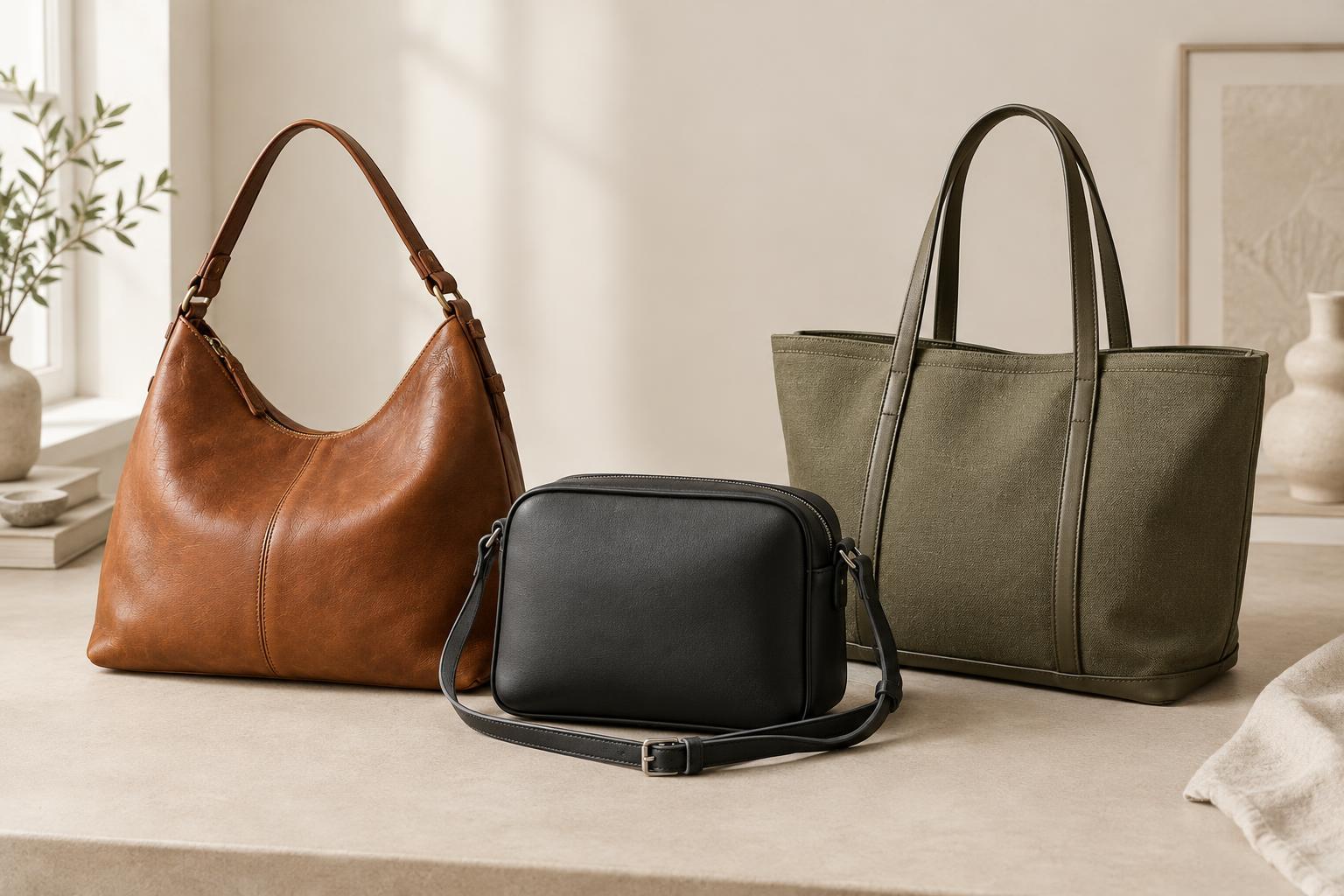
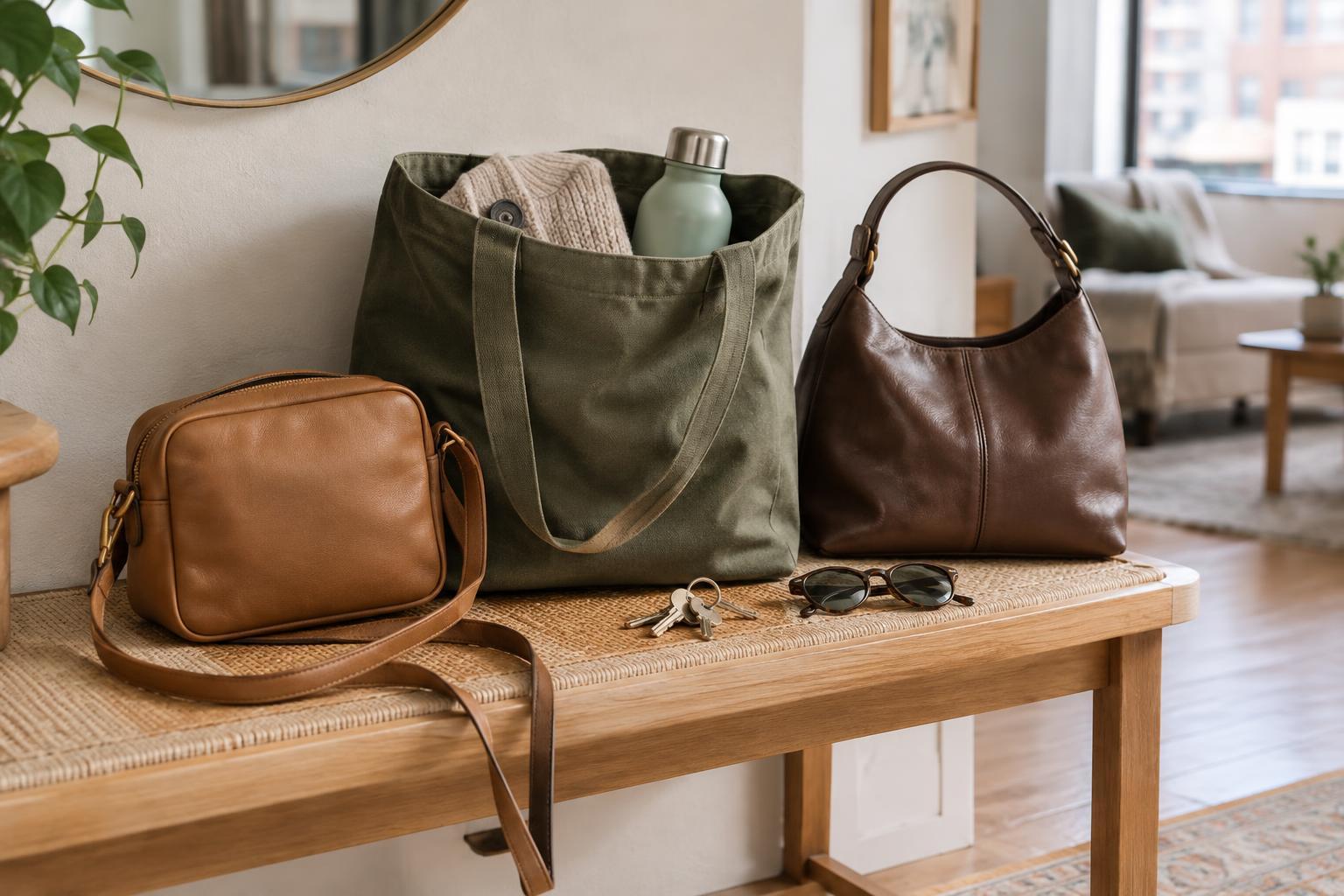
A crossbody bag rests against your hip or torso on a strap worn diagonally across the body. It is a strong option when you travel light, walk often or want your hands free for errands. Smaller versions encourage you to carry only essentials; a roomier style can hold a few extras without becoming a catchall. An exterior pocket may help if you reach for your phone or transit pass frequently.
Pay attention to where the bag sits when the strap is adjusted. If it hangs too low, it may swing as you walk; too high, and the opening may feel awkward to use. A wider strap can feel more comfortable when the bag is full, while a secure closure helps keep contents in place. If you regularly carry a laptop or several heavy items, a small crossbody may not have the capacity or carrying comfort you need.
Tote: space for a changing load
A tote suits days when your load changes. Its broad opening can make it easy to add a scarf, notebook or small purchase, and a structured tote may keep work items more orderly. If you need to carry a particular device or folder, check the bag’s interior dimensions rather than relying on its overall size. Also check whether the handles fit comfortably over the clothes you wear most often, including a coat.
Extra space is useful, but it can tempt you to carry more than you intended. A tote with an interior pocket, divider or pouch can prevent small belongings from settling at the bottom. Think about the opening, too: an open top offers quick access, while a zip or other closure may be preferable on crowded journeys or in wet weather. A tote is often easiest to use when you have a clear reason for its capacity, not simply because bigger seems safer.
Shoulder bag: easy access with a closer fit
A shoulder bag sits under or beside your arm, making it convenient to reach into while standing. It can be a useful middle ground if you want more room than a compact crossbody but less bulk than a tote. Shape makes a difference: a slim bag may sit neatly against the body, while a wider one offers more space but may feel less secure as you move.
Try the strap length with a realistic amount of weight inside. A strap that looks right on an empty bag might slip off a coat or bunch up against your arm once the bag is full. If the style has a short strap, consider whether you will be comfortable carrying it by hand when your shoulder needs a break. Some bags have adjustable straps that allow both shoulder and crossbody wear, which can be helpful if your day includes different activities.
Choose details you will appreciate every day
Once you know which shape fits your routine, compare the details. Look at the lining, seams, straps and closures, and open the bag as you would in daily use. Can you reach the essentials without emptying it? Does the base hold its shape if you set it down? Fabric and coated materials may be lightweight, while leather and leather alternatives offer different textures and care needs. No material is automatically the best choice; pick one whose feel and upkeep suit you.
Color is another practical decision. A shade that works with your most-worn shoes and outerwear can make the bag easier to use across outfits, but a bright bag can be an enjoyable focal point if your wardrobe is mostly neutral. If possible, put your usual items inside before deciding. The bag that carries them comfortably, closes easily and still looks like something you want to wear is a better everyday choice than one selected by shape alone.