Start with the place the belt will sit
The most useful belt measurement is the circumference where you plan to wear the belt, over the clothes you will wear it with. A belt threaded through low-rise jeans may need a different length from one worn at the natural waist over a dress. If you want one belt to do both jobs, measure both positions before shopping and check whether its range of holes covers them.
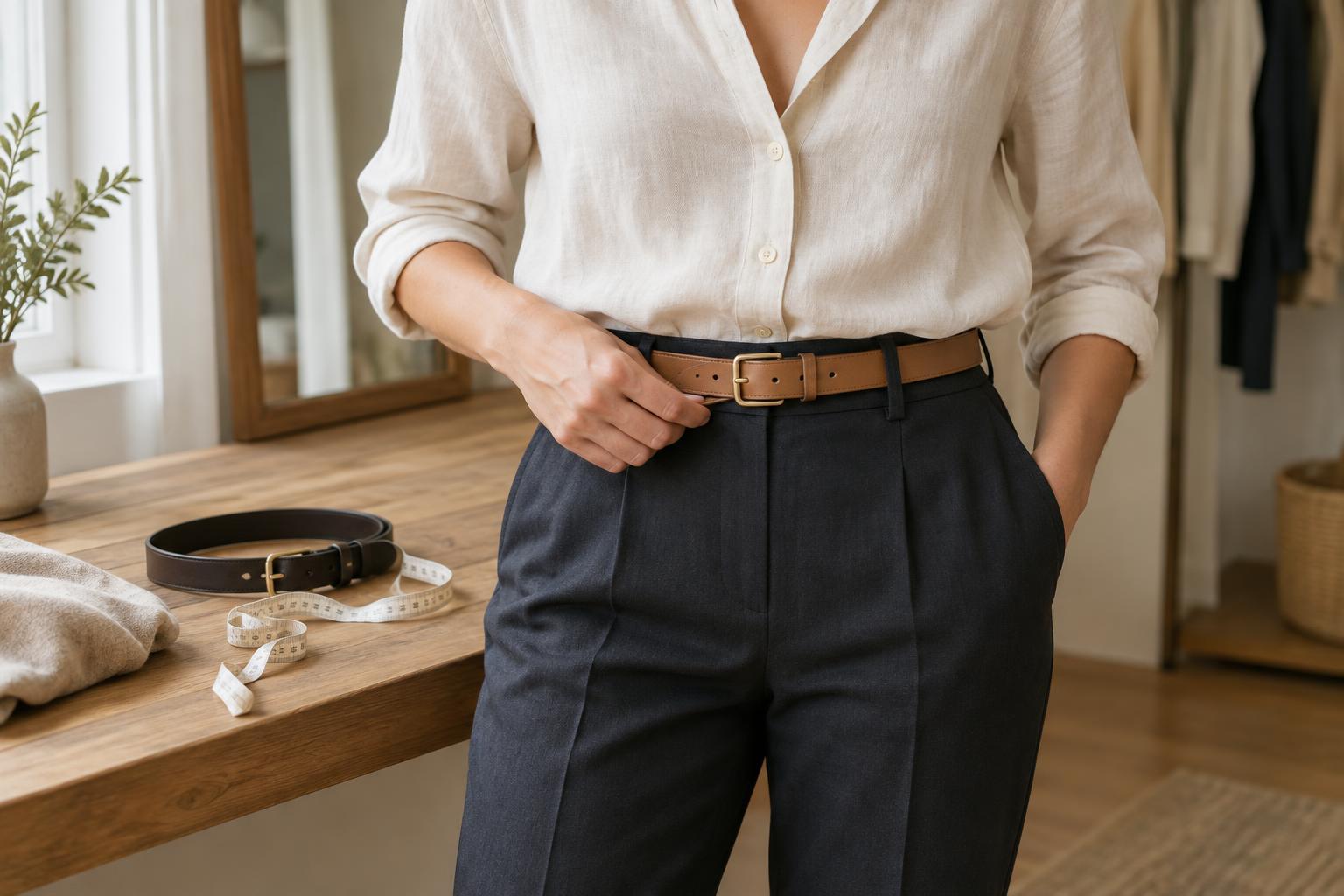
Stand comfortably and wrap a flexible measuring tape through the belt loops of your trousers, or around the intended position on a dress or jacket. Keep the tape level and snug without pulling it tight. Measure over a similar thickness of clothing: a fine shirt and a chunky sweater can change where the belt fastens. If you do not have a flexible tape, use a piece of string, mark where it meets and measure the string against a ruler.
Use an existing belt as a guide
A belt you already wear comfortably can be an even better starting point. Lay it flat and measure from the point where the buckle’s prong rests when fastened to the hole you use most often. That gives you a practical reference for the length you wear, rather than the belt’s full end-to-end length. If the old belt has stretched or you only just reach its first or last hole, measure your body as well.
Check the seller’s size guide before choosing a size. Some brands describe belt size by the distance to the middle hole; others use a waist range or a small, medium and large system. Trouser size is a rough clue, not a reliable substitute for measuring, because garment sizing and belt positions vary. If your measurement falls between sizes, look at the listed hole range and decide where you would like room to adjust.
Choose the position for the outfit
For trousers or jeans, the belt generally follows the waistband and passes through the loops. A comfortable fit should help the waistband stay in place without gathering the fabric sharply. If trousers slide down even with a tightly fastened belt, their cut or waist fit may be the underlying issue. A belt can refine the fit, but it cannot make every pair of trousers fit well.
Over a dress, long shirt or cardigan, a belt can create a visual break in the outfit. Try it at your natural waist, which is often the narrower part of your torso, then shift it slightly higher or lower to see how the proportions change. There is no required position: the useful one is where the fabric drapes comfortably and the belt stays put. A lower, looser placement can give a relaxed shape, while a higher placement can emphasize the waist above a flowing skirt.
Consider what happens when you sit, reach or add a layer. A belt that looks right while standing may press uncomfortably against your ribs or ride up over a coat. Test the outfit in motion before committing to a position, especially when belting thick or slippery fabric.
Match the belt to its job
Width makes a difference. A narrow belt usually fits more trouser loops and can add a subtle line to a dress; a wider belt makes a stronger visual statement but needs enough space in the loops if you plan to wear it with trousers. Check loop width before buying. Also consider the buckle: a large or heavy buckle may feel cumbersome when seated or under an untucked top.
Material affects both appearance and adjustment. A structured leather belt can keep a crisp shape, while softer woven or fabric styles may follow the body more easily. Braided belts often allow fastening at many points, which can be useful if you switch between waist and hip placement. Whatever the material, look for neat edges, a secure buckle and a tail that sits comfortably after fastening rather than hanging far past the first loop.
Make a final fit check
Fasten the belt and check that you can move and breathe easily. For a traditional belt with several holes, fastening near the middle gives you flexibility if your outfit or preferred placement changes. If you are at the very end of the available range, another size or a more adjustable style may be more useful.
Before removing tags, try the belt with the outfits you expect to wear most. Check its length, loop compatibility and how the buckle sits with each waistband or layer. The best choice is not simply a number on a label: it is a belt that fastens comfortably where you want to wear it and works with the clothes already in your wardrobe.