Start with the clothes you actually wear
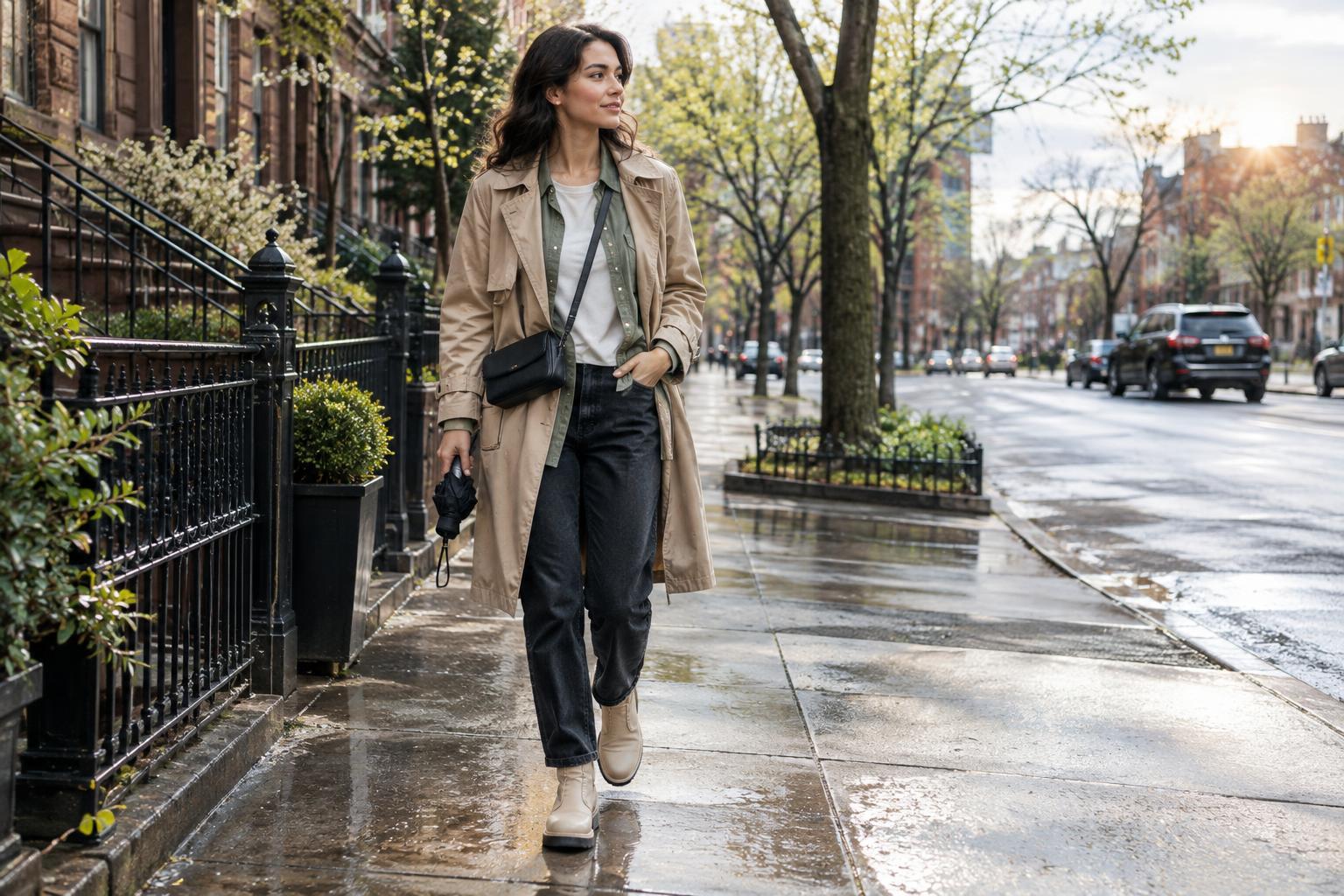
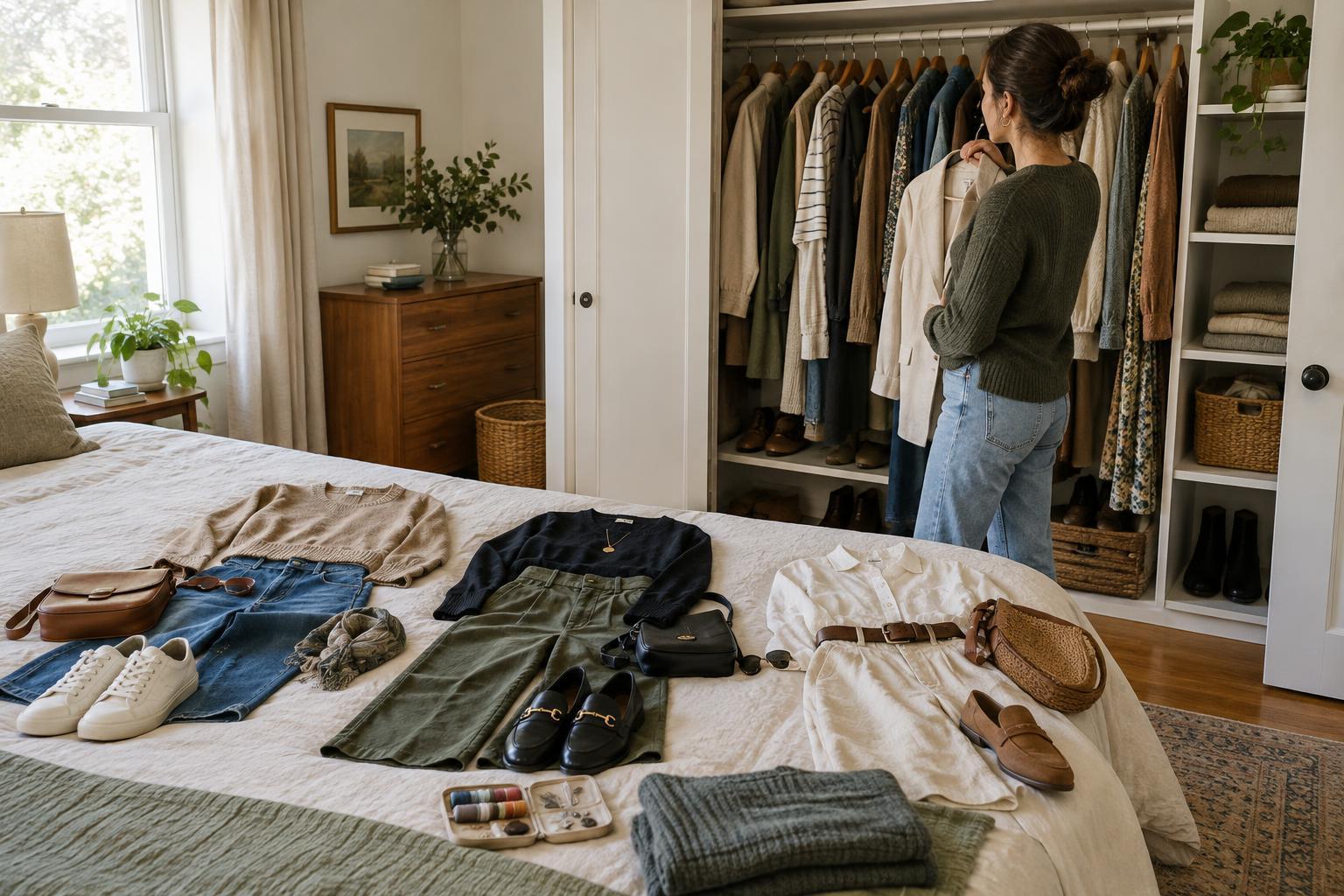
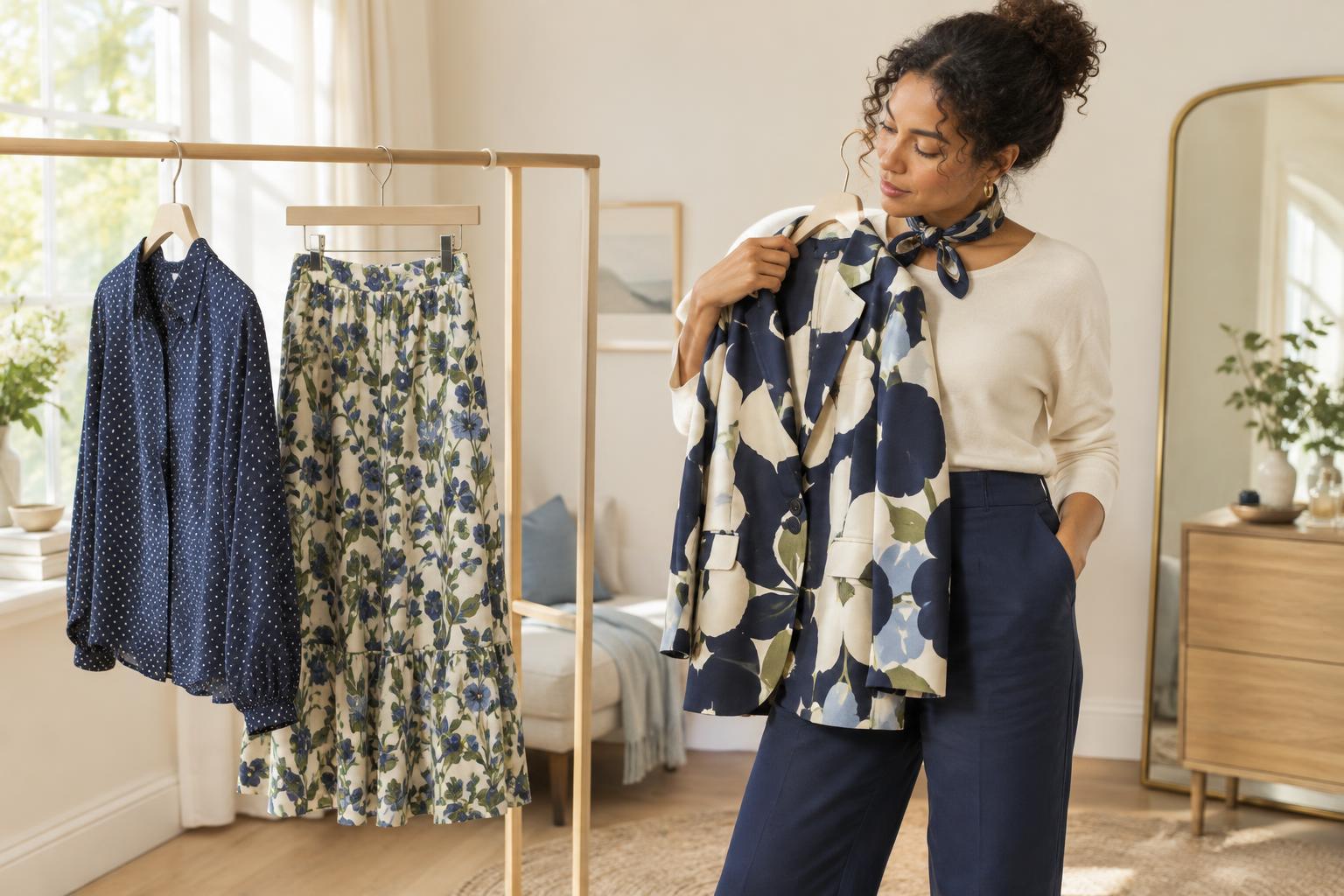
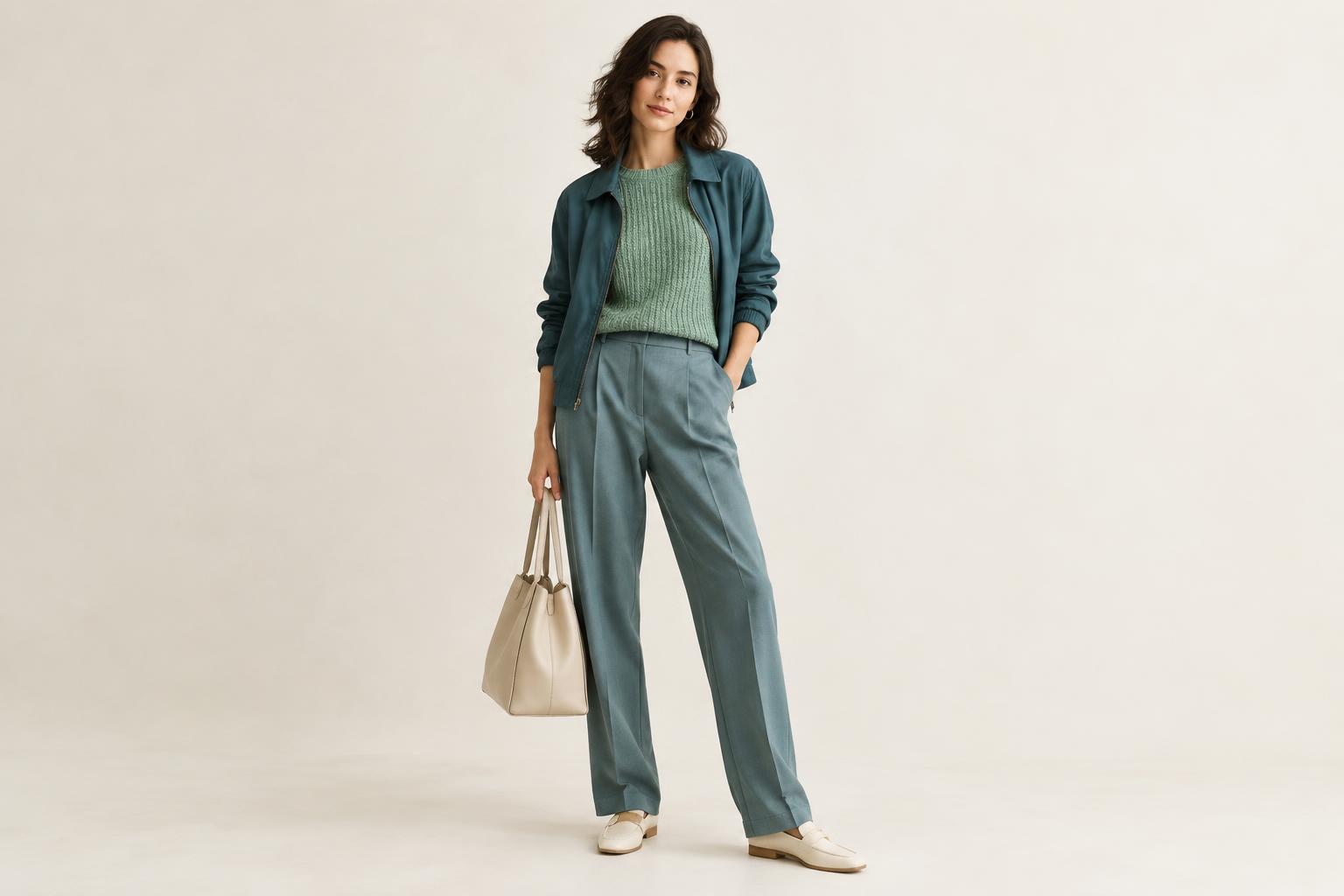
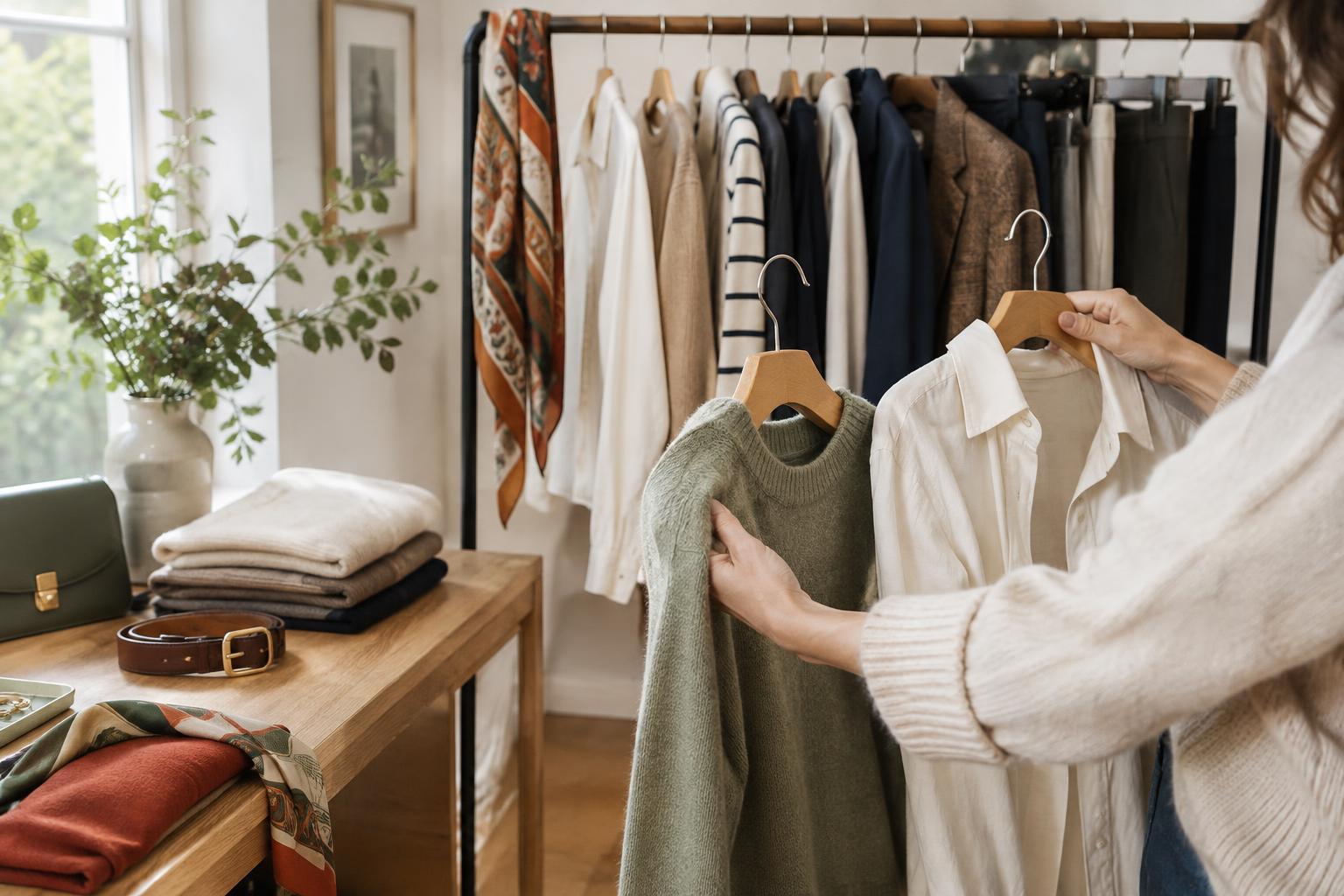
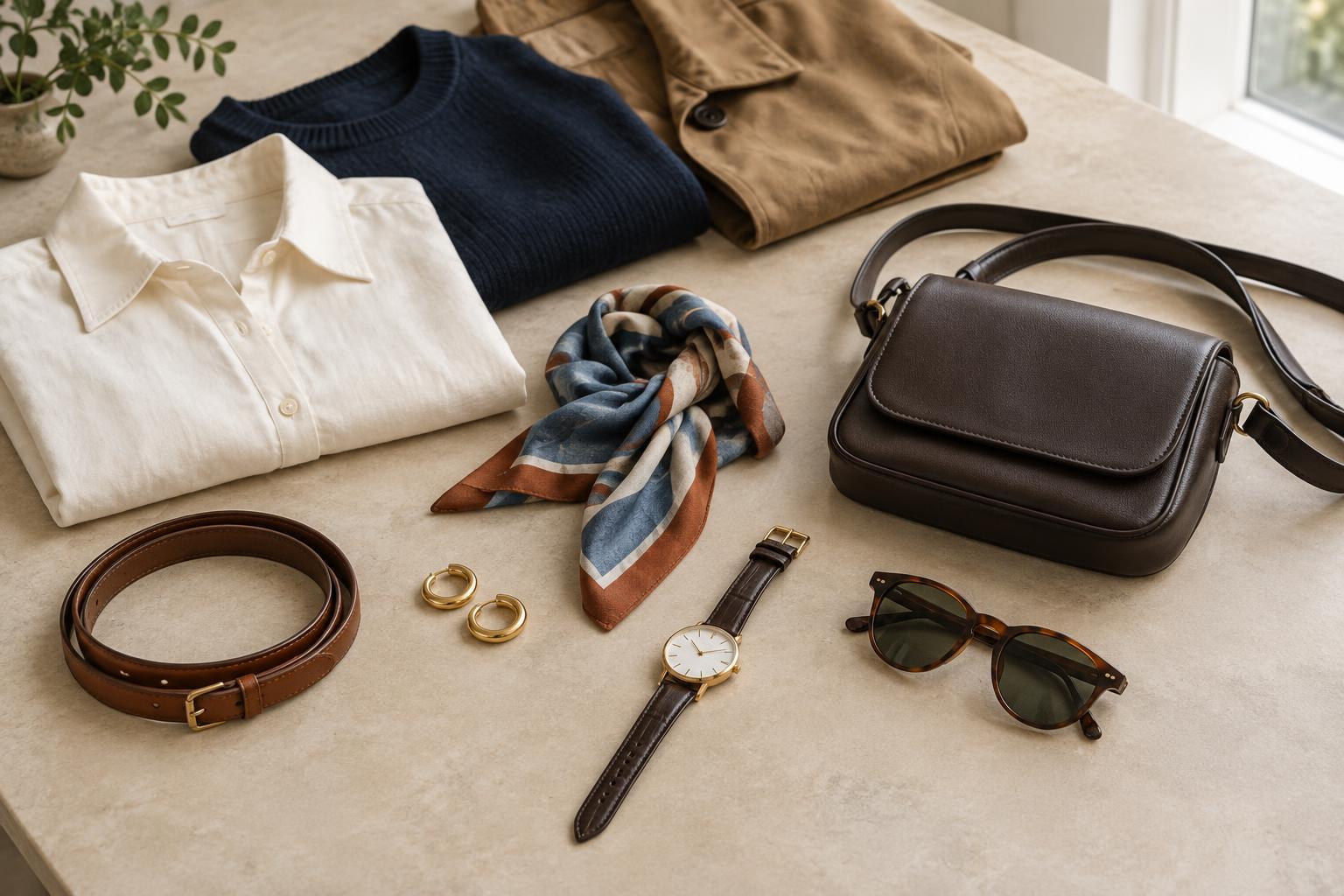
Before choosing an accessory, picture an ordinary week rather than an idealized occasion. Which coat leaves the house most often? Do you usually wear open-neck shirts, crewnecks, dresses or a high collar? A scarf that looks striking on its own may get little use if its proportions compete with your favorite coat. Lay out two or three regular outfits and decide what is missing: warmth at the neck, a softer edge near the face, a little color, or a finishing layer for an evening outfit. That question gives your choice a purpose.
UniqueYou’s emphasis on elegant, accessible accessories fits a wardrobe-first approach. Instead of trying to build an entire look around one purchase, see whether a scarf can connect pieces you already like. A quiet wrap might sit comfortably with a patterned dress; a more expressive square scarf could enliven a plain shirt and trousers. There is no requirement to dress in one fixed way. The useful test is whether you can imagine wearing the accessory in several real situations, with shoes, bags and outerwear you already own.
Understand the shapes before choosing a print
A long scarf invites familiar moves: drape it over both shoulders, loop it once around the neck, or let the ends show beneath a coat. A wider shawl or wrap covers more of the shoulders and can be useful over a sleeveless dress or a fine knit, especially when you want an extra layer that is easy to remove. A square scarf offers a different scale of styling. Folded diagonally, it can sit at the neckline; folded into a narrow band, it can add a small, intentional accent without covering the outfit beneath it.
Dimensions matter more than a category name alone. A narrow scarf may fit neatly inside a structured jacket, while a generous piece may create volume that works better over a simple coat. Look at the stated measurements and imagine the accessory folded, tied and worn open. If you dislike adjusting fabric throughout the day, favor a shape you can wear with one uncomplicated arrangement. If you enjoy experimenting, a square or a longer piece can offer more ways to change the impression of the same clothes.
Let fabric information guide the decision
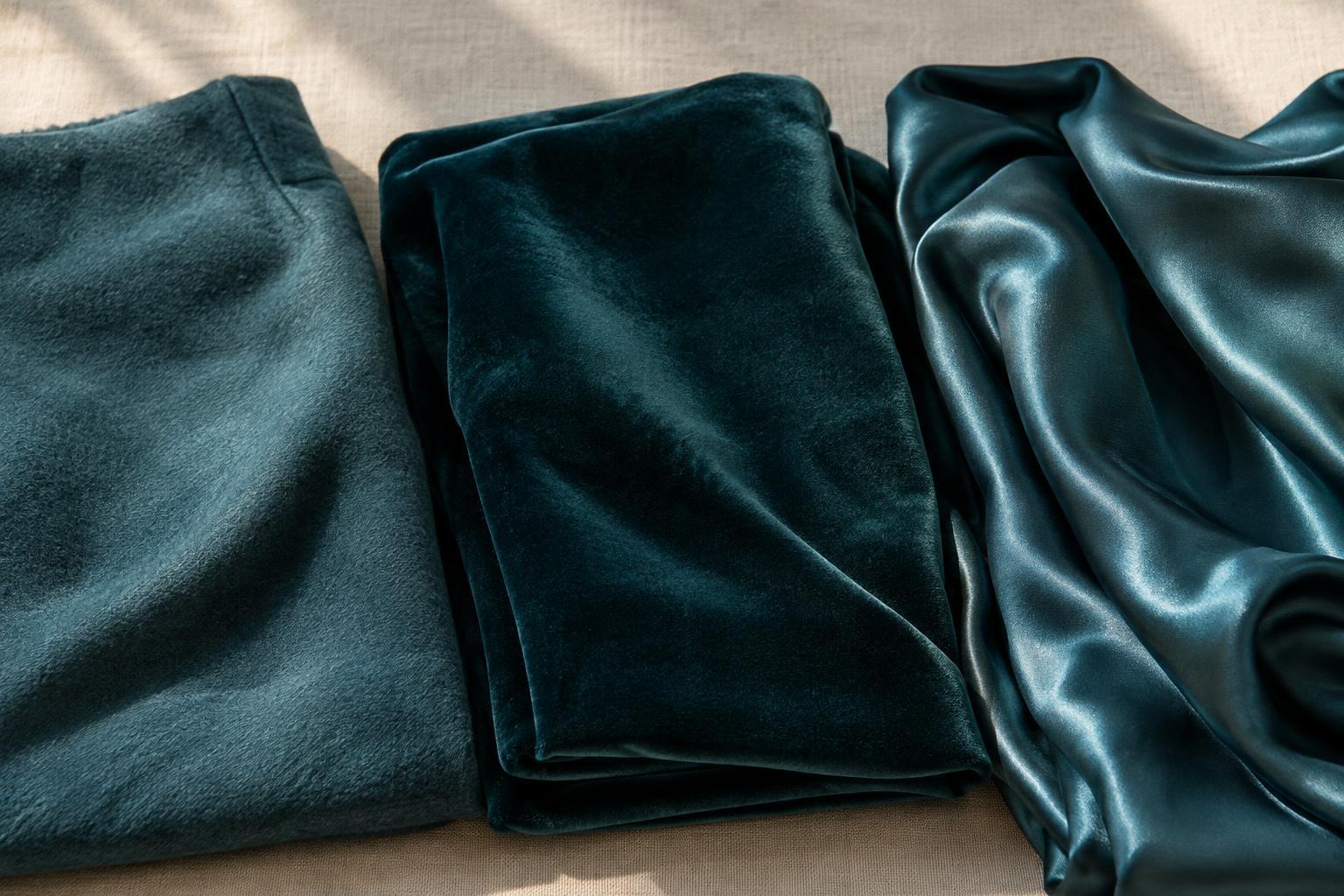
UniqueYou includes silk, cashmere and wool categories, but the composition of an individual product can vary. Treat a category as a place to begin browsing, not as a substitute for reading that item’s material details. Silk may appeal when you want a lighter, smoother-looking accent; wool can make sense when your priority is a more substantial cold-weather layer. Cashmere is another material to consider for a soft-feeling scarf or wrap, provided the particular item’s description, dimensions and care needs suit what you have in mind.
Think about fabric in relation to use, not just its name. Will the scarf be worn against bare skin, over a sweater or outside a coat? Do you want a compact piece to carry during a changeable day, or a broader layer for occasions when you will spend time sitting still? Texture changes how color and pattern appear, too: a crisp fold draws the eye differently from a relaxed drape. Checking composition and care information for the exact piece helps you compare options without assuming every scarf in a collection is made alike.
Build color around your wardrobe, not a passing rule
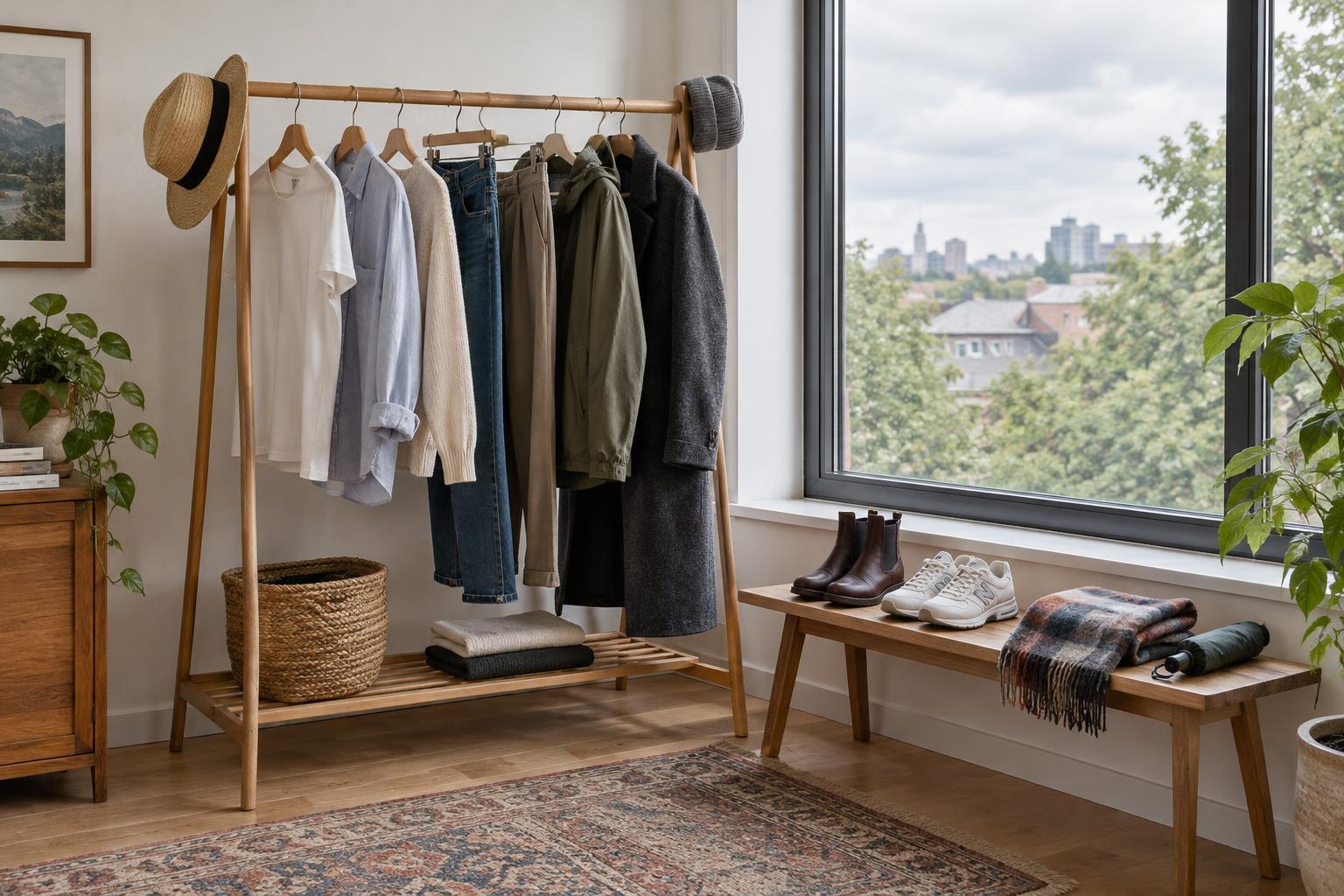
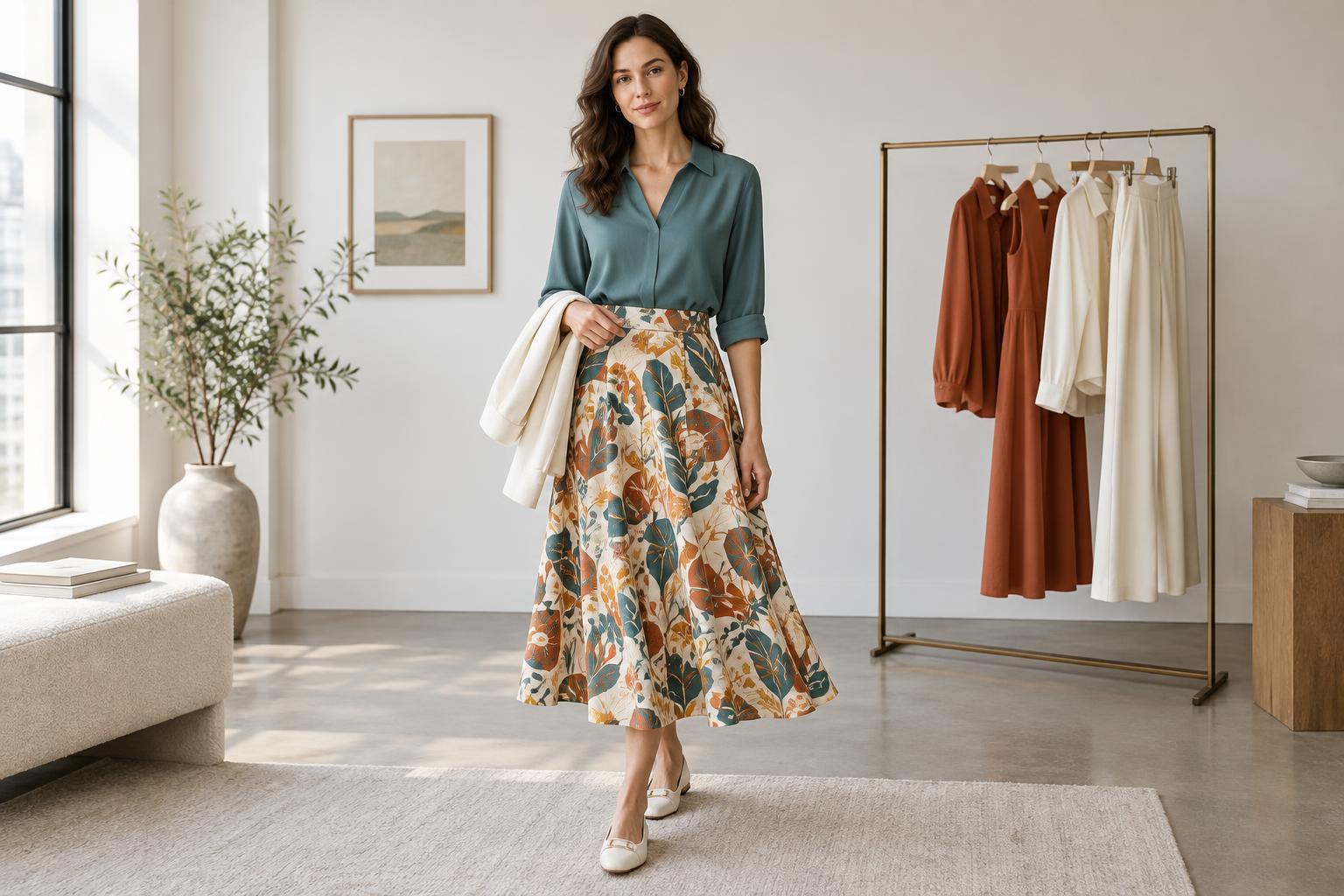
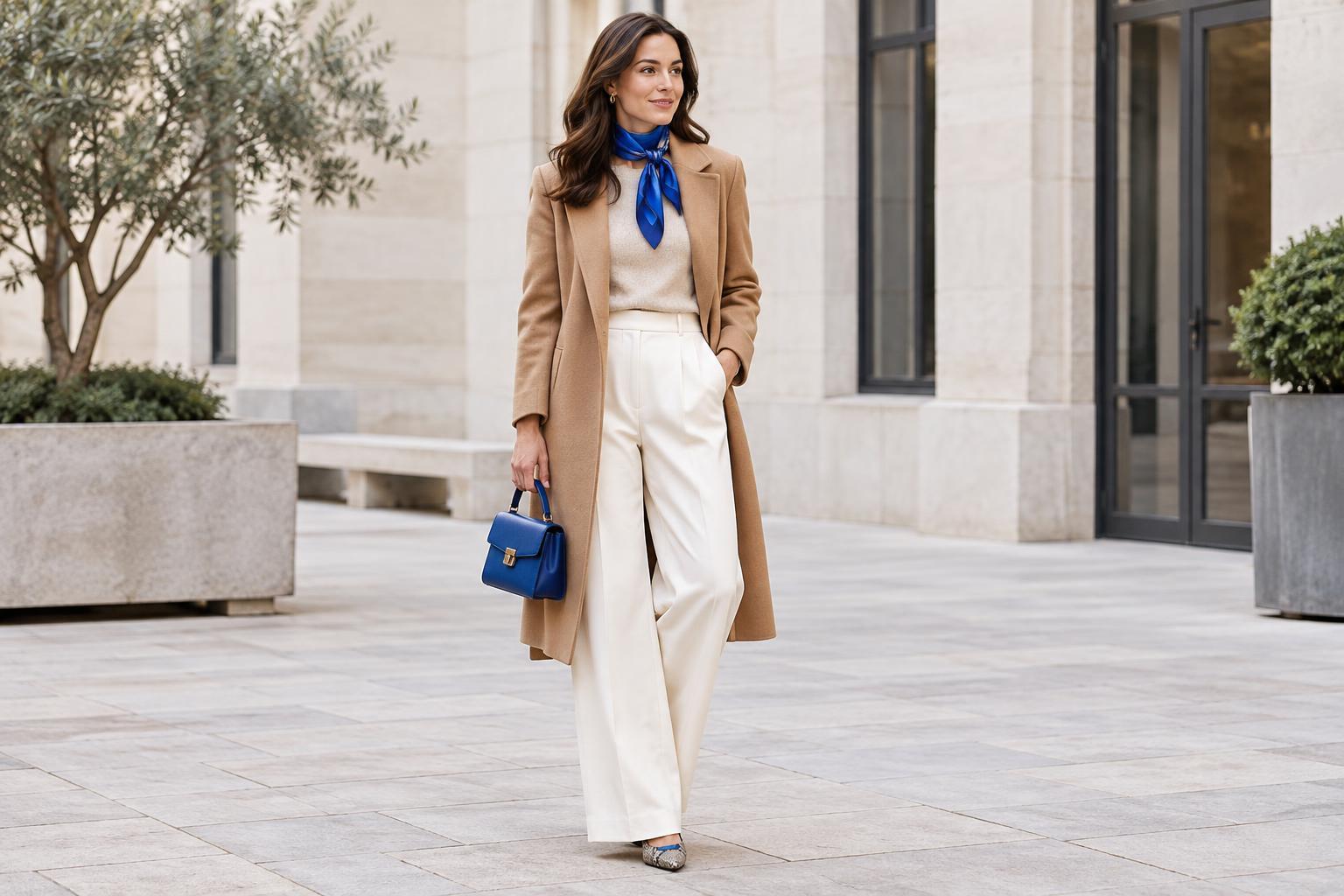
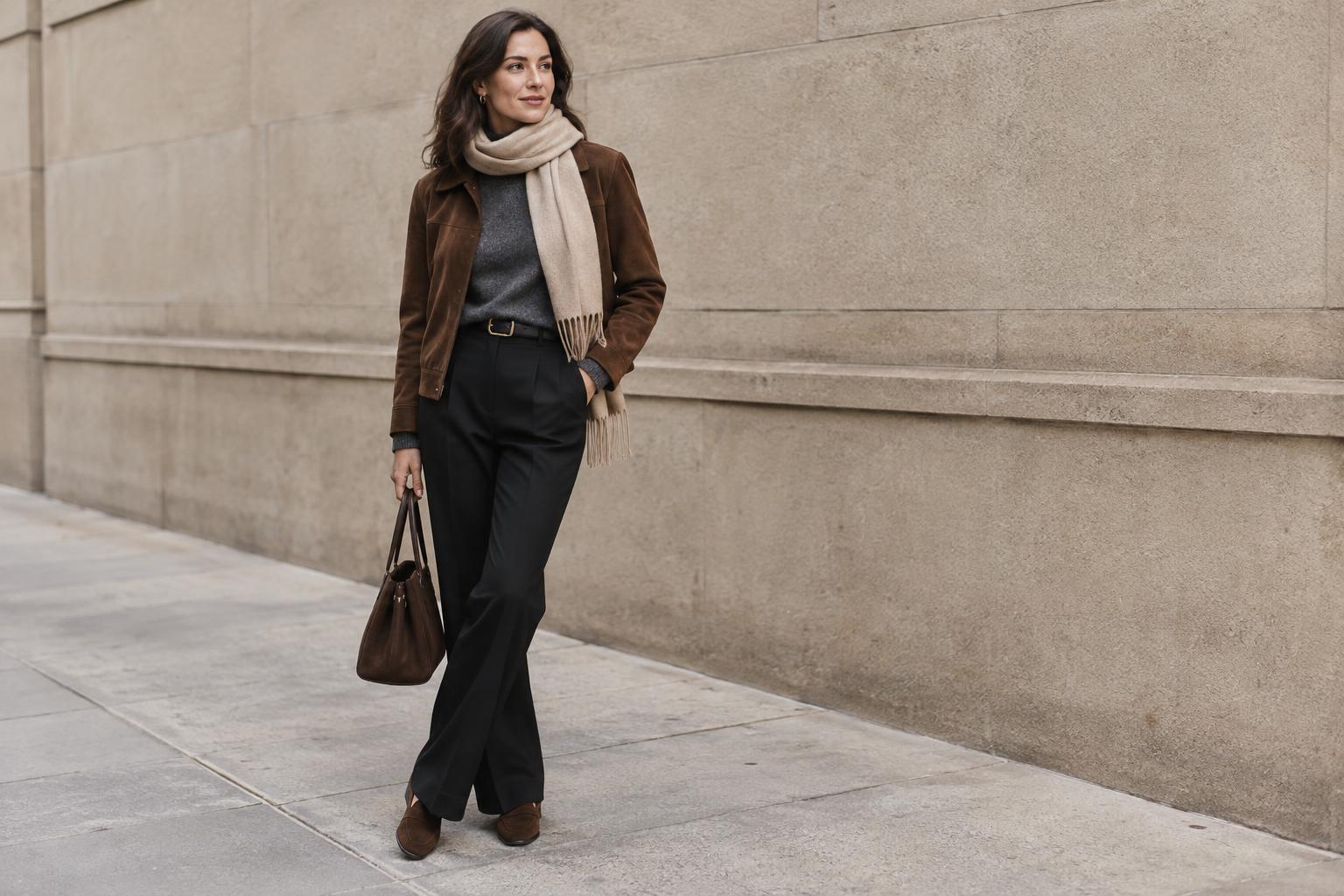
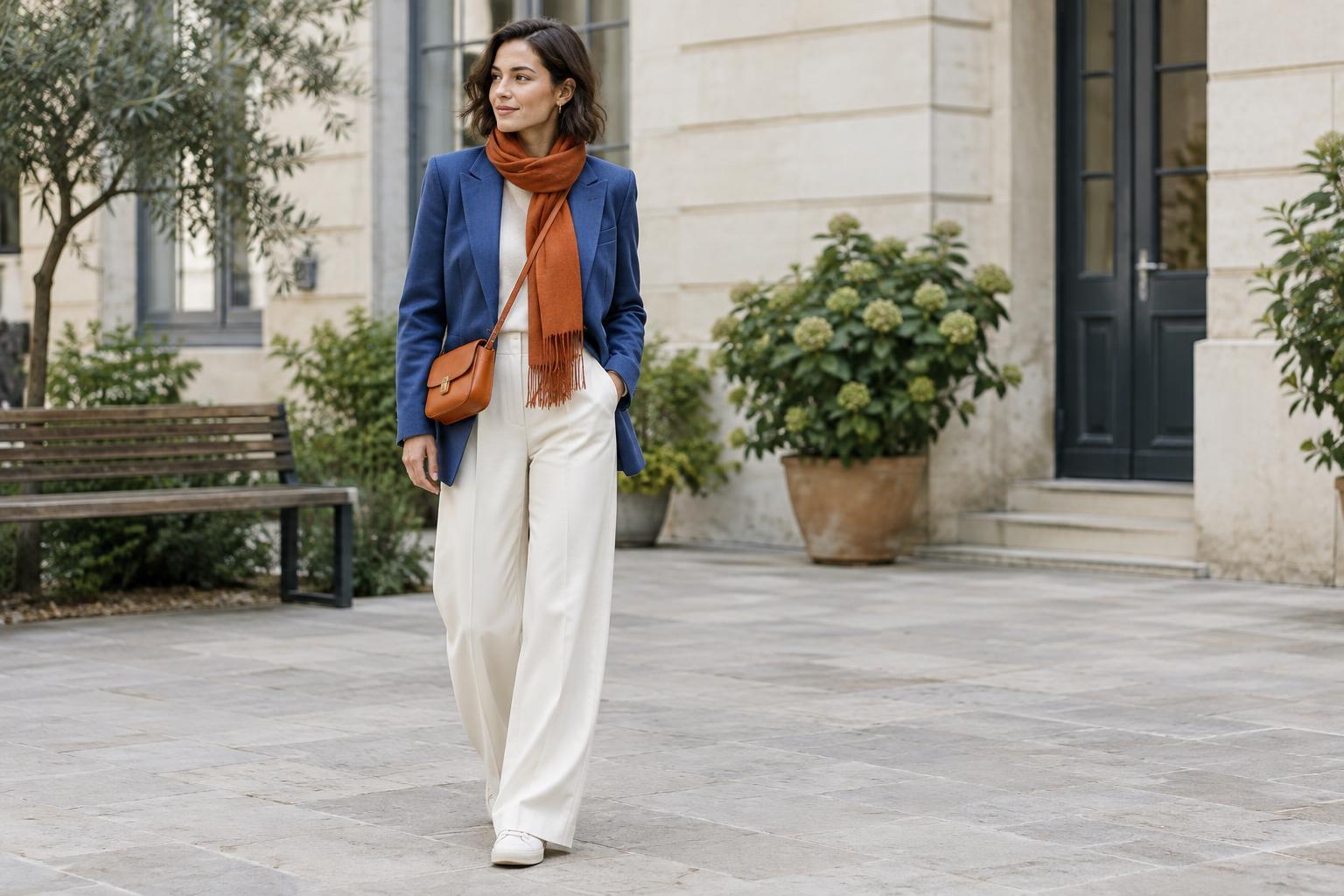
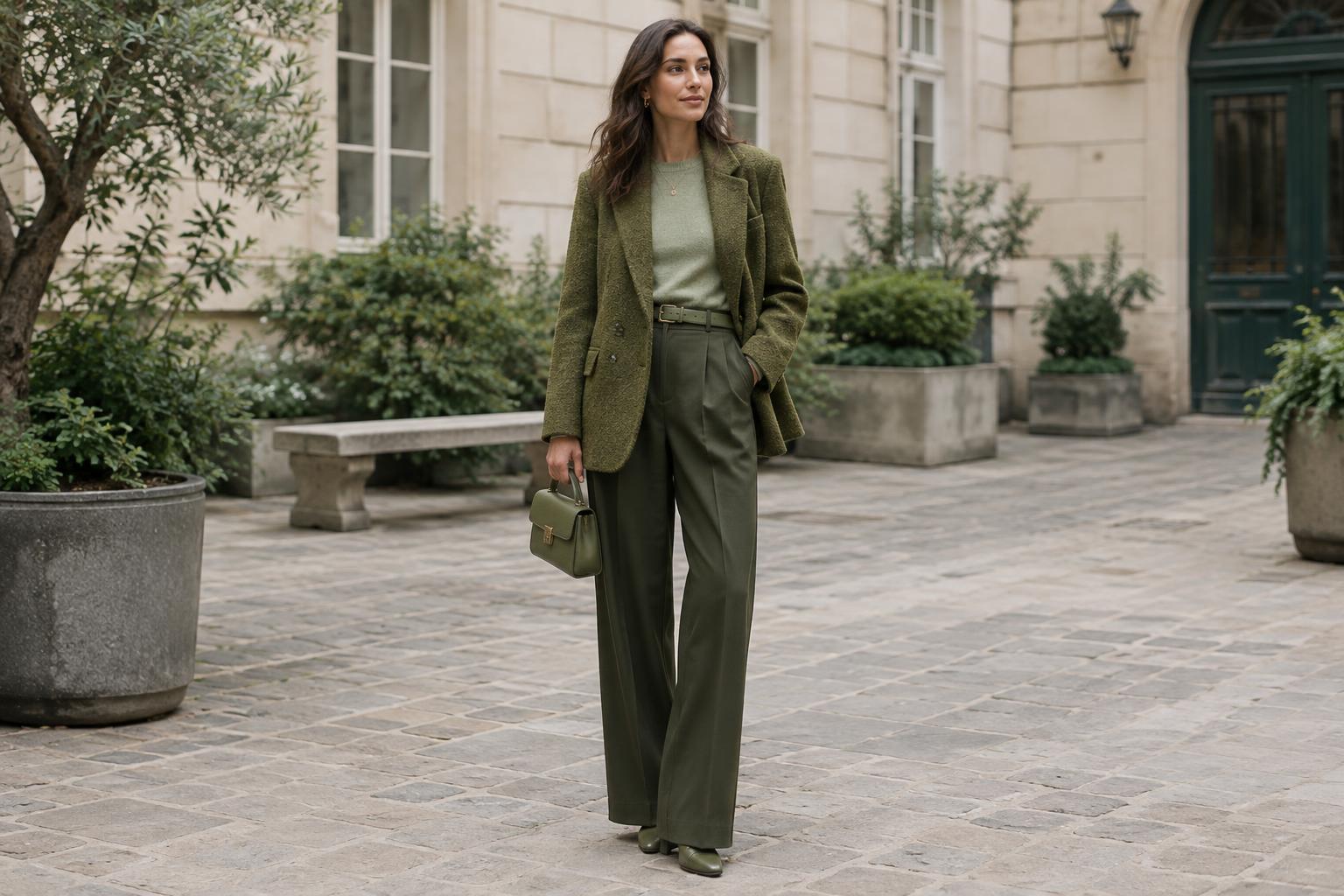
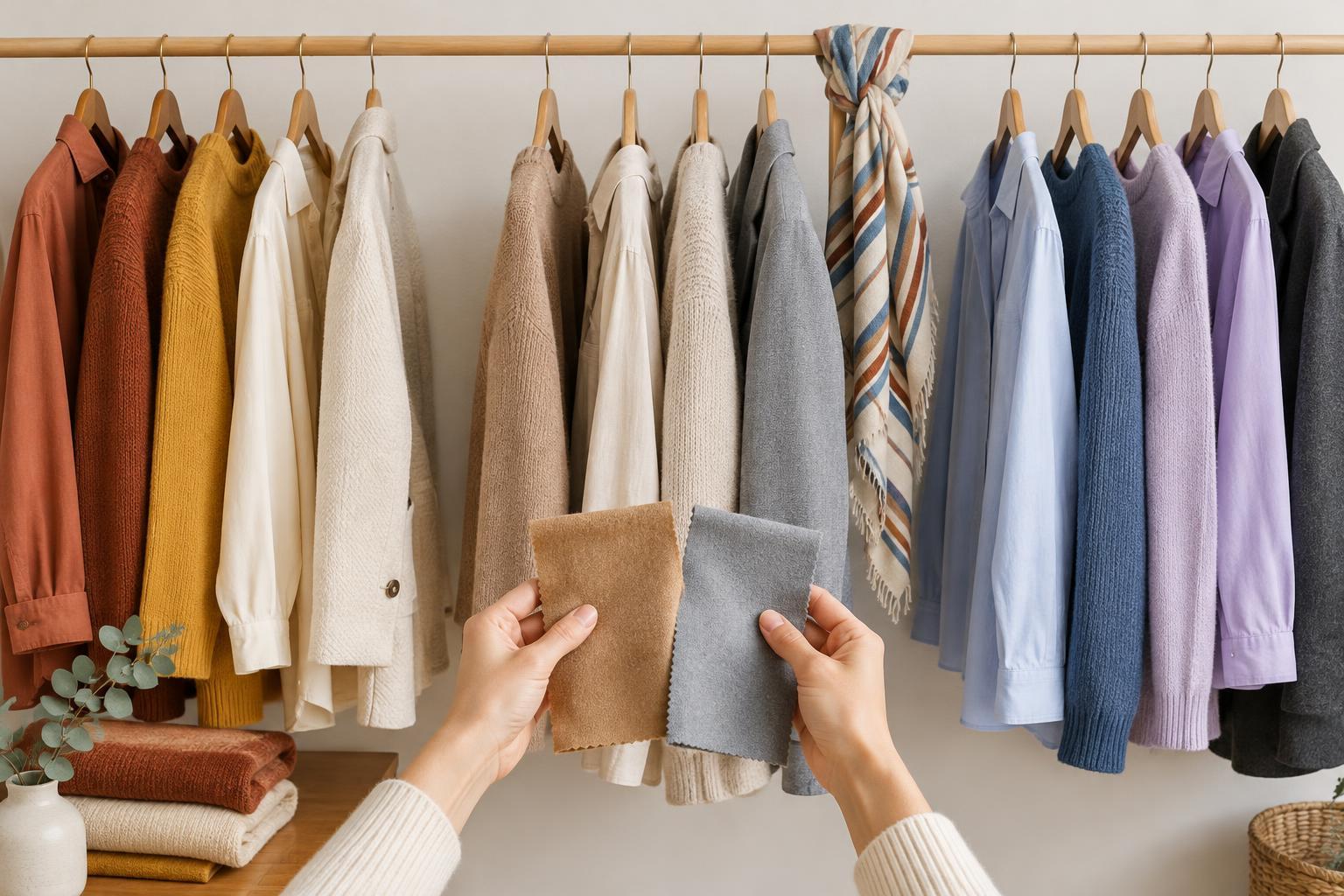
A useful color plan begins with your most-worn outer layer. With a dark navy, charcoal or black coat, a scarf can either echo the coat for a calm line or introduce a noticeable contrast near the face. With a tan, cream or brown jacket, try holding a prospective color next to the fabric rather than judging it against a white product background. You do not have to match shades perfectly. Repeating a color already found in a bag, blouse or print can make the outfit feel connected even when the scarf is the most visible accessory.
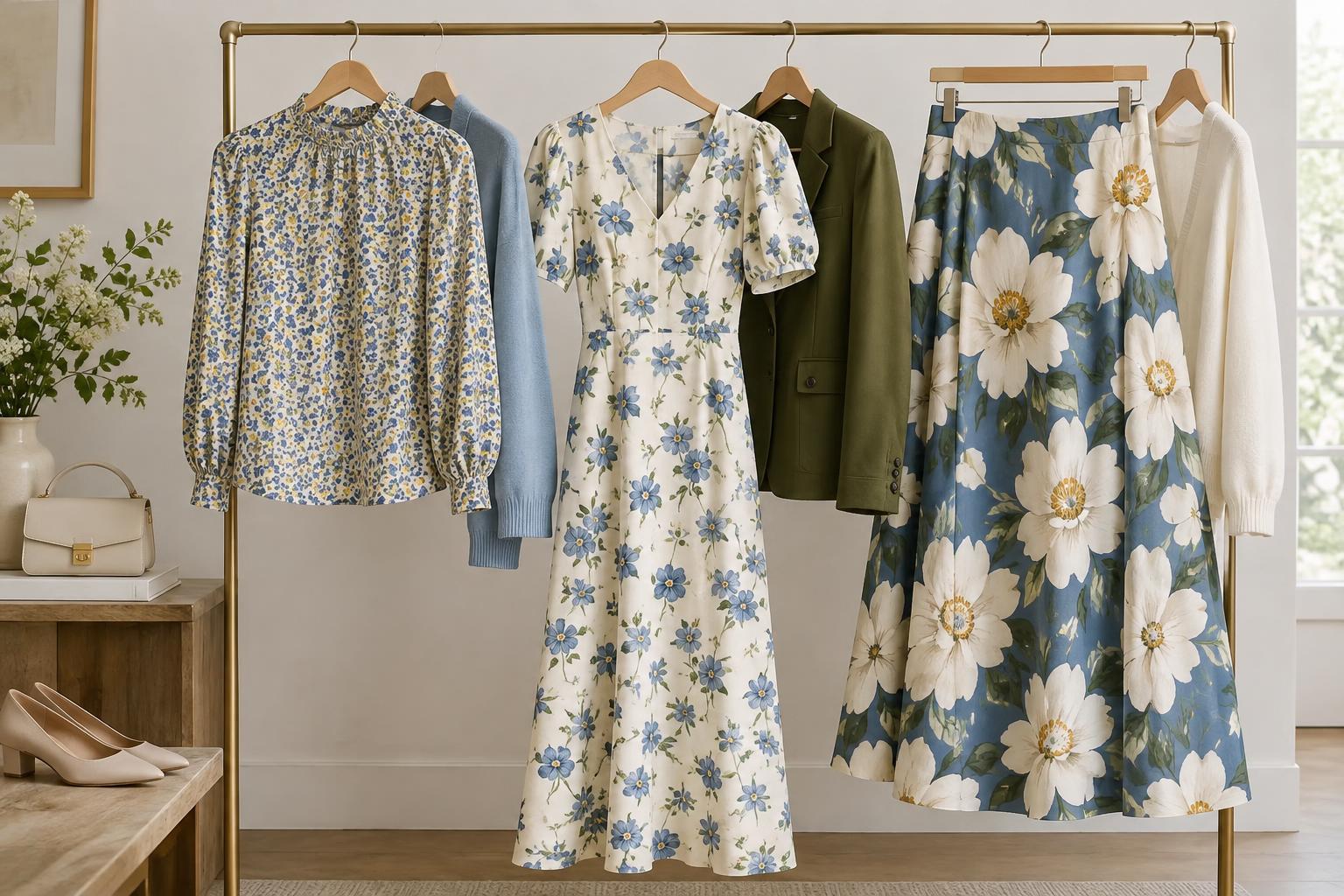
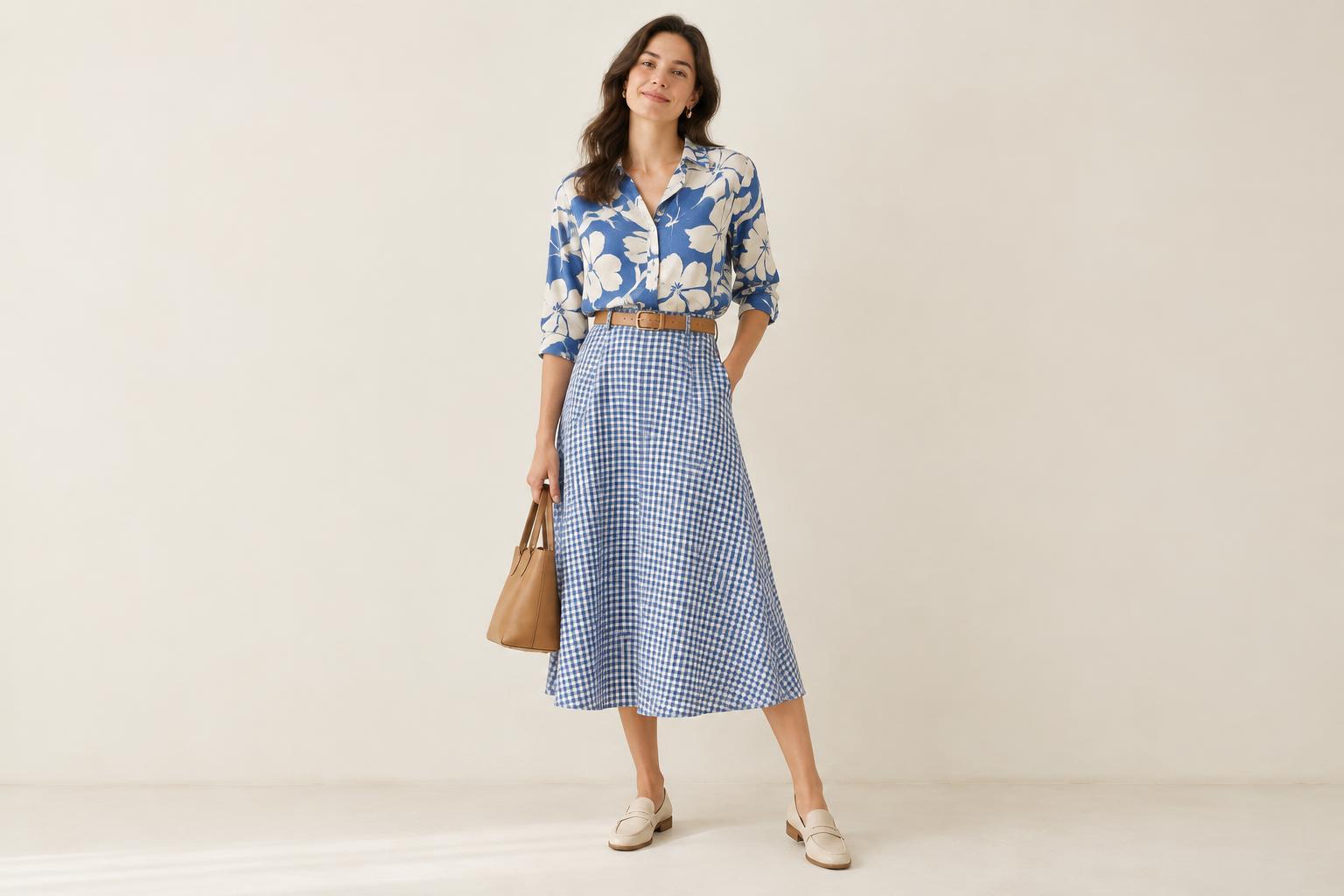
Patterns deserve the same practical check. If your clothes already feature checks, florals or strong stripes, a quieter scarf can give the eye a resting place. If most of your wardrobe is plain, a patterned square scarf may add variety without requiring a new top. Consider the scale of the motif as well as its colors: a small design may read almost like texture from a distance, while a large one becomes a focal point. Choose the effect you want on the outfits you own, rather than trying to follow a universal rule about which colors belong together.
Style one accessory in several believable ways
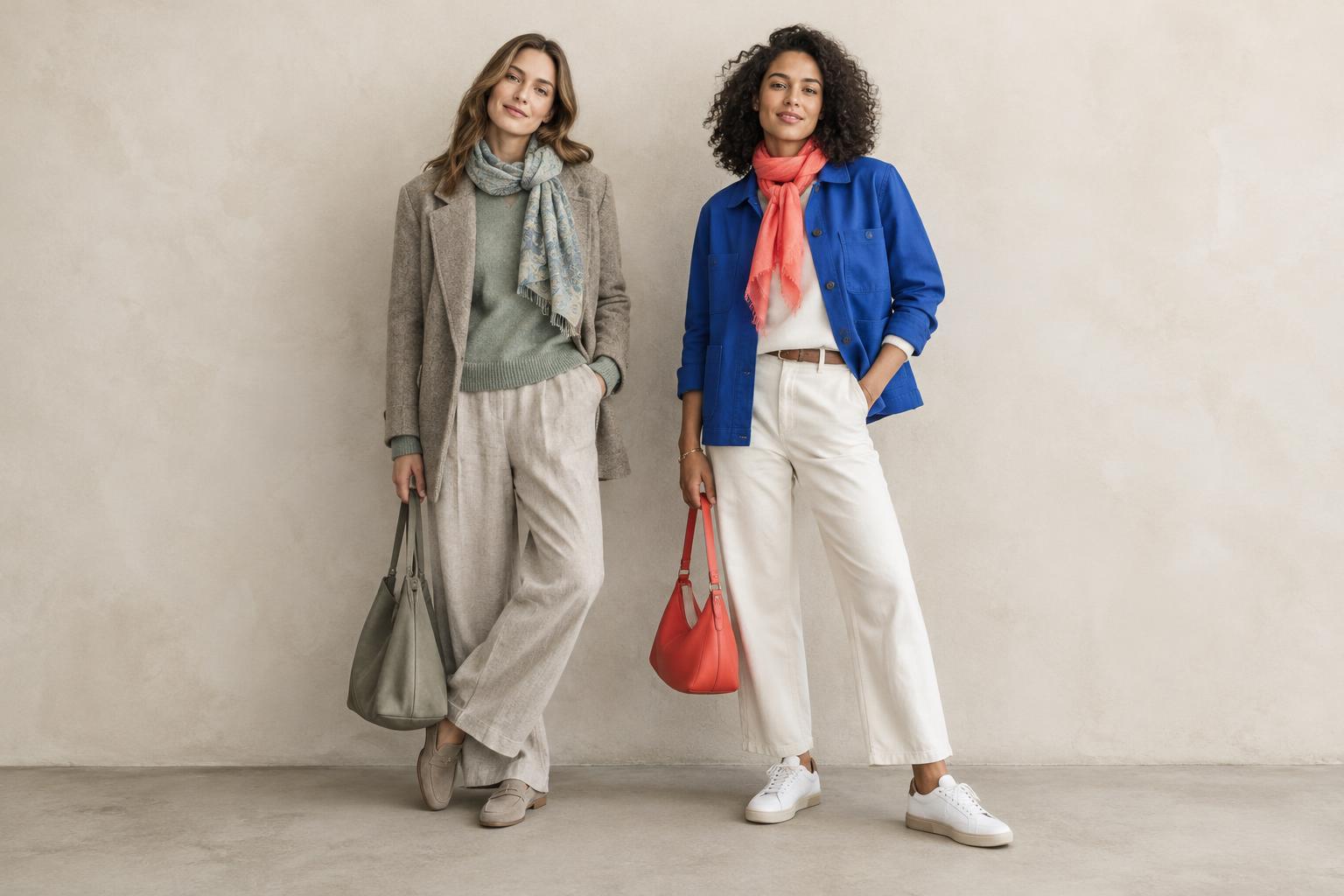
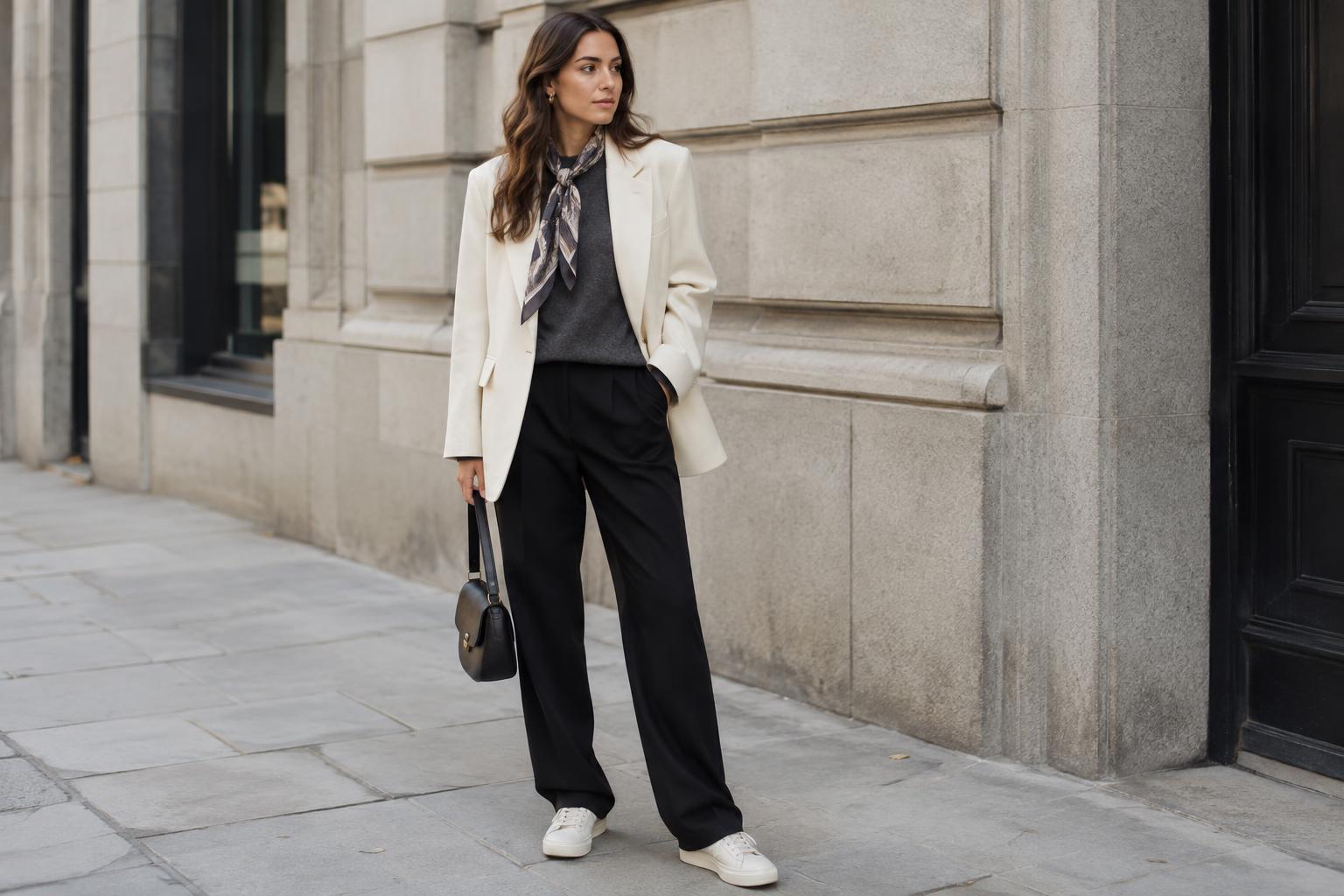
For an everyday outfit, try a scarf over a plain knit with straight-leg trousers and the shoes you usually wear. Leave a longer style loose if you want a relaxed vertical line, or make one simple loop when you want the color nearer your face. With a button-up shirt, a small square scarf tied at the neck can give the outfit definition while keeping the shirt visible. If the knot feels too formal, loosen it or move it slightly to one side. Small adjustments often change the result more than adding another accessory.
For a dress or occasion outfit, consider a wider wrap as part of the silhouette rather than as an emergency layer. Let it rest over the shoulders, then check how it looks with the dress neckline and any jewelry. A patterned scarf can also sit against a plain jacket, while a quieter one may balance an elaborate dress. Try the full combination before the event, including your coat and bag. That rehearsal tells you whether the fabric stays where you want it and whether the look still feels comfortable when you move.
Plan for seasons without rebuilding everything
Seasonal dressing does not require four separate accessory collections. Begin with the temperatures and indoor spaces you actually encounter. During colder months, a longer or more substantial scarf can add a layer at the neck and visually bridge a sweater and coat. In milder weather, a lighter piece may provide color without the bulk of another garment. A wrap can be useful when an outfit needs shoulder coverage, but its comfort will depend on the particular fabric, size and conditions. Check those details rather than relying on a seasonal label alone.
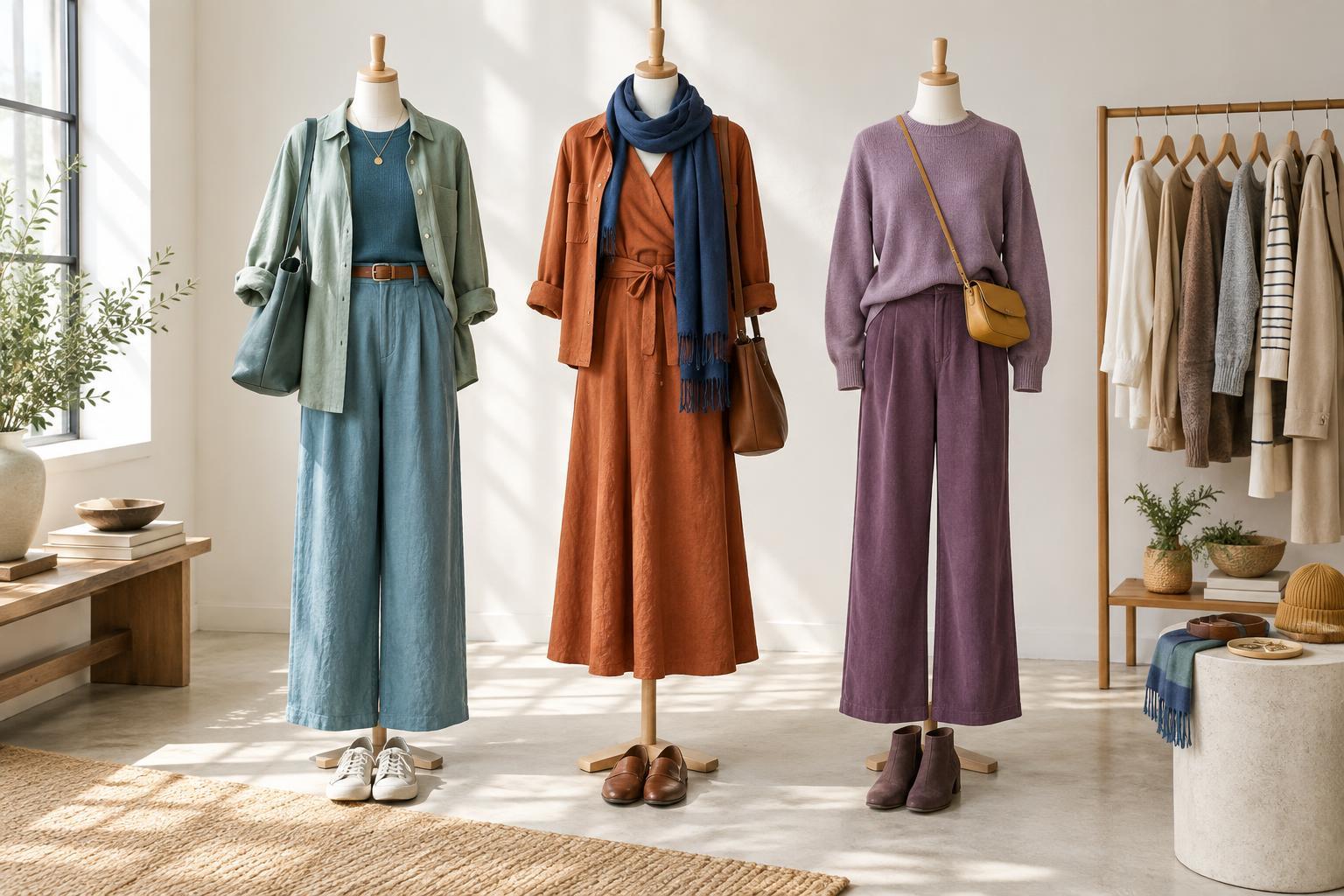
An accessory can also help familiar clothes make a gentle transition between seasons. A pale scarf may lighten the appearance of a dark coat; a deeper color may make a simple dress feel more suited to autumn. This is about presentation, not a promise that one piece will work in every climate. Keep your most versatile options somewhere you can see them when you get dressed. If a scarf lives at the back of a drawer, it is easy to forget that you already own a way to change the outfit.
Choose a gift with the recipient’s habits in mind
A scarf can be a thoughtful gift because it does not depend on the same close fit as many clothes, but it still calls for observation. Notice whether the person favors small accents or generous layers, bright prints or quiet solids, smooth fabrics or pronounced texture. Their most-worn coat is a particularly useful clue: it shows which colors and proportions will have a real opportunity to be worn. If you are unsure, prioritize a shade that sits comfortably with several of their existing pieces rather than one that matches only a single outfit.
Consider the recipient’s routine, too. Someone who dresses up frequently may enjoy a wrap for dresses, while someone who wears collared shirts may use a compact square scarf more often. Materials and care requirements are part of the gift: a lovely accessory is less useful if its upkeep conflicts with the person’s habits. Before choosing, check the individual product’s composition, dimensions and care instructions. A note explaining the outfit you pictured it with can make a practical choice feel personal without pretending to know exactly how the recipient will style it.
Care for the piece you select, and know the brand’s story
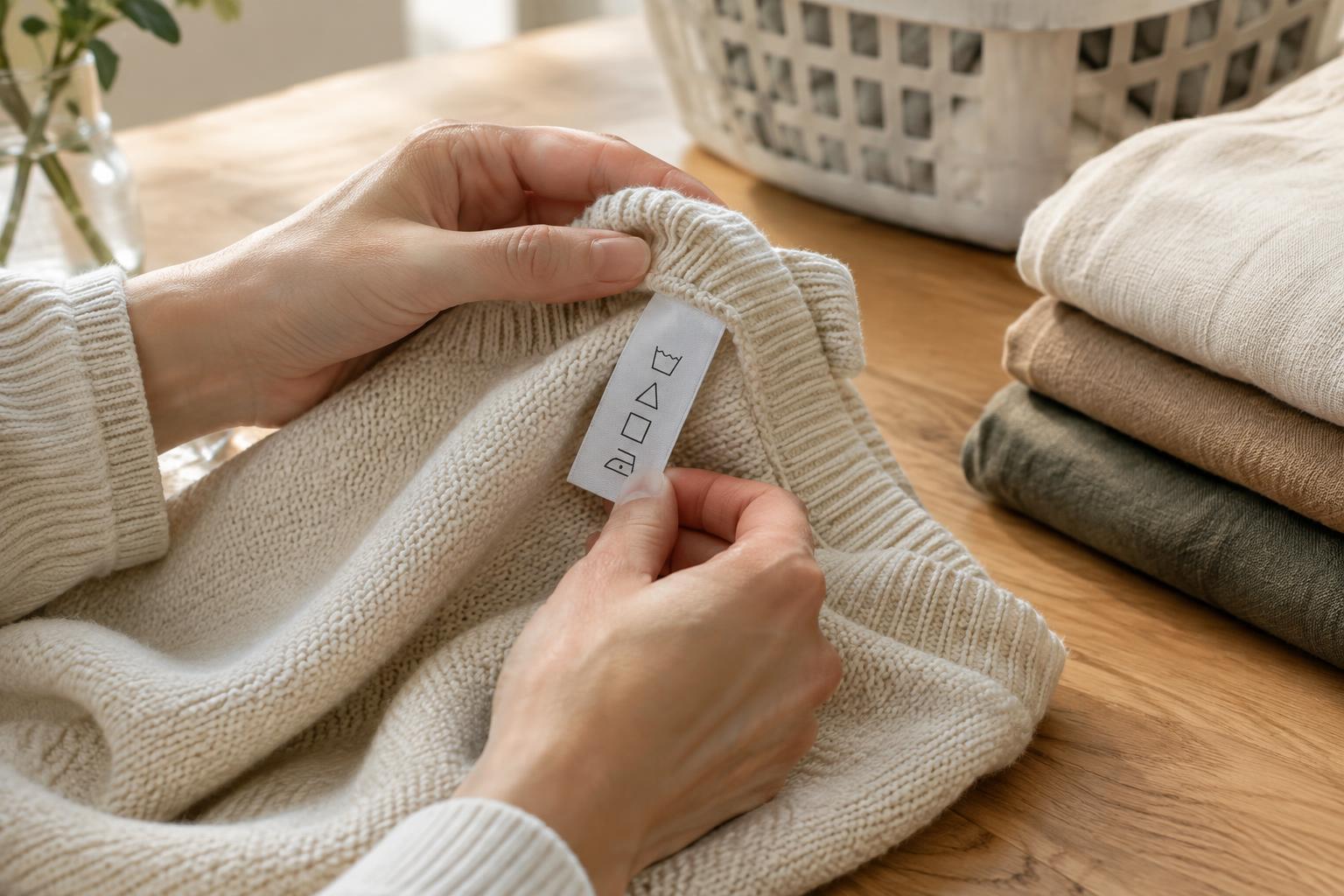
Good care begins with the label on the specific item. Different fibers, blends, finishes and trims may call for different treatment, so avoid assuming that everything in a silk, wool or cashmere category should be handled identically. Give a scarf room to dry after wear if it has become damp, and store it in a way that avoids unnecessary pulling or crushing. Before washing or ironing, follow the product’s stated instructions. If a mark needs attention, working gently and checking the guidance first is safer than applying a familiar method to an unfamiliar fabric.
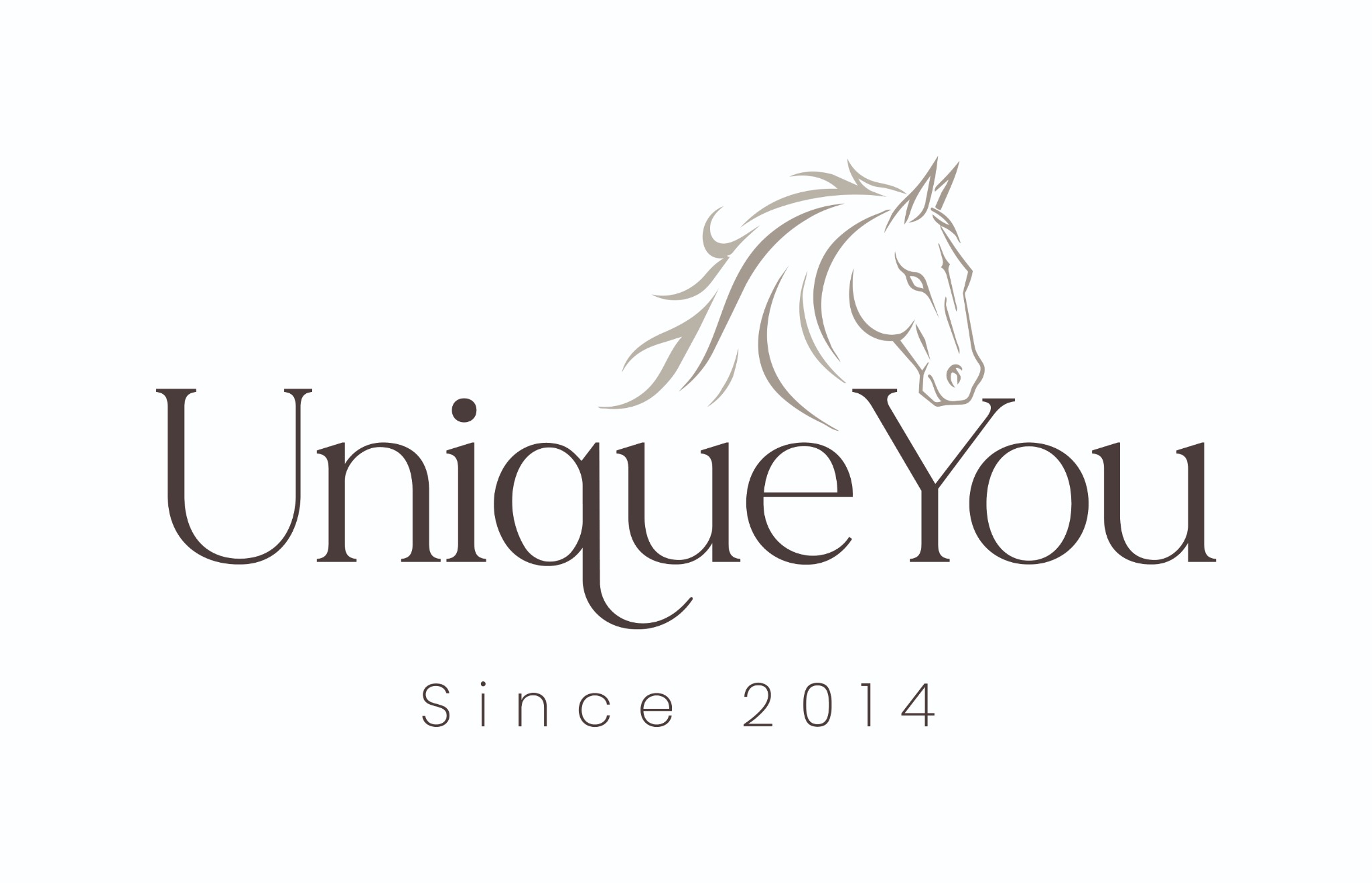
UniqueYou’s story began in 2014 with scarves and clothing. There was a pause, followed by a return after the domain was recovered; it should not be mistaken for a claim of uninterrupted trading. Its original brown wordmark with a horse motif and the words Since 2014, alongside a neutral taupe palette, gives the brand a restrained identity. That background is most useful as context, not as a reason to skip the practical checks. The deciding questions remain how an individual accessory fits your wardrobe, what it is made of and whether you will enjoy wearing it.
Find the regional-language destination that suits you
UniqueYou has 20 regional domains, 21 regional-language versions and 16 distinct languages. Countries may share a language, so a destination language does not always identify just one country. The United Arab Emirates has an Arabic root version and a separate English /en version on the same regional domain. Each guide below names the country and destination language before its links; choose the version that makes product details easiest for you to read, then check the particulars of any item you consider.
Poland — Polish
For the Polish-language destination in Poland, begin with the brand home page — UniqueYou. If you are comparing scarves for everyday outfits, the Polish term for women’s scarves leads to that collection — szaliki damskie UniqueYou. For a less substantial-looking layer, there is also a lighter-scarves collection — UniqueYou. Compare the stated size and composition of individual pieces before deciding which one fits your coat or knitwear.
Germany — German
The German-language destination for Germany starts at the brand home page — UniqueYou. If a cold-weather outfit is your priority, the German winter-scarf term points toward a relevant collection — schal winter UniqueYou. Think about whether your scarf needs to sit neatly inside a coat collar or provide a more visible layer outside it, then check individual measurements and material details.
Czechia — Czech
For Czech-language browsing in Czechia, the brand home page is here — UniqueYou. The Czech term for women’s wool scarves leads to a focused collection — dámské vlněné šály UniqueYou. It is a useful starting point for considering a scarf with a winter coat, but read each product description before drawing conclusions about its exact composition, dimensions or care.
Spain — Spanish
The Spanish-language destination for Spain begins with the brand home page — UniqueYou. For a scarf that might add color to a shirt, dress or plain jacket, the Spanish women’s-scarf term leads to the relevant collection — fular mujer UniqueYou. Start with the neckline you wear most, then decide whether you would prefer a small accent or a more visible drape.
France — French
For the French-language destination in France, visit the brand home page — UniqueYou. The French scarf term points to a scarf collection — echarpe UniqueYou. If you are pairing one with a patterned coat or jacket, consider a restrained color first; if your outerwear is plain, think about whether a print would give it a useful change of pace.
Hungary — Hungarian
The Hungarian-language destination for Hungary opens at the brand home page — UniqueYou. The Hungarian term for scarves leads to the broader collection — sálak UniqueYou, while a silk-scarf collection offers another place to browse — UniqueYou. A compact accent and a broad shoulder layer serve different wardrobes, so check each item’s measurements and composition rather than choosing from the collection name alone.
Italy — Italian
For Italian-language browsing in Italy, start at the brand home page — UniqueYou. If you are dressing for a ceremony, the Italian term for an elegant occasion stole points to a dedicated collection — stola elegante per cerimonia UniqueYou. There is also a silk-scarf collection to explore — UniqueYou. Compare each piece with your dress neckline and jacket, and read its own material and care details.
Romania — Romanian
The Romanian-language destination for Romania starts with the brand home page — UniqueYou. The Romanian term for women’s cashmere scarves leads to a focused collection — fulare casmir dama UniqueYou, and a separate collection offers headscarf-style pieces — UniqueYou. Think about where you want the fabric to sit—at the neck, over the shoulders or nearer the hair—and verify the details of the individual item.
Slovakia — Slovak
For the Slovak-language destination in Slovakia, begin at the brand home page — UniqueYou. The Slovak term for an elegant neck scarf points to a relevant collection — elegantná šatka na krk UniqueYou. A small scarf can bring interest to a plain blouse or jacket without changing the rest of an outfit; check the dimensions if you have a particular tie or fold in mind.
Finland — Finnish
The Finnish-language destination for Finland begins at the brand home page — UniqueYou. The Finnish term for a women’s white scarf leads to a color-focused collection — naisten valkoinen huivi UniqueYou. White can create contrast against dark outerwear or sit quietly beside pale layers, but texture and shade affect the result. Compare the individual product information with what is already in your wardrobe.
Sweden — Swedish
For Swedish-language browsing in Sweden, the brand home page is here — UniqueYou. The Swedish term for a large wool scarf leads to a focused collection — stor halsduk ull UniqueYou, while the broader scarf collection gives you another starting point — UniqueYou. If you want volume over a coat, check measurements; if you want a neat neckline under it, compare less bulky options.
Denmark — Danish
The Danish-language destination for Denmark starts at the brand home page — UniqueYou. The Danish term for a red women’s scarf points to a color-focused collection — rødt tørklæde til damer UniqueYou. Red can be a deliberate accent against neutral outerwear, but consider it beside your own coat rather than in isolation. Shape, fabric and the particular shade will influence how often you reach for it.
Belgium — Dutch
For the Dutch-language destination in Belgium, begin with the brand home page — UniqueYou. The Dutch term for a women’s scarf leads to a broad collection — dames sjaal UniqueYou, while a burgundy-scarf collection offers a more specific color direction — UniqueYou. Check whether that deeper shade complements the jackets and knitwear you already wear, then compare individual material details.
Austria — German
The German-language destination for Austria has its own brand home page — UniqueYou. The German term for women’s quality scarves leads to a collection of cloth accessories — hochwertige tücher damen UniqueYou. Treat the wording as a way to find the collection, not as a guarantee about every item. Look at the product’s stated composition, dimensions and care before deciding how it fits your wardrobe.
Netherlands — Dutch
For Dutch-language browsing in the Netherlands, start at the brand home page — UniqueYou. The Dutch term for women’s stoles to wear with dresses leads to an occasion-focused collection — stola’s voor jurken voor dames UniqueYou. If you want color for less formal outfits as well, there is a red-scarf collection — UniqueYou. Picture each option with the dress, outer layer and shoes you already plan to wear.
United States — English
The English-language destination for the United States begins at the brand home page — UniqueYou. If you are considering a bright accent for a simple coat or sweater, the English term for a women’s red scarf points to a color-focused collection — ladies red scarf UniqueYou. Check the individual shade, fabric information and size to see whether it suits the way you usually dress.
United Arab Emirates — Arabic
For the Arabic-language root destination in the United Arab Emirates, the brand home page is here — UniqueYou. This is the Arabic version rather than the separate English /en destination. If you are choosing a scarf for an existing outfit or as a gift, use the language that lets you read the particular product’s material, measurements and care information most comfortably.
United Arab Emirates — English
For the English-language /en destination in the United Arab Emirates, the English online-scarf-shop term leads to that version — online scarf shop UniqueYou. It is separate from the Arabic root version on the same regional domain. Use this destination when English makes it easier to compare scarf shapes, check an item’s composition and decide how it might work with your existing clothes.
Ireland — English
The English-language destination for Ireland begins at the brand home page — UniqueYou. The English term for a women’s scarf leads to the scarf collection — womens scarf UniqueYou, and a neckerchief collection offers a smaller-scale option — UniqueYou. Think about whether you want a visible layer with a coat or a compact accent for shirts and lighter jackets.
United Kingdom — English
For the English-language destination in the United Kingdom, begin at the brand home page — UniqueYou. The English term for a cashmere wrap shawl points to a wrap collection — cashmere wrap shawl UniqueYou, while a cashmere-scarf collection offers another shape to consider — UniqueYou. Read each item’s composition and dimensions before choosing between shoulder coverage and a scarf for the neckline.
Portugal — Portuguese
The Portuguese-language destination for Portugal starts at the brand home page — UniqueYou. The Portuguese term for a women’s cashmere scarf leads to a focused collection — cachecol caxemira mulher UniqueYou, and a separate collection covers scarves for the head and hair — UniqueYou. Consider where you intend to wear the piece, then check its particular fabric, size and care guidance before deciding.
The best scarf is not simply the one that stands out on a page. It is the one whose shape, material and color make sense with clothes you already enjoy wearing—and whose details you have checked before choosing.
 Accessories