What denier tells you
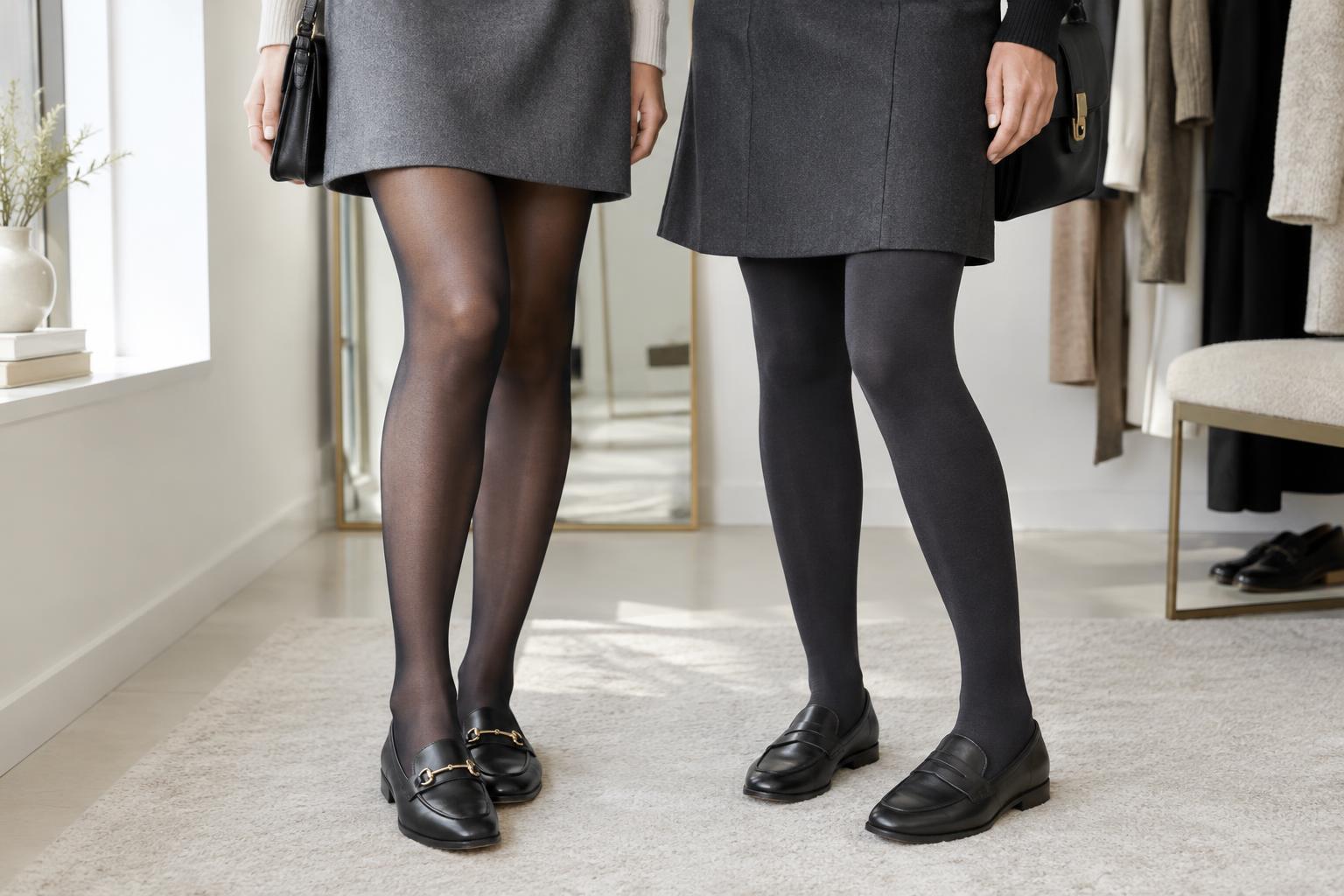
Denier measures the weight of the yarn used to make tights: a higher number generally indicates a heavier yarn. In practice, low-denier tights tend to look sheer, while higher-denier pairs tend to provide more coverage. It is a helpful guide when shopping, but it is not a promise that two pairs marked with the same number will look identical on your legs.
As a rough guide, tights around 10 to 20 denier usually look quite sheer. Around 30 to 50 denier often gives a more noticeable layer of color, with some skin still visible depending on the pair. At about 60 denier and above, many tights look opaque. Treat those ranges as starting points: the knit, yarn, color and amount the fabric stretches can all change the result.
Why the same denier can look different
Color has a strong effect on perceived coverage. Black tights may look darker and more uniform than a lighter pair with a similar denier. A shade close to your skin tone may look subtle without being especially thin. Patterns also interrupt the view of the fabric, so a dotted or ribbed pair can appear more substantial than a plain one.
Fit matters just as much. When tights stretch over the knees or thighs, the knit may open up and look sheerer in those areas. Sizing up within a brand’s guidance may give a more even appearance if you are between sizes. Look at product photos and descriptions for clues about coverage, but remember that lighting and the wearer’s skin tone can influence how a pair appears on screen.
Choosing a finish
Matte tights have little visible shine and often blend quietly into an outfit. They work well when you want your shoes, skirt or dress to take the lead. A satin or glossy finish catches more light and can make a simple outfit feel dressier. Even when two pairs offer similar coverage, the shinier one may draw more attention to the legs.
Texture creates another kind of finish. Fine ribs, subtle patterns and soft-looking knits add detail without requiring a bright color. If the rest of your outfit is busy, plain matte tights can provide a visual pause. If you are wearing a simple knit dress or an understated skirt, textured tights can supply an easy point of interest.
Match coverage to the outfit
For a light, barely-there effect, try sheer tights with a skirt and shoes in related tones. For a more continuous line, opaque tights in a color close to your footwear are an easy option. You do not have to match exactly: charcoal tights with black loafers, for example, can create a gentle contrast while keeping the outfit cohesive.
Think about where you will wear them, too. Sheer tights can be useful when you want a light layer indoors or a polished finish with dressier clothes. Opaque pairs often feel more at home with heavier fabrics such as denim, wool or corduroy. Neither choice is limited to a particular season; comfort depends on the weather, the rest of your clothing and your own preference.
Check comfort and care before buying
Denier is not the only practical detail on the package. Check the size guide and consider the waistband, toe construction and whether you prefer a reinforced or plain finish. If you plan to wear tights with open or delicate shoes, the toe design may be especially noticeable. A pair that stays comfortably in place is more useful than one that looks perfect but needs constant adjustment.
To help tights last, keep nails and rough jewelry from catching the fabric as you put them on. Gather each leg down to the toe, ease it over your foot, then pull the fabric up gradually rather than tugging from the waistband. Follow the care label for washing, and store delicate pairs away from zips or other items that could snag them. Choosing the right denier gets you close; choosing a finish and fit you enjoy makes the pair worth wearing.