Start with the outfit, not the socks
Patterned socks work best when they have a clear role in the outfit. Before choosing a pair, look at the clothes and shoes you already plan to wear. Is the outfit mostly simple, or does it include a bold print, bright color or distinctive texture? A small sock pattern can bring interest to a quiet look. When the outfit already has several attention-grabbing elements, socks in a restrained pattern are less likely to compete.
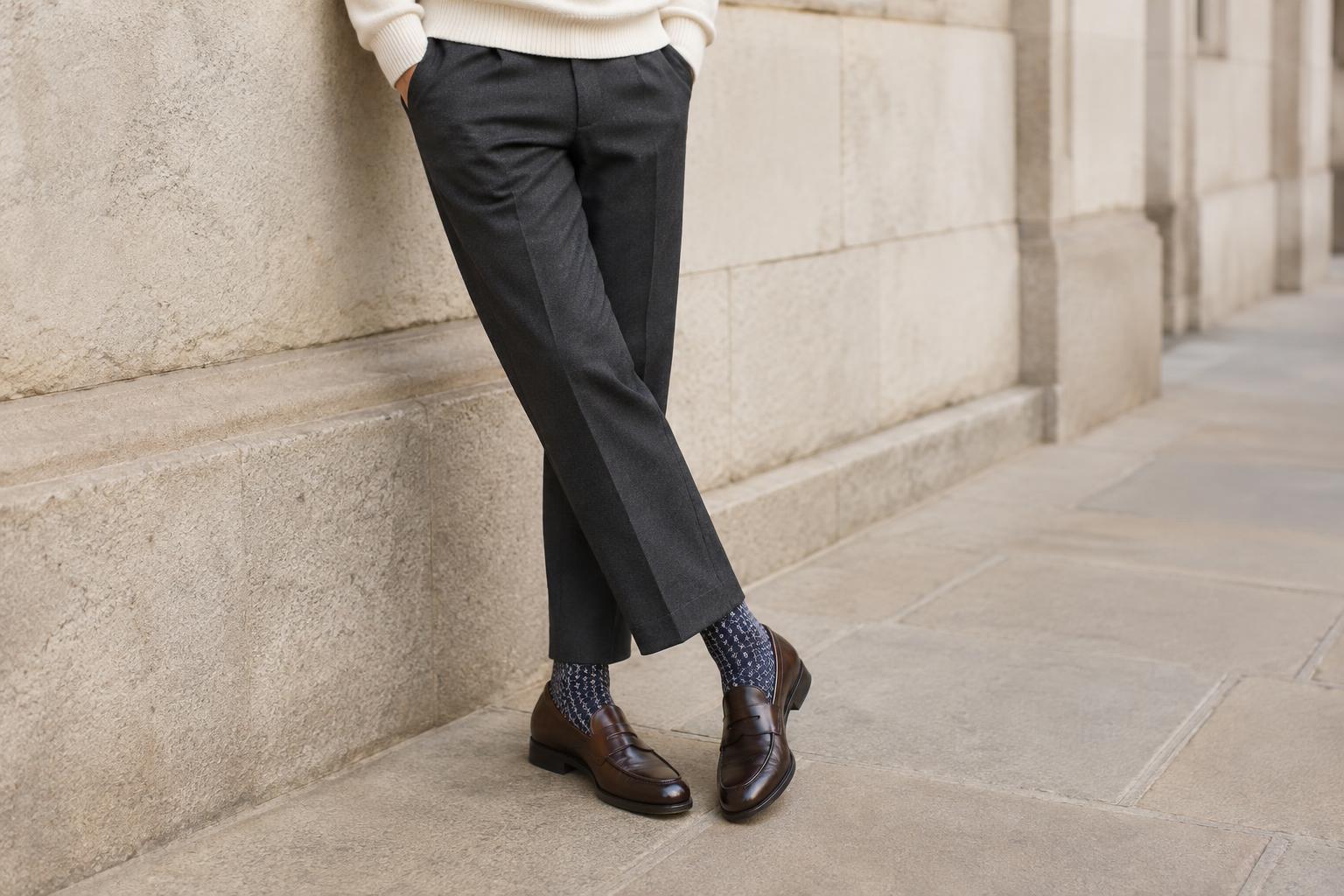
Think of the socks as a bridge between two pieces rather than a separate statement. With navy trousers, brown shoes and a cream shirt, socks that contain navy and cream can connect the upper and lower halves. The colors do not need to match exactly. Repeating one familiar shade is often enough to make the pattern look considered.
Control color and pattern scale
The easiest starting point is a pair with a dark or muted base and one or two accent colors. A charcoal sock with a small blue motif, for example, will usually sit more quietly beside dark trousers than a high-contrast multicolored design. If you want to try a brighter pair, choose an accent color that appears elsewhere in your outfit, perhaps in a shirt, scarf or bag.
Pattern size matters as much as color. Fine stripes, tiny dots and small geometric shapes read more like texture from a distance, while large motifs draw the eye. For outfits with a patterned top, you can vary the scale: a broad checked shirt and fine-striped socks are easier to distinguish than two similarly sized checks. You do not need to follow a strict rule, but giving one pattern a supporting role helps the look feel balanced.
Consider how much sock will show
Trouser length changes the effect of patterned socks. Full-length trousers may reveal only a glimpse when you sit or walk, so a slightly stronger design can still feel subtle. Cropped or cuffed trousers keep the socks visible for longer; in that case, a lower-contrast pattern may be easier to integrate into an everyday outfit. Check the look both standing and seated before deciding how prominent the socks feel.
Shoes also frame the pattern. Loafers and low-profile sneakers leave more sock in view than higher-cut shoes or boots. If you want the socks to be a quiet detail, try matching their base color to your trousers or shoes. For a soft transition, medium-blue socks can work with dark-blue trousers and neutral shoes. The aim is not to hide the pattern, but to avoid an abrupt visual break at the ankle.
Build a few reliable combinations
For a relaxed outfit, pair straight-leg jeans, a plain tee and simple sneakers with narrow striped socks. Pick a stripe color from the tee or an outer layer so the socks feel connected. With chinos, a knit top and loafers, small dots or a compact geometric pattern can add detail while preserving the outfit’s clean lines. In a dressier combination of tailored trousers and leather shoes, a subtle repeated pattern in two closely related shades offers personality without taking over.
You can use the same approach with bolder clothes. If you are wearing a floral shirt or a colorful jacket, choose socks that echo a background color rather than the brightest accent. If the outfit includes several textures, such as denim and chunky knitwear, a simple stripe may provide enough pattern. These are starting points, not restrictions; the best combination is one you feel comfortable wearing repeatedly.
Make the detail look intentional
Fit and condition affect the result. Socks that slip down can bunch around the shoe and interrupt the line of an otherwise neat outfit. A pair that stays in place and reaches comfortably above the exposed ankle will generally look more deliberate. Consider the fabric weight too: thinner socks tend to sit smoothly inside close-fitting shoes, while thicker pairs may suit roomier casual footwear.
If you are unsure about a combination, take away one competing element rather than abandoning the socks. Swap a graphic top for a plain one, or choose shoes in a quieter color. Patterned socks do not have to be the first thing someone notices. Often their appeal is that they reward a second look, adding a small piece of self-expression to clothes you already enjoy.