Start with the hold you need
A hair accessory has two jobs: it should create the shape you want and stay comfortable while you wear it. Before choosing one, consider your hair’s length, density and texture. Density describes how much hair you have, while texture includes whether strands are straight, wavy, curly or coily. Two people with the same curl pattern may need different-sized clips if one has much denser hair.
Think about the task, too. Holding back a few face-framing strands takes less grip than securing a full twist. A decorative clip can finish a style without carrying its weight; a working clip or pin needs to support the hair underneath. If an accessory slides, pinches or pulls, try changing its size or placement before assuming that style of accessory cannot work for you.
Clips for fine, slippery or short hair
Fine hair can slip out of large clips because there is not enough hair to fill the clasp. Small snap clips, narrow barrettes and mini claw clips are often easier to position securely. For a half-up style, gather only the amount of hair the clip can close around without leaving a gap. A clip with a textured inner surface may grip better than a smooth one, but it should not snag when you remove it.
Short hair benefits from accessories that work with small sections. Try a pair of snap clips above one ear, or use a mini claw clip to lift the hair at the crown. If the hair is too short to gather, a headband can change the shape of the style without requiring a ponytail. Place clips over a gentle twist rather than straight, loose strands if you need a little more hold.
Clips and pins for thick, curly or coily hair
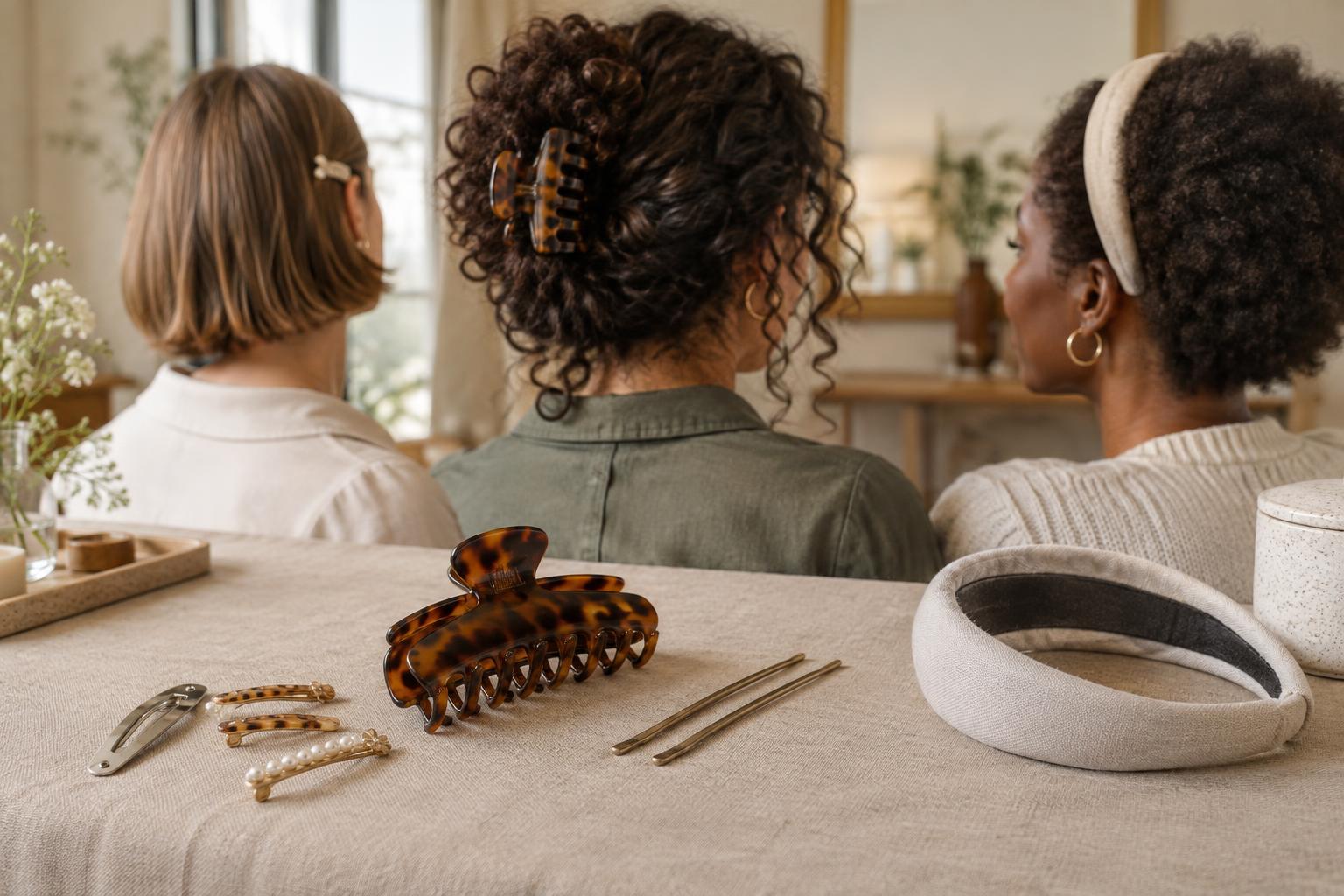
Dense hair may overwhelm a small clip even when the clasp appears to close. Look for a claw clip with enough room for the gathered section and teeth that reach into the hair rather than resting on its surface. Instead of forcing all your hair into one clip, secure a half-up section or divide a twist between two clips. The result can feel lighter and give you more control over the shape.
For curls and coils, placement matters as much as size. Open a clip fully and ease it around a section rather than dragging it through the hair. Wide hairpins can help anchor an updo: slide them into the outer edge of a twist, then turn them toward its centre to catch some hair underneath. Use as many as needed for a balanced hold, and remove them gently to avoid disturbing the style.
Choose a headband for comfort as well as style
Headbands are useful when you want to keep hair off your face without gathering it. A slim band makes a subtle addition to straight or short styles, while a wider fabric band can hold back more hair or sit visibly among curls. Soft, adjustable bands offer another option if rigid ones tend to press behind your ears. Try a headband on for a while at home: a secure fit should not depend on uncomfortable pressure.
Where you place the band changes its effect. Set it close to the hairline for a tidy finish, or leave some strands loose at the front for a softer look. With voluminous hair, settle the band into the style rather than flattening everything beneath it. If it keeps moving, check whether it is sitting over the hair you want to hold back or merely resting on top.
Build a small collection you will actually wear
You do not need a different accessory for every outfit. Start with one reliable item for each job you do regularly: a small clip for loose strands, a stronger clip or set of pins for an updo, and a comfortable headband for days when you want your hair away from your face. Neutral colours blend easily with many outfits; a contrasting colour or pattern makes the accessory a focal point.
Check how each piece behaves after several wears. A clasp that no longer closes firmly may slip, while a rough edge can catch strands. Wipe accessories clean as needed and store pins where their ends will not bend. Most importantly, keep the pieces that feel good in your hair. The right accessory is the one that lets you wear the style you want without repeatedly readjusting it.