Start with what you really carry
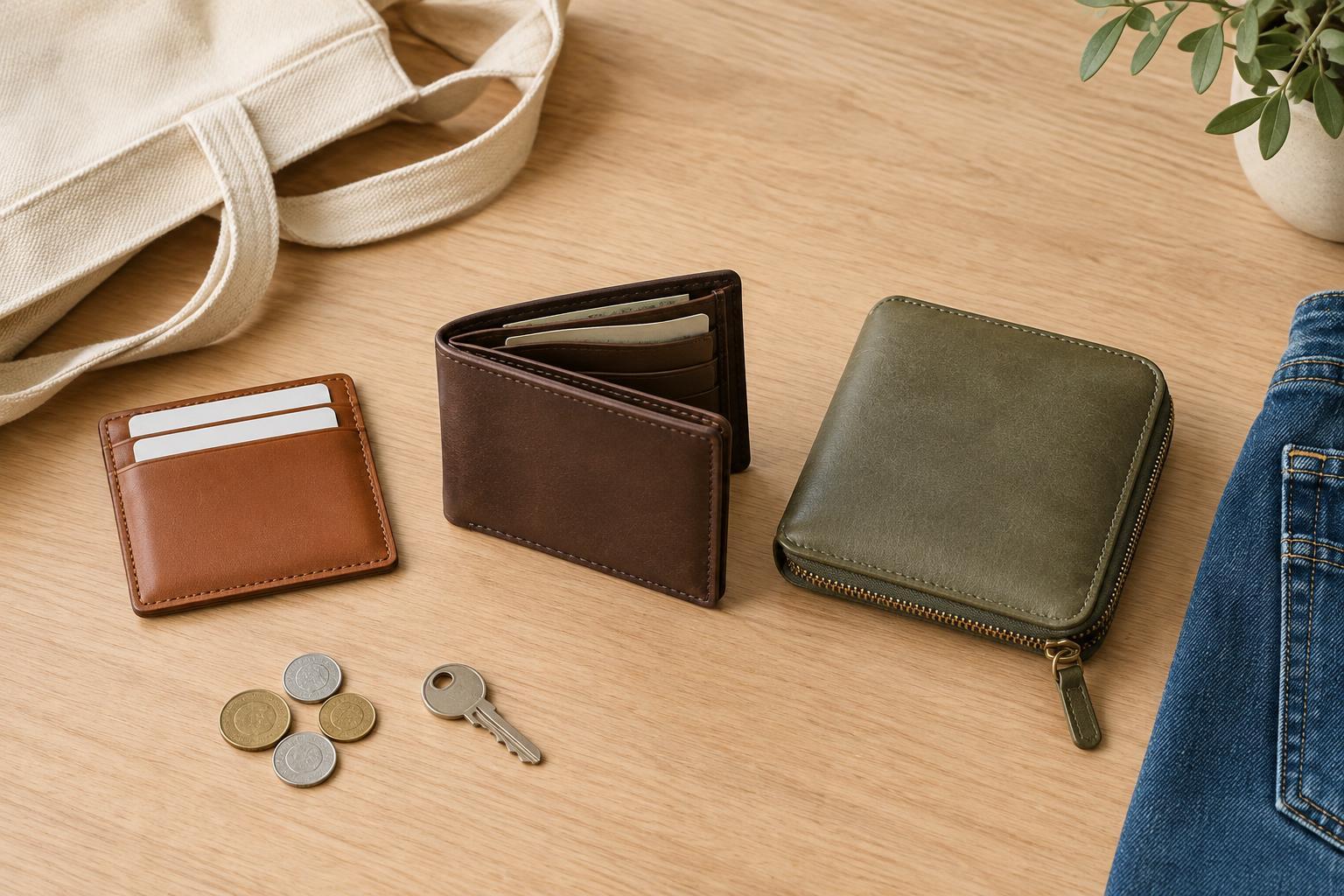
Before choosing a wallet, empty your current one and sort its contents. Set aside cards you use often, cards you need only occasionally, cash, coins and receipts. This gives you a better guide to size than the number of pockets a wallet advertises. A slim cardholder may be enough if you usually carry a few cards and little else. If you regularly need cash or coins, a compact wallet with a dedicated compartment will be easier to live with.
Think about the moments when you reach for it. Do you pay at a busy counter, move between bags or carry everything in a coat pocket? An item that looks neat on a shelf can feel awkward if you must open several layers to get one card. Leave a little room for the occasional extra item, but avoid buying so much capacity that unused pockets encourage clutter.
Match the shape to your bag or pocket
A wallet needs to fit the space where you plan to carry it, not just your hand. Measure the smallest bag compartment or pocket you use regularly, then allow room to take the wallet out without tugging. A long wallet may keep notes flat and contents visible, but it can be inconvenient in a small crossbody bag. A folded wallet takes up less length, though it may become thick once every pocket is filled.
Check thickness as well as width. A tightly packed cardholder can stretch, while a bulky wallet may distort the outline of a slim bag or feel uncomfortable in a trouser pocket. If you switch between a work bag and a smaller weekend bag, consider whether one compact option can serve both. The most versatile choice is often the one you can transfer without reorganizing its contents.
Look closely at closures and materials
Handle the closure before deciding. A zip can contain loose items, especially coins, but it should move smoothly around the corners. A snap is quick to open, provided it still closes comfortably when the wallet holds your usual contents. An open cardholder offers fast access but calls for pockets that grip cards securely. Whatever the style, check that you can remove a card without bending it or pulling out several others.
Material affects both feel and upkeep. Leather can soften with use and may develop visible wear; its finish influences how marks show. Coated fabrics and synthetic materials may be easier to wipe clean, though seams and edge finishes still deserve a close look. Fabric can be lightweight, but a pale or loosely woven surface may show grime sooner. Rather than assuming one material is always best, inspect stitching, corners and the areas you will handle most.
Choose a style you can maintain
A wallet can add a small, deliberate accent to an everyday outfit. A color that contrasts with your bag may be easier to spot inside it; a similar tone gives a quieter look. Texture can do the same work as color: a smooth finish feels understated, while a woven or grained surface adds visual interest. Choose an appearance you will still enjoy using with your most frequently carried bag, rather than matching it to one outfit.
To help it keep its shape, clear out receipts and unused cards regularly, and avoid forcing extra items into full slots. Wipe the exterior with a method appropriate to its material and let it dry before putting it away. If you change wallets seasonally, store the spare empty and loosely closed. A wallet that holds only what you need is easier to find, easier to use and less likely to become an overlooked source of clutter.