Plan for conditions, not just destinations
Packing for different climates starts with the conditions you are likely to encounter, rather than a separate outfit for every place. Think about the warmest daytime setting, the coldest period outdoors and whether wind or rain could change how comfortable you feel. Also consider what you will actually do: a long walk calls for different clothes than an evening indoors. If plans are uncertain, choose pieces that can be adjusted rather than specialized items that work for only one stop.
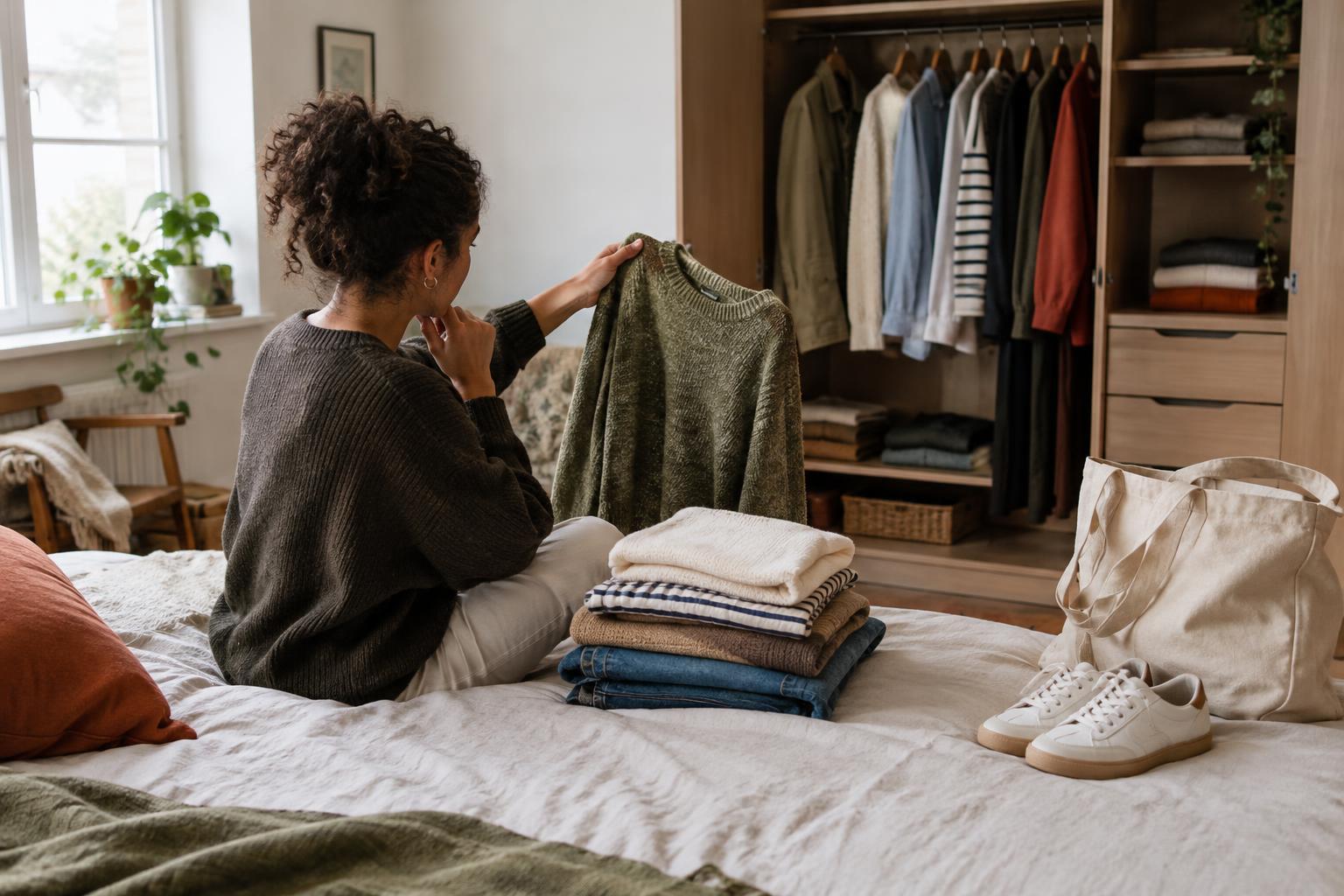
Set out a small group of clothes before putting anything in your bag. Choose a limited range of colors that you enjoy wearing together, then check whether each top works with more than one bottom. This is a tool for making combinations easier, not a rule against bright colors or prints. A patterned shirt, colorful scarf or distinctive jacket can still anchor several outfits when the surrounding pieces are easy to pair.
Build warmth in removable layers
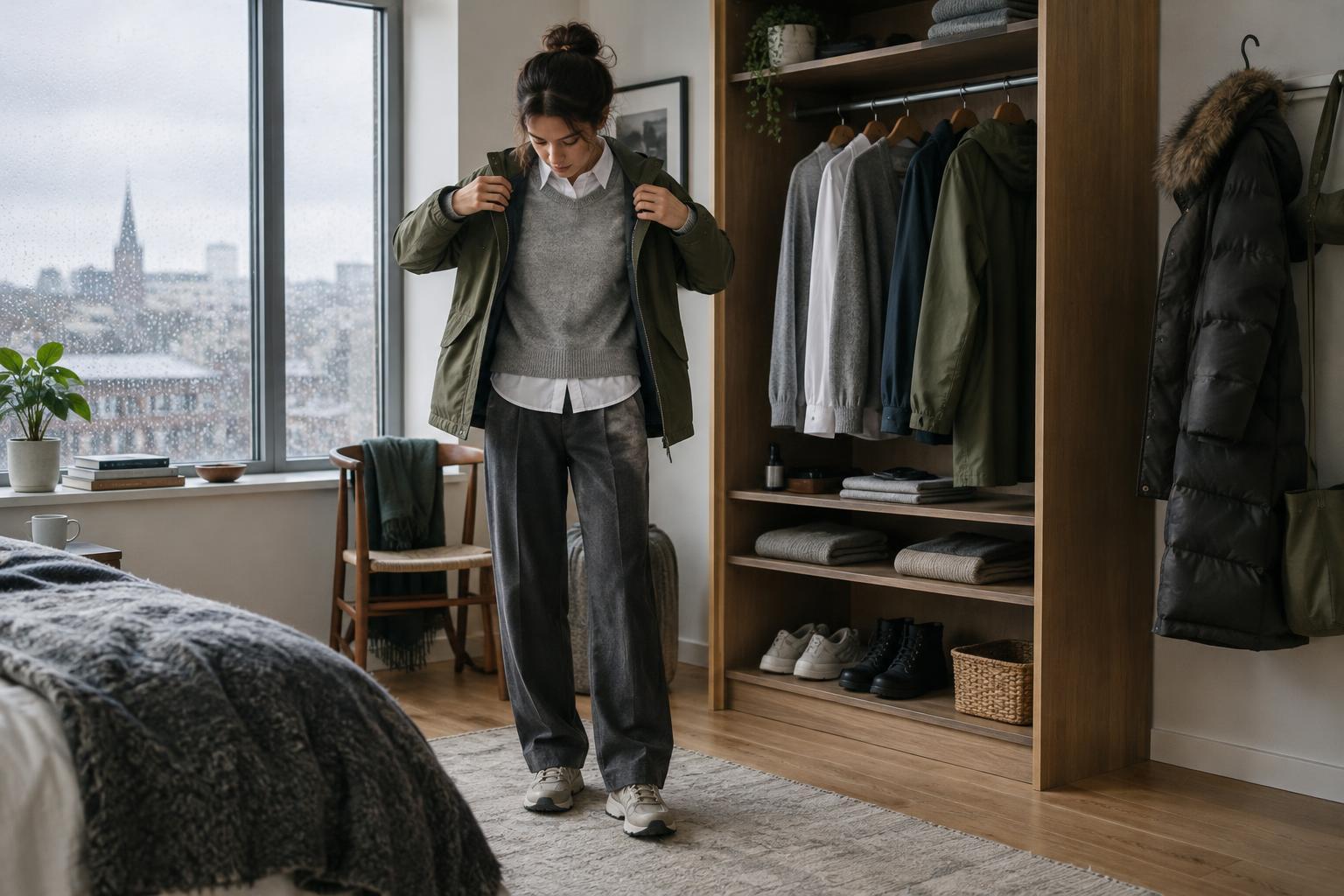
A useful starting point is a breathable base layer, a warmer middle layer and an outer layer suited to the conditions. For example, a short-sleeved top can work alone on a warm day, under an overshirt when the air cools and beneath a sweater and jacket in colder weather. Layers let you change your outfit during the day without carrying a complete replacement.
Choose the outer layer with the trip's most demanding conditions in mind, but be realistic about its bulk. A light rain shell may be more useful than a heavy coat if wet weather is the main concern; a packable insulated layer may help when dry cold is more likely. If you expect both, check that the layers fit comfortably together. Try them on before departure: a jacket that works over a T-shirt may feel restrictive over a sweater.
Fabric affects how readily you can repeat an item. Lightweight knits often fold into small spaces, while some woven fabrics can be aired out between wears. Quick-drying options may be convenient if you expect to wash clothes during the trip. Comfort matters more than a material label alone, so pack pieces you already know feel good against your skin.
Choose pieces with more than one job
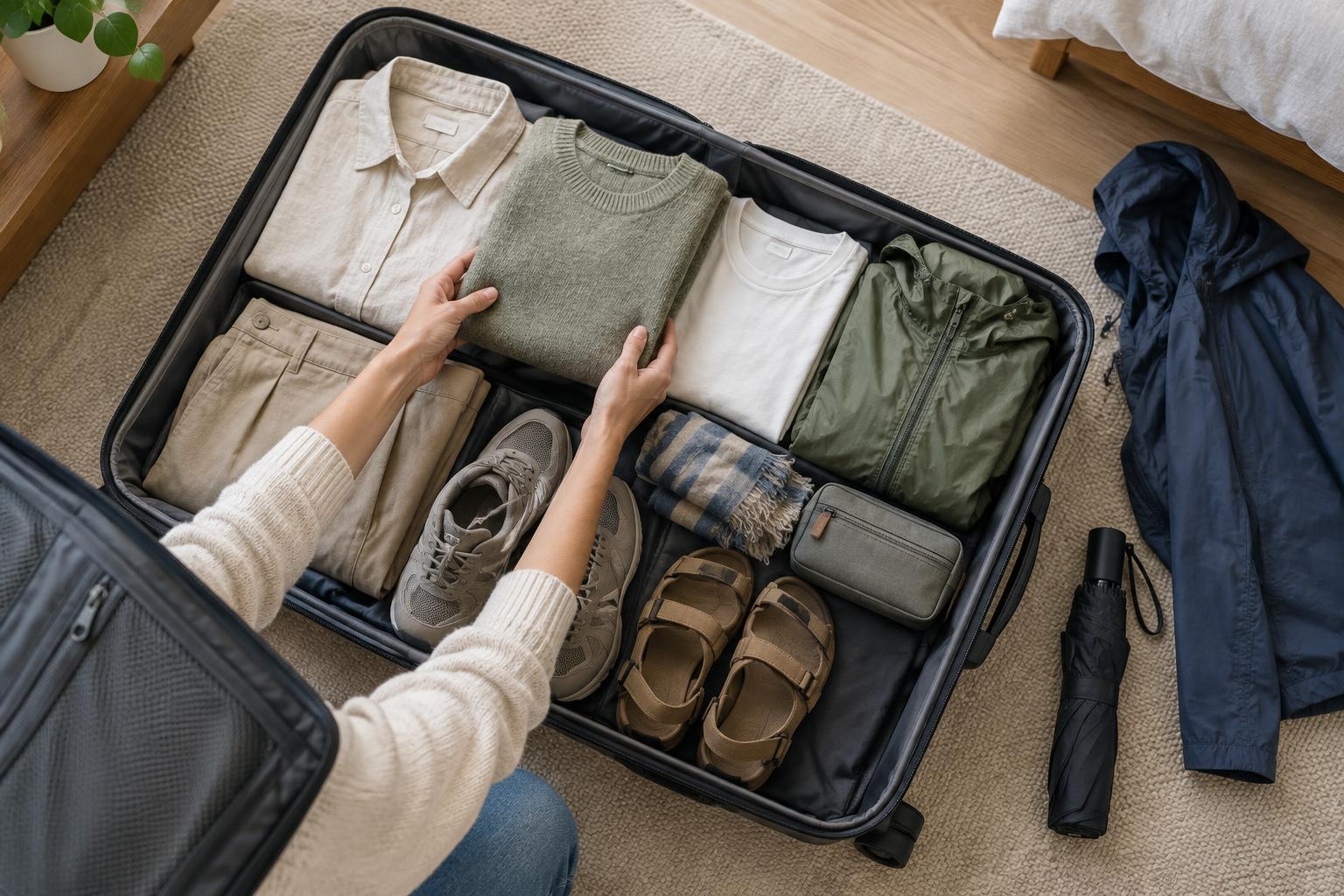
To keep the wardrobe compact, give each item a reason to come along. One comfortable bottom for travel and walking, another that can dress up with a different top, and a few interchangeable tops may cover many situations. A button-front shirt can be worn closed, open over a simple top or under a warmer layer. A relaxed dress or jumpsuit may also earn its space if you can style it for both daytime and evenings.
Before packing, make a few complete outfits on your bed. Include socks, underlayers and the shoes you would wear with each one. This catches problems that are easy to miss when looking at individual pieces: a hem that drags with your walking shoes, a sheer top without the right layer underneath, or a warm outfit with no suitable outerwear. If an item fits only one unlikely scenario, consider leaving it behind.
Accessories are an efficient way to change an outfit's feel. A scarf can add warmth or color, while a compact piece of jewelry can make familiar clothes feel different at dinner. Choose accessories you will be comfortable carrying and wearing, rather than packing several just in case.
Be selective about shoes and weather gear
Shoes take up space, so start with the pair you can walk in for most of the trip. Wear the bulkiest useful pair while traveling if that is comfortable. Add a second pair only when it serves a clear purpose, such as a lighter option for warm weather or a neater one for planned occasions. Shoes that rub at home are unlikely to become more comfortable during a busy travel day.
Small weather items can do substantial work without requiring another outfit. Depending on the conditions, a compact umbrella, warm socks, a hat or light gloves may make your existing layers more useful. Keep the items you might need during a change in weather accessible, rather than buried at the bottom of your bag.
Leave room for care and changes of plan
A compact wardrobe works best when you can keep it fresh. Check garment care labels before you travel, especially if you intend to wash anything by hand. Give washed clothes enough time and space to dry; a piece that stays damp may not be ready when you need it. A small bag for worn items helps separate them from clean clothes, and airing a garment when appropriate can make repeat wear more pleasant.
Pack for a sensible range of conditions, not every imaginable possibility. If one part of the trip involves an unusual activity, decide whether its clothing is essential or whether you can adapt something already in your bag. Leave a little space so the suitcase is easy to use. The goal is not the fewest possible garments; it is a wardrobe that lets you get dressed comfortably as the setting changes.