Start with the weather you actually dress for
A seasonal wardrobe rotation works best when it follows your daily life rather than a calendar. Before moving anything, think about the temperatures you have dressed for recently, the places you go and how often conditions change during the day. You may need a warm layer well into spring or a light shirt throughout autumn. The aim is not to create a perfectly divided wardrobe. It is to make the clothes you can wear now easier to find.
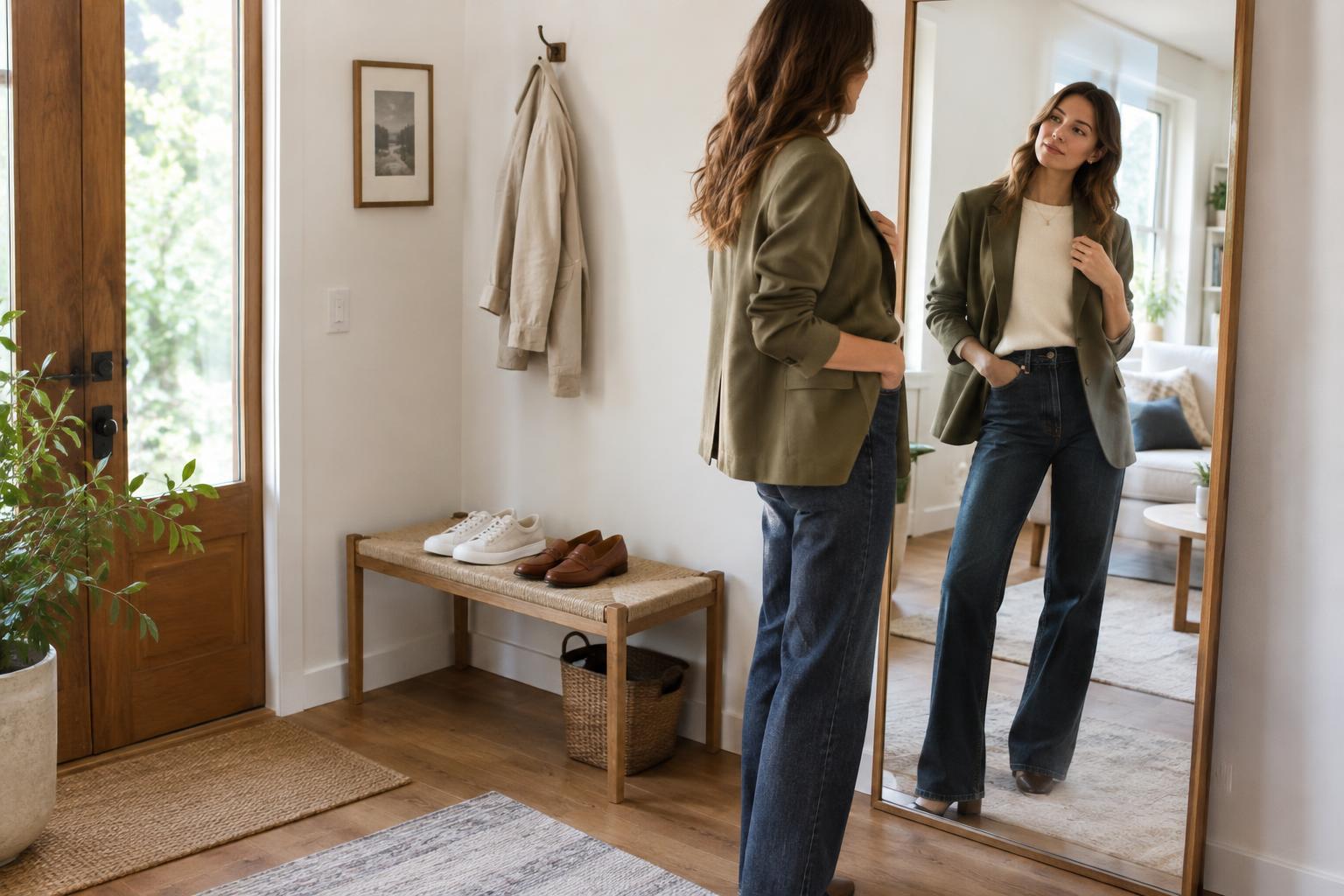
Choose a small transition group to keep within reach: perhaps a lightweight jacket, a warmer knit, a long-sleeved top and shoes that suit changeable conditions. These pieces bridge the gap when the next season has not fully arrived. If closet space is tight, place them at the front of a shelf or in an accessible drawer rather than mixing them into long-term storage. This gives you room to rotate the rest without committing too early.
Decide what stays, what rests and what needs attention
Sort clothes into three practical groups. Keep pieces you wear in the current weather close at hand. Set aside items you are unlikely to need for a while, such as heavy sweaters during a long stretch of warm weather. Put anything that needs washing, mending or a fit check in a separate group. Sorting by likely use is more helpful than sorting by a rigid idea of what belongs to each season.
As you handle each item, ask whether it still works with the clothes you wear most. A piece does not need to be a favorite to earn its space, but you should know when you would reach for it. If you are unsure, leave it accessible for one more rotation instead of making an immediate decision. A short note about why you kept it—a particular occasion, temperature or outfit—can help you assess it more clearly next time.
Prepare off-season clothes for storage
Store clothes clean and fully dry. Even a garment that looks fine may have marks that are harder to deal with after months out of sight. Follow its care label, empty pockets and check that buttons, zippers and seams are in reasonable shape. Address small repairs before storage if you can; otherwise, attach a note so the problem is visible when the item comes back out.
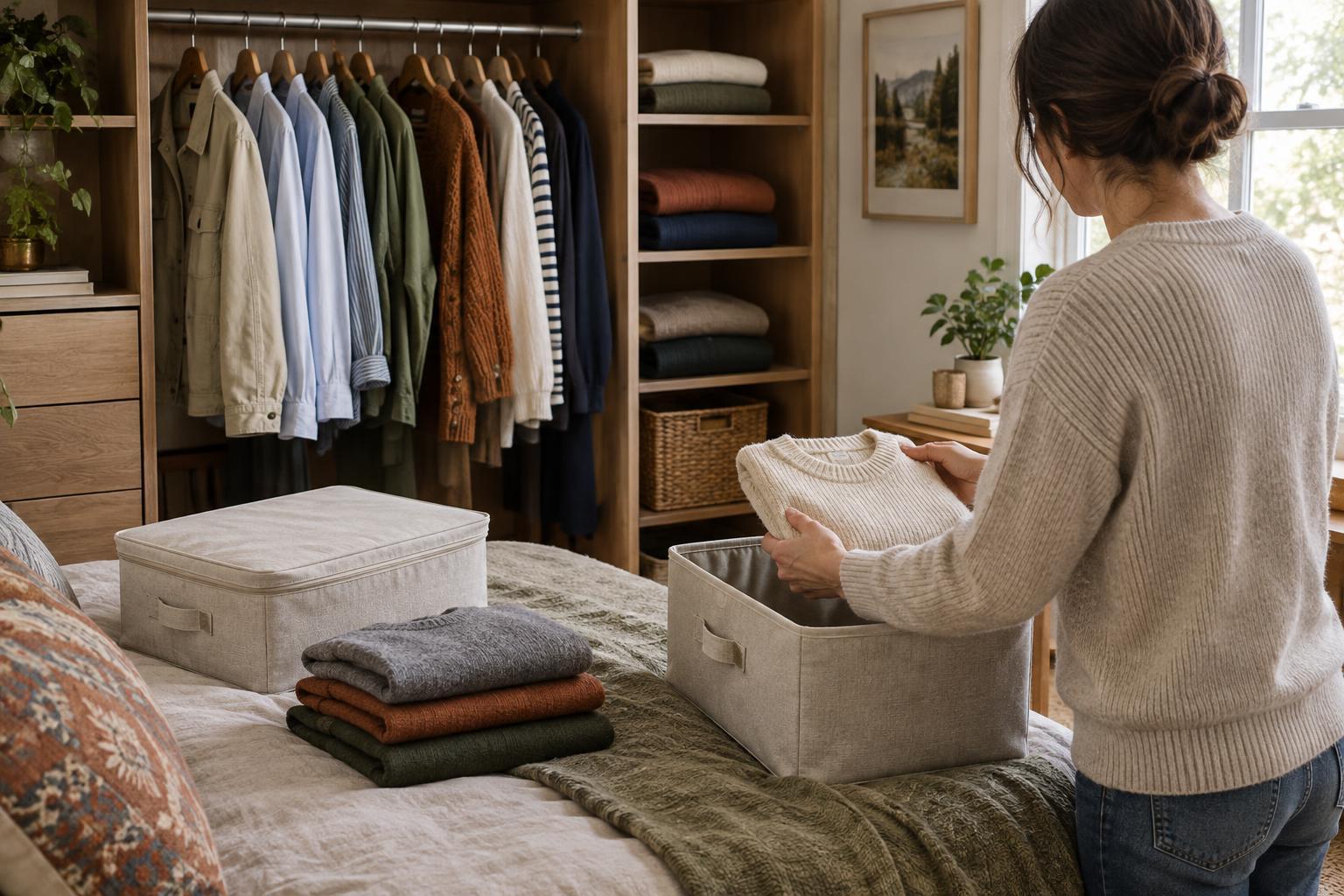
Use storage that suits both the fabric and your space. Fold knits so they do not spend months stretched on hangers, and avoid crushing structured garments into an overfilled box. A clean, dry storage area is more useful than a complicated organizing system. If you use bins or bags, label them with specific contents, such as “warm-weather tops” or “heavy knitwear.” Broad labels make it harder to retrieve the one item you need during an unexpected change in weather.
Make the next rotation easier than this one
Before putting a container away, record what is inside. A brief list on your phone or a paper label is enough; there is no need to catalog every garment in detail. Note any items you want to try in a different combination when they return. This helps prevent an off-season purchase of something similar to a piece you already own, while giving overlooked clothes a clearer role.
When the weather shifts again, bring clothes back in small groups rather than unpacking everything at once. Try a few pieces with your current staples and check their fit and condition before giving them closet space. If a garment consistently stays unworn, consider whether it needs a different pairing, an alteration or a new home. A useful rotation is a repeating habit, not a one-time overhaul: keep what serves the season accessible, protect what is resting and leave room to adjust.