Start with distinct areas of color
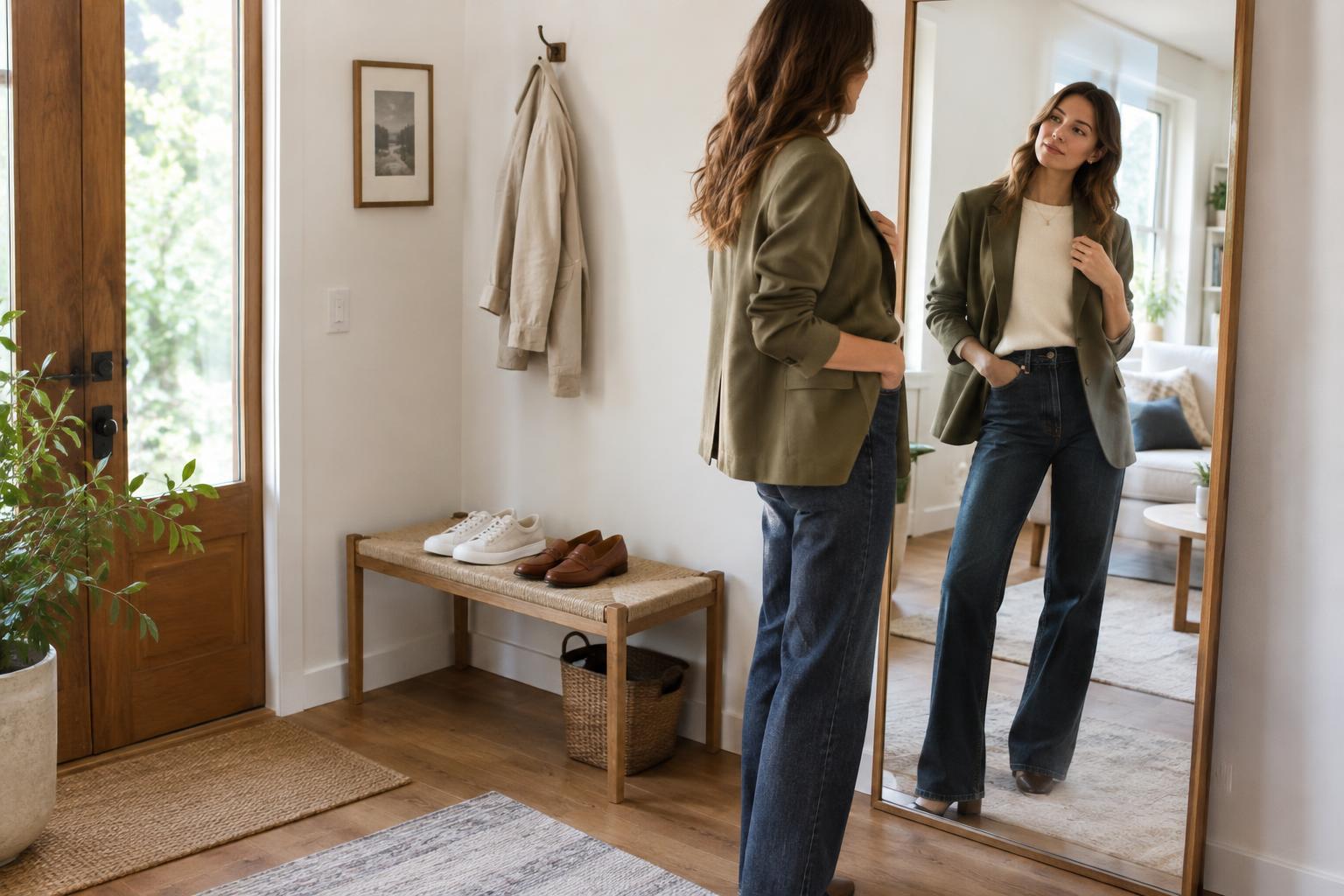
Color blocking means placing noticeable areas of color next to one another. A blue shirt with rust trousers is a simple example; a green jacket over a cream top and dark skirt adds another layer. Unlike a small accent, each color occupies enough space to help define the outfit. The effect can be bold, but it does not require vivid colors or sharply tailored clothes.
Begin with two pieces you already like wearing. Choose a top and bottom in different solid colors, then put them on before deciding whether the outfit needs anything else. Seeing the colors at their actual size is more useful than judging them side by side on hangers. If the combination feels too strong, try a softer shade of one color or add a familiar neutral layer.
Give each color a role
An easy starting point is to let one color cover most of the outfit and use another for a smaller, clearly visible area. For example, dark trousers and a matching jacket can frame a bright shirt. You can reverse that balance with a colorful dress and a neutral cardigan. Neither arrangement is inherently better; the choice depends on which piece you want people to notice first.
Equal-sized color areas can also work, especially when the colors differ in depth. A pale blue shirt above deep green trousers creates a clear division without both pieces competing for attention. If two vivid colors feel busy together, a belt, open jacket or visible neutral top can give the eye a pause. Treat these as options rather than rules: the point is to make the arrangement look deliberate to you.
Notice where the colors meet
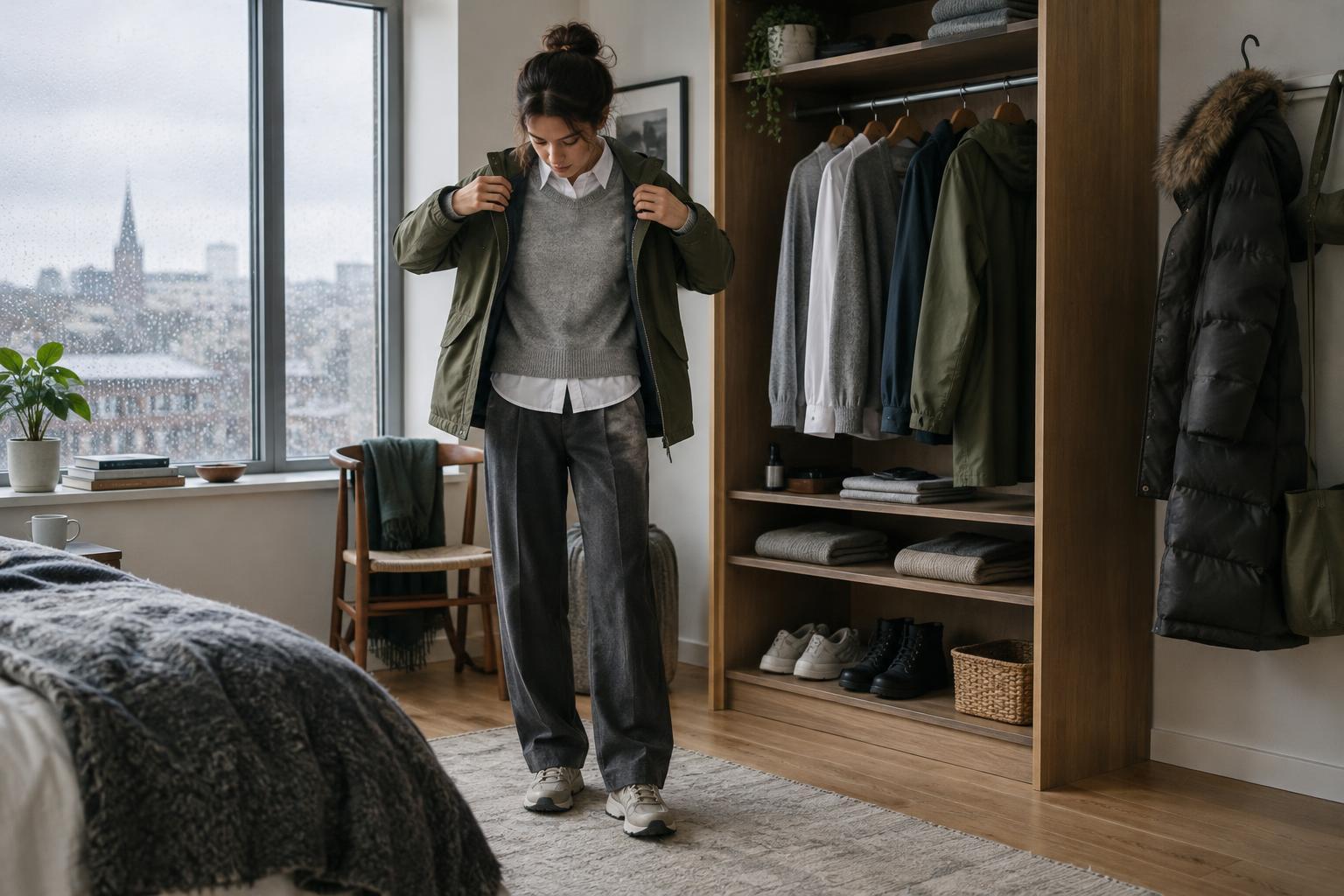
The boundary between garments is part of the design. A tucked shirt makes a crisp line at the waist, while an untucked shirt creates a lower, less defined break. An open coat adds two vertical bands of color around whatever you wear underneath. Try changing only one of these details before changing the palette; a different tuck or layer may solve what first seems like a color problem.
Accessories can either reinforce a color area or introduce a new one. Shoes close in color to your trousers make the lower part of an outfit read as one continuous block. Shoes in a contrasting color create another distinct area, even if they occupy less space. If the clothes already have a strong division, repeating an existing color in your bag or shoes is often simpler than adding a third bright shade.
Use texture without losing the color plan
Solid-colored pieces do not have to look flat. A matte knit beside smooth cotton, or denim beside a soft woven shirt, introduces variation while keeping the color areas easy to read. Texture can also make similar colors appear slightly different. That is fine: the pieces do not need to match perfectly unless an exact match is the effect you want.
Patterns are possible, too, but start small if you want the blocks to remain the focus. A striped scarf that picks up one of the outfit colors can connect two pieces without becoming a large new area. Alternatively, let a patterned garment be the main block and choose a solid piece in one of its quieter colors. Step back and look at the whole outfit to see whether the pattern supports the arrangement or pulls attention away from it.
Test the idea with clothes you own
Before buying anything, try three versions of the same outfit: your original combination, one with a neutral layer, and one with a different shoe. Notice which feels comfortable for the places you actually go. A combination that looks exciting in isolation may need a practical outer layer; a subdued one may come alive when you remove it.
Visual ideas do not have to come only from wardrobes. For a change of perspective, browse Room for Nature for room-oriented inspiration, explore Room Layouts · Room for Nature while thinking about how larger areas of color are divided, and visit Natural Materials · Room for Nature for material-oriented ideas. Then translate one observation back into your clothes rather than copying an entire palette. One useful color boundary or texture pairing is enough to give a familiar outfit a fresh arrangement.