Start with a typical day, not an ideal outfit
Before choosing a dress, picture an ordinary day from getting dressed to getting home. Do you sit for long stretches, walk between places, carry a bag, work from home or move between indoor and outdoor spaces? A dress that looks appealing on a hanger may be less useful if you spend the day adjusting it or worrying about the weather.
Write down two or three things the dress needs to do well. You might need room to move, a neckline that stays comfortable when you bend, or a length that works when you sit. If your days vary, aim for a dress that handles the most common activities and can be adapted with shoes or an extra layer. You do not need one dress to solve every wardrobe problem.
Check fit while you move
Size is a starting point, but movement tells you more about everyday fit. When trying on a dress, sit down, raise your arms, take a few steps and reach forward. Notice whether the shoulders pull, the waist feels restrictive or the hem rises farther than you like. Also check the fit with the shoes and underlayers you would normally wear.
The shape that feels best depends on your preferences and routine. A relaxed shirt dress can offer an easy fit and adjustable waist. A wrap-style dress may let you vary the fit, though some designs need a camisole or fastening to feel secure. A simple A-line or straight dress can be comfortable if it leaves enough room at the hips and knees. Focus on how a particular garment behaves on you rather than treating its label or silhouette as a guarantee.
Small details can make a large difference. Pockets are useful only if they sit comfortably and do not pull the fabric out of shape. Slits can help with walking, but check where they open when seated. If a dress needs frequent straightening in the fitting room, it may ask for the same attention during your day.
Choose fabric for comfort and upkeep
Think about how the fabric feels against your skin, how it hangs and how much care you are willing to give it. Lightweight cotton can feel easy in warm weather, while a cotton blend may offer a different balance of softness, stretch and wrinkle resistance. Jersey often moves comfortably, but its weight matters: a thin knit may cling or show underlayers more than you expect. Linen has a relaxed texture and commonly creases with wear, which can be either part of its appeal or a drawback for your routine.
Hold the fabric up to the light, look at it in a mirror and check whether you are comfortable with its coverage. Then read the care label. A dress that requires special washing may still be right for you, but only if that care fits your habits. If you prefer simple laundry, make that a firm requirement rather than a detail to figure out later.
Make it work with what you already own
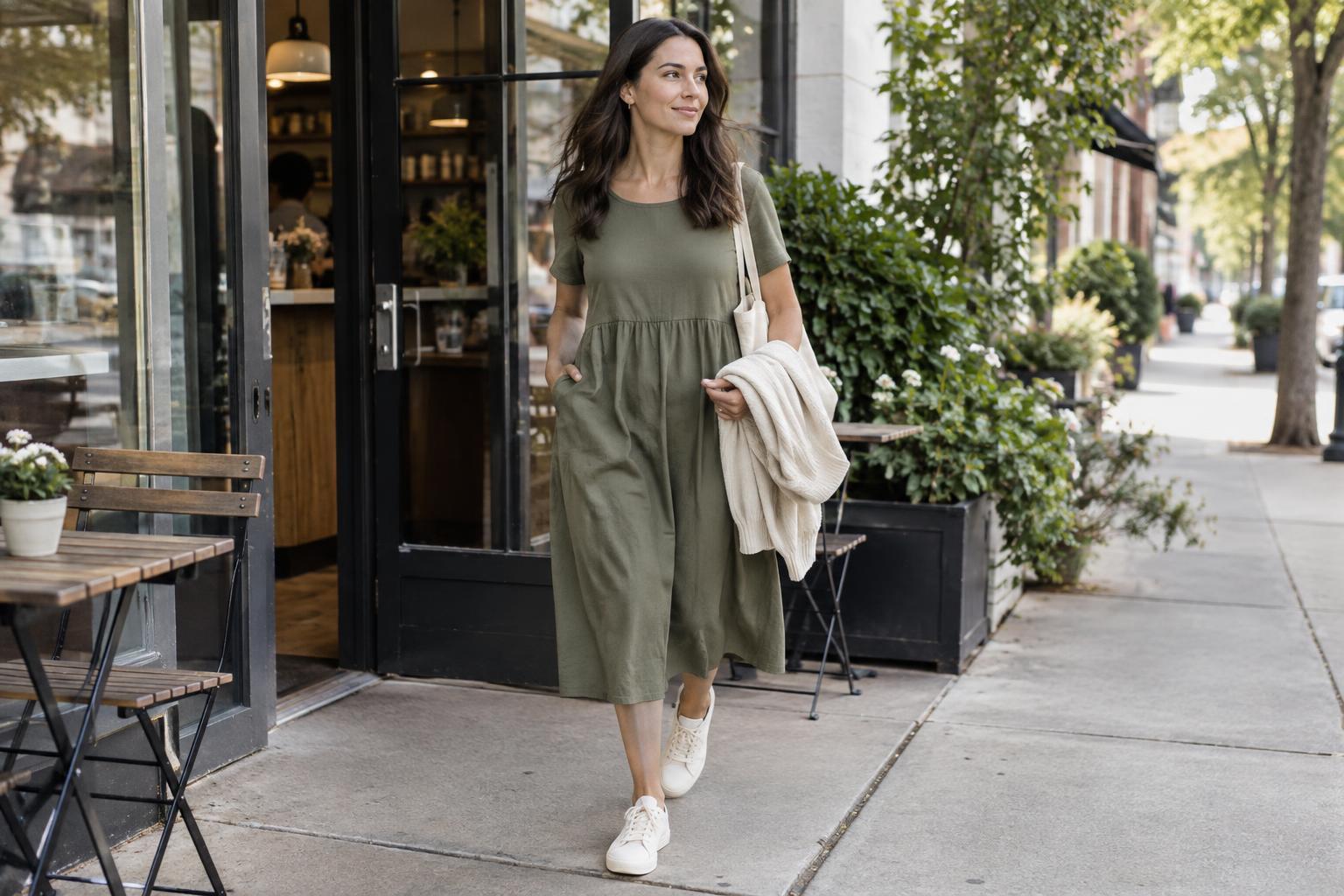
A versatile casual dress does not have to be plain. It does help if you can name a few outfits using pieces already in your wardrobe. Picture it with your most-worn sneakers, sandals or boots, then add a jacket, cardigan or overshirt you actually reach for. If the combinations feel natural, the dress is more likely to become part of your routine.
Color and pattern can support that flexibility. A solid color may be easy to accessorize, while a print can make a simple outfit feel complete. Neither is automatically more practical. Consider whether the dress works with your usual outerwear and whether its color or pattern suits the level of attention you enjoy. The goal is not maximum versatility on paper; it is a dress you feel like wearing.
Decide by cost per wear, not just the price tag
A lower price is useful only if the dress meets your needs. Before buying, inspect the seams, closures and fabric, and ask yourself when you would wear it in the next few weeks. You do not need an exact cost-per-wear calculation. Simply comparing a dress you can imagine wearing regularly with one reserved for a vague future occasion can clarify which offers better value to you.
If you are unsure, pause and identify the reason. Perhaps the fit needs alteration, the fabric feels wrong for your climate, or you do not own a layer that works with it. Those are practical concerns, not styling failures. The best everyday dress is not necessarily the most adaptable or polished one; it is the one that makes getting dressed easier on the days you actually have.