Start with a blazer you can move in
The easiest casual blazer is one you can wear without constantly adjusting it. Check that the shoulders sit comfortably, the sleeves let you reach forward, and the front does not pull when you move. You do not need an oversized cut, but a little room makes it easier to wear a T-shirt or light knit underneath. If you plan to shop secondhand, focus on fit at the shoulders first; sleeve length and other details may be easier to alter.
Fabric changes the mood of the outfit. A soft cotton or linen-blend blazer often feels relaxed with warm-weather clothes, while wool or a substantial knit can work well over cooler-season layers. A structured jacket with sharp lapels can also look casual when the rest of the outfit is simple. Choose a fabric that suits your climate and that you are willing to care for, rather than saving a difficult-to-maintain jacket for an imagined perfect occasion.
Build around clothes you already wear
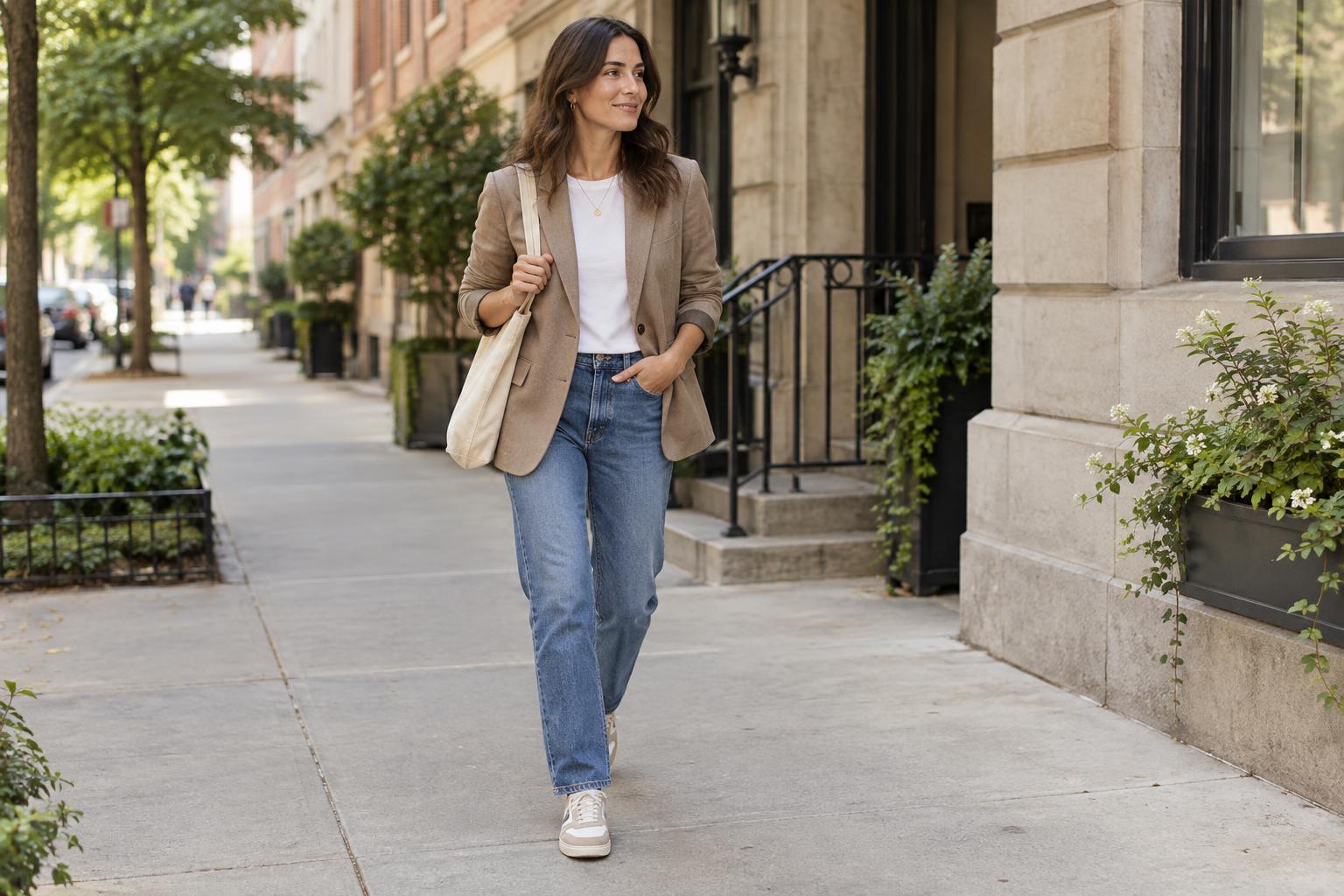
For a straightforward starting point, put a blazer over a plain T-shirt and add jeans. Straight-leg, relaxed or slim jeans can all work; the useful test is whether the overall shape feels balanced to you. A fitted tee under a roomy blazer gives the jacket space to stand out. A looser tee can look equally intentional if you tuck or half-tuck it to show where the trousers begin.
You can use the same idea with chinos, wide-leg trousers, a denim skirt or a simple dress. Try a blazer over a sweatshirt for a relaxed layered look, provided the sleeves have enough room and the hood sits comfortably behind the collar. On cooler days, a fine-gauge sweater offers warmth without adding much bulk. These combinations work best when at least one piece still feels like your usual everyday clothing.
Use proportion to keep the outfit relaxed
A blazer does not have to be buttoned to look finished. Wearing it open shows the layers beneath and creates an easy line down the front. If the jacket is long, try it with a shorter top, a tuck or trousers with a clearly defined waist. If it is cropped, a longer top or higher-rise bottoms can help you find a proportion you like. There is no single correct combination; look at the outfit from head to toe and adjust one piece at a time.
Rolling or pushing up the sleeves can make a blazer feel less formal and reveal a watch, bracelet or contrasting shirt cuff. Check that the fabric is comfortable when gathered, and let delicate sleeves hang normally if they crease easily. Small changes often do more than adding extra items: opening the jacket, changing the tuck or swapping trousers may be enough.
Let shoes and accessories set the tone
Shoes tell people how to read the outfit. Clean sneakers make a blazer and trousers feel ready for a casual day, while flat boots add weight that pairs well with denim or thicker fabrics. Loafers, sandals or simple flats can work too, depending on the weather and where you are going. Choose shoes you can comfortably wear for the day; an outfit will feel more natural when you are not planning every step around your footwear.
Accessories are another way to make the look yours. A canvas tote or crossbody bag keeps the emphasis on ease, while a compact bag can make the same blazer feel a little more dressed up. If the jacket has a bold pattern, try a quiet layer underneath. If the blazer is plain, a striped shirt, colorful socks or a scarf can add personality without requiring an entirely new outfit.
Make a small rotation instead of buying a new wardrobe
Before buying anything, try one blazer with three outfits from your closet: a T-shirt and jeans, a knit and trousers, and a dress or skirt if you wear them. Take note of which layers fit comfortably under the sleeves and which shoes make each combination feel right for your day. Repeating a blazer with different basics is useful; the contrast between tailored and casual pieces is the point.
Give the jacket a little care between wears so it stays easy to reach for. Hang it where the shoulders are supported, let it air after use and follow its care label before washing or steaming. If a blazer feels too formal no matter what you pair it with, experiment with a softer fabric or a less structured cut. The goal is not to disguise the jacket, but to make it fit naturally into the clothes you already enjoy wearing.