Start with the shirt and the outfit
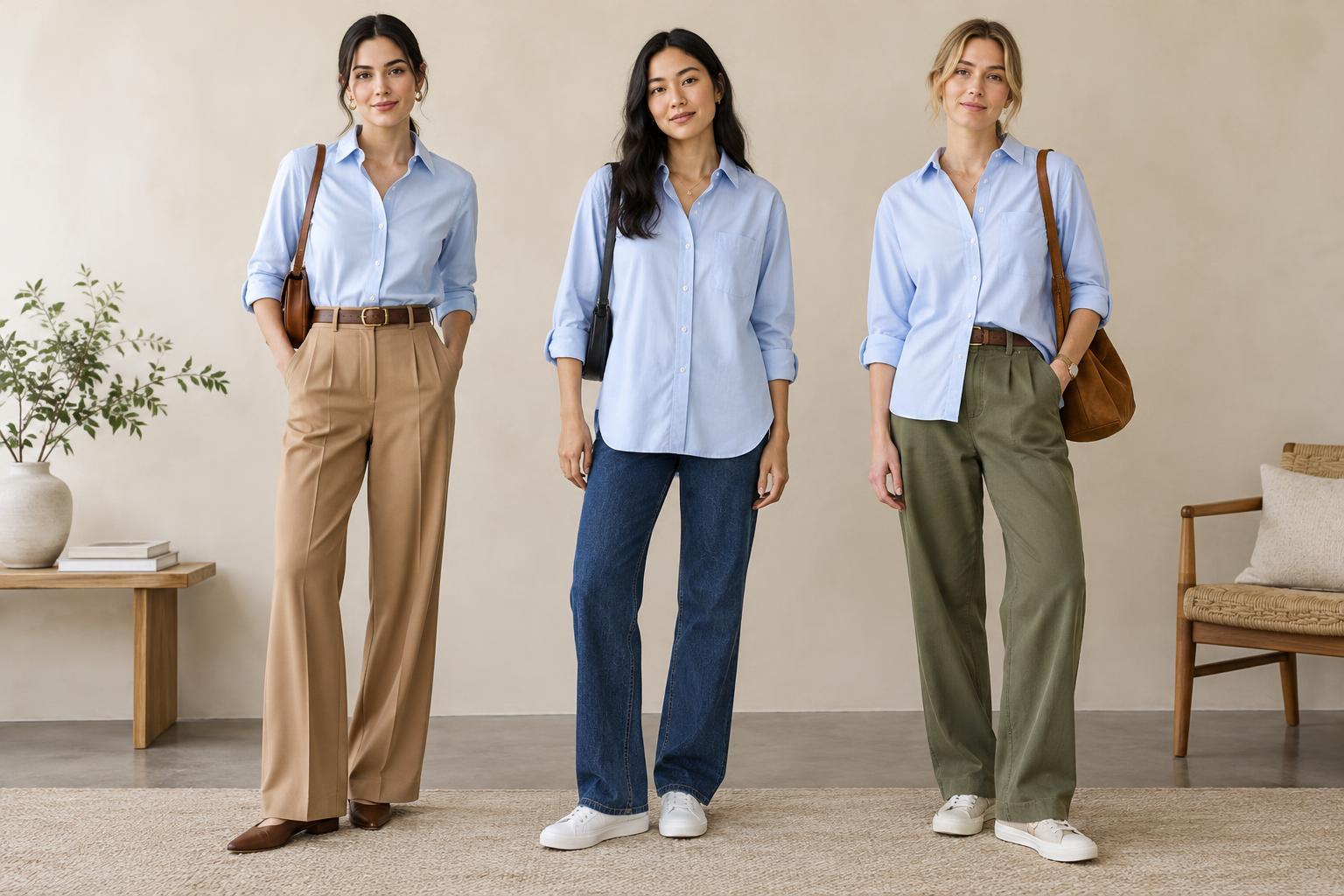
There is no single correct way to wear a button-down shirt. A full tuck can make an outfit feel neat, an untucked hem can give it ease, and a half-tuck can sit between the two. Before choosing, look at the shirt’s length, shape and fabric alongside the trousers, jeans or skirt you plan to wear.
A shirt with a long, curved hem often has enough fabric to stay tucked in. A shorter shirt with a straighter hem may sit more comfortably untucked. Fabric matters too: a crisp cotton shirt creates a defined outline, while a soft linen or fluid blend tends to drape. Neither is automatically dressier; the result depends on the rest of the outfit. Button the shirt, move around in it and notice where the hem naturally falls before adjusting it.
Choose a full tuck for a defined waist
Tucking in the whole shirt draws attention to the waistline and makes the shirt and bottoms read as separate pieces. It is useful when you want to show the shape of high-waisted trousers or a skirt, keep a longer shirt from covering your pockets, or create a tidy base under a jacket. A tucked shirt with straight-leg jeans and a simple belt, for example, can feel put-together without requiring formal clothes.
For a comfortable tuck, smooth the shirt down before fastening your bottoms, then lift your arms or sit and stand once. This releases a little fabric so the shirt does not pull across the chest or shoulders. You can ease a small amount of fabric out at the waist for a softer look. If the shirt bunches heavily, it may be too long or roomy for that particular waistband; try a different pair of bottoms rather than fighting the fabric all day.
Leave it untucked for an easy line
An untucked shirt can be the simplest choice for a relaxed outfit. It works especially well when the hem ends around the hip and the shirt leaves enough room to move without looking as though it is swallowing the rest of your clothes. Try it with slim or straight trousers, shorts, or a fitted skirt if you want some contrast between a loose top and a cleaner lower half. For a more fluid look, pair a loose shirt with wide-leg bottoms and let both pieces drape.
Pay attention to where the hem ends rather than following a strict length rule. If it cuts across the widest point of your hips and you dislike that effect, try another shirt length, roll the sleeves or wear the shirt open over a close-fitting top. Leaving a few upper buttons undone can also change the shape around your face and neck. Those small adjustments may be all an outfit needs.
Use a half-tuck to break up the shape
A half-tuck gives a glimpse of the waistband while leaving some fabric loose. It can help a roomy shirt feel less like one solid block of fabric, particularly with high-waisted jeans or trousers. For an easy front tuck, place a small section of the front hem into the waistband and let the sides hang freely. For a more asymmetrical version, tuck in only one front panel and leave the other out.
Keep the adjustment light. Pushing too much fabric into one spot can create a bulky fold, especially with thick flannel or sturdy cotton. If a half-tuck shifts as you move, a full tuck or an untucked hem may be more practical that day. The goal is not a perfectly fixed arrangement; it is a shape you like and can wear comfortably.
Make the choice suit your day
Consider what you will be doing as well as how the outfit looks in the mirror. A full tuck may stay out of the way when you wear a belt or carry a crossbody bag. An untucked shirt may feel better for a day with lots of sitting and walking. A half-tuck can bring shape to a casual outfit, but it may need an occasional adjustment. If you plan to add a sweater or jacket, try the layers together: a visible shirt hem can be an intentional detail, while a tucked shirt can keep layers smooth.
The most useful test is to try all three versions with the same outfit. Look at the overall proportions, then sit, reach and walk. If one option feels awkward, change the shirt, the bottoms or the tuck rather than assuming your body is the problem. A button-down is versatile because you can make these small changes without buying anything new.