Start with shape, not a fixed outfit formula
Knitwear comes in many shapes, from close-fitting ribbed tops to roomy cardigans. Before choosing trousers or a skirt, notice where the knit ends and how much volume it adds. A sweater that stops near the waistband leaves the lower half of an outfit visible; a long, loose knit covers more of it. Neither shape is automatically more flattering. The useful question is whether the pieces have enough definition to look deliberate together.
Try changing just one element if an outfit feels shapeless. Push up the sleeves to show your wrists, leave a cardigan open over a simple top, or add a small front tuck if the knit is light enough. A bulky sweater may sit better untucked, especially if the waistband creates a lump. These adjustments cost nothing and let you work with clothes you already own.
Choose trousers that work with the knit’s volume
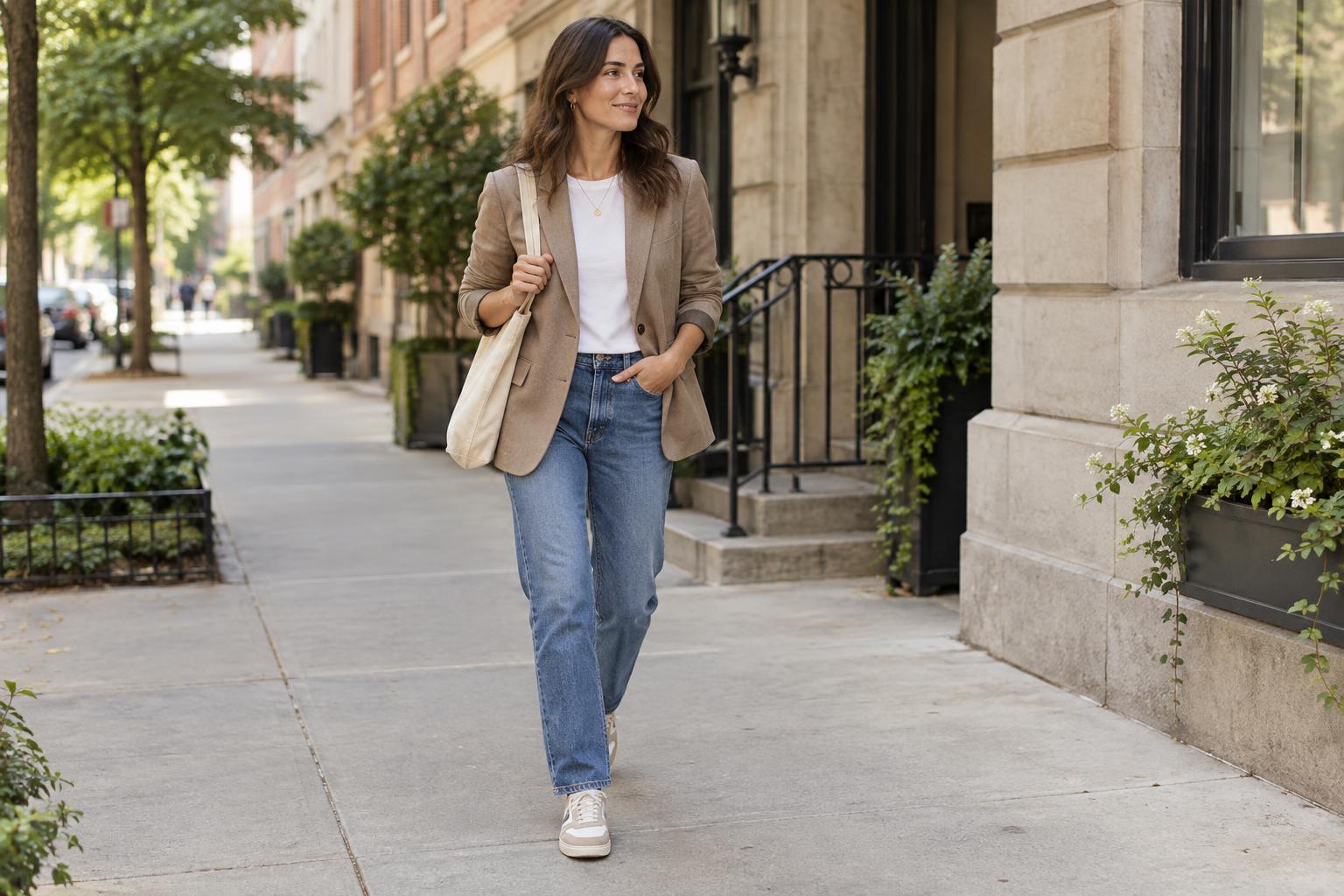
Straight-leg trousers are a versatile starting point. They give a relaxed sweater room without repeating all of its volume, and they also work with a slim knit. For an easy everyday combination, pair a crewneck sweater with straight-leg jeans or casual tailored trousers. If the sweater is oversized, look for a clear shoulder line, visible waistband or neatly rolled sleeves to keep its shape from overwhelming the outfit.
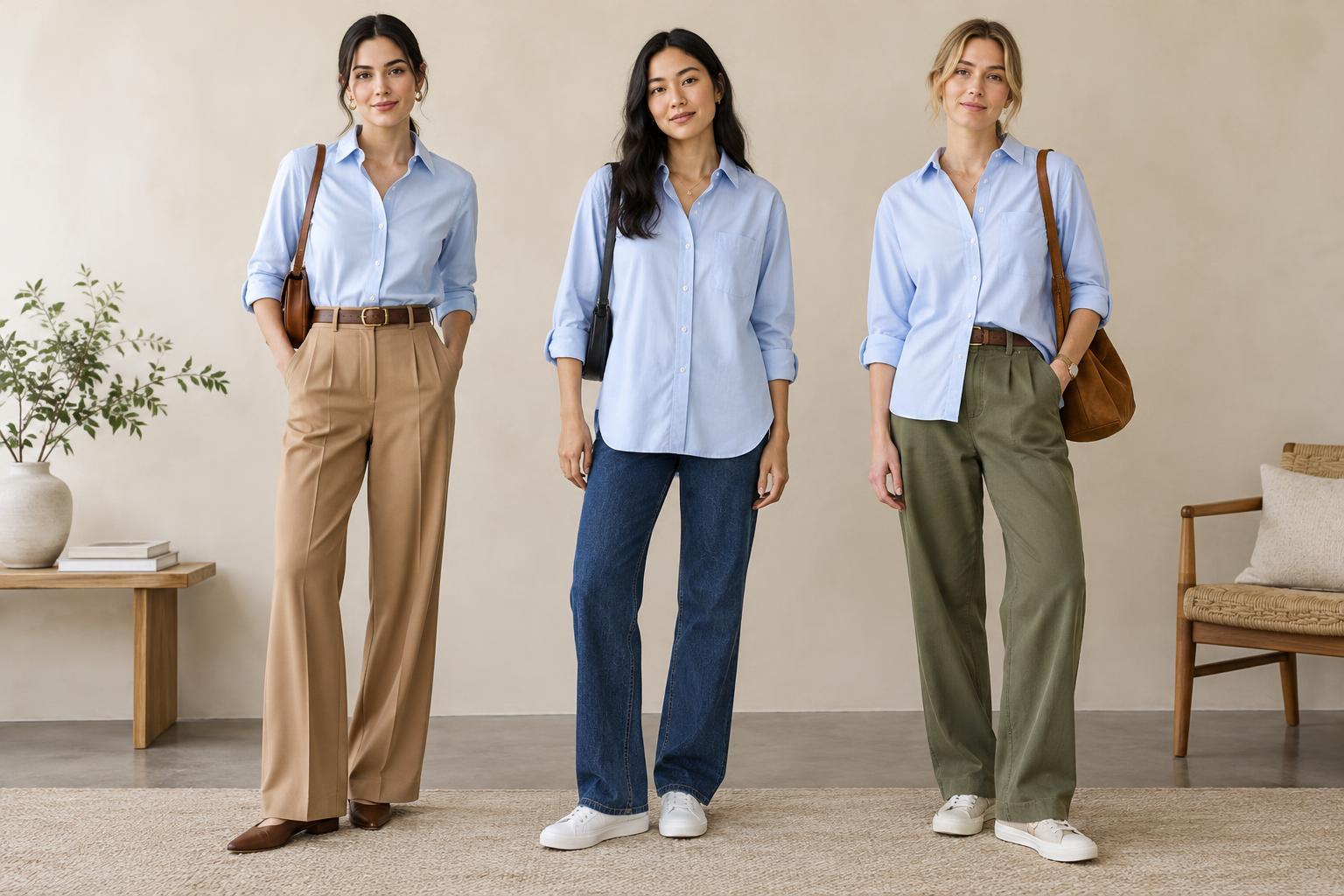
Wide-leg trousers can look good with knitwear too. A shorter sweater or a fine-gauge top tucked into the waistband makes the trouser shape easier to see. With a longer knit, consider a front tuck or an open cardigan over a fitted layer. At the other end of the spectrum, slim trousers balance a chunky sweater, but they are not required: choose the trouser cut you enjoy wearing, then adjust the knit’s length or styling to suit it.
Let skirt length and movement guide the pairing
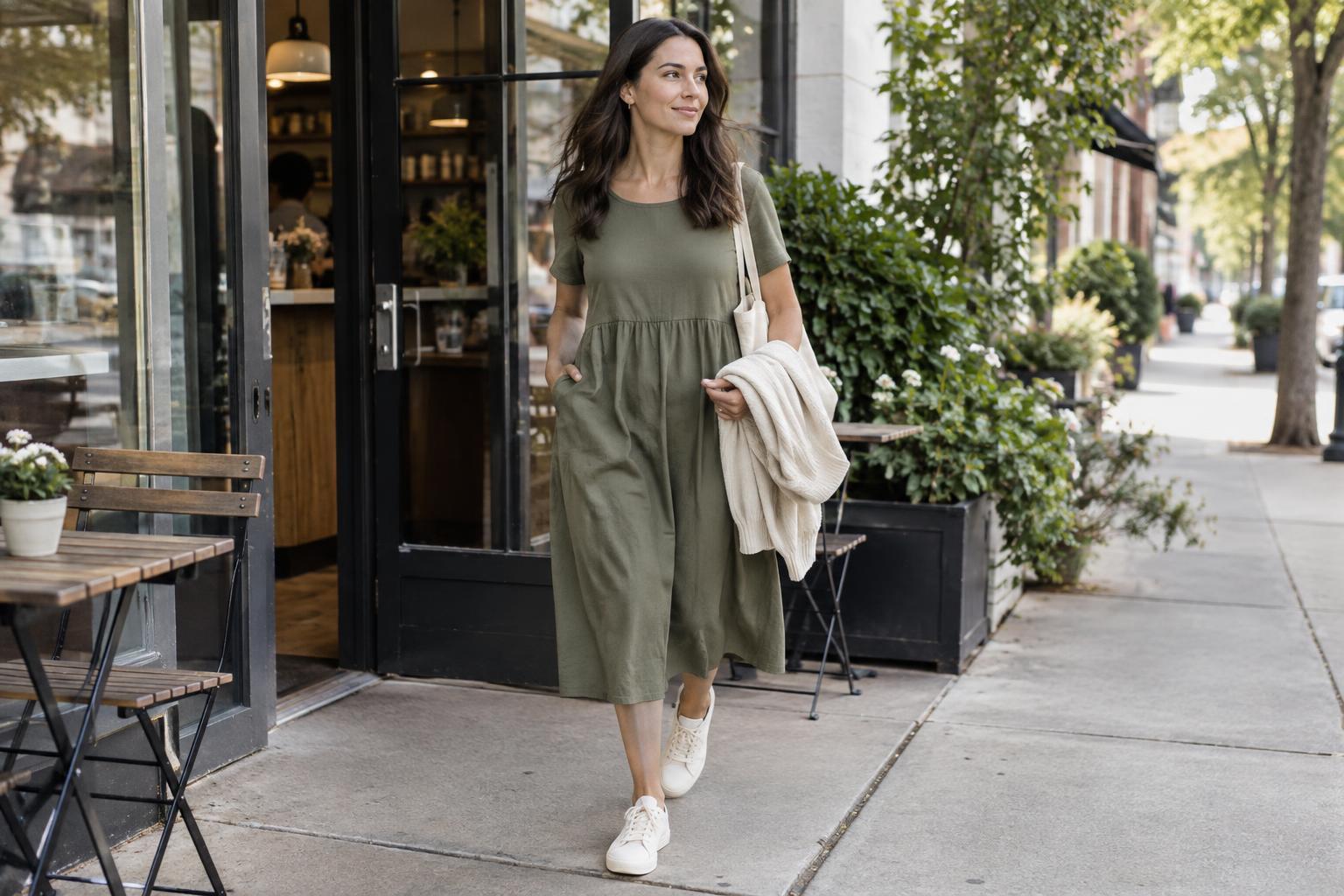
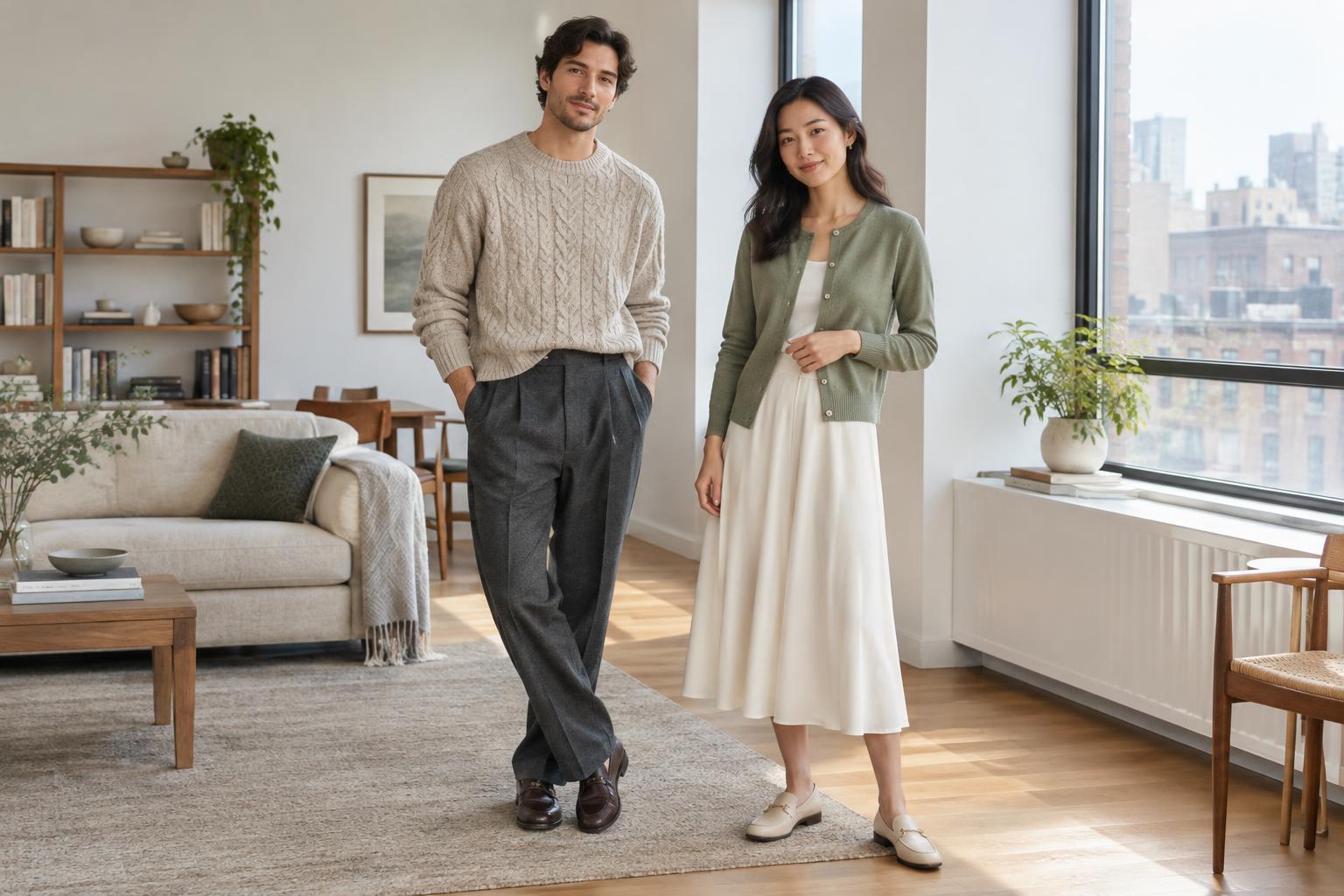
Skirts bring movement and a different outline to everyday knitwear. A fitted knit with an A-line or pleated midi skirt defines the waist while leaving space for the skirt to move. A fuller sweater with a straight or gently flared skirt can feel equally balanced. If both pieces are loose, try a partial tuck or a belt over the knit, provided the fabric sits comfortably rather than bunching.
Pay attention to where the sweater hem meets the skirt. If they end at a similar point, the layers can look crowded; shifting the knit slightly higher or choosing a longer skirt often gives each piece more room visually. For a casual outfit, try a fine cardigan with a denim skirt, or a soft pullover with a simple woven midi. Shoes can change the mood: trainers keep either combination relaxed, while boots give it a more structured finish.
Mix texture and color with intention
Texture adds interest even when an outfit uses only a few colors. A chunky cable knit contrasts with smooth cotton trousers, while a fine-gauge sweater sits neatly against corduroy, denim or a crisp woven skirt. Mixing textures can help separate pieces that are close in color. If you prefer an all-soft outfit, such as knitwear with a jersey skirt, a structured bag or sturdy shoes can add definition.
For simple color combinations, start with one shade you want to feature and keep the other piece quieter. A bright sweater can sit over dark trousers or a neutral skirt; a patterned skirt often works with a knit in one of its colors. Tonal dressing is another option: try related shades of brown, blue or grey, allowing differences in texture to keep the outfit from looking flat. You do not need an exact color match.
Make the combination work for daily wear
A good pairing should also feel comfortable through the day. Check whether a tucked knit stays in place when you sit, whether a skirt waistband pulls against thick fabric, and whether trouser hems work with the shoes you plan to wear. If a sweater is too bulky to tuck, wear it loose with a defined trouser or skirt shape, or layer a lighter knit instead. Thin layers can also make an outfit easier to adjust as temperatures change.
Keep care in mind when building repeatable outfits. Check garment labels before washing knitwear, give sweaters enough time to dry in the recommended position, and avoid hanging pieces that stretch noticeably at the shoulders. A small set of knits that hold their shape and pair with several bottoms is often more useful than a collection that needs a new outfit for every wear. The best combination is one you can move in, maintain and make your own.