Start with one color in charge
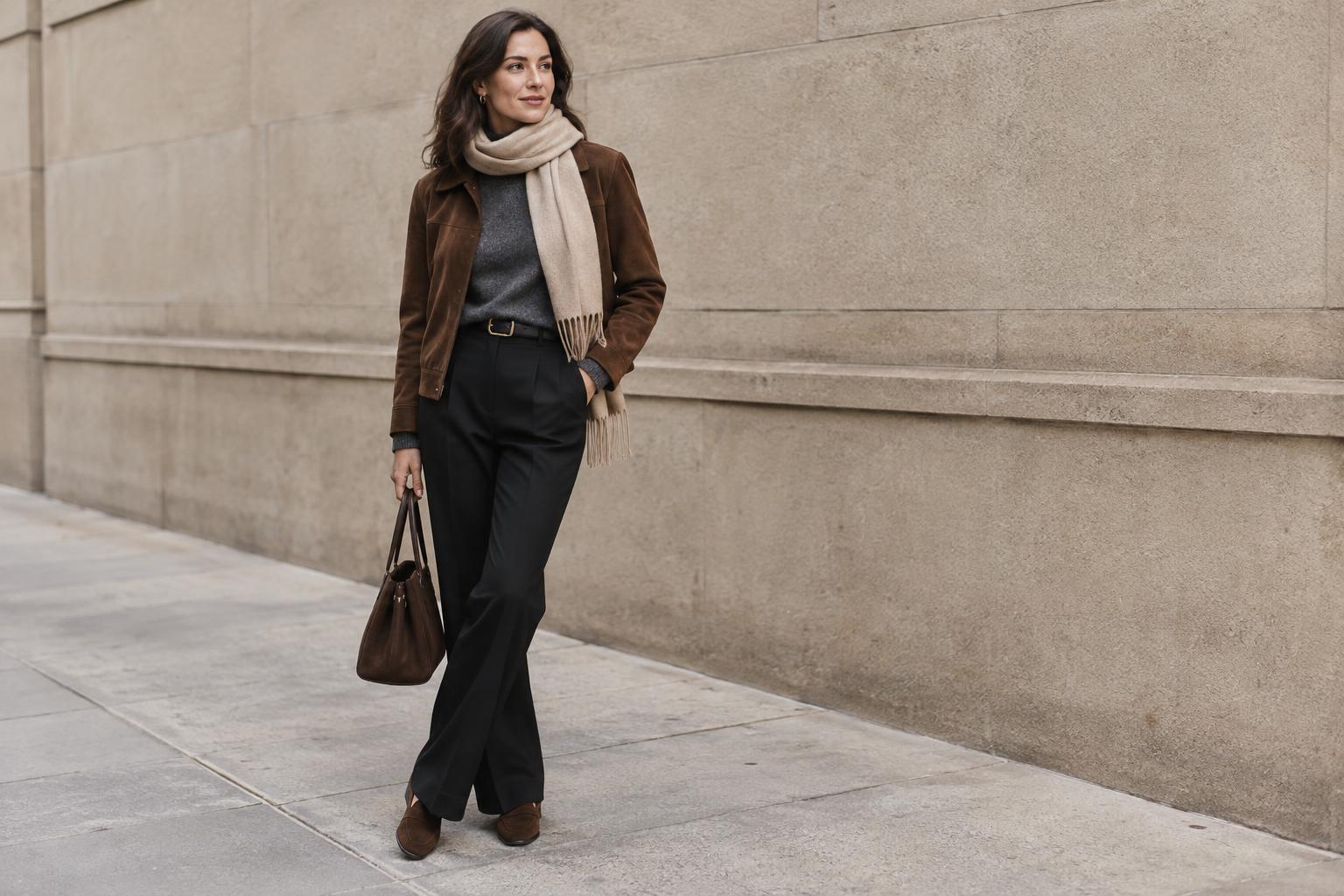
Black, gray, brown and beige do not need to appear in equal amounts. An easier approach is to let one color form the base of the outfit, use a second for contrast and bring in the others as smaller details. For example, black trousers and a black top can support a brown jacket, while a gray scarf and beige bag add lighter notes. The result has a clear focal point rather than four colors competing for attention.
You can also begin with a piece you want to wear, such as a beige coat or brown boots. Build most of the outfit around one or two other neutrals, then decide whether a fourth color adds anything. Wearing all four is an option, not a requirement. A black belt or gray sock may be enough to complete the mix.
Balance light and dark
These colors become easier to combine when you think about how light or dark each garment looks. Black usually provides the strongest contrast, while beige can brighten an outfit. Gray and brown vary widely: charcoal reads differently from pale gray, just as espresso brown differs from tan. Lay the pieces next to each other before getting dressed if you are unsure how they will work together.
For a simple starting point, put darker colors on one half of the outfit and lighter colors on the other. Try black jeans and a dark brown belt with a light gray sweater and beige coat. Or wear beige trousers with a brown knit and finish with a charcoal jacket and black shoes. Neither arrangement is a rule; it is a way to give the eye a clear path through the outfit.
Use undertones as a guide, not a restriction
Some grays look cool or bluish, while others lean warm. Beige may appear creamy, sandy or slightly pink; brown can range from reddish to almost black. You do not have to match every undertone exactly. If two pieces look awkward side by side, give them some space by placing another color between them. A black shirt, for instance, can separate a cool gray jacket from warm brown trousers.
Repeating a color elsewhere can also help a combination feel deliberate. Brown boots can connect with a brown watch strap or the buttons on a coat. A beige shirt can echo a beige bag. These details do not need to match perfectly. Their job is to make a color feel like part of the outfit rather than a last-minute addition.
Let texture and pattern do some of the work
An outfit made entirely of smooth, solid-colored pieces can feel flat even when the colors work well together. Mix surfaces to add interest without introducing another shade: a soft gray knit against black denim, a brown leather or faux-leather belt over beige cotton, or a structured coat over a relaxed jersey top. The contrast between matte and slightly polished finishes can be as useful as the contrast between light and dark.
Patterns can bridge the colors, too. A scarf, plaid shirt or patterned bag that contains two or more of your chosen neutrals offers a natural link between separate pieces. Keep the rest of the outfit quieter if you want the pattern to stand out. If you prefer a subtle look, choose a small-scale pattern or a stripe with low contrast.
Try a few dependable combinations
For an everyday outfit, pair black trousers with a beige T-shirt or knit, add a gray overshirt, and finish with brown shoes or a bag. For a lighter version, start with beige trousers and a gray top, then add a dark brown jacket and black belt. If you like dressing mostly in black, a brown coat and one beige accessory can soften the look without changing its overall mood.
Use what is already in your wardrobe to test combinations before buying anything new. Try swapping just one piece at a time: charcoal for pale gray, tan for deep brown, or a beige layer for a black one. A quick look in natural light can help you judge both color and fabric. Keep the version that feels comfortable and suits where you are going; a useful color palette should make getting dressed easier, not more rigid.