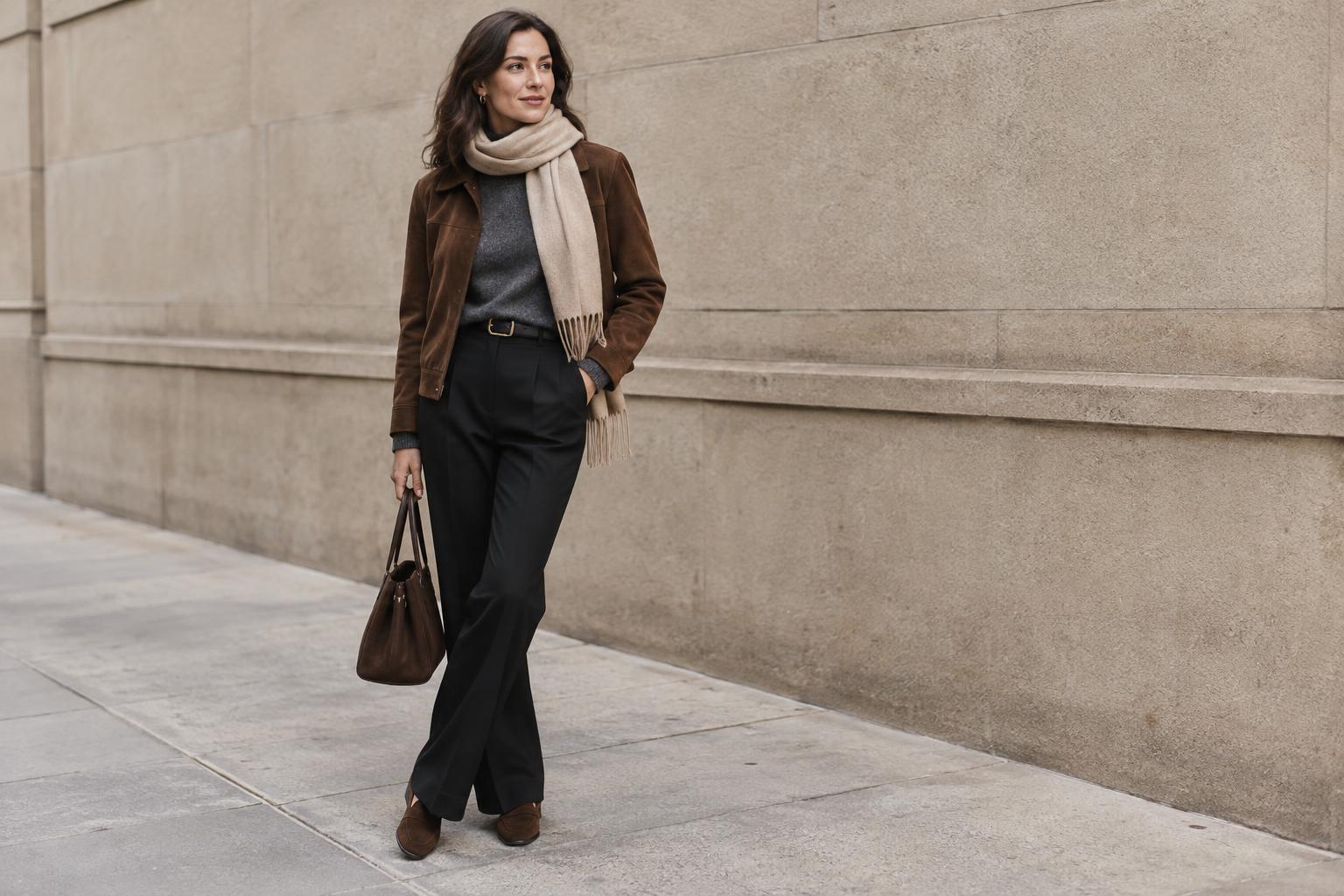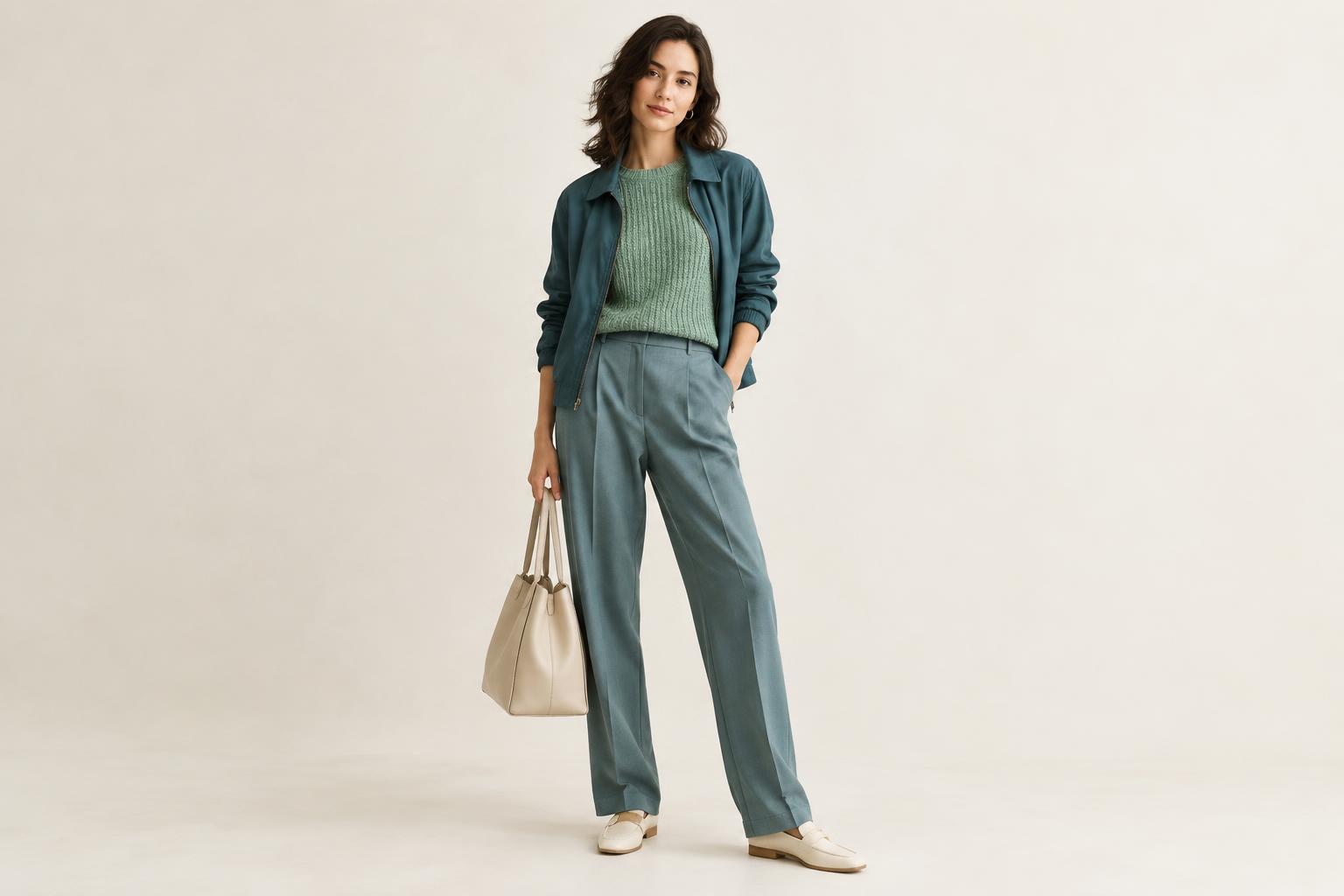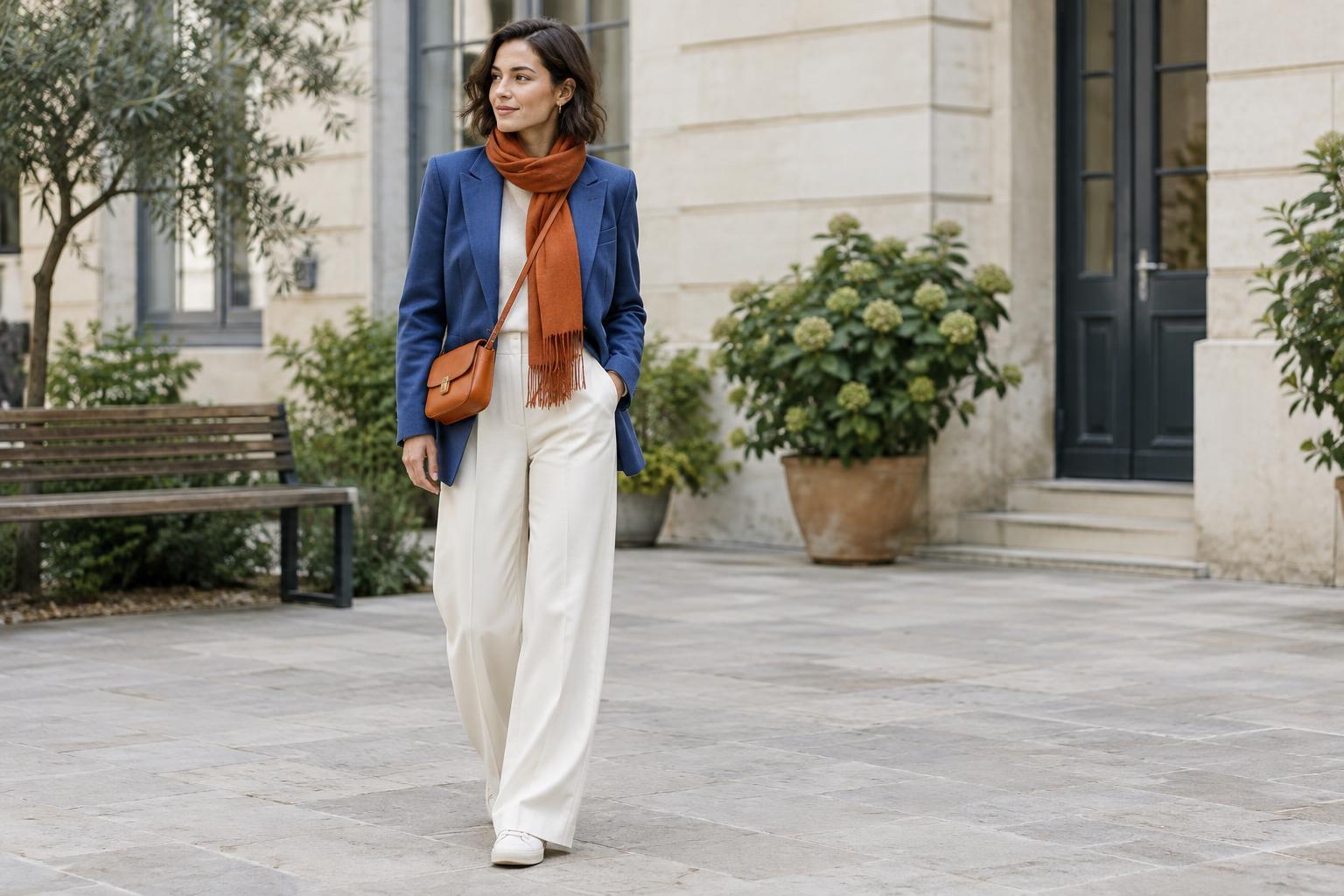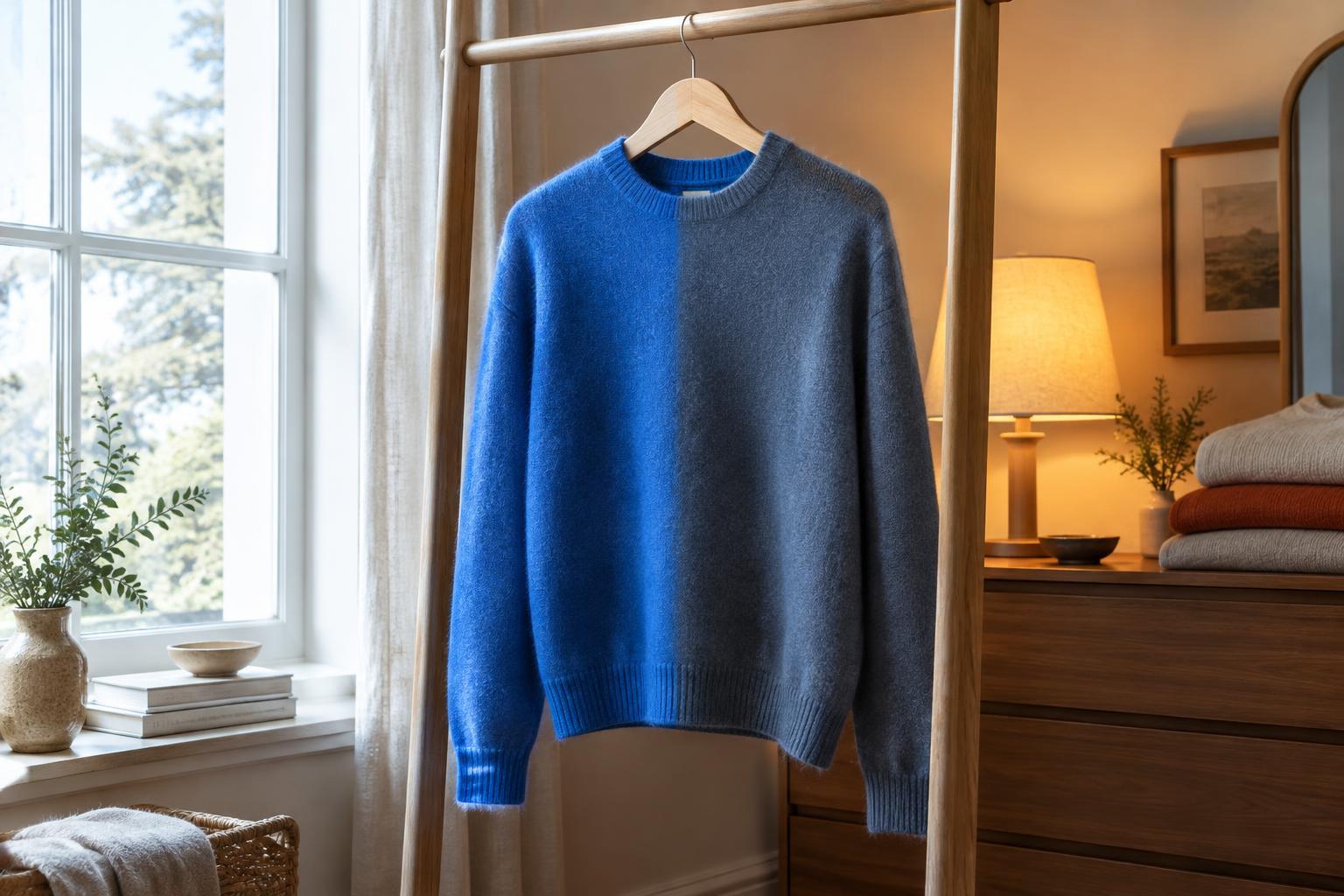
The light changes what your eyes can see
A garment does not need to change for its color to look different. Its fibers absorb some parts of the light shining on them and reflect others toward your eyes. Change the light, and you change what is available for the fabric to reflect. That is why a shirt that reads as crisp white beside a window might seem cream under a warm household lamp.
Daylight often makes it easier to distinguish nearby shades, but it is not one fixed kind of light. Direct sun can make colors look vivid, while shade can give them a cooler cast. Indoors, a warm bulb may emphasize the yellow or orange in a color; a cooler bulb may make the same garment appear bluer. The brightness of the room matters, too. In dim light, subtle differences between navy, charcoal and black can become harder to spot.
Fabric and dye affect the result
Two pieces of clothing can match in one room and clash in another. Their dyes may reflect light differently even when they appear nearly identical under a particular lamp. This is especially useful to remember when buying separates intended to form a set, such as a blazer and trousers from different brands. Checking them together in more than one light gives you a better idea of whether the match will hold up.
Texture also changes your impression of color. A smooth satin surface catches bright highlights and can look lighter where it reflects a lamp. Matte cotton tends to show a more even surface, while velvet can shift dramatically as its pile catches light from different directions. Ribbing, knits and brushed finishes create tiny areas of light and shadow. When a color seems inconsistent, turn the garment slightly before deciding whether the shade itself is the problem.
Your surroundings play a part
Color is rarely viewed in isolation. A pale pink top may look soft next to beige trousers but brighter beside deep green. A white wall, a colorful fitting-room curtain or another garment held against it can influence how you judge a shade. Mirrors add another variable if they place you under overhead lighting or leave your face in shadow.
This does not mean there is one “true” appearance you must find. It means the most helpful comparison is the one that resembles how you plan to wear the piece. If you are building an outfit around a patterned skirt, judge a potential top alongside the skirt rather than from memory. Step back and look at the full outfit: a slight shade difference that is obvious when two fabrics touch may barely register at a normal viewing distance.
How to check a color before buying or wearing it
Start near a window with indirect daylight, then look at the garment under the lighting where you expect to wear it. For an evening outfit, a check under a household lamp may be more useful than a daylight-only verdict. If you are shopping, move to another part of the store when possible. Hold coordinating pieces together, and compare them both up close and at arm’s length.
Phone photos can help you remember combinations, but they are not a reliable final test of color. Cameras and screens adjust brightness and color in ways that may not match what you see in person. If you shop online, treat product images as a starting point, read the color name and material description, and check the retailer’s return terms before ordering a shade that needs to match something you already own.
Dress for a pleasing combination, not a perfect match
When a near-match keeps changing under different lights, consider making the contrast intentional. Pair a dark navy jacket with lighter blue trousers, or place a cream layer between two whites that do not quite match. Patterns can bridge colors, too: a scarf that includes both shades can make a combination feel connected without requiring identical dyes.
For a small wardrobe, it can help to test new pieces against the clothes you reach for most. You do not need every item to look identical in every setting. Aim for combinations you enjoy in the places you actually spend time. A quick check in two kinds of light can prevent surprises while leaving plenty of room to experiment with color.