Start with the UV label, not the lens color
The most important feature to check is ultraviolet protection. Look for a clear statement that the sunglasses block 100% of UVA and UVB rays, or for a UV400 label. UV400 generally indicates that the lenses block ultraviolet wavelengths up to 400 nanometers. If a product description only says “UV protection” without explaining how much, ask the seller for more detail or choose a pair with clearer labeling.
A dark lens is not necessarily a protective lens. Tint controls how bright the world looks, while UV protection depends on the lens material or treatment. Likewise, a high price, designer name or mirrored finish does not tell you how much UV light the lenses block. Check the stated protection even when the glasses look substantial.
Choose lenses for the light you actually encounter
Lens tint affects comfort and appearance. Gray tends to keep colors looking relatively neutral, while brown or amber can make some contrasts seem more noticeable. Lighter tints may feel comfortable in mild light but less useful in intense sunshine. Try looking through both lenses in ordinary daylight, if possible: you should be able to see comfortably without an uneven tint, distracting distortion or a noticeable difference between eyes.
Polarized lenses reduce certain kinds of reflected glare, such as light bouncing off water or a road. That can be useful for outdoor activities or driving, but polarization is separate from UV protection, so check for both if you want both. It can also make some phone, dashboard or other digital screens harder to read from certain angles. If you rely on a screen, test it while wearing the glasses before buying.
Check coverage as well as comfort
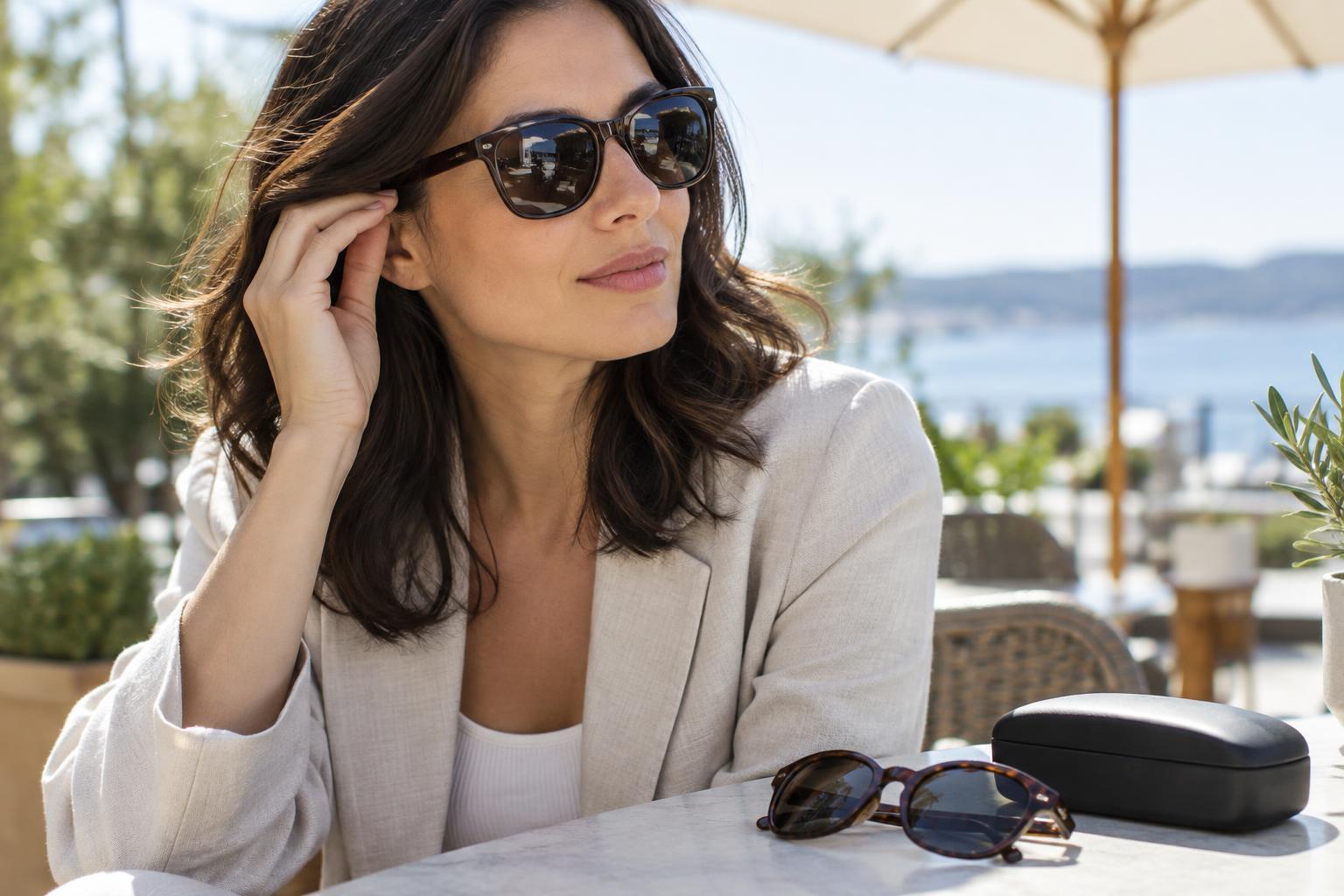
Frames that sit close enough to the face and cover the eye area can help limit light entering from above and the sides. Larger lenses or wraparound shapes may offer more coverage than narrow frames, though the best option is one you will comfortably wear. Try the sunglasses outdoors or near a bright window when you can, and notice whether sunlight slips through wide gaps around the lenses.
A secure fit should not require constant adjustment. The bridge should rest comfortably without pinching or sliding far down your nose. Temples should hold the frame in place without pressing painfully behind your ears. Look down, turn your head and smile to see whether the frame shifts or touches your cheeks. If you have a low or high nose bridge, adjustable nose pads or a different bridge shape may make a bigger difference than changing the lens width alone.
Match the frame to your routine and style
Think about where the pair will spend most of its time. Lightweight frames may be easier to wear for long walks; a sturdier pair may suit a bag that gets opened and closed all day. If you often wear a hat, headphones or helmet, try them on together to check for pressure points. Frames with hinges that move smoothly and arms that sit evenly are worth a closer look, whatever your budget.
Style still matters: sunglasses are more useful when you enjoy reaching for them. A simple shape in a color you regularly wear can work across many outfits, while a bold frame can act as the focal point of an otherwise understated look. If you need prescription lenses, confirm that the chosen frame can accommodate them and discuss suitable lens options with your eyewear provider.
Inspect the pair and plan for basic care
Before purchasing, check that the frame sits level and that the lenses are free of scratches, chips or obvious warping. Fold and unfold the arms gently to see whether they move consistently. When shopping online, use the listed frame dimensions to compare a new pair with sunglasses or glasses that already fit you well, and review the return policy in case the shape feels different in person.
Keep sunglasses in a case when you are not wearing them, especially if they share a bag with keys. Rinse away grit before wiping the lenses, then use a clean microfiber cloth and a cleaner suitable for eyewear. With the UV label, lens type, fit and coverage checked, you can choose a pair for its look without asking style to do the work of protection.