Start with where the necklace lands
Necklace lengths are usually described by their total chain length, but the number alone cannot tell you exactly where a piece will sit. Neck size, torso proportions, chain thickness and pendant weight all affect the result. A soft measuring tape or a piece of string can help: drape it around your neck, adjust it to the position you like, then measure it flat. If you are shopping for a pendant, remember that the pendant will extend below the chain.
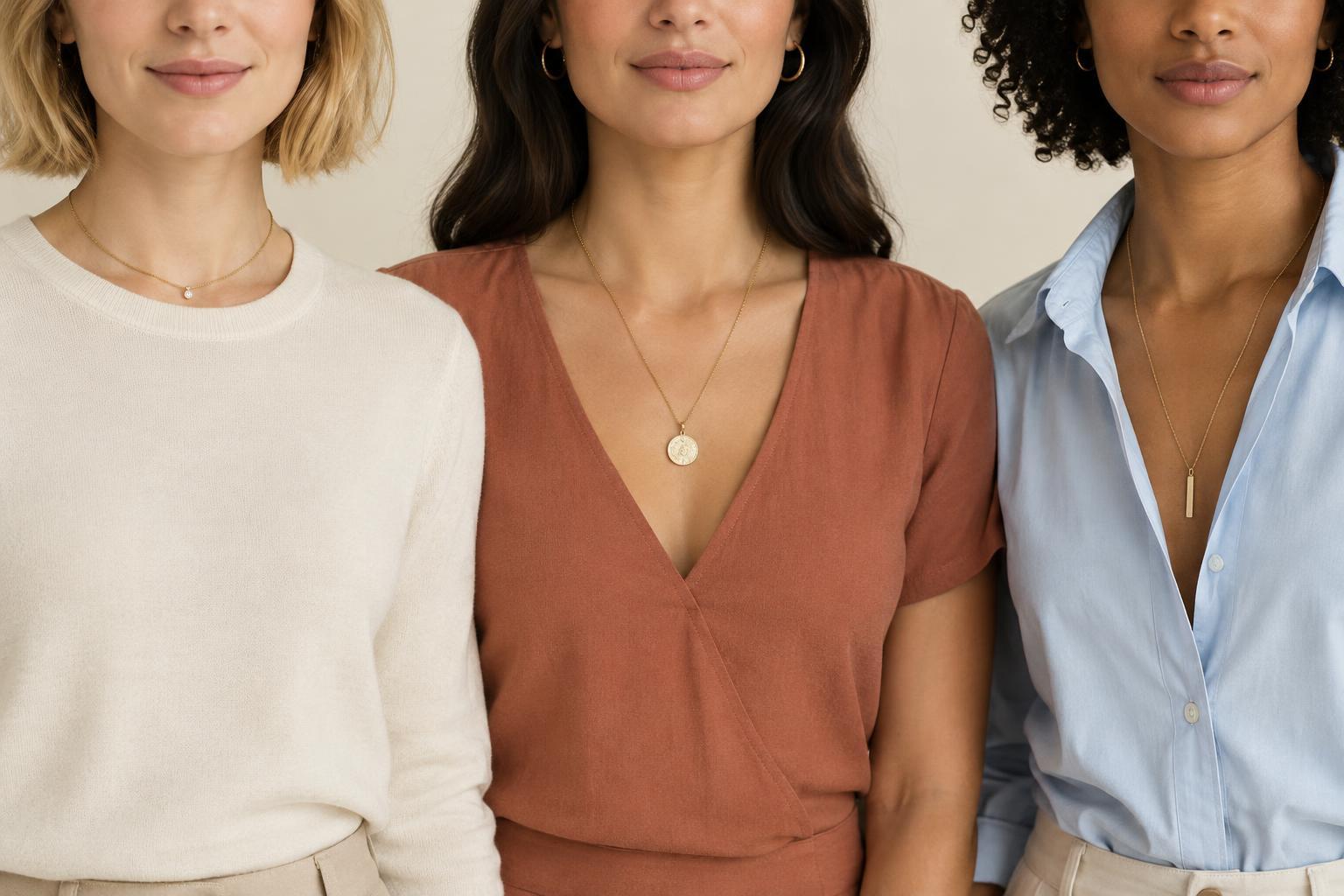
As a rough guide, a 14–16-inch necklace often sits close to the base of the neck, while an 18-inch chain commonly falls near the collarbone. A 20–24-inch chain tends to sit lower on the chest, and longer styles can be worn as a single strand or, if designed for it, doubled. Treat these as starting points rather than rules. An extender is a useful addition when you want one necklace to work with several tops.
Match the shape of the neckline
With a crew neck, a necklace usually looks most intentional when it sits clearly above the fabric or hangs well below the collar. A short chain worn just above the neckline adds a small point of shine; a longer pendant creates a vertical line over a plain T-shirt or sweater. A chain that ends exactly at the collar edge may disappear in and out of the fabric as you move.
A V-neck already draws the eye downward, so a short-to-medium pendant that sits within the V can echo its shape. Leave a little space between the pendant and the bottom of the opening rather than trying to match the point precisely. For a scoop neck, a curved necklace or a pendant that rests on the exposed skin can fill the open space without crowding it. These pairings are helpful if you want a balanced look, not requirements for getting dressed.
Work with wide, high and collared necklines
A boat neck runs horizontally across the shoulders. A longer pendant can contrast with that wide line, while a short, close-fitting necklace keeps the emphasis near the face. With a turtleneck or mock neck, try a medium or long chain over the fabric so it remains visible. Smooth chains and pendants that do not snag are especially practical over knits; check delicate fabrics before wearing a sharp-edged charm against them.
Button-front shirts offer several options. With the top buttons open, a short chain can sit inside the opening, or a pendant can follow its shape. Buttoned up, the shirt becomes a backdrop for a necklace worn over the collar or a longer piece worn down the front. If a necklace competes with a patterned collar, you can simplify the pairing by choosing a smaller pendant, a plain chain or no necklace at all.
Adjust for the outfit and your comfort
Necklines are only part of the picture. A large pendant can anchor a simple outfit, while a fine chain may be enough beside a textured sweater, bold print or statement earrings. Think about where you want the eye to pause. If a necklace ends at a seam, graphic or busy patch of pattern, shifting it a few inches can make the outfit feel less crowded.
Comfort matters as much as appearance. A close-fitting necklace should allow easy movement and breathing, and a heavy pendant may feel different after several hours than it does in the mirror. Try the complete outfit while sitting and moving, not just standing still. If a chain repeatedly slips under a neckline or catches on buttons, change its length or choose a different top rather than spending the day adjusting it.
Try simple layering without tangles
For an easy layered look, begin with two necklaces that end at visibly different points, such as a short plain chain and a longer pendant. The space between them lets each piece show. Mixing chain textures can add interest even when both are the same metal color. If you prefer a quieter look, repeat one element, such as similarly shaped pendants, and vary only the lengths.
Start with pieces you already own before buying a set. Lay them over the top you plan to wear, then check whether each necklace remains visible when you move. Chains of similar weight and length may twist together more readily, so greater spacing or a necklace separator can help. The best combination is the one that stays comfortable and feels like yours; the measurements are simply tools for finding it.