Check the garment before it gets wet
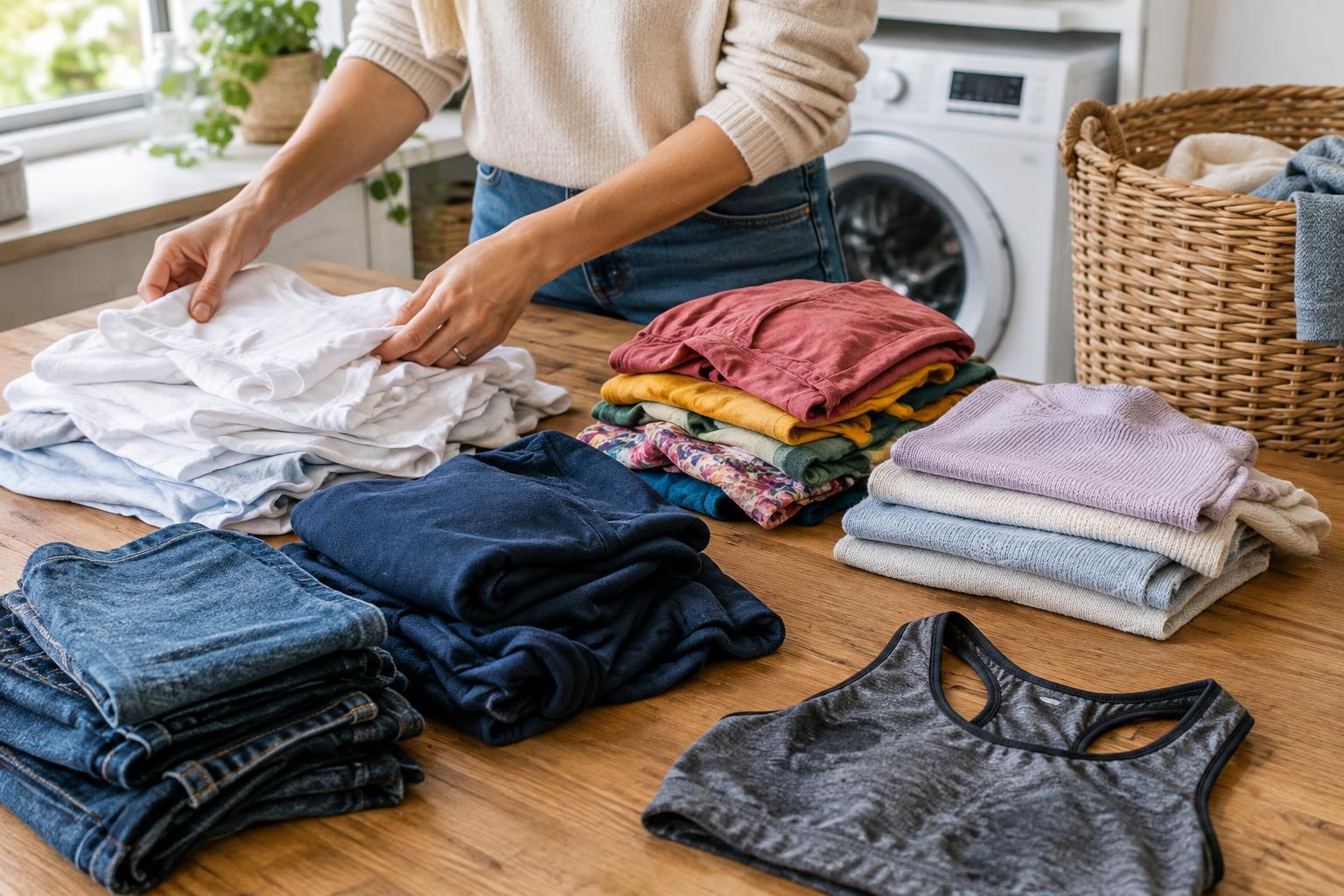
Start with the care label. “Hand wash” is a useful starting point, but it does not mean every part of a garment is equally sturdy. Look at the fabric, seams, lining, trim and fastenings. Loose knits, lace, silk, viscose and items with beading may need extra support when wet. If the label says “dry clean only,” or the piece has structured shoulders, bonded details or fragile decoration, professional cleaning may be the safer choice.
Check pockets, close hooks or zippers that could catch, and turn the garment inside out if its surface is prone to snagging. If you are unsure whether the color will run, test a hidden area with a little water and a clean white cloth. Color transfer is a reason to pause rather than risk washing the whole piece. Treat stains before washing only if you know the fabric can tolerate the treatment; rubbing a delicate area can cause more damage than the stain itself.
Set up a gentle wash
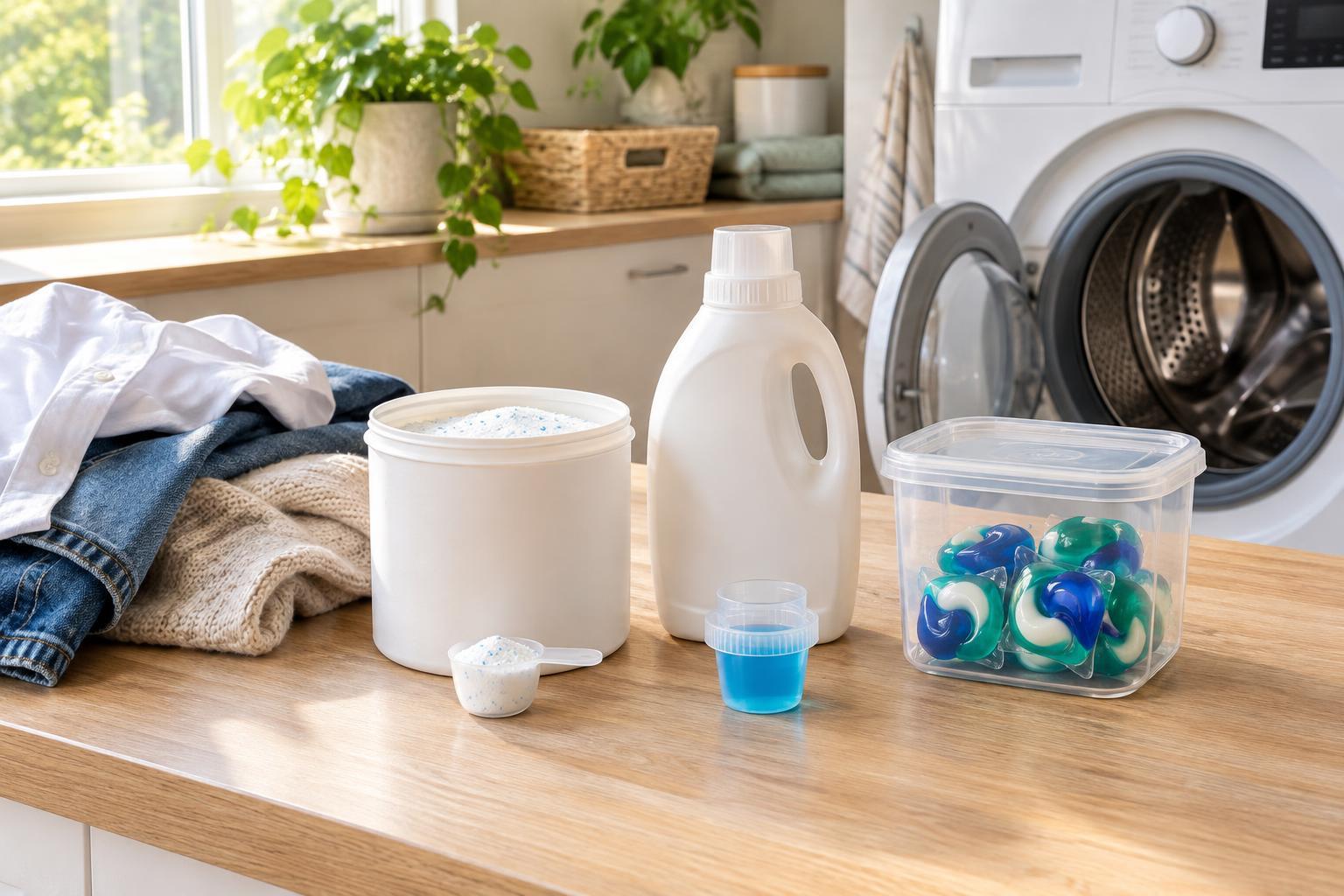
Use a clean basin or sink with enough water for the garment to move without being crowded. Follow the label’s temperature guidance; cool water is often a cautious choice when guidance is unclear. Add a small amount of detergent intended for delicate fabrics and mix it into the water before adding the clothing. Too much detergent can make rinsing harder, which means more handling later.
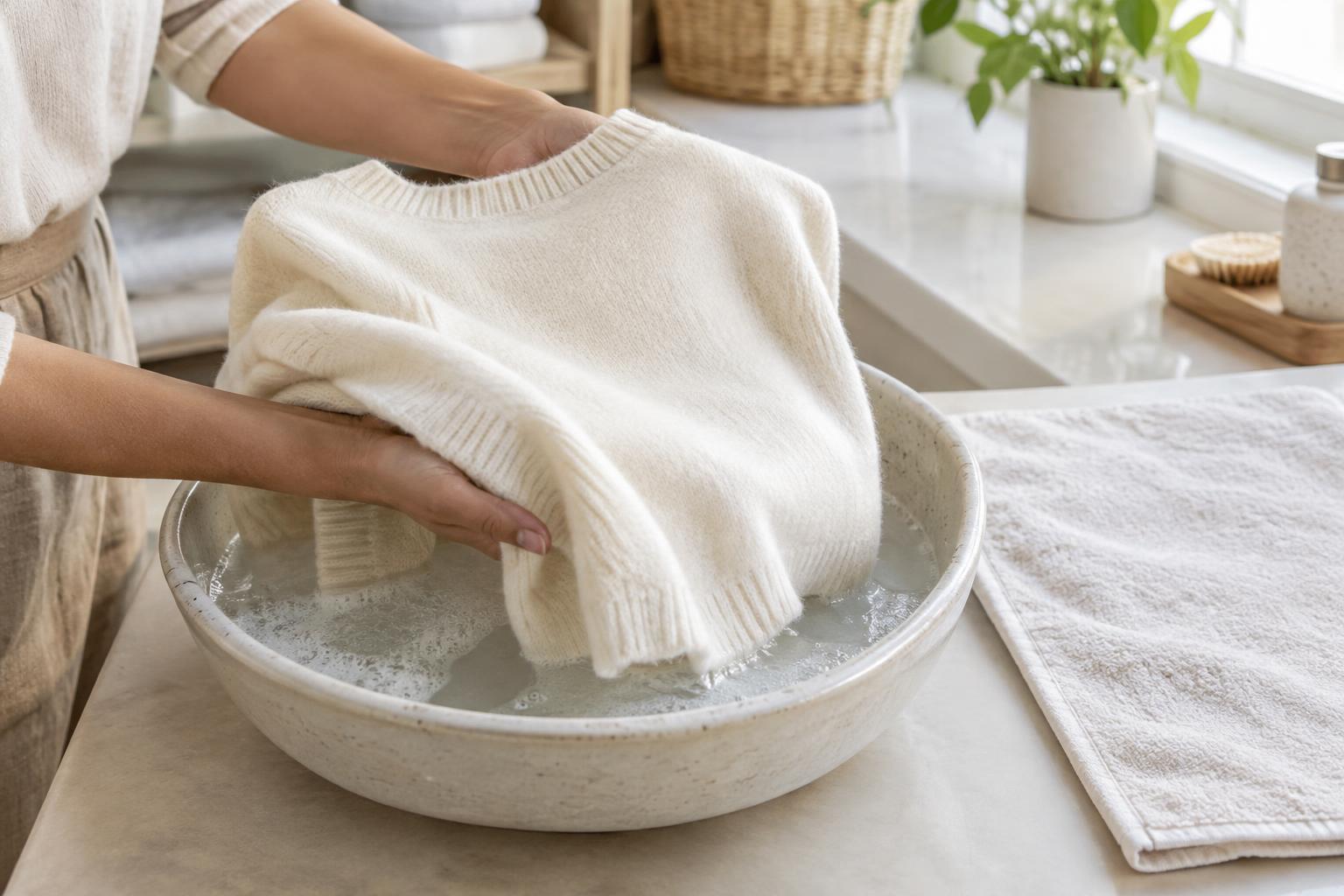
Lower the garment into the water while supporting its weight with both hands. Press it gently below the surface, then let the water pass through it. Rather than scrubbing, twisting or pulling at stained areas, lightly squeeze the fabric against itself. Pay attention to necklines and straps: lifting a wet garment by either can put its full weight on a small section. Wash one delicate item at a time when possible, especially if colors may bleed or trims might snag.
Keep soaking and rinsing brief
A long soak is not a substitute for careful washing. Follow any timing on the care label or detergent instructions, and avoid leaving an unfamiliar fabric in water unattended. Some materials and dyes can change when wet, while loosely constructed garments may become harder to handle as they absorb water. If a piece still looks soiled after a gentle wash, it may need a different cleaning approach rather than more vigorous agitation.
To rinse, drain the basin while keeping the garment supported. Refill it with water at a similar temperature and gently press the fabric to release detergent. Repeat with fresh water if needed, without holding the garment under a forceful tap or lifting it by one edge. Once rinsed, gather it with both hands or scoop it onto a clean towel. The goal is to keep its weight evenly supported from basin to drying surface.
Remove water without pulling the fabric
Never wring a delicate garment: twisting can strain fibers, seams and elastic. Instead, press it lightly against the side or base of the basin, without stretching it into place. Lay it flat on a clean, absorbent towel, smooth out major folds and roll the towel and garment together. Press the roll gently to transfer water into the towel. If the piece is still very wet, repeat with a dry towel.
Unroll carefully, supporting the garment as you move it. Do not shake it out by the shoulders or waistband. A fine blouse may be light enough to handle easily, but a wet sweater can be surprisingly heavy. Keeping that weight distributed is one of the simplest ways to avoid a stretched hem, drooping sleeves or a neckline that no longer sits as intended.
Reshape and dry flat
Lay the garment on a dry towel or a flat, breathable drying surface. Arrange it close to its original shape, using the seams and cuffs as guides. Gently ease a knit back to its usual width and length without tugging to make it fit a measurement. Straighten lace and trim with your fingertips. If the towel becomes damp, replace it carefully so the garment does not sit wet for longer than necessary.
Let the item air-dry in a place with good airflow, away from direct heat; strong sunlight may affect some colors. Avoid hanging heavy or loosely knitted pieces while they are wet, since gravity can pull them out of shape. Once fully dry, fold knits for storage rather than leaving them on a hanger. A little planning at each stage—supporting, pressing and drying flat—does more to protect the shape than trying to fix stretching afterward.