Start with the route, not the outfit
Before choosing clothes, think about where you will walk and what else the day involves. A paved route with café stops asks something different of an outfit than uneven paths, crowded transit or hours spent moving between indoor and outdoor spaces. Check the weather, then consider whether you will have somewhere to set down a bag or change a layer. You do not need a specialized wardrobe for every outing; you need an outfit that suits the conditions you expect.
Comfort becomes easier to plan when you identify your usual annoyances. If a waistband digs in while sitting, it may feel worse after several hours out. If a jacket feels fine when you stand still but restricts your arms, try it with a full stride before leaving. Small adjustments made at home can save you from spending the day tugging, carrying or readjusting.
Choose shoes and socks as a pair
For a day with lots of walking, reach first for shoes that already feel good on your feet. A familiar pair of sneakers, supportive flats or comfortable boots is often a better choice than a new pair that looks perfect with the outfit. Look for enough room for your toes, a secure fit that does not let your heel slip excessively, and a sole that feels appropriate for the surfaces ahead. Test the shoes with the socks you plan to wear; changing sock thickness can change the fit.
Socks deserve attention too. A pair that stays in place and does not bunch at the toe can make a familiar shoe more pleasant to wear. If your feet tend to get warm, choose a fabric and thickness you find comfortable rather than assuming the thickest sock is best. For shoes with exposed areas that rub, a different sock height may help. If you have never worn a particular shoe-and-sock combination for long, try it on a shorter outing first.
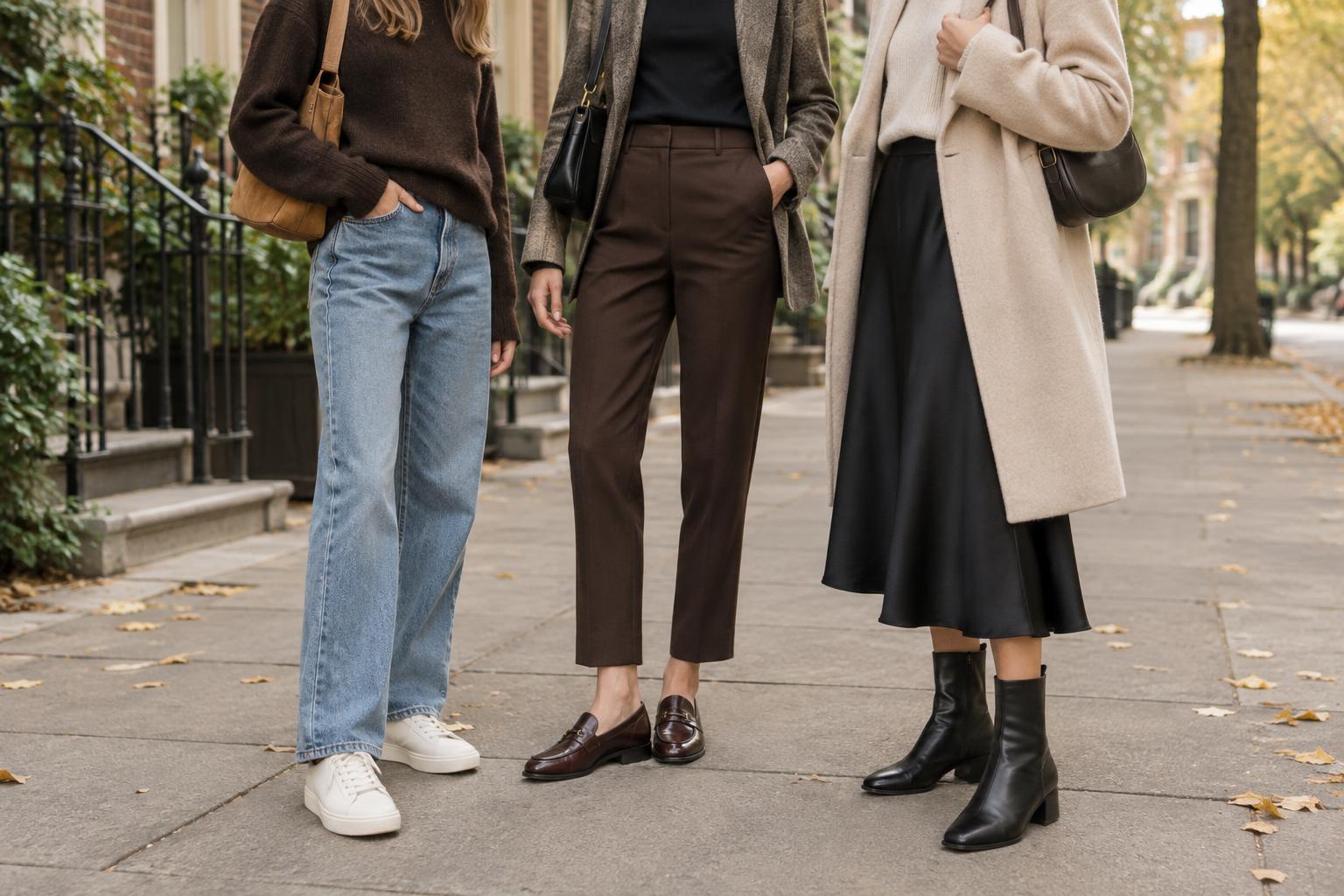
Let the shoes set the direction for the rest of the look. Clean, simple sneakers can sit comfortably alongside wide-leg trousers and a crisp shirt. Sturdy boots can ground a soft knit and a relaxed skirt. When your footwear feels intentional, comfort does not have to look like an afterthought.
Build an outfit that moves with you
Choose bottoms that allow a natural stride and stay comfortable through changes of pace. Straight-leg jeans with some give, relaxed trousers, leggings or a skirt with enough room to walk are all workable options. The best choice is the one that stays put without repeated adjustments. If a hem drags or catches under your shoes, change the length or choose another pair before heading out.
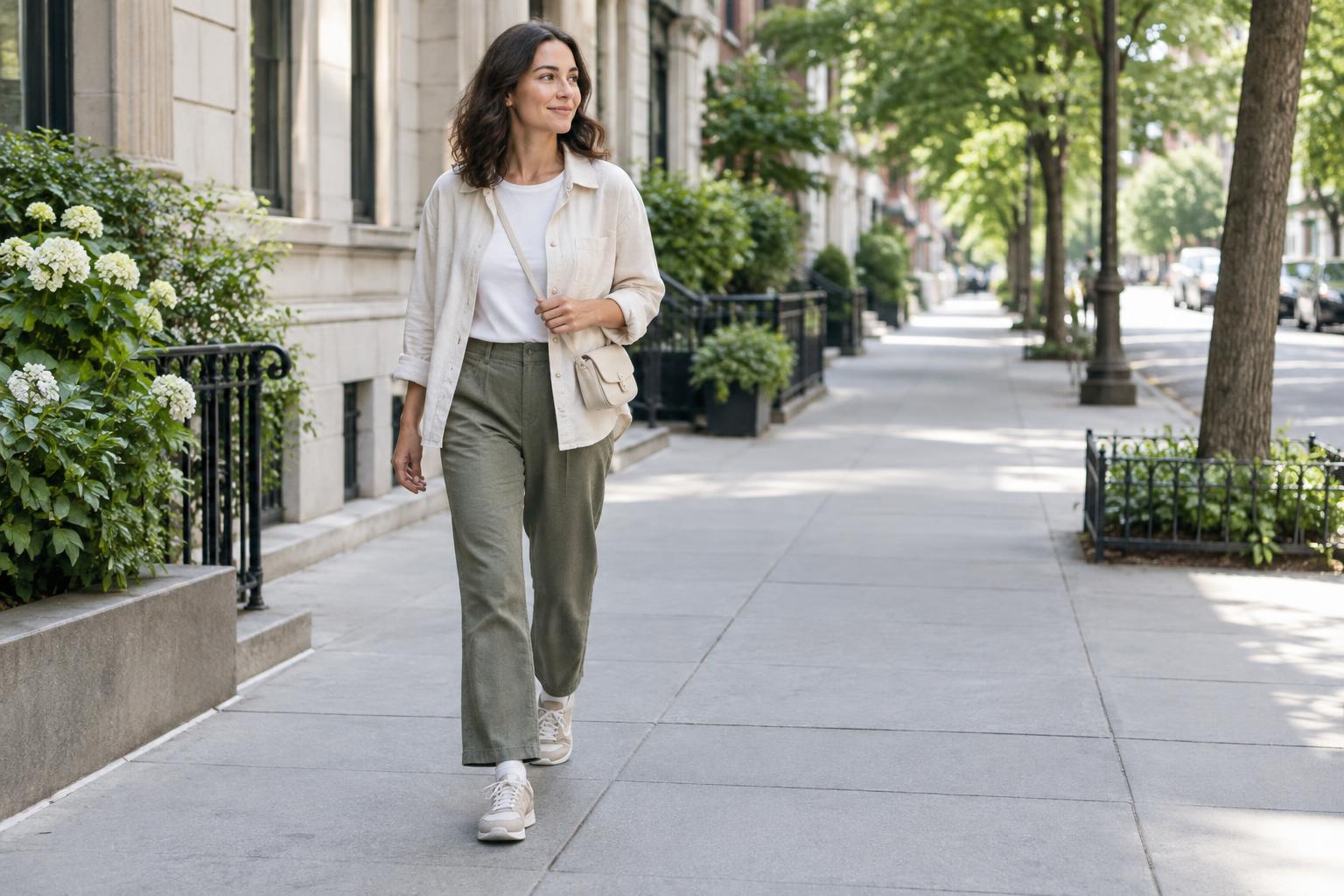
For a simple everyday formula, try relaxed trousers, a soft T-shirt, an open overshirt and sneakers. For a slightly dressed-up day, pair a knit top with an easy midi skirt, comfortable flats or boots, and a lightweight jacket. If you prefer jeans, add a breathable top and a layer you can remove. These combinations can be assembled from clothes you already own; the useful test is how they feel when you walk, sit and reach for your bag.
Consider fabric against your skin, especially where seams, straps or waistbands may rub. Breathable, easy-care pieces are practical when you expect to be out for hours, but comfort is personal: a fabric one person loves may feel scratchy or clingy to another. Check how the whole outfit feels after a few minutes of movement, not just how it looks in the mirror.
Use layers to handle changing conditions
Walking can make a cool morning feel warmer, while a pause outdoors can make the same outfit feel too light. Removable layers give you options. Start with a comfortable base, then add an overshirt, cardigan or light jacket according to the forecast. If rain is possible, a compact outer layer may be more useful than a bulky knit. Choose a layer you can carry easily if you take it off.
For warm days, favor lighter pieces that give you the coverage you want without adding unnecessary bulk. For colder days, layering a top, midlayer and outer layer can be easier to adjust than relying on one very heavy coat. Whatever the season, make sure sleeves, cuffs and closures do not get in your way when you are moving or carrying things.
Keep accessories useful and light
A bag can change how comfortable an outfit feels over a long day. Take only what you expect to use, and choose a bag that sits securely without demanding constant attention. A small backpack distributes a load across both shoulders; a crossbody keeps essentials close. Either can work if the straps are comfortable and the bag does not swing or bump as you walk. Try it on with your outer layer, since a strap may sit differently over a jacket.
Finish with accessories that solve a real need: sunglasses or a hat for bright conditions, a compact umbrella when showers are possible, or a scarf you can remove easily. You can still express your style through color and texture. A patterned overshirt, bright socks or a distinctive bag adds personality without relying on an uncomfortable statement piece. The aim is an outfit you can enjoy wearing from the first step to the last.