Start with the expectations of your workplace
A relaxed dress code does not look the same in every office. Before building a week of outfits, notice what people wear for ordinary workdays and what changes for meetings or visitors. If the guidance is unclear, a neat version of your usual style is a useful starting point: clothes that fit comfortably, shoes suited to your commute, and pieces you can sit and move in throughout the day.
Think of each outfit as a combination of a base, a layer and a finishing detail. The base keeps you comfortable, the layer lets you adjust to the temperature, and the detail makes the look feel intentional. None of those pieces needs to be expensive. Clean shoes, a shirt that sits well at the shoulders or a belt in good condition can make familiar clothes feel ready for work.
Formula one: relaxed trousers, a simple top and a structured layer
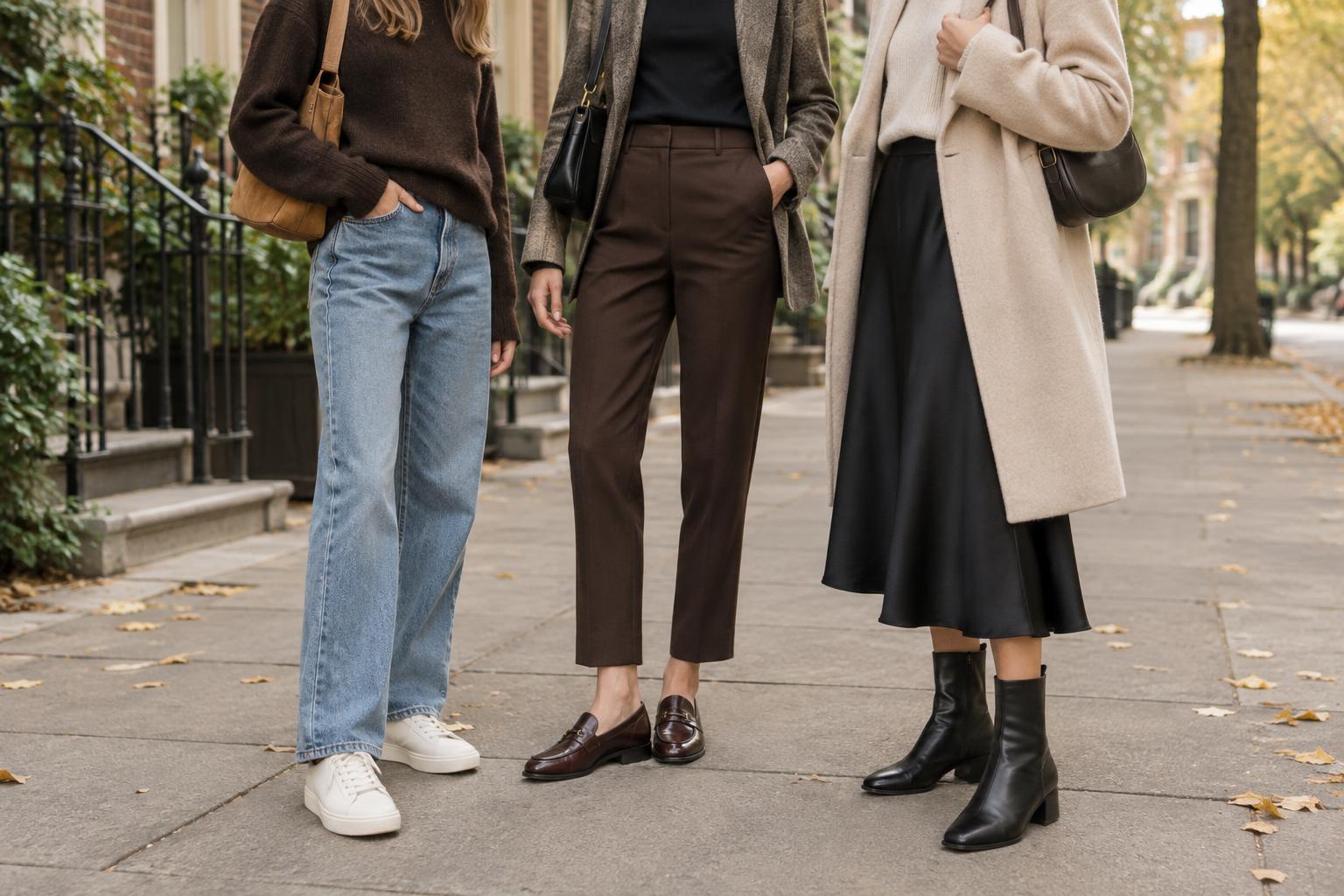
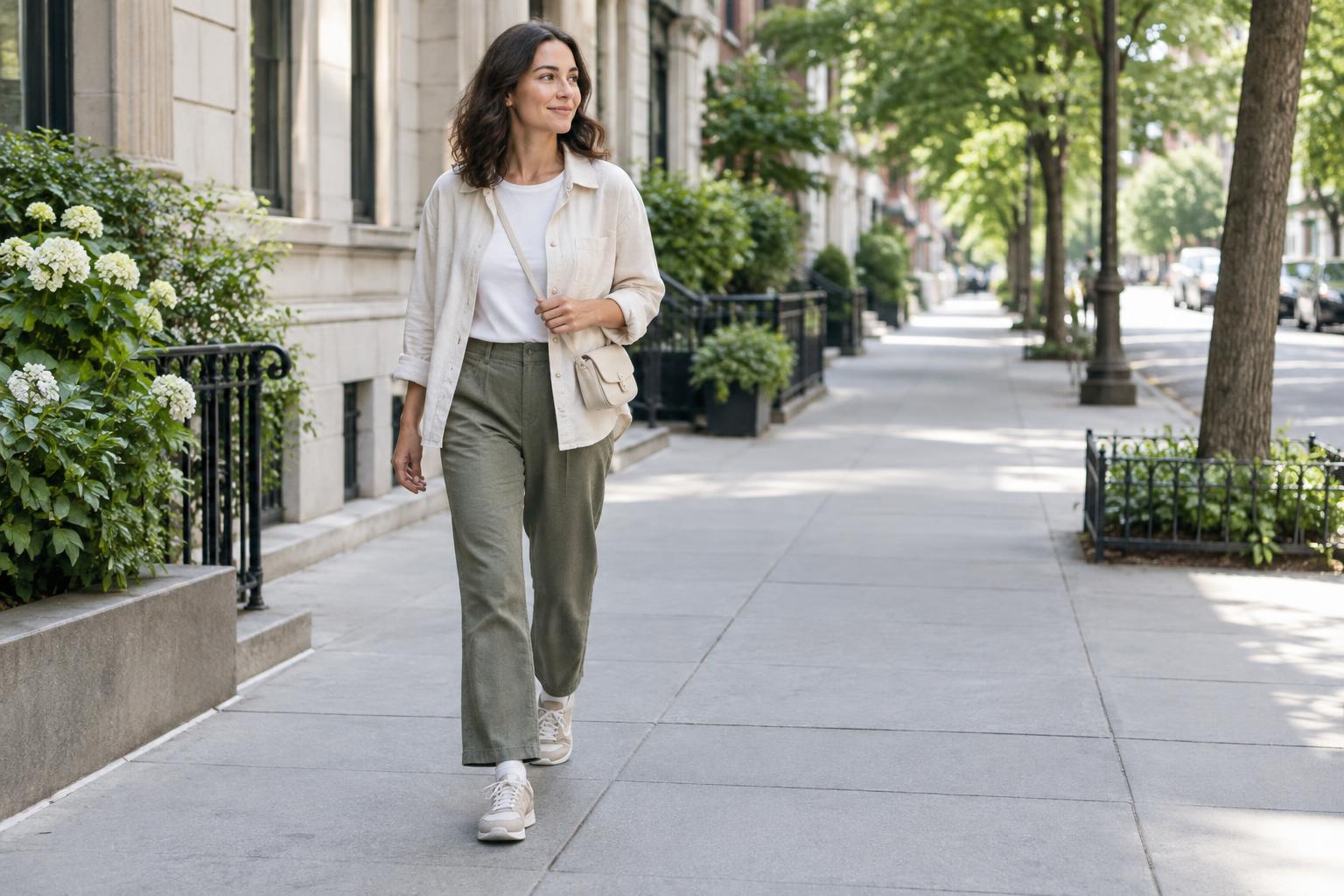
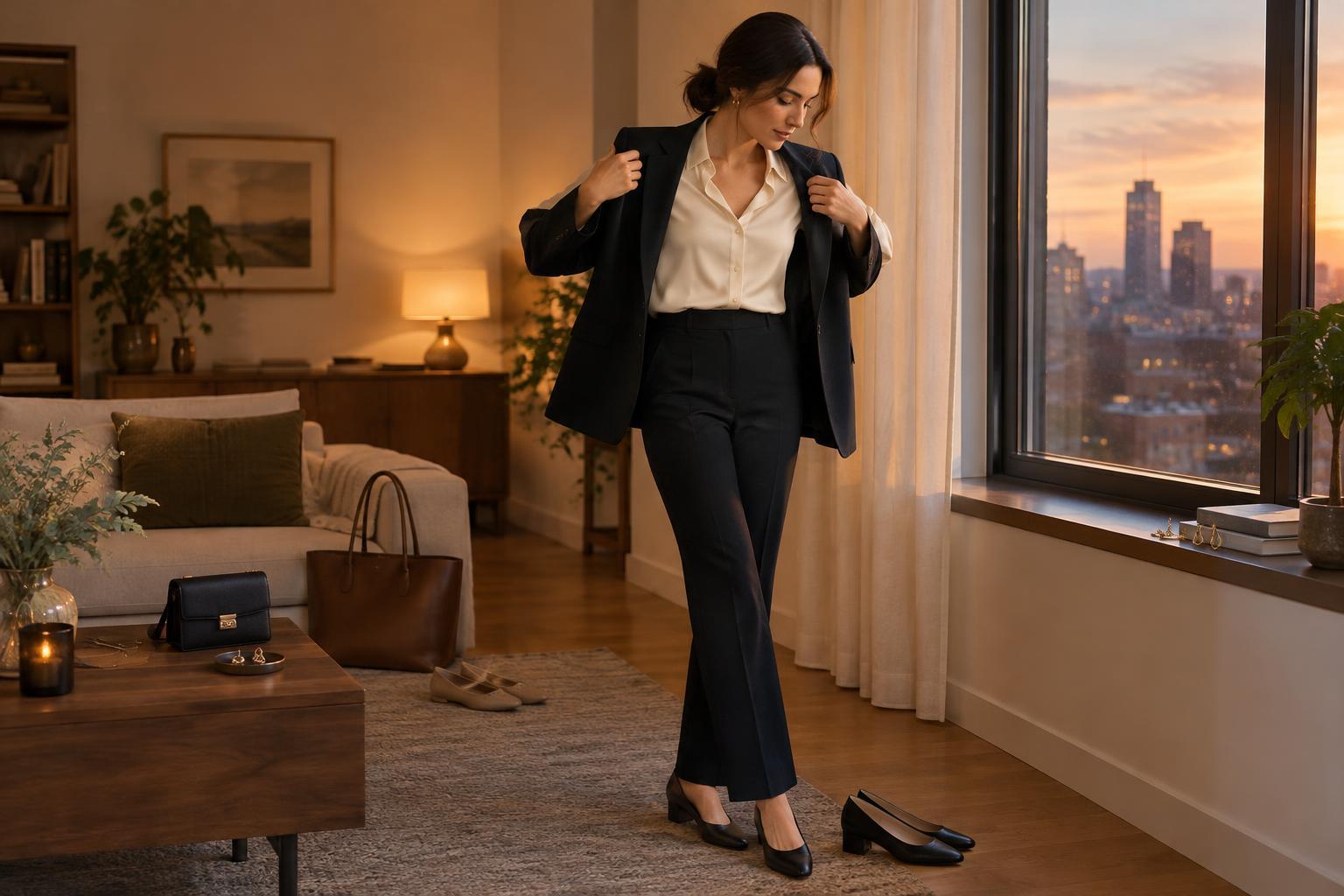
Straight-leg trousers or chinos are an easy foundation because they work with many tops without looking overly formal. Add a plain T-shirt, fine-knit top or button-up shirt, then finish with an unstructured blazer, cardigan or overshirt. The contrast between comfortable pieces and a defined outer layer gives the outfit shape. For example, dark trousers, a light knit and a soft blazer create a quiet combination that can be repeated in different colors.
Pay attention to where each layer ends. A shorter jacket can balance wider trousers, while a longer cardigan often pairs well with a closer-fitting base layer. If you prefer a loose top and loose trousers, try a partial tuck or a slightly cropped layer to show the waistline without changing the comfortable fit. Loafers, ankle boots or tidy low-profile trainers can each work, depending on your office norms.
Formula two: dark denim, a crisp shirt and practical shoes
If denim is welcome at work, a pair with a simple finish makes a versatile base. Dark or evenly washed jeans can pair with an Oxford shirt, a relaxed blouse or a neatly fitted polo. Choose a cut you can sit in comfortably rather than one that only looks good standing up. A straight or gently tapered leg is straightforward to style, but the best shape is the one that works with your proportions and preferred shoes.
This formula is especially useful on days that move between desk work and casual conversations. Wear the shirt untucked if its length looks balanced, or tuck it in for a more defined outline. Add a belt if it serves the outfit, not because every pair of jeans needs one. If trainers are appropriate, keeping them clean helps the look feel deliberate. When in doubt about denim, swap in chinos without changing the rest of the outfit.
Formula three: one-piece dressing with an adjustable layer
A dress, jumpsuit or coordinated set can simplify the morning because the main outfit is already decided. For a relaxed office, look for a shape that allows comfortable movement and a fabric that does not demand constant adjustment. A jersey dress with enough structure to hold its shape, a woven shirt dress or an easy jumpsuit can each provide a useful starting point. Add a cardigan, overshirt or lightweight jacket for cooler rooms.
The same approach works if dresses are not your style: match a top and bottom in similar colors to create a simple column, then add a contrasting layer. Keep footwear practical for the day ahead. A change from flats to boots, or from an open cardigan to a jacket, can shift the feel of the outfit without requiring a new wardrobe. Before leaving home, check that you can sit, reach and walk comfortably in the full combination.
Make the formulas yours, then repeat them
A formula should save decisions, not flatten your personal style. Choose one element to vary: a patterned scarf, a colorful shirt, an interesting sock or a piece of jewelry you enjoy wearing. Keeping the other pieces simple gives that detail space. If you like bold color, reverse the approach and use a bright base with quieter accessories. Repeating a silhouette you trust is not a style limitation; it gives you a reliable framework for experimenting.
To make these combinations easier to use, identify a few pieces that work across more than one formula. The same trousers might go with a knit on Monday and a shirt later in the week; the same layer might finish a dress or a denim outfit. Give clothes enough space to air between wears when appropriate, follow their care labels and deal with small marks promptly. A manageable rotation of well-kept pieces is often more useful than a crowded wardrobe.