Start with a base you can keep wearing
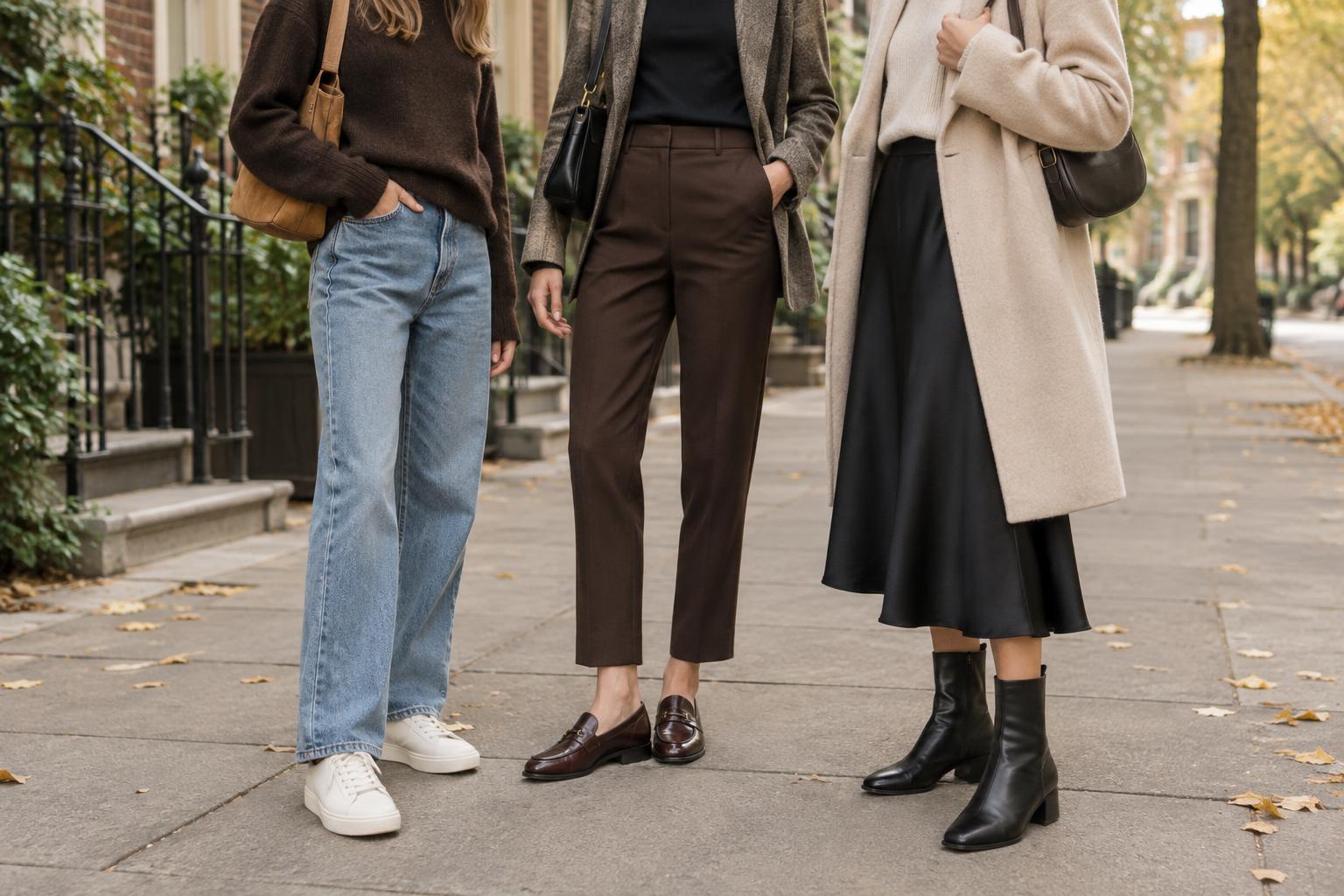
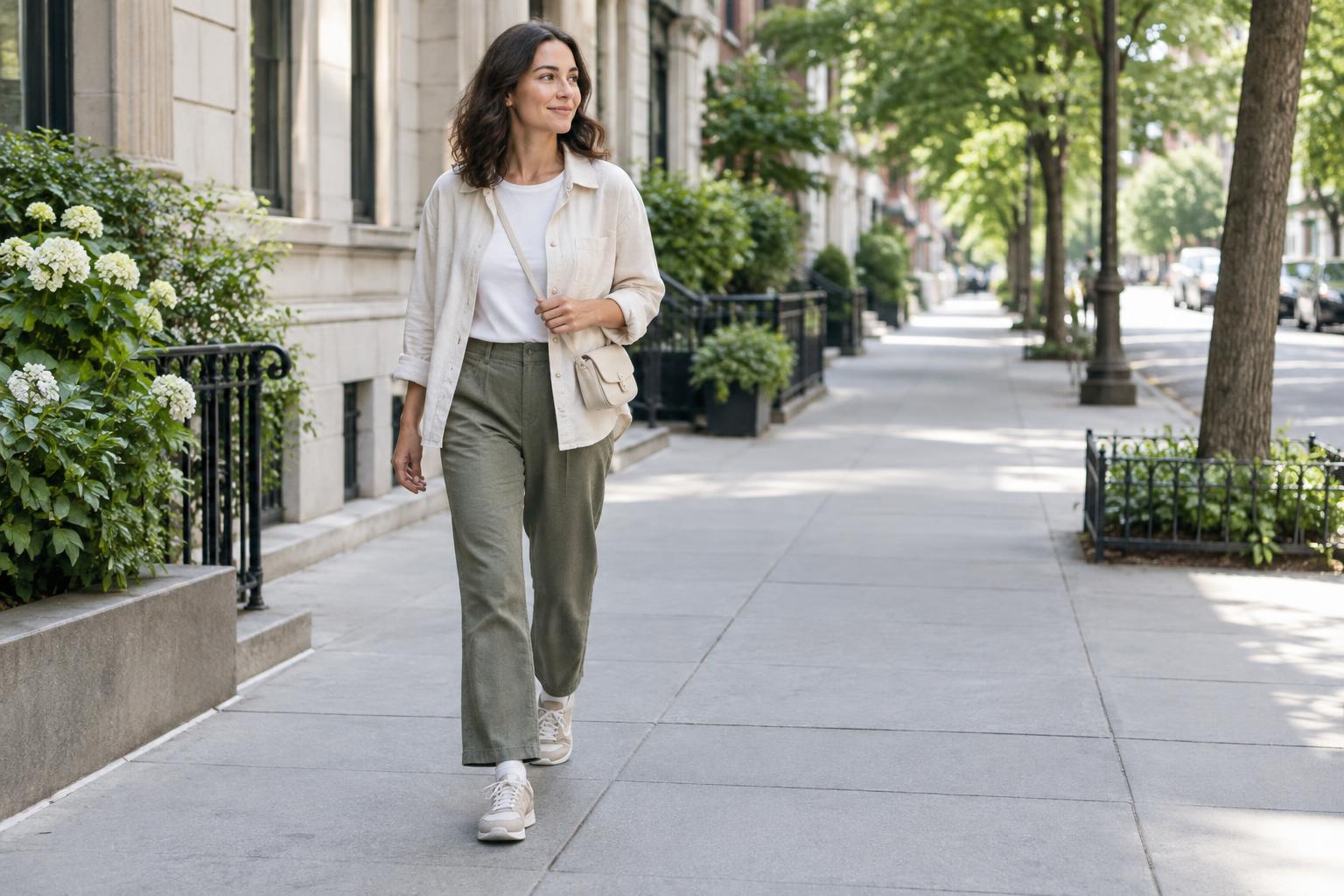
The easiest day-to-evening outfit begins with clothes that work in both settings. Straight-leg jeans and a neat knit, relaxed trousers and a tucked-in T-shirt, or a simple dress with a light layer can all serve as a starting point. Choose pieces you can sit, walk and move in comfortably. An evening plan is less enjoyable if your outfit only looks good while you stand still.
Think about the level of polish your destination calls for, rather than treating every evening out as a formal occasion. Dinner with friends might need only a sharper jacket; a casual concert may call for shoes you can stand in. If you know your plans in advance, wearing one evening-ready piece during the day—such as tailored trousers or a well-fitting shirt—means you have less to carry.
Change the silhouette with one layer
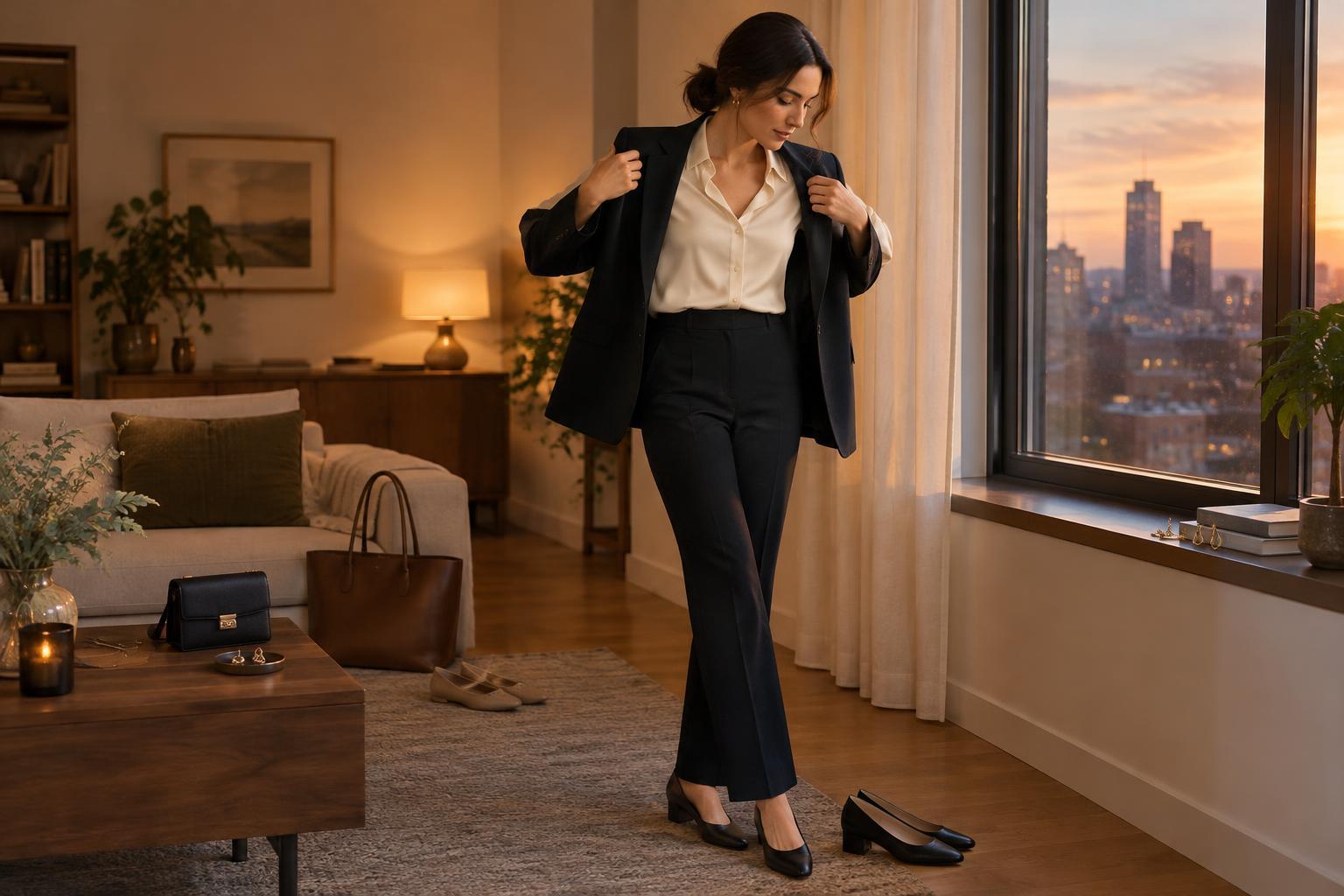
A layer can shift an outfit’s shape and mood quickly. Replace a casual cardigan with a blazer, wear an open overshirt over a fitted top, or swap a practical daytime jacket for one with a cleaner line. You do not need to change every piece. A more structured layer can make relaxed basics look intentional, while a soft wrap or textured jacket can make a simple outfit feel more expressive.
Pay attention to proportion when making the switch. If your base is loose from top to bottom, try defining the waist with a tuck or a belt. If your trousers or skirt have plenty of volume, a shorter jacket may give the outfit a clearer shape. These are options, not rules: the useful test is whether you like how the combination looks and feels when you move.
Use shoes and a bag to match the plan
Shoes often make the most noticeable difference, but an evening shoe does not have to be a heel. Clean leather or leather-look sneakers, loafers, ankle boots and dressier flats can all work, depending on the place and your comfort needs. If a shoe swap is practical, choose a pair that gives your daytime clothes a different finish without making the journey home difficult.
A smaller bag can also change the feel of an outfit. Move the essentials from a work tote or backpack into a crossbody, compact shoulder bag or pouch. Check that it holds what you actually need, including keys, phone and any items for the trip home. If you cannot carry a second bag, tidying or removing an overfilled tote can make just as much difference.
Add detail where it will be seen
Accessories offer an easy way to make the outfit feel chosen for the evening. Try one focal point: noticeable earrings, a patterned scarf, a distinctive belt or a necklace against a plain neckline. If you prefer quieter styling, a watch, a simple chain or a change of hair accessory may be enough. The aim is not to pile on decoration, but to direct attention to a detail you enjoy.
Texture and color can do similar work. A satin-finish scarf against cotton, a metallic accent with a dark outfit, or a rich-colored layer over neutrals introduces contrast without requiring a new outfit. Before leaving, take a moment to check how the pieces sit together. Adjust a cuff, smooth a collar or remove an accessory if the result feels too busy.
Make the transition easy to repeat
A small change kit can help when you are going straight from work or errands to an evening plan. Depending on your routine, it might hold an accessory, a compact bag, a spare top or a simple grooming item. Keep it limited to things you will use. Clothing that wrinkles badly in a bag or shoes that are awkward to carry may create more effort than they save.
After an outing, notice which changes made you feel comfortable and ready. Perhaps a jacket and earrings were enough, or perhaps the shoe swap mattered most. Repeating a combination you trust is not a lack of creativity; it gives you a dependable starting point that you can vary with color, texture or one new accessory. The best day-to-evening approach fits your plans and still feels like you.