Start with the day, not the shoes
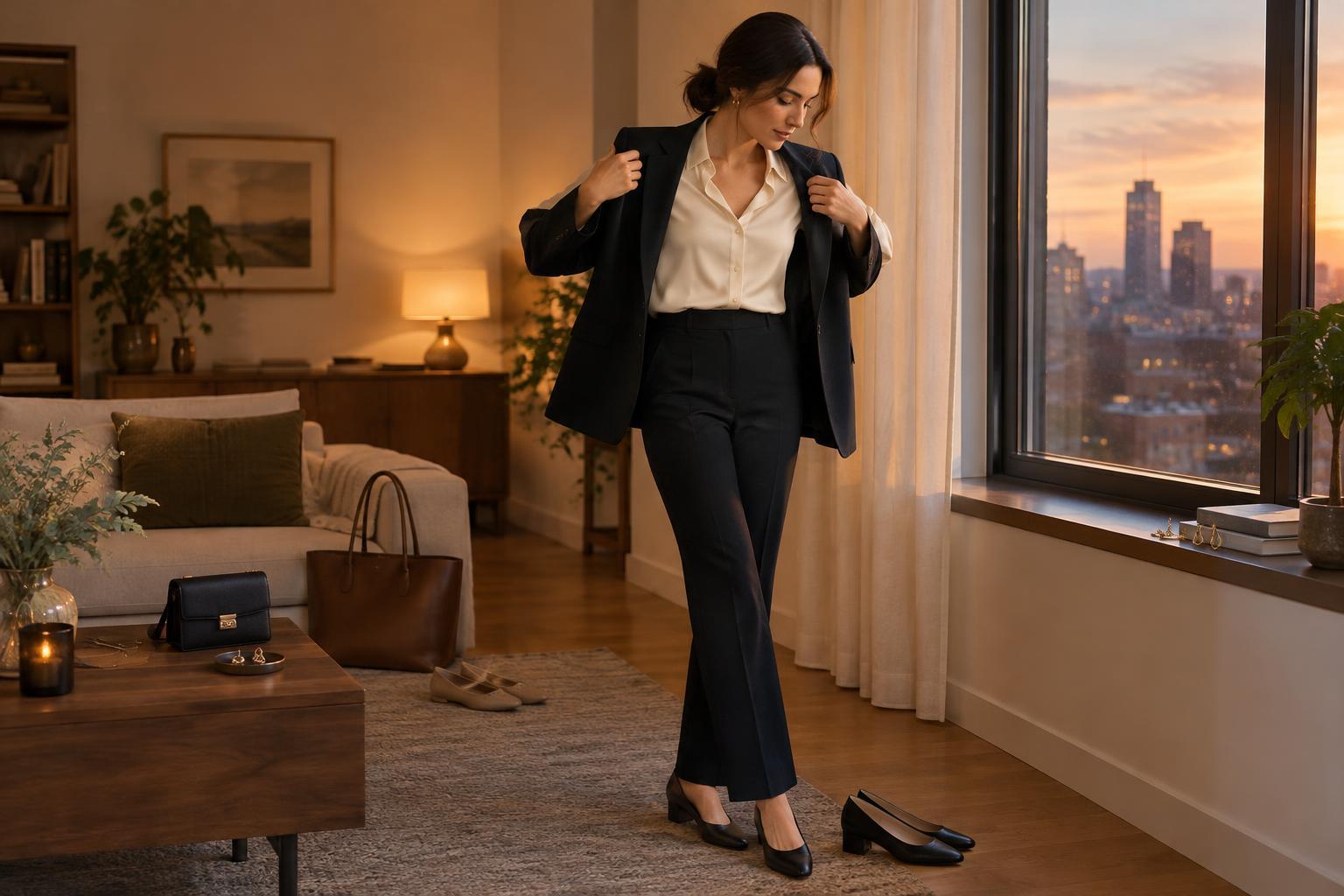
A good everyday outfit works for the places you are going and the way you want to feel there. Before choosing shoes, consider how much you will walk, whether you will be indoors or outside, and whether your plans call for a relaxed or slightly polished look. Sneakers, loafers and ankle boots can all work with familiar pieces such as jeans, trousers and simple dresses. The most useful choice is the pair that supports your plans without making the rest of the outfit feel forced.
Next, look at proportion. A chunky shoe adds visual weight, while a slim one creates a quieter finish. Neither is automatically better: wide-leg trousers may look balanced with a substantial sneaker or boot, while a tapered trouser can give a loafer room to stand out. Try the full outfit on and look at where the trouser hem meets the shoe. A small change in hem length or sock choice can make the combination feel more intentional.
Choose sneakers for ease and a relaxed finish
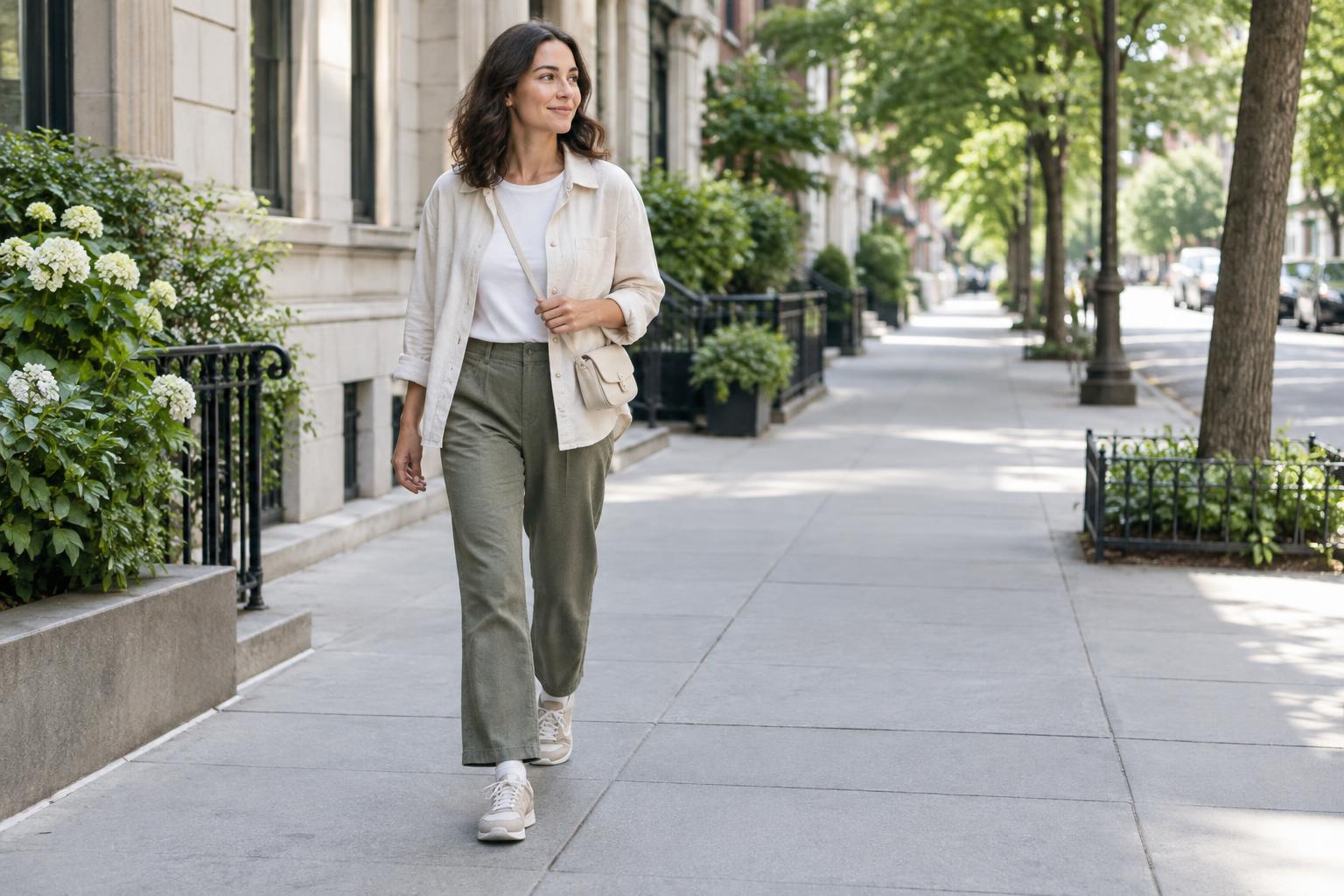
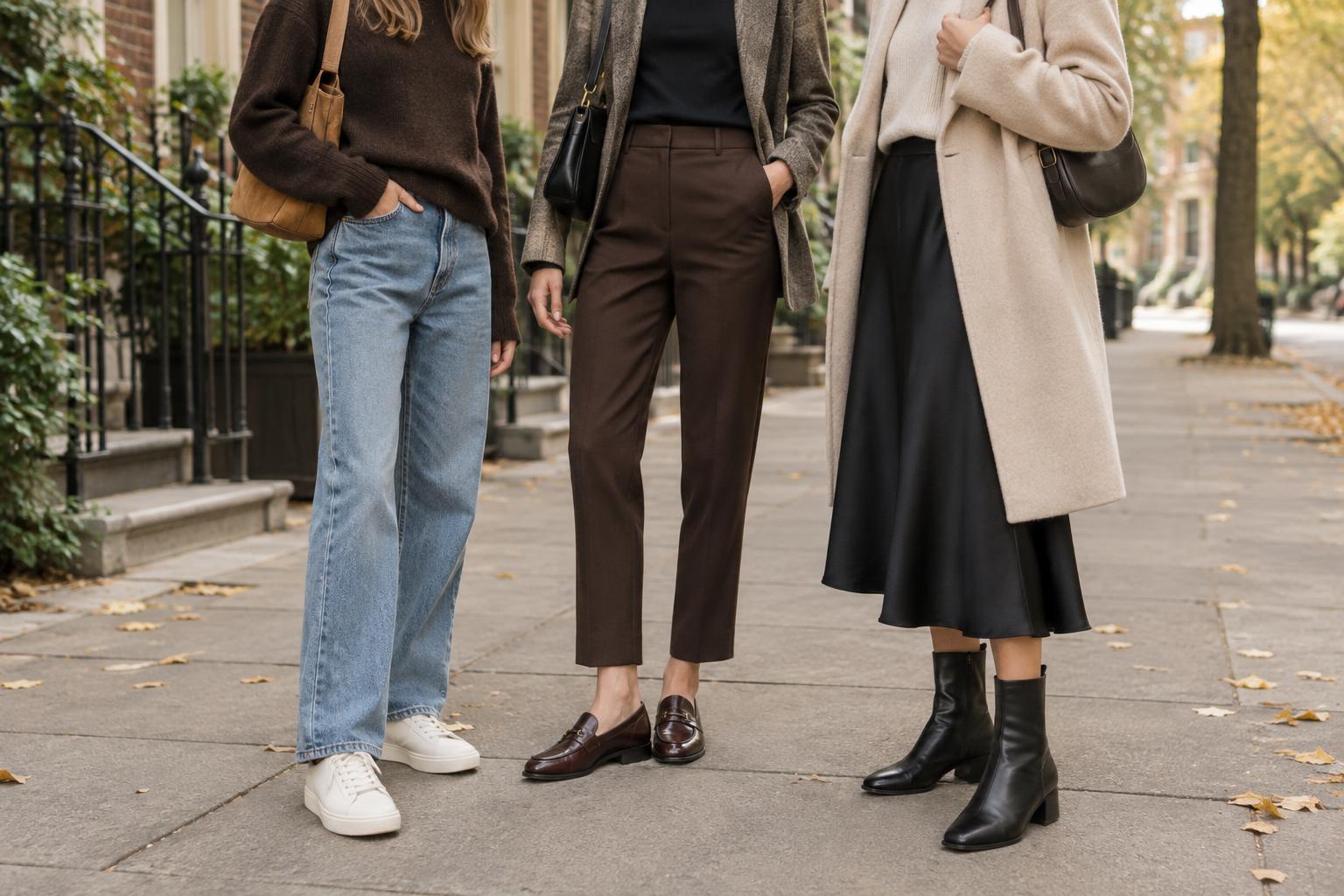
Sneakers are a natural starting point when your day involves plenty of movement or you want an informal look. A simple pair in a color you wear often can sit easily beside denim, casual trousers, skirts and knit dresses. For a low-key outfit, try straight-leg jeans, a T-shirt, an open shirt and sneakers. To make the same shoes feel a little neater, pair them with pressed trousers and a clean, unfussy top.
Pay attention to shape rather than assuming every sneaker serves the same purpose. A slim style keeps the line of an outfit light; a bulkier one can ground loose trousers or an oversized jacket. Comfort depends on the individual shoe and your feet, so check the fit while standing and walking rather than relying on its appearance alone. If you are buying one versatile pair, consider whether its color, sole and overall shape work with several outfits you already own.
Use loafers when you want casual polish
Loafers can make an everyday outfit look more considered without requiring a formal wardrobe. They work particularly well when you want a clear contrast: relaxed jeans with a structured shoe, or an easy knit with tailored trousers. For a straightforward combination, try ankle-length trousers, loafers and a soft sweater. The trousers show the shoe, while the sweater keeps the outfit from feeling too strict.
Fit matters here, especially around the heel and across the front of the foot. A loafer that slips excessively or pinches is unlikely to become a favorite just because it looks versatile. Think about how you will wear yours, too. Visible socks can add color or texture, while socks that blend with your trousers create a more continuous line. A slightly thicker sole gives the outfit a stronger visual anchor; a sleeker sole tends to feel quieter.
Turn to ankle boots for coverage and structure
Ankle boots are useful when you want more coverage or a stronger outline at the bottom of an outfit. They can suit cooler days, though warmth and weather resistance depend on the boot’s materials and construction. A low, stable heel may be easier to work into a long day than a heel you rarely wear. Think of ankle boots as a practical style option, not an automatic substitute for footwear made for heavy rain or snow.
The point where the boot meets your clothing makes a difference. Cropped trousers can leave a small gap above the boot; full-length trousers can fall over the shaft for a smoother line. With a midi skirt or dress, a close-fitting ankle boot creates a different mood from a broad, rugged one. If the outfit feels bottom-heavy, try a shorter jacket, a more defined waist or a lighter-colored top to shift the balance.
Build a small decision routine
When two pairs seem equally suitable, choose by asking three questions: Can I comfortably do what I have planned? Does the shoe work with the hem and shape of my clothes? Does it give the outfit the mood I want? Sneakers often make a look more relaxed, loafers can add polish, and ankle boots can add definition. These are starting points, not rules; your colors, fabrics and styling choices can change the effect.
You do not need all three styles to dress well. Start with the shoes you wear most, then notice when they leave a gap in your wardrobe. If you already have reliable sneakers, for example, a loafer might offer a different finish for the same trousers. Whatever you choose, give shoes time to dry after wear when needed, follow their material-specific care instructions, and keep them reasonably clean. A familiar pair in good condition is often the easiest way to make an everyday outfit feel complete.