Start with the afternoon, then add warmth
When temperatures change through the day, plan the outfit you will want to wear at its warmest point first. A breathable shirt with trousers, a simple dress, or a T-shirt and skirt can serve as the base. If you would be comfortable wearing it without an outer layer in the afternoon, you have a better starting point than a heavy outfit you cannot adjust.
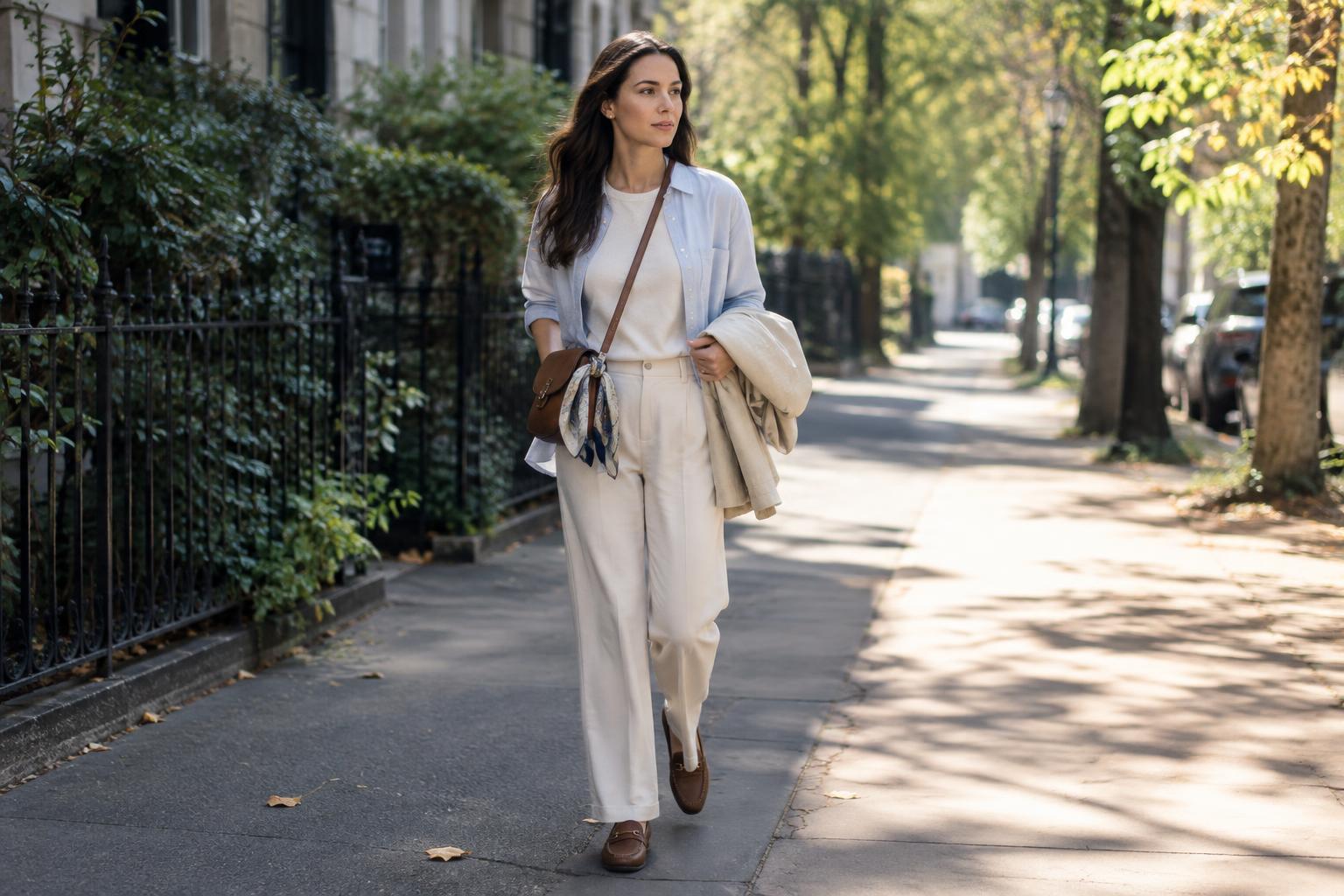
Next, add enough warmth for the morning. A light sweater, overshirt, cardigan or jacket can make the walk to work or an early errand more comfortable. Choose pieces that are easy to take off without changing the rest of your outfit. A cardigan over a sleeveless top, for example, offers more flexibility than a thick sweater worn alone.
Choose layers that are easy to carry
The best extra layer is one you can manage after you remove it. A soft shirt can be tied around the waist, a fine-knit cardigan may fit in a tote, and a lightweight jacket can often be carried over an arm. Before leaving home, check whether your bag has room for a layer. If not, choose something you will not mind carrying.
Pay attention to where layers sit. A fitted long-sleeve top under a loose button-down can feel comfortable without adding much bulk. A roomy jacket leaves space for a sweater during the morning, but it should still look and feel right when worn over only your base layer. If you tend to get warm indoors, make the layer nearest your skin comfortable enough to wear on its own.
Let fabric and fit do some of the work
Fabric choice affects how adaptable an outfit feels. Cotton shirts, linen blends and lightweight knits can work well as everyday base layers, depending on their weave and how they feel on your skin. A thin wool or wool-blend sweater can provide warmth without the bulk of a heavy knit. Labels offer clues, but the feel and thickness of the actual garment matter more than the fiber name alone.
Looser cuts may allow more air to move around the body on a warm afternoon, while close-fitting pieces can be useful beneath layers. Neither approach is right for every outfit. Try sitting, walking and lifting your arms when you put a combination together; an outfit that only works while standing still may become frustrating over a full day. Dark colors, light colors and prints can all work here, so use the palette you enjoy rather than treating transitional dressing as a separate style.
Make shoes and accessories part of the plan
Shoes need to suit the whole day, not just the first hour. Sneakers, loafers and other closed-toe shoes can offer coverage on a chilly morning without requiring a change when the weather warms. Socks are worth considering too: a comfortable pair can make a noticeable difference when you are walking, while bulky socks may feel out of place by afternoon.
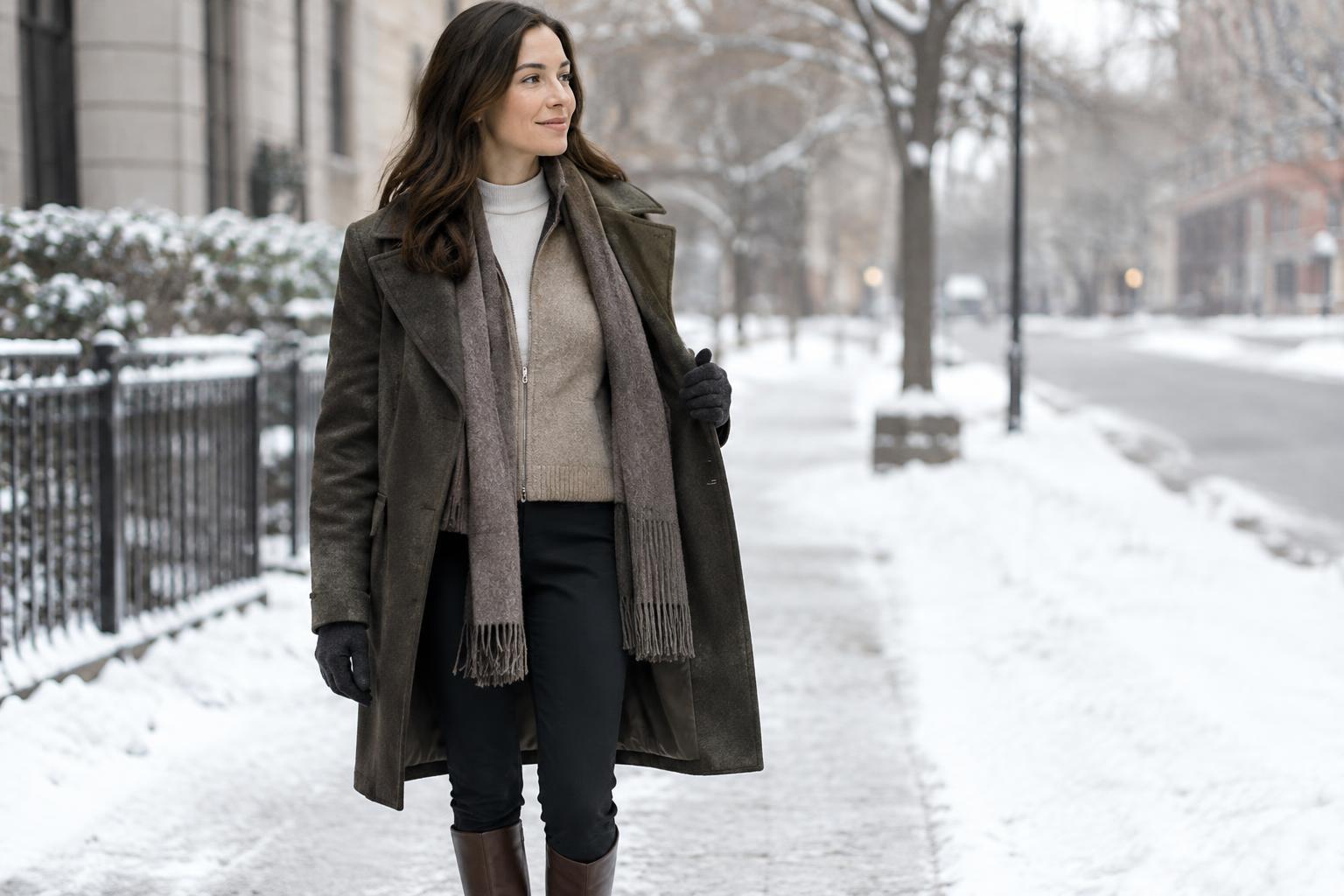
Small accessories can provide adjustable warmth without complicating the outfit. A scarf can be removed and tucked into a bag, and sunglasses may be useful once the afternoon brightens. If rain is possible, consider a compact umbrella or a light outer layer that suits your plans. There is no need to bring every possible extra; pick the items you are likely to use and have space to carry.
Build a few reliable outfit formulas
An adaptable outfit does not require a new wardrobe. Try a T-shirt, straight-leg trousers and a button-down worn open, adding a light jacket for the morning if needed. Or pair a dress with a cardigan and shoes you can comfortably wear all day. For a more polished option, start with a breathable shirt and tailored trousers, then add a fine-knit sweater or an unstructured blazer.
Think about your routine when choosing among these combinations. A long commute outdoors may call for a warmer removable layer than a short walk to a car. If you will be away from home until evening, you may want to keep that layer with you even after the afternoon warms up. With a comfortable base and one or two useful additions, you can adjust your outfit as the day changes without having to plan a complete change of clothes.