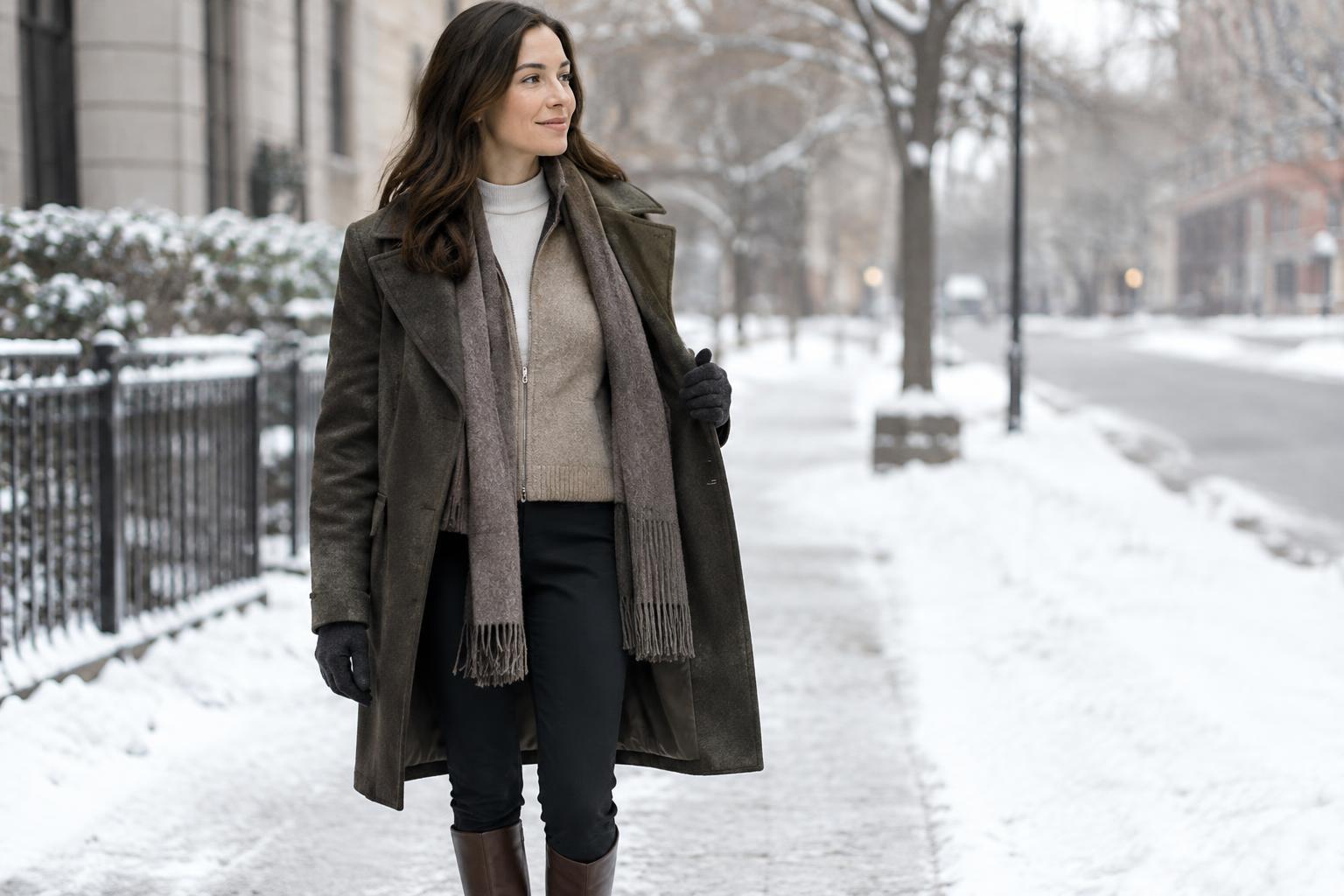
Start with the day, not the coat
A winter outfit works best when it suits what you will actually do in it. A brisk walk, a commute with a warm train ride, and an afternoon mostly indoors call for different amounts of insulation. Before getting dressed, consider how long you will be outside, whether you will be moving, and how easily you can remove a layer. This helps you avoid wearing every warm item you own at once.
Think of layering as a way to make small adjustments. A close-fitting first layer, a comfortable insulating layer, and a weather-appropriate outer layer are a useful starting point, but you may not need all three every day. Leave enough space between them to move your arms and sit comfortably. If a coat only closes when everything underneath is compressed, a thinner midlayer or a roomier coat may work better.
Choose a base layer that feels good against your skin
The first layer should be comfortable under your regular clothes rather than noticeably thick. A fitted long-sleeve top, lightweight thermal, or thin turtleneck can cover exposed skin without changing the shape of an outfit much. Look for smooth fabric and seams that do not bunch at the shoulders or wrists. A close fit is useful, but the garment should not pull when you reach forward.
Fabric choice depends partly on comfort and activity. Lightweight wool blends and many synthetic fabrics can help move moisture away from skin, which may feel more comfortable when you alternate between cold streets and heated rooms. Cotton can be pleasant for a low-activity day, though it may stay damp longer if you sweat. Choose a texture you will willingly wear all day; an itchy layer is unlikely to earn a regular place in your wardrobe.
Let one midlayer do the insulating work
Instead of stacking several heavy sweaters, try one midlayer that fits neatly beneath your coat. A fine-gauge knit, fleece zip-up, quilted vest, or light insulated jacket can each serve this purpose. Which one feels least bulky depends on its cut and the clothes around it. A vest, for example, warms the torso while leaving more room for your arms; a slim knit may be easier to wear in an office or at dinner.
Pay attention to where fabric gathers. Thick cuffs under tight coat sleeves and long sweaters under a short jacket can feel awkward even when each piece fits well on its own. Try the full outfit together and move as you normally would. If you need more warmth, first consider a warmer midlayer in place of the current one rather than automatically adding another.
Use the outer layer to handle the conditions
Your coat has a different job from your sweater: it is the layer that meets wind, rain, or snow. A wind-blocking shell over a suitable midlayer may feel warmer than a thick knit worn beneath a coat that lets drafts through. In wet weather, prioritize an outer layer suited to the conditions and follow its care instructions to maintain its finish. On a dry, milder day, a lighter coat may be all you need.
Fit matters as much as thickness. Check that the coat closes over your chosen layers without strain and that its shoulders allow a natural range of motion. A longer hem can add coverage without requiring another sweater. If you are shopping, wear a typical winter outfit when trying coats on. If you are using what you already own, experiment with thinner pieces underneath before deciding a coat is too small or not warm enough.
Add warmth where it makes the most difference
Small gaps can make an otherwise sensible outfit feel chilly. A scarf can cover the space at your collar, while a hat and gloves provide warmth without adding weight around your torso. Socks should fit inside your shoes without making them tight; cramped footwear can be uncomfortable on a cold walk. These accessories are also easy to remove when you step indoors.
For a streamlined look, repeat one or two colors across your layers and let a scarf, hat, or visible knit add texture. A thin base layer, a single midlayer, straight-leg trousers, and a coat with room through the shoulders make a practical starting combination. Then adjust one piece at a time after wearing it out. The goal is not the fewest possible garments, but an outfit that keeps you comfortable and still feels like you.