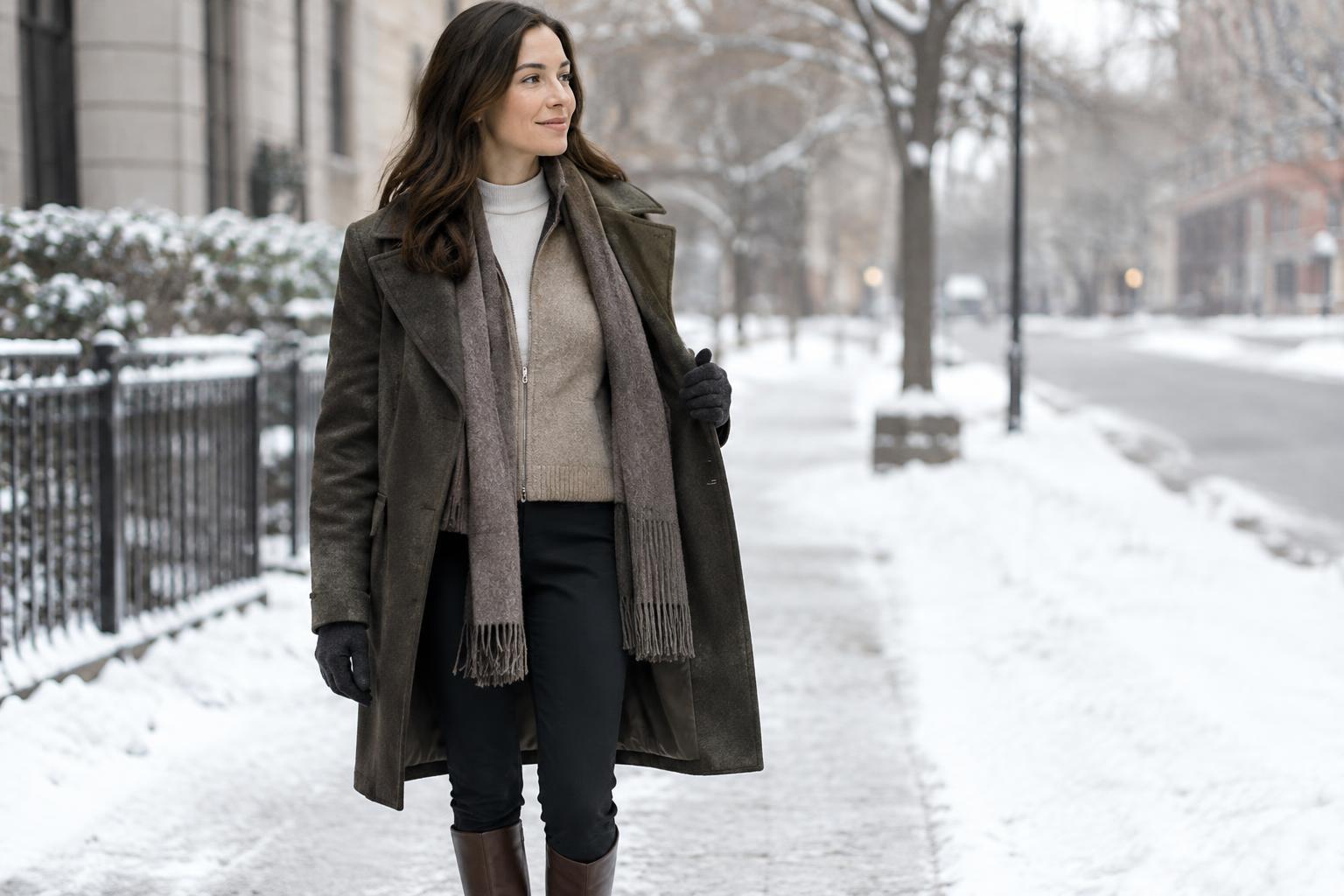
Start with what a base layer needs to do
A base layer is the clothing worn closest to your skin, usually beneath a sweater, shirt or jacket. Its job is not simply to add warmth. It also needs to feel comfortable as you move and help manage moisture when you warm up. A fabric that feels cozy while you stand still may feel less pleasant after a brisk walk or a crowded commute.
Before choosing a material, think about the day ahead. Will you be outdoors for long stretches, moving between heated rooms and cold streets, or mostly sitting inside? How easily do you overheat? A thin layer that suits an active walk may be more useful than a thick one under a heavy coat. For most wardrobes, the best choice is the one you will wear comfortably and often.
Merino wool: adaptable warmth with a softer feel
Merino is a fine wool often used for close-fitting tops, leggings and socks. It can feel comfortable across changing temperatures and may stay more pleasant than some fabrics when slightly damp. Many people also find that it develops odor more slowly than typical synthetic activewear, making it handy for travel or repeat wears between washes. The feel varies by garment, though; if wool bothers your skin, check the fabric in person or try a blend.
Merino usually costs more than basic cotton or synthetic options, and a lightweight knit can wear through if it rubs repeatedly against rough surfaces. A merino crew neck can work under an overshirt for a casual day or beneath a fine sweater when you want warmth without much bulk. Look at the care label before buying: some pieces can be machine-washed, while others call for gentler handling.
Synthetics: a practical option for active days
Polyester, nylon and related synthetic fabrics are common in base layers designed for movement. They are often lightweight, quick to dry and available at a wide range of prices. If you expect to sweat while walking, cycling or doing outdoor activities, a synthetic top can be a useful choice beneath an insulating layer and a weather-resistant outer layer.
The trade-offs depend on the fabric and finish. Some synthetic tops can hold onto odors, feel less pleasant against sensitive skin or develop pilling where straps and seams rub. A smooth, close-fitting style may also look too much like gym wear for the outfit you have in mind. If you want it to double as an everyday top, try it on with your usual trousers or skirt and check whether the neckline and fabric surface suit your style.
Cotton: comfortable, but consider the conditions
Cotton feels familiar, is widely available and works well for many ordinary winter days. A soft cotton long-sleeve tee can be an easy layer under a cardigan when you are moving between home, transport and heated indoor spaces. It is often a sensible starting point if you are building a cold-weather wardrobe from clothes you already own.
Its main limitation is moisture management. Cotton can absorb sweat and take longer to dry than many wool or synthetic base layers. If you become damp and then spend time in the cold, that wet layer may feel chilly. For a low-exertion day with easy access to warmth, this may not matter much. For a long outdoor outing or an activity that makes you sweat, consider merino or a quick-drying synthetic instead.
Choose for your outfit, then care for the layer
Fit matters as much as fiber. A base layer should sit close enough to your body to fit neatly beneath other clothes, without restricting movement or digging in at the waist and cuffs. Thin tops disappear more easily under fitted knitwear; a slightly roomier one can feel more comfortable beneath an overshirt. Check for bunching at the elbows and around the shoulders before committing to a full outfit.
You do not need one material for every situation. A cotton tee may cover routine indoor days, a synthetic layer can serve active outings, and a merino piece may earn its place when you want a light layer that works across several outfits. To help any of them last, follow the garment’s care label, avoid unnecessary heat when washing or drying, and let layers dry fully before storing them. A small selection chosen around your actual routine is more useful than a drawer full of pieces you dislike wearing.