Start with the piece you want to wear
An everyday outfit does not have to begin with a complete look in mind. Start with one item you are excited to wear: a patterned shirt, a soft cardigan, wide-leg trousers, a colorful bag or a pair of well-worn boots. Put it on or set it where you can see it. Then ask what you like most about it. Is it the color, the shape, the texture or simply how comfortable it feels?
Let that answer guide the rest of the outfit. If you love a shirt for its bold print, give the print room to stand out. If you love trousers because they move easily, choose pieces that preserve that relaxed feeling. Before you add anything else, consider where you are going and what you will need to do. A favorite piece becomes more useful when the finished outfit suits your actual day.
Give it a simple foundation
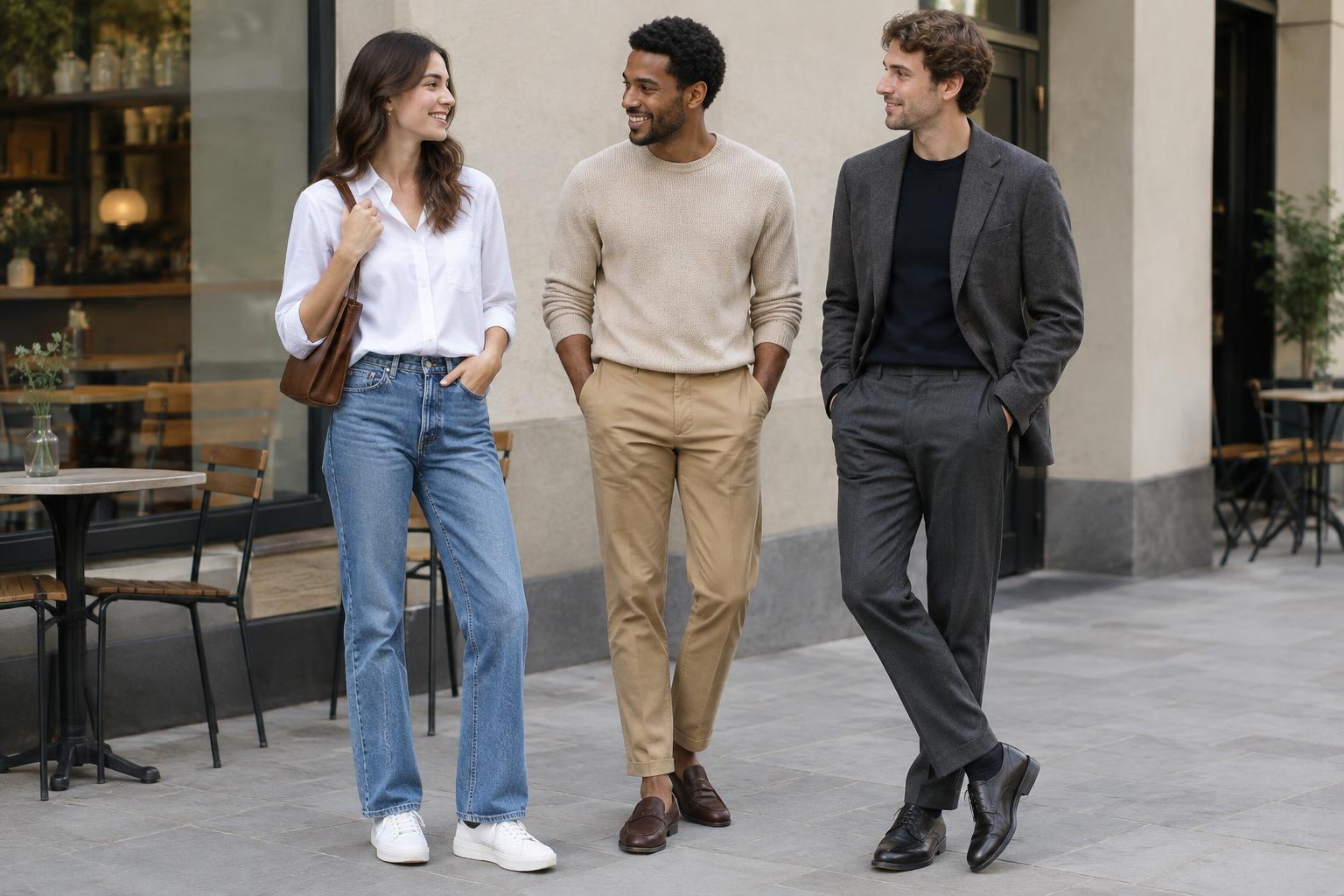
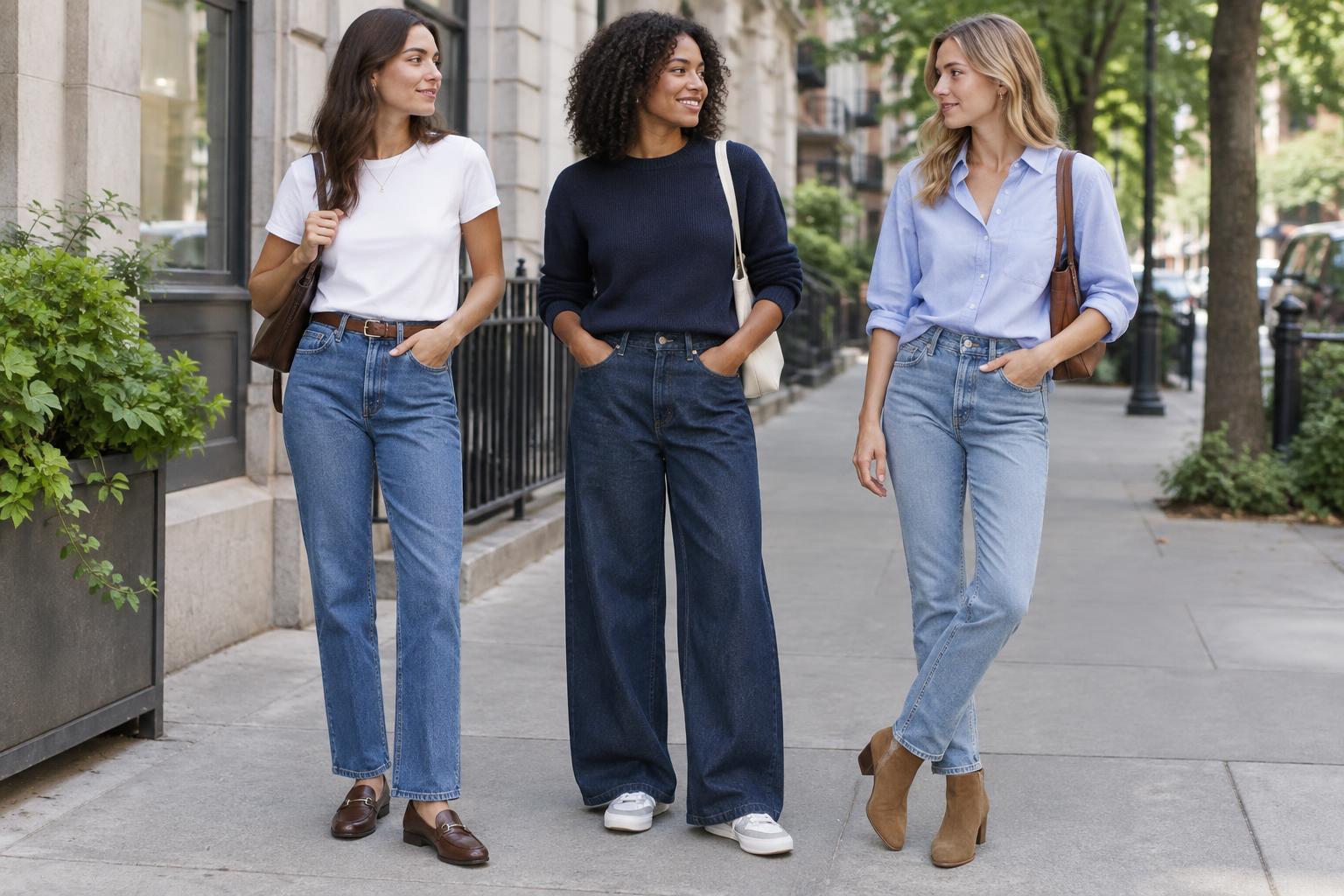
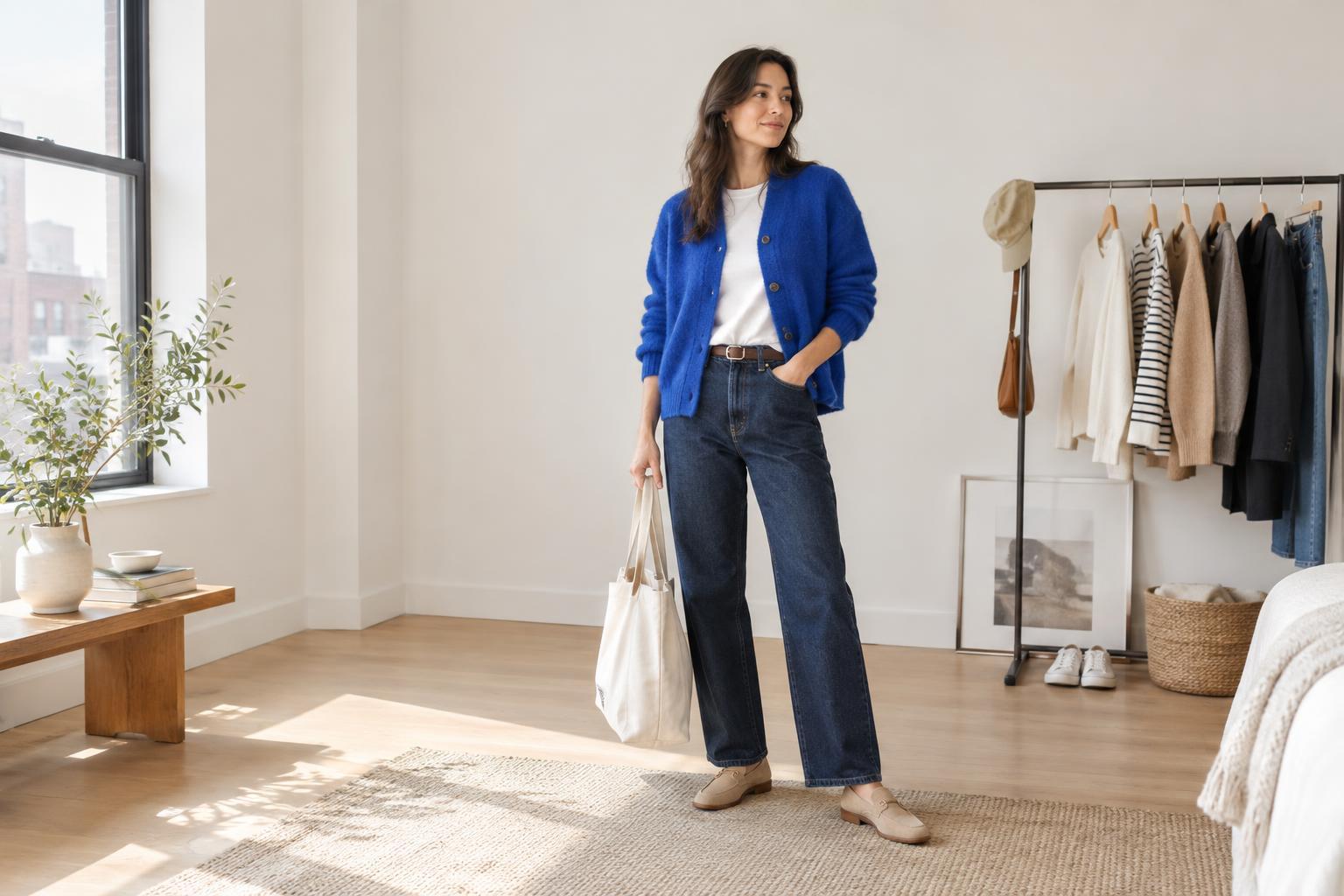
Build a base with pieces that support rather than compete with your starting item. A bright sweater might work with dark jeans and a plain tee underneath. A detailed skirt could pair with a simple knit. A favorite jacket can sit over a familiar shirt-and-trousers combination. These are starting points, not rules: simple means the other pieces are easy to wear together, not that they must be neutral.
Color is one way to create that connection. You can repeat a shade from a patterned item in a quieter piece, or place a saturated color beside black, cream, denim or another color you enjoy wearing. Texture matters too. Smooth cotton can give a fuzzy knit some contrast, while a structured layer can make soft clothing feel more deliberate. If the combination feels busy, remove one element before replacing the whole outfit.
Check the overall shape
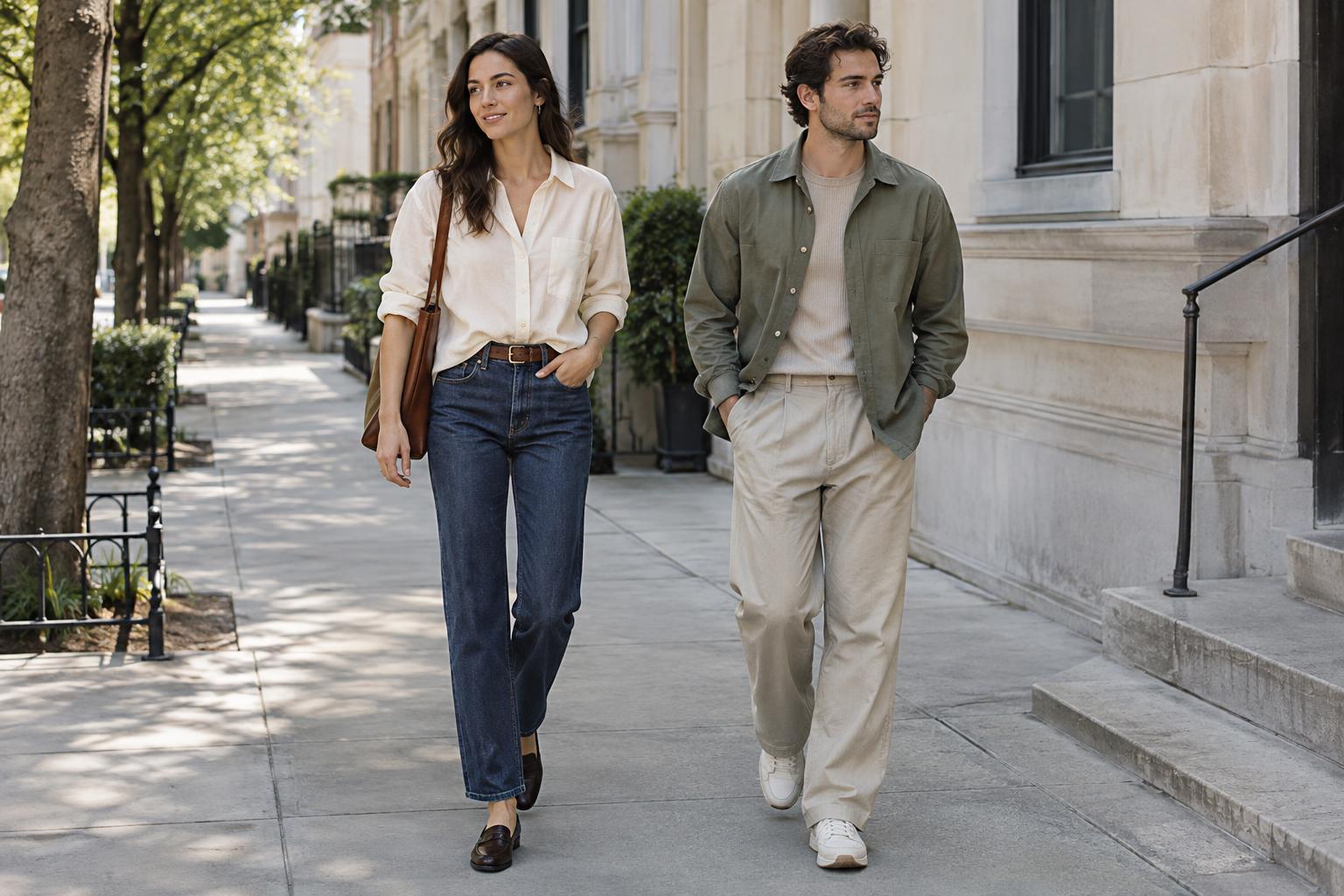
Once the colors feel right, look at the outline of the outfit. A roomy top with straight or narrower bottoms is one familiar option; a fitted top with loose trousers is another. You can also wear volume throughout if you like it. In that case, a visible waistline, an open jacket or a glimpse of ankle or wrist may help you see the shape of each piece.
Small adjustments often make more difference than buying something new. Try tucking in just the front of a shirt, rolling a sleeve, changing where a jacket ends or swapping one pair of shoes for another. Move around before deciding. Sit down, reach for something and walk a few steps to check whether the proportions still feel comfortable. An outfit that looks good standing still should also work when you are living in it.
Finish for the day ahead
Shoes, a bag and an outer layer can shift the mood of the same clothes. A favorite dress with sneakers and a crossbody bag may feel ready for errands; with boots and a jacket, it takes on a different shape. Choose these finishing pieces for your plans first. Think about how far you will walk, what you need to carry and whether the temperature is likely to change.
Accessories do not all need to make a statement. If your starting piece is a striking bag, let it be the main accent and keep jewelry or other details quiet. If the starting piece is a plain tee you love, earrings, a belt or a scarf can add interest without changing what makes the tee comfortable. Check that each addition has a purpose for you, whether practical, visual or personal.
Make the idea easy to repeat
When an outfit works, notice which choices made it work. Perhaps your favorite trousers pair well with two tops you already own, or a printed shirt feels easiest with one particular jacket. Remembering those combinations gives you a shortcut on busy mornings. You can vary a layer, shoe or accessory rather than inventing a new outfit every time.
It also helps to notice what did not work. If you kept adjusting a hem or felt too warm in a layer, change that part next time. Your favorite piece does not need a perfect set of matching companions. It needs a few reliable partners that fit your routine and leave room for your taste to change.