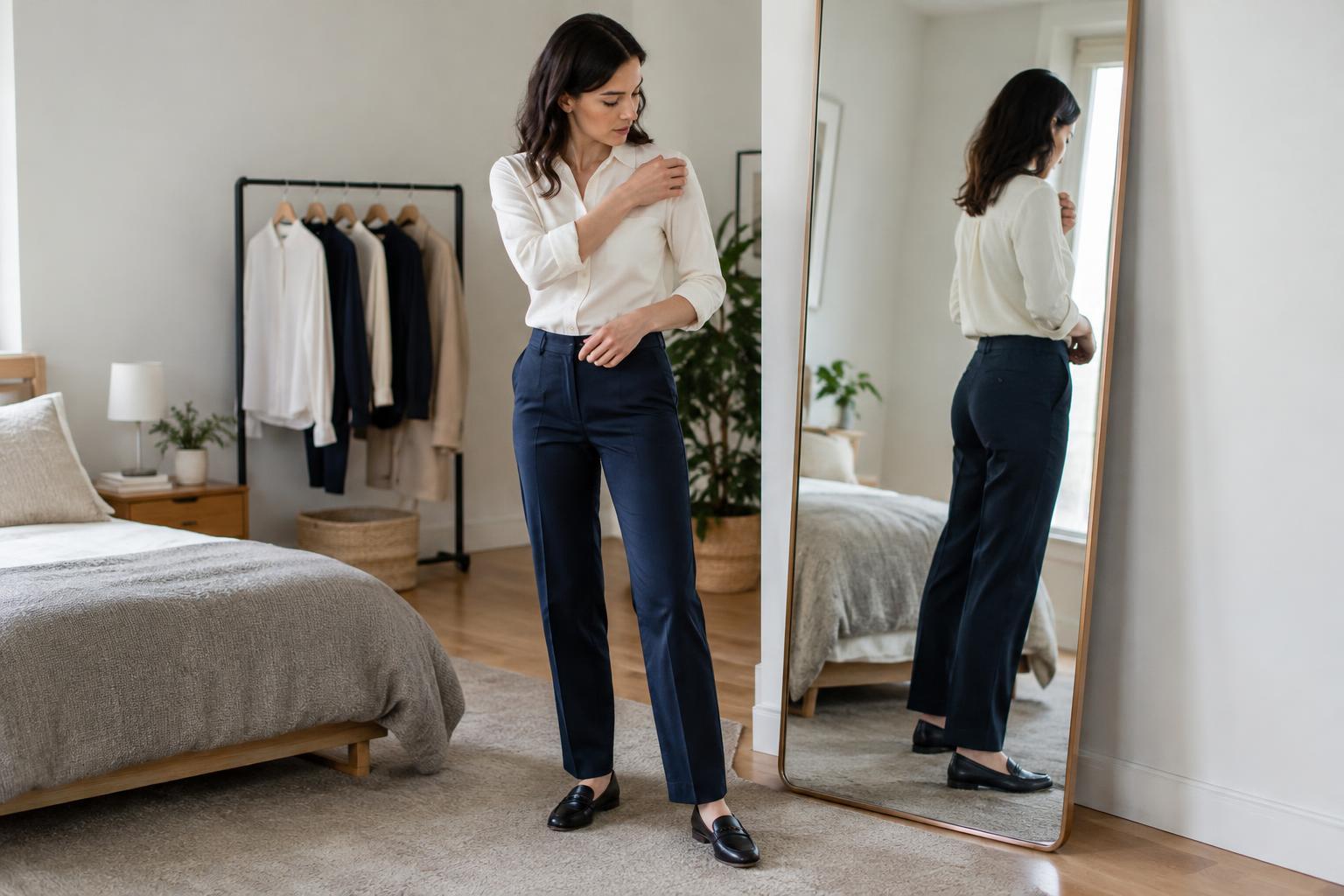
Start with the outfits you actually wear
Before comparing denim labels, picture an ordinary week. Do you wear tucked shirts, loose sweaters or short jackets? Are your usual shoes slim sneakers, boots or something chunkier? A pair of jeans earns its place in an everyday wardrobe when it works with several of those combinations, not just one carefully planned outfit.
Rise describes where the waistband sits; leg shape describes the line from hip to hem. Treat both as choices about comfort and proportion rather than rules for a particular body type. If you can, try different cuts with a familiar top and your most-worn shoes. That gives you a better sense of how the jeans will look and feel outside the fitting room.
Choose a rise that stays comfortable in motion
Low-rise jeans sit below the natural waist and can create a longer-looking torso. Mid-rise styles generally sit around the hips or just below the natural waist, making them a flexible starting point for many outfits. High-rise jeans sit closer to or above the natural waist and often pair neatly with tucked tops and shorter layers. Where each rise lands will vary with your proportions and the brand’s pattern, so the label is only a guide.
Try sitting, bending and walking before deciding. A waistband should feel secure without digging in or needing constant adjustment. Check how the front and back behave when you move: a rise that feels fine while standing may gap, slide or press uncomfortably once you sit. If you like the leg shape but not the waistband, try another rise or a different cut rather than assuming you need a different size.
Use leg shape to set the tone of an outfit
Straight-leg jeans run in a relatively even line from knee to hem, making them easy to wear with a range of shoes. Slim jeans sit closer to the leg without necessarily fitting tightly; they can slip under longer coats or pair with roomy tops. Wide-leg jeans offer more volume through the leg and can make a simple T-shirt and jeans outfit feel deliberate. Tapered cuts provide room higher up and narrow toward the ankle.
Consider the hem as part of the shape. A cropped straight leg shows more of the shoe, while a full-length wide leg creates a longer, flowing line. Boots may need enough hem width to fit comfortably over the shaft; a narrow ankle opening may work better tucked into a boot. If a cut almost works, an appropriate hem alteration may be more useful than buying a different style.
Check fit beyond the waistband
Look at how the jeans sit through the hips, seat and thighs as well as the waist. You should have the room you need to move without feeling that the fabric is pulling sharply across an area. Wrinkles are normal in worn clothing, but persistent tugging or a seam that feels strained can signal that the cut is not right for you. Pocket placement and size also affect the overall look, so check the back view if that matters to you.
Fabric changes the experience of a fit. Rigid denim may feel structured and soften with wear, while denim with stretch can offer more immediate give. Neither is automatically better for daily use: choose based on how you want the jeans to feel and how consistently they keep their shape between wears. If shopping online, compare the garment measurements with a pair you already like, especially the rise, thigh, inseam and leg opening.
Make the final choice easy to wear
Once you have a comfortable rise and leg shape, test three quick outfits in your head. For example, mid-rise straight jeans might work with a tucked tee and sneakers, a loose shirt and loafers, or a knit and ankle boots. High-rise wide-leg jeans could pair with a fitted top, a partially tucked button-up, or a cropped jacket. These are starting points, not formulas you have to follow.
Color and finish can make a versatile cut even more useful. A plain dark or medium wash is often simple to dress up or down, while fading, distressing or a pronounced wash can become a stronger part of an outfit. Choose the version you enjoy wearing, then follow its care label to help preserve the fit and finish. The best everyday jeans are not defined by a trend; they are the pair you can move in and style without much thought.