Start with comfort, not a rule
Balancing loose and fitted clothes is less about making every outfit look a certain way and more about deciding where you want room to move and where you want a clearer shape. A relaxed shirt with straight trousers can feel just as considered as a roomy sweater with slim pants. Neither combination needs to follow a fixed formula. Your preferences, the weather and what you will do in the outfit are better starting points.
First, pick the piece you most want to wear. If it is a loose pair of trousers, try a top that sits closer to the body, then see how the combination feels. If it is an oversized shirt, begin with bottoms that have a defined waist or a straighter leg. You can always change one element later; starting with an anchor keeps you from trying to solve the whole outfit at once.
Pay attention to where pieces meet
The point where your top and bottom meet can change the impression of an outfit. A loose top worn fully untucked may cover the waistband and create one long, relaxed line. A partial tuck, a shorter hem or an open shirt over a tucked-in layer reveals more of the waist. These are options, not requirements: choose the one that stays comfortable when you sit, walk and reach.
Length matters as much as width. With wide-leg trousers, a top that ends near the waistband can make the trouser shape easier to see. With a longer tunic or shirt, a narrower or straight bottom may give the outfit a different rhythm. Before changing sizes, try changing how you wear a garment: roll a sleeve, leave a layer open or adjust a hem. Small changes can show whether the issue is the fit or simply where the pieces overlap.
Use fabric to control volume
Two garments can have similar measurements and still hang very differently. Soft knits and fluid trousers tend to fall closer to the body, while crisp cotton and structured denim may hold their shape. If you want a loose top and loose bottom together, mixing a drapey piece with a more structured one can make each silhouette distinct. A fluid wide-leg trouser, for example, can sit comfortably beneath a boxy cotton shirt.
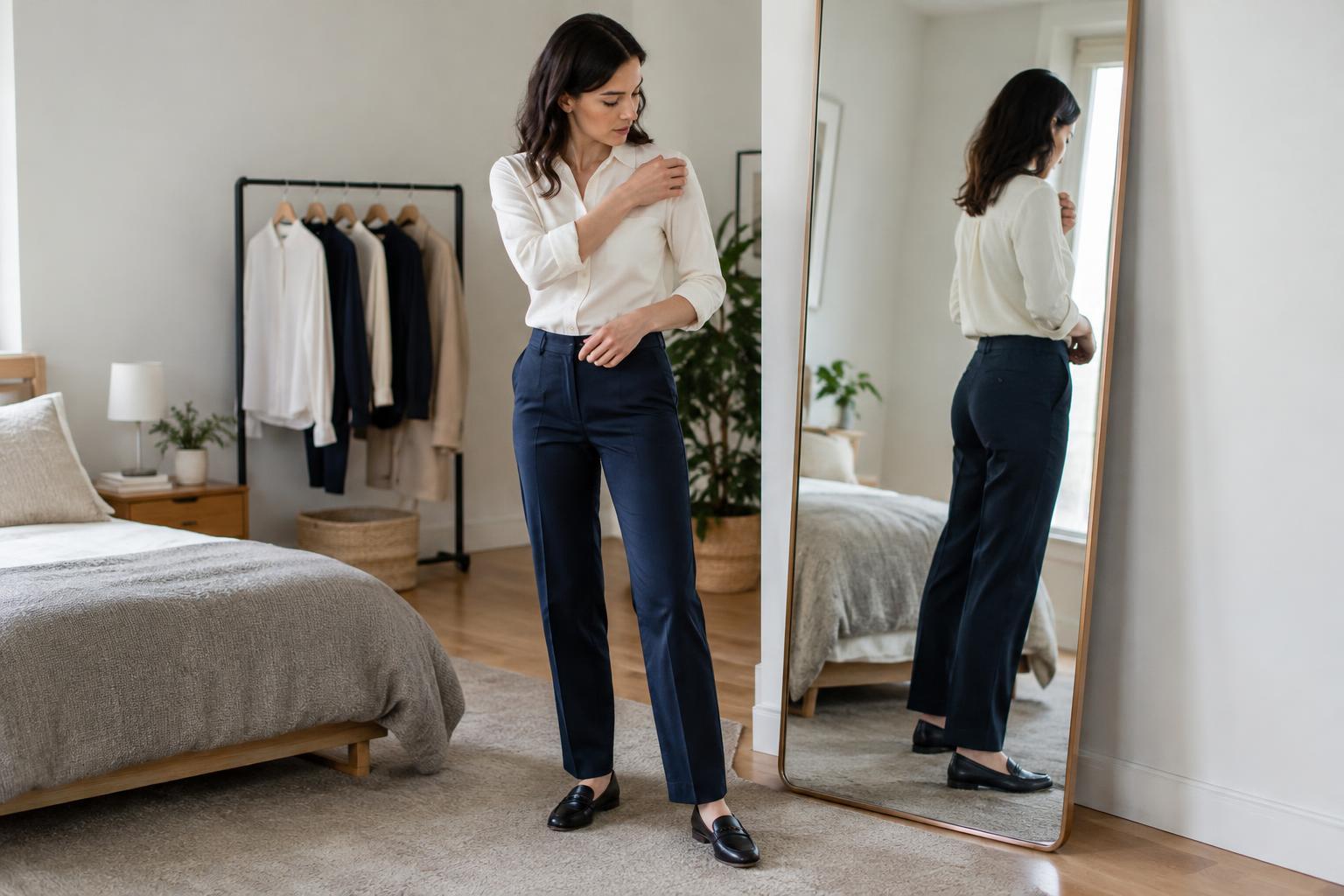
Thickness also affects how layers sit. A bulky sweater under a close-fitting jacket may bunch at the shoulders, even if both pieces look good separately. Try a thinner base layer under the jacket, or choose an outer layer with enough room for the sweater. Check the outfit in motion rather than only in a mirror: if you keep pulling at a hem or rearranging a waistband, a different fabric or fit may serve you better.
Build combinations you can repeat
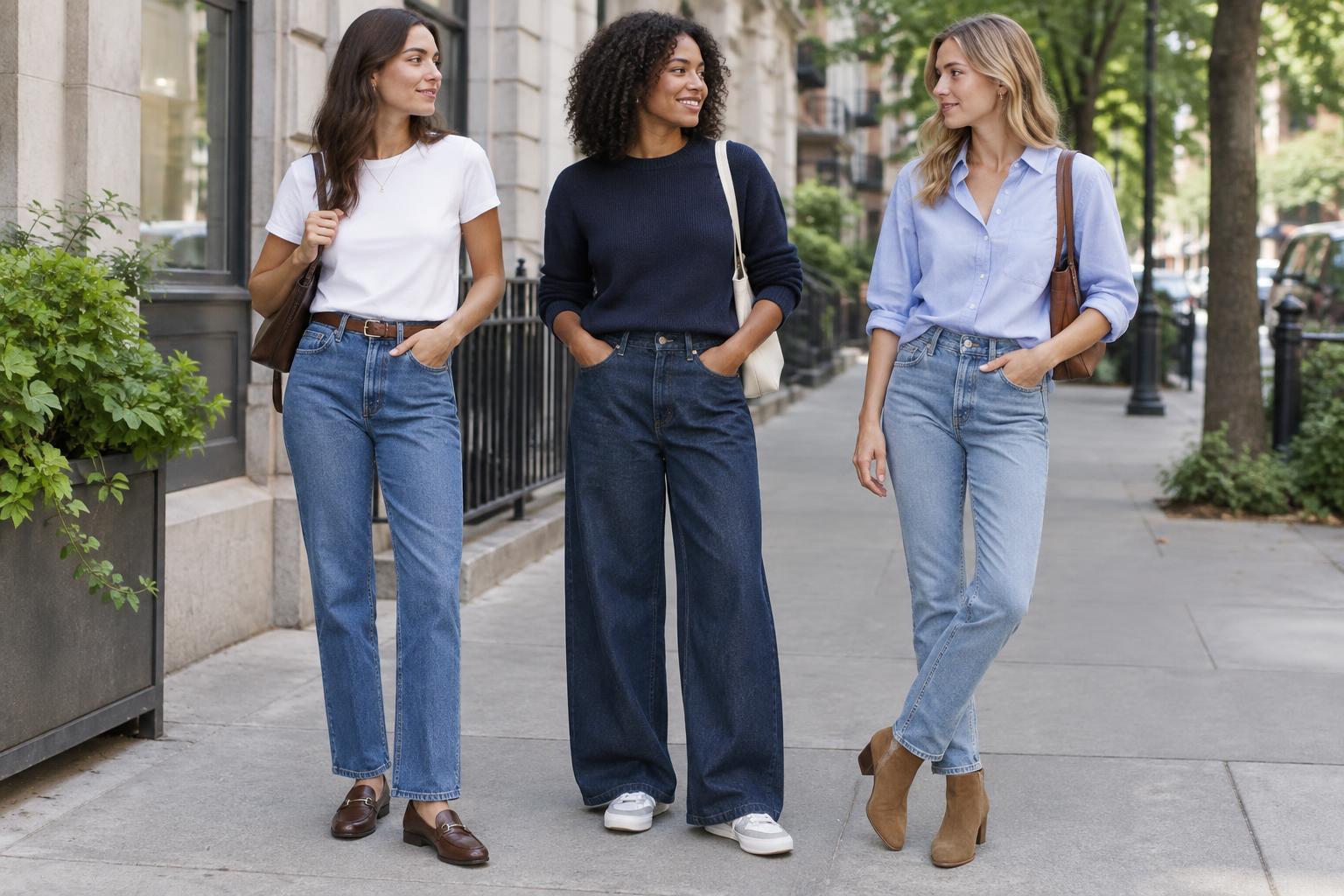
For an easy casual outfit, pair a fitted T-shirt or fine-knit top with relaxed jeans and an open overshirt. The base layer gives the outfit a clear line, while the other pieces add room without needing careful styling. For another approach, wear a generous sweater with straight-leg trousers. Showing a little of the trouser waistband, if comfortable, can help separate the shapes.
You can also wear loose on loose. Try wide-leg trousers with a relaxed button-up, then roll the cuffs or leave a few buttons open over a simple top to introduce smaller points of definition. If you prefer fitted pieces together, an unstructured cardigan or loose jacket can add space. The goal is not to display a particular body shape; it is to make the clothes feel like they belong in the same outfit.
Finish the outfit with the day in mind
Shoes and accessories can influence how much visual weight an outfit carries. A simple low-profile shoe may keep wide trousers and a roomy top feeling light, while a chunkier shoe can echo their volume. A belt can mark the waist when you want that effect, but it is not necessary. Choose a bag that works for what you need to carry rather than treating it as a fix for the silhouette.
Before heading out, ask two practical questions: can you move comfortably, and can you recognize your own style in the result? If the outfit feels too bulky, change one variable, such as the top length or outer layer. If it feels too close-fitting, add a relaxed piece. Loose and fitted are tools you can adjust, not categories you have to get right.