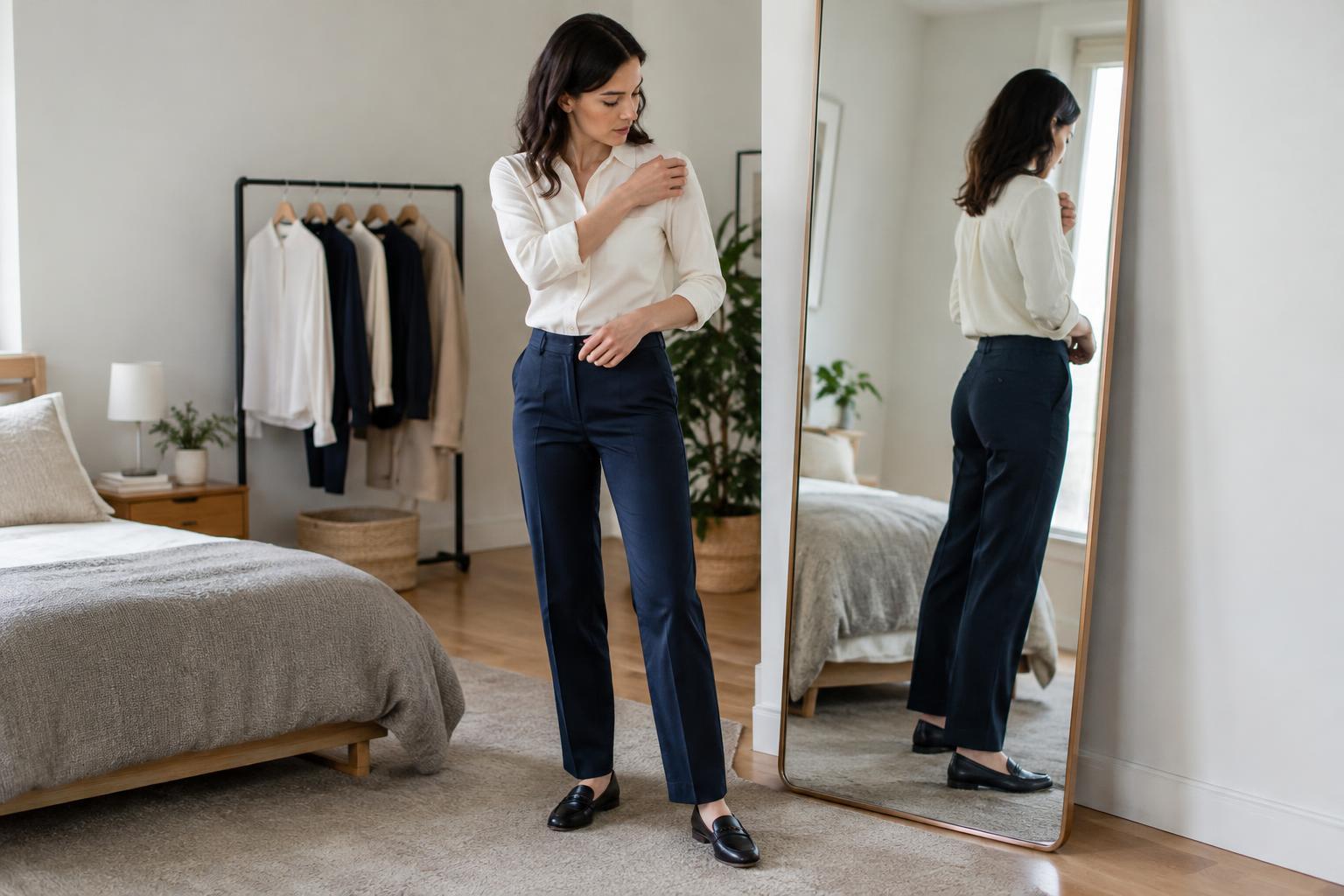
Start with movement, not a size label
A size label is a starting point, not a verdict. The same labeled size can feel different across cuts and fabrics, and a good fit does not have to follow the outline of your body. Before judging a garment, decide what you want it to do: skim, sit close, drape loosely or create an oversized shape.
Try the piece with the shoes and any layers you expect to wear most often. Stand naturally in front of a mirror, then walk, sit, reach forward and raise your arms. Look for areas that pull, slip or need repeated adjustment. A garment can look smooth while you stand still yet feel awkward in an ordinary day. Checking four areas—the shoulders, waist, seat and hem—makes it easier to name the problem instead of dismissing the whole outfit.
Shoulders: check where the garment hangs
On a structured shirt, blazer or coat, look at where the shoulder seam meets your arm. For a conventional fit, it will sit near the edge of your shoulder rather than pulling inward toward your neck or dropping far down your upper arm. Dropped shoulders may be intentional on a relaxed design, so judge them by the shape you want and by how the sleeves move.
Watch the fabric across your upper back as you reach forward. Strong horizontal pulling can mean you need more room, even if the front looks fine. If the shoulder area collapses or the sleeves twist as your arms hang naturally, try another cut or size. Shoulder adjustments can be more involved than changing a hem, so prioritize a shoulder fit you like when choosing a structured piece.
Waist: allow for breathing and sitting
For trousers and skirts, the waistband should stay where you intend to wear it without digging in or sliding down during normal movement. Sit down and take a few steps. If you have to keep pulling the waistband up, the rise or cut may be wrong for you, even when the waist measurement seems right. If it feels restrictive when seated, try a different size, rise or fabric.
On dresses, shirts and jackets, the waist may be fitted, gently shaped or deliberately loose. Check that buttons lie comfortably and that the fabric does not strain when you turn. You can also test how a top behaves tucked and untucked. A belt may help shape a roomy garment, but it should be a styling choice rather than the only thing holding an uncomfortable fit in place.
Seat: look from the side and back
The seat is the area over your hips and backside, especially important in trousers, jeans, skirts and fitted dresses. Use a second mirror or a photo to see the back; a front view rarely tells the full story. Fabric that pulls tightly across the seat, forms pronounced horizontal lines or makes pockets flare may need more room. Extra fabric that folds heavily beneath the seat may signal a cut that is too roomy in that area.
Sit, bend slightly and walk before deciding. You should be able to move without feeling that a skirt rides up sharply or trousers pull down at the back. Some wrinkling is normal, particularly when you move or wear a soft fabric. Focus on comfort and on whether the garment returns to a shape you like when you stand.
Hem: judge the length as part of the outfit
A hem changes the balance of a look, so check it with your usual footwear. For trousers, notice whether the fabric gathers at the ankle, brushes the shoe or ends above it. None of these lengths is automatically right; each creates a different effect. Check both legs while standing and walking, since a length that looks neat in a fitting room can catch under a shoe in motion.
For tops and jackets, see where the hem falls relative to your waistband and hips, both tucked and untucked if you plan to wear it both ways. For skirts and dresses, sit as well as stand to check your comfort with the length. Hemming can often refine a piece whose shoulders, waist and seat already work. Make that decision based on the full outfit, rather than treating length as an isolated measurement.