Start with how you wear your watch
A strap can change the character of a watch without changing the watch itself. A simple dial may look polished on leather, relaxed on fabric or sporty on silicone. Rather than choosing by appearance alone, think about when you wear the watch, how the strap feels against your skin and how much upkeep you want to do.
Before shopping, check how your watch attaches to its strap. Measure the width between the lugs, where the strap meets the case, and confirm whether the watch uses standard spring bars, quick-release pins or a proprietary connection. A strap that looks right but has the wrong attachment will not fit securely. Also consider thickness: a substantial strap can overwhelm a small case, while a very slim one may look out of place on a bulky watch.
Leather: polished, soft and best kept dry
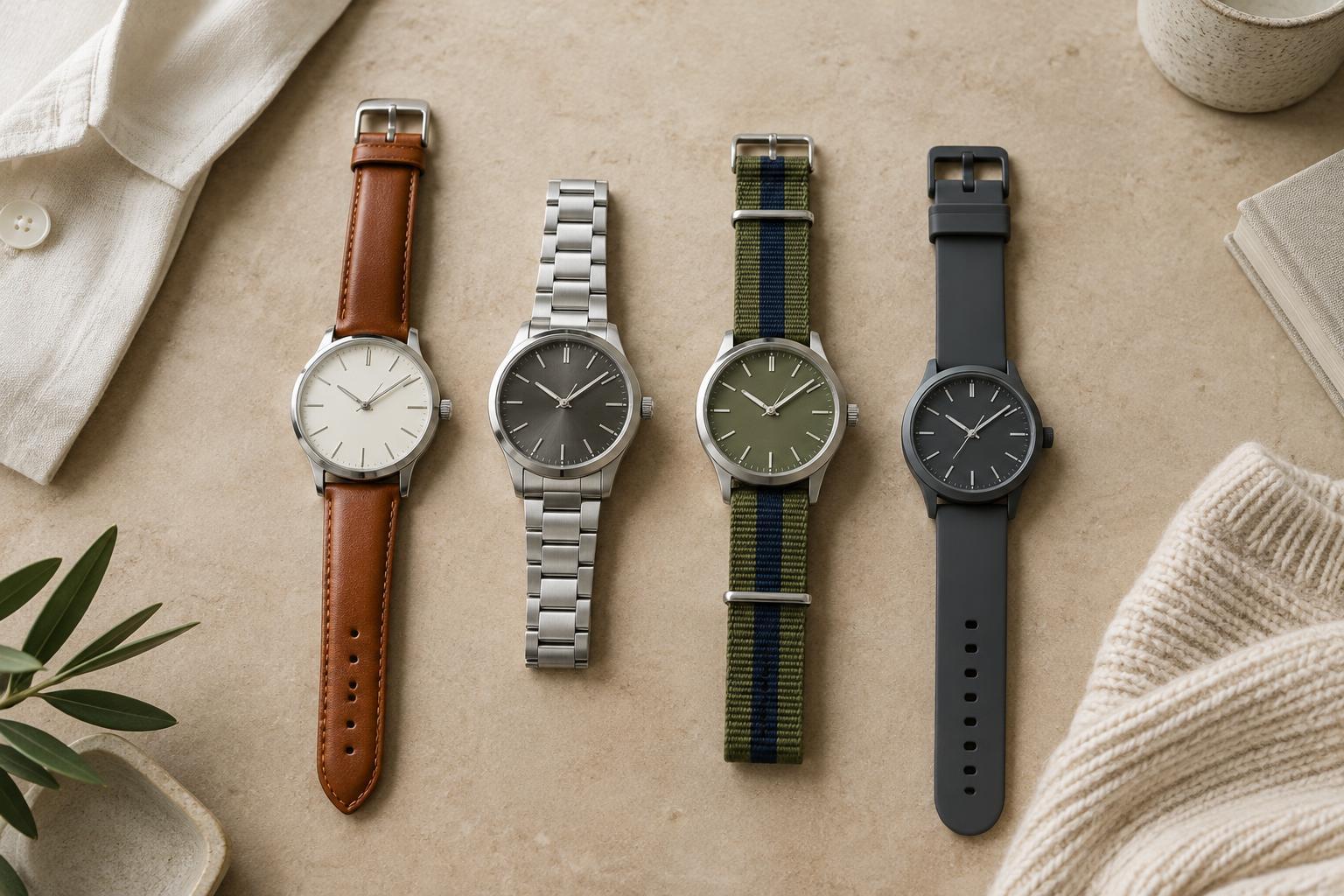
Leather is an easy choice when you want a watch to sit comfortably with a shirt, knitwear or a tailored jacket. Smooth leather tends to look neater; textured or suede-like finishes can make the same watch feel more casual. Brown often pairs naturally with warm-toned shoes and belts, while black can create a sharper look. Matching every accessory exactly is optional; a similar level of formality usually matters more.
Leather may soften with wear, but it can also absorb moisture and show marks. If your watch regularly gets wet or you expect to sweat heavily, another material may be easier to live with. After wearing a leather strap, let it air out and wipe it gently with a dry, soft cloth. Avoid soaking it, and follow any care directions supplied with the strap, since finishes and linings vary.
Metal: versatile, structured and adjustable
A metal bracelet can make a watch feel more substantial. Linked bracelets often work with both everyday outfits and dressier layers, while fine mesh can offer a lighter-looking alternative. The case and bracelet do not have to be identical in every detail, but similar metal tones usually create a cohesive look. A brushed finish can also be less visually prominent than a highly polished one.
Fit matters especially with metal. A bracelet should stay in place without pinching or sliding far down your hand. Depending on the design, fit can be adjusted by removing links or using positions in the clasp; some changes may call for a watch shop or suitable tools. Metal tolerates routine wiping well, but dirt can gather between links. Clean it according to the bracelet and watch maker’s guidance, and do not assume the watch itself is safe to immerse just because its strap is metal. If certain metals irritate your skin, check the bracelet materials before buying.
Fabric: casual color and easy variety
Fabric straps make it simple to introduce a new color or pattern without replacing the watch. A muted woven strap can sit quietly alongside jeans and a plain tee; a stripe can add interest to an otherwise simple outfit. Nylon and other woven fabrics are common options, but their texture, stiffness and drying time can differ.
Construction affects comfort as much as material. Some one-piece straps pass underneath the case, which can raise the watch slightly on the wrist. Others attach at the lugs like a conventional strap. Check the design if your watch already sits high or needs close contact with your skin. Fabric can generally handle a more casual routine than leather, though cleaning instructions vary. Let a washed or damp strap dry fully before wearing it again.
Silicone: low-fuss for active days
Silicone is worth considering if you want a flexible strap that is straightforward to wipe down. It can suit exercise clothes, weekend layers or a colorful, playful watch. Compared with leather or fabric, it is usually less troubled by splashes and sweat. That does not change the water resistance of the watch case, so check the watch’s own guidance before wearing it in water.
Pay attention to shape and ventilation. A very snug silicone strap may feel warm against the wrist, while one that is too loose can shift during movement. Perforations or textured undersides may feel more comfortable to some wearers. For a practical small rotation, you might keep one understated strap for work or dinners and one easy-care option for active days. The best choice is the one you will enjoy wearing often—and can attach securely to your watch.