Start with layers you already wear
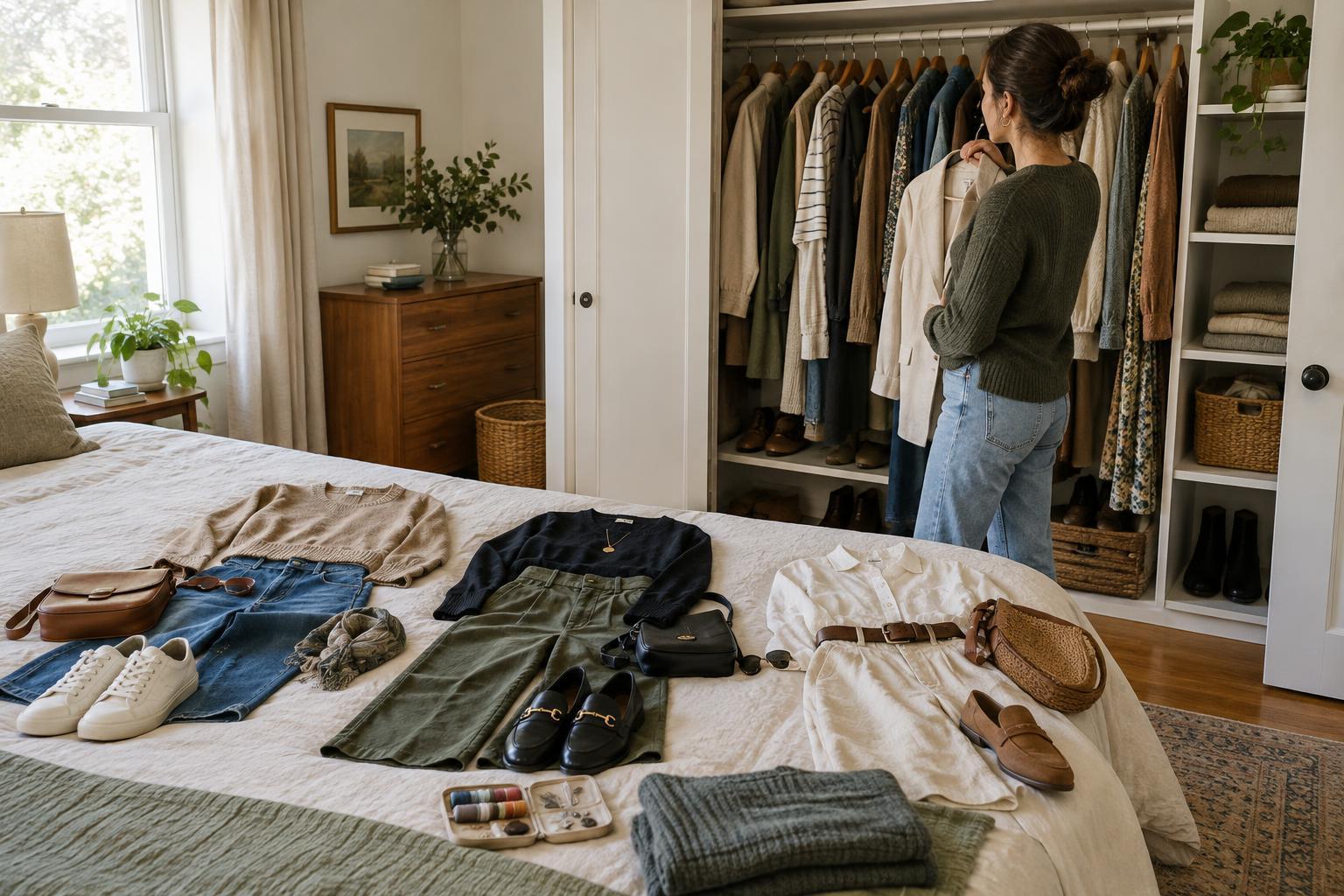
An autumn wardrobe works best when it can handle a cool morning, a warmer afternoon and an unexpectedly breezy evening. Before buying anything, look through the tops and trousers you already enjoy wearing. A long-sleeved T-shirt, a button-up shirt and a lightweight knit can form several outfits when their colors and fits work together. Keep the pieces that feel comfortable on their own; layers are more useful when you can remove one without feeling unfinished.
For base layers, cotton is familiar and easy to wear, while lightweight merino wool can offer warmth without much bulk. Fabric weight matters as much as fiber: a dense cotton shirt may feel warmer than a very fine knit. Aim for pieces that sit smoothly under your jackets without pulling at the shoulders. If you tend to overheat indoors, choose a thinner base and carry an extra layer rather than relying on one heavy sweater.
Choose a middle layer with more than one role
A cardigan, overshirt or medium-weight sweater adds warmth and gives a simple outfit some texture. Pick one that works with at least a few of your existing bottoms. A neutral cardigan can soften a shirt-and-trousers combination, while a sturdy overshirt can make a T-shirt and jeans feel more autumnal. If you prefer brighter clothes, this layer is an easy place to introduce a favorite color without committing to an entire outfit built around it.
Think about how the layer fastens and fits. Buttons or a zipper make temperature changes easier to manage, and a slightly relaxed cut leaves room for a shirt underneath. That does not mean everything needs to be oversized: a defined shoulder or a tidy hem can keep multiple layers from looking bulky. Try the pieces on together before deciding whether an item earns space in your wardrobe.
Match outerwear to your weather and routine
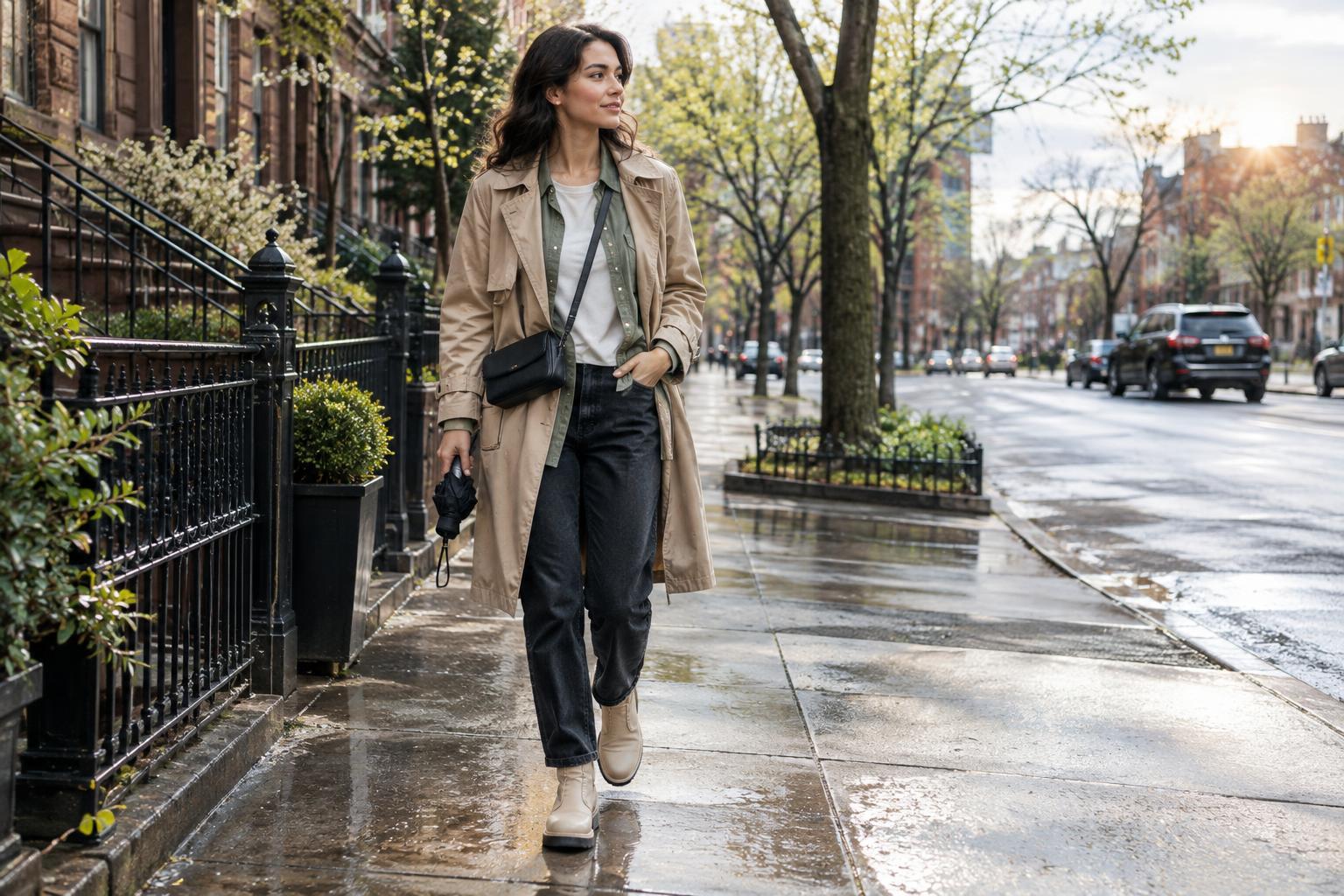
The most useful autumn coat is the one you will actually take with you. In a mild climate, a lined denim jacket, chore jacket or light trench may be enough for many days. Where rain or wind is common, a jacket with a hood and a protective outer fabric may be more useful than a heavier coat with no weather protection. Check that you can move your arms comfortably and close the jacket over your usual middle layer.
Consider the details of your day, too. Deep pockets can be handy on a walk, while a coat that packs or folds easily may suit a commute with changing temperatures. You do not need a separate jacket for every forecast. One versatile everyday option, paired with adjustable layers underneath, may cover most of your needs. If your current coat is still in good shape, changing the layers beneath it can be more useful than replacing it.
Keep bottoms and footwear comfortable
Autumn does not require a complete switch to heavy fabrics. Jeans, chinos, tailored trousers or a longer skirt can all work; choose cuts that allow you to sit, walk and add tights or socks when needed. A few repeatable combinations simplify mornings: straight-leg trousers with a knit and light jacket, for example, or a skirt with boots, a long-sleeved top and a cardigan. Texture can make familiar outfits feel seasonal without a new color scheme.
For shoes, think first about the surfaces you use and the weather you encounter. Closed-toe sneakers, loafers or ankle boots may be useful starting points, provided they are comfortable for your day. Grippy soles and materials that are easy to wipe clean are worth considering in damp conditions. Socks are part of the outfit rather than an afterthought: a comfortable pair can help you keep wearing lighter shoes as the air cools.
Finish with small, practical adjustments
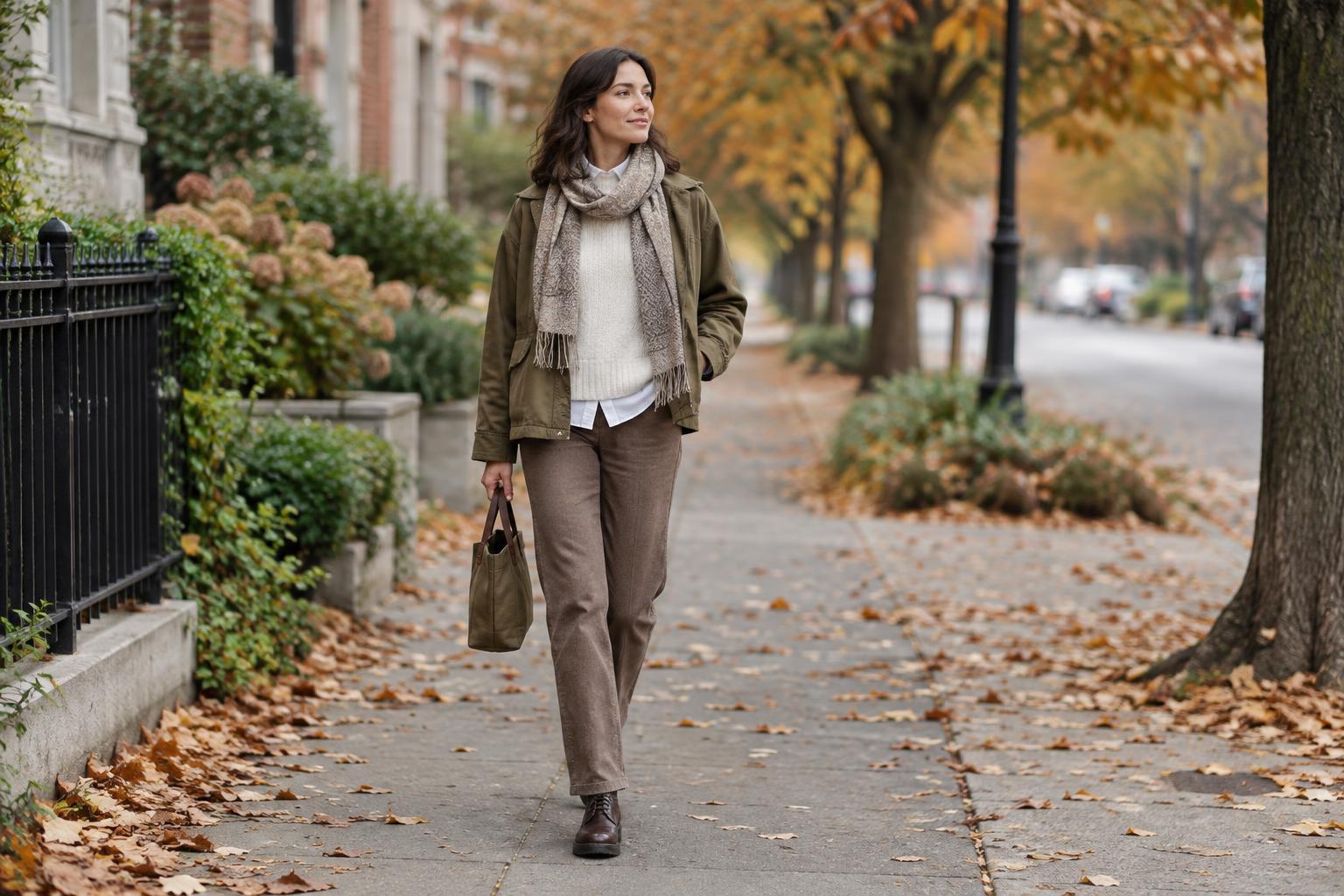
A scarf, hat or compact umbrella can extend the usefulness of clothes you already own. Start with accessories that solve a real problem, such as a scarf for a drafty commute, rather than collecting items you rarely reach for. For an easy visual connection between outfits, repeat one or two colors across your outerwear, shoes and accessories. You can still mix in patterns; keeping one element relatively quiet gives a checked scarf or striped knit room to stand out.
Set aside a few minutes for care as you rotate your wardrobe. Check care labels, let damp shoes dry thoroughly and clean outerwear as its fabric requires. Fold knits that might stretch on hangers, and store lighter clothes clean so they are ready next season. A useful autumn wardrobe is not a fixed checklist: it is a small collection you can adjust to your climate, your routine and the way you like to dress.