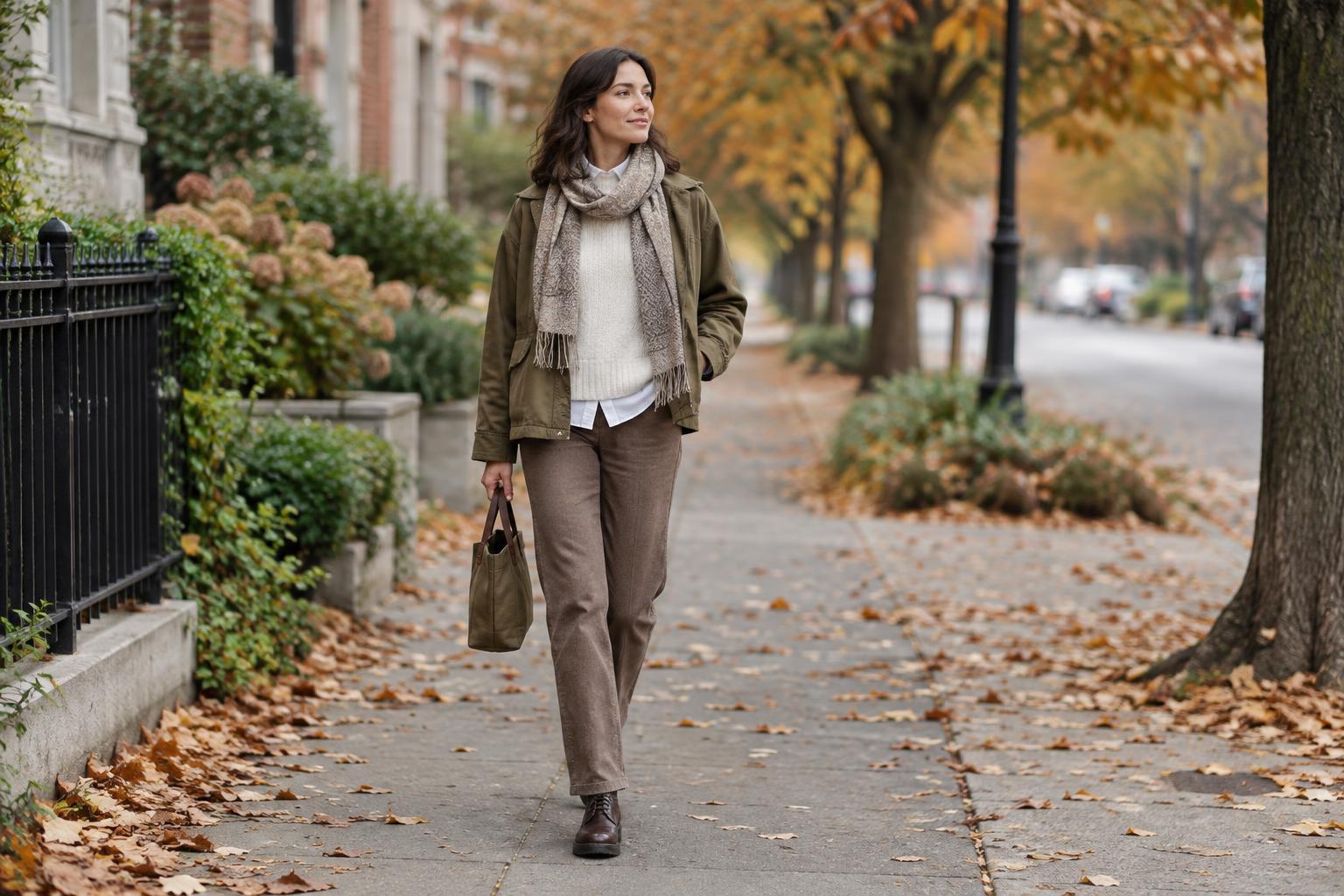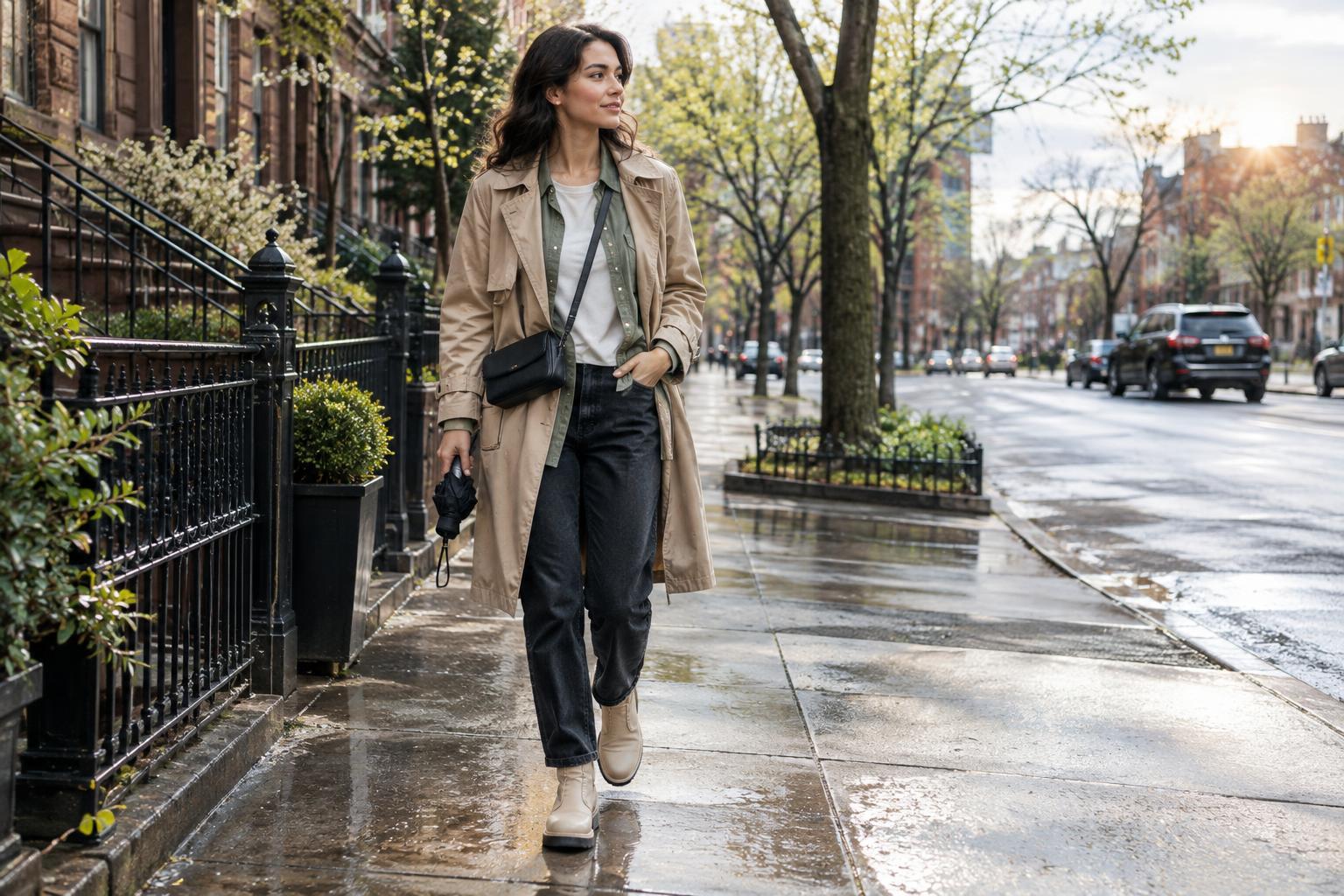
Start with the days you actually have
The most useful summer essentials depend on where you spend your time. A wardrobe for long walks and outdoor errands will look different from one built around an air-conditioned office. Before adding anything, think through a typical week: which outfits need to be comfortable in direct heat, which need to look a little more polished, and whether you regularly move between hot streets and cool indoor spaces.
Choose a small color palette so pieces can rotate easily. Two or three base colors, such as cream, navy and olive, leave room for a brighter shirt, patterned skirt or favorite accessory. You do not need a perfectly coordinated capsule. The goal is simply to make getting dressed easier when you would rather not spend time planning an outfit.
Choose fabrics and fits that feel easy
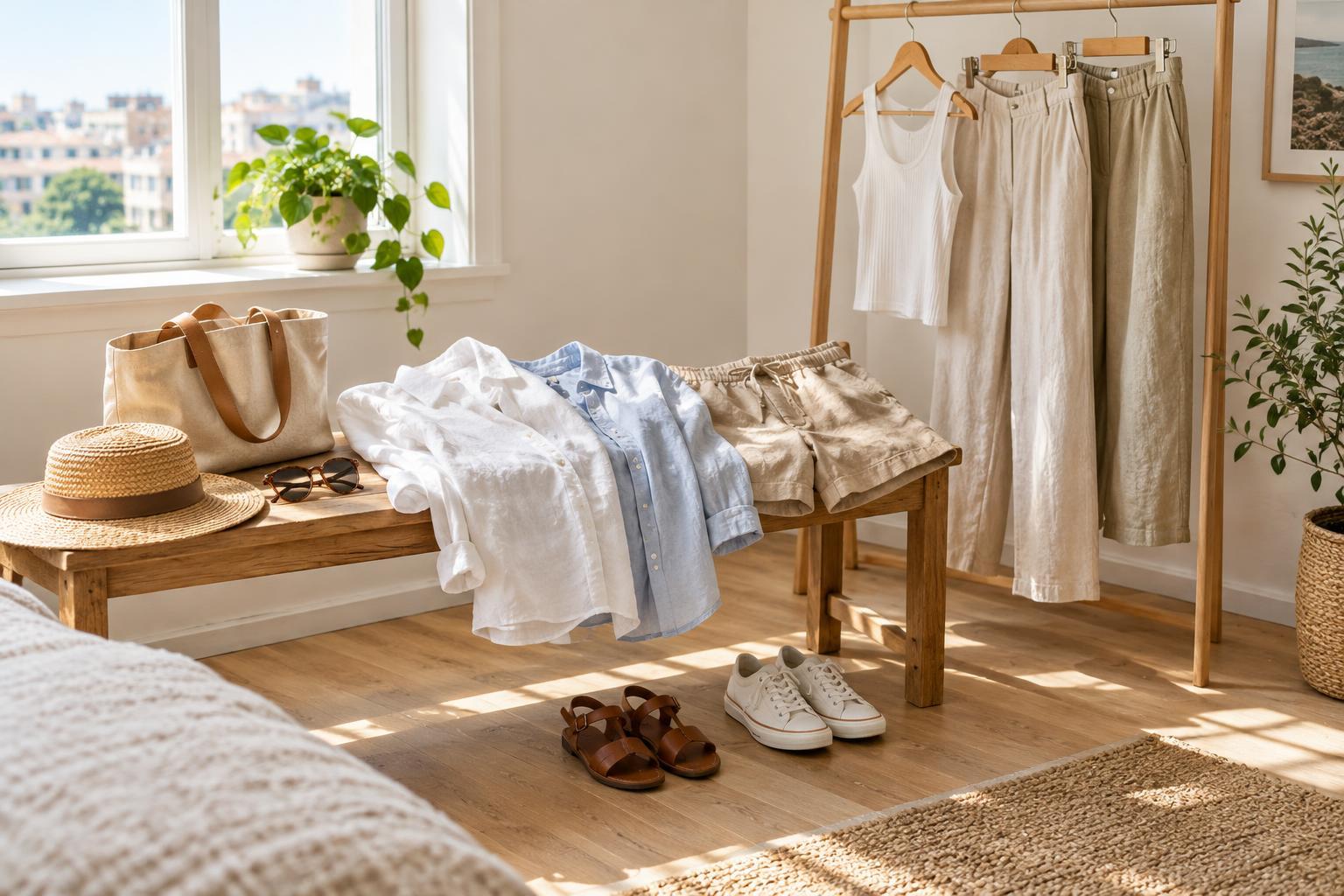
A few lightweight tops form a flexible starting point: a relaxed T-shirt, a sleeveless or short-sleeved option, and a loose button-up shirt. Linen and cotton are common choices for warm weather because they can feel airy, though the weight and weave matter as much as the fiber name. A thin fabric may also be sheer, so check it in good light and decide whether you are comfortable with the coverage. Some linen blends wrinkle less than pure linen, while some synthetic fabrics dry quickly; how each feels will vary by garment.
Leave room for air to move without assuming every item must be oversized. A shirt that skims rather than clings, shorts with a comfortable waistband, and trousers that do not grip the leg can all make a hot day easier to navigate. Try sitting, walking and raising your arms when assessing fit. An item that looks good while standing still may not earn its place if it needs constant adjustment.
Build a dependable outfit rotation
For bottoms, consider one casual pair of shorts, one breezy skirt or dress if you enjoy wearing them, and one lightweight pair of trousers. The trousers can cover situations where shorts feel too informal or indoor temperatures are chilly. If dresses are your easiest one-piece outfit, a simple cut that works with both flat sandals and sneakers may do more for you than several occasion-specific styles.
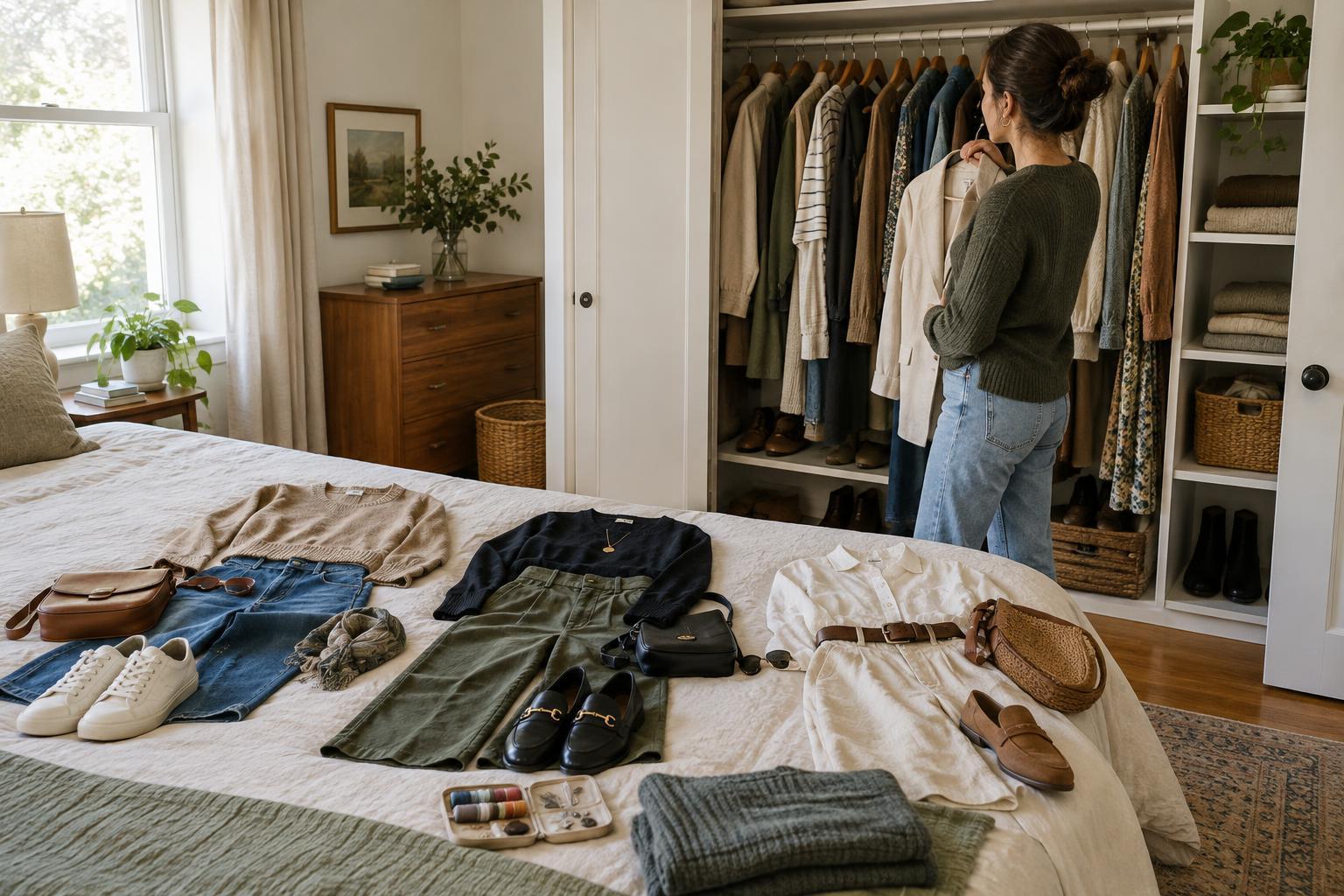
Make a few combinations before you buy anything new. A loose shirt can go over a tank with shorts, buttoned and tucked loosely into trousers, or worn open over a simple dress. A plain top can take on a different mood with a patterned bottom or colorful bag. If a potential purchase works with several pieces you already own, it is more likely to become part of your regular rotation.
Keep one light layer within reach for changing conditions. An open-weave shirt, thin cardigan or unlined overshirt can be useful for cool interiors or a breezy evening. Pick a layer you can carry without fuss rather than one that looks good only when the temperature is just right.
Let shoes and accessories do practical work
Shoes can make or break a hot-day outfit. A comfortable walking sandal, breathable sneaker or lightweight flat may cover most plans, depending on your routine. Look for a secure fit and consider how the shoes feel after more than a few steps. If you wear sandals, check whether straps rub and whether the soles suit the surfaces you usually walk on.
Accessories add personality without requiring another full outfit. A hat can provide shade for your face, while sunglasses and a small bag keep daily essentials close. Scarves, jewelry and belts can add color or texture, but on very hot days you might prefer fewer items against your skin. Choose what you will actually wear, whether that is a bold printed tote or a simple cap.
Care for the pieces you reach for most
Hot-weather clothes often enter a frequent wash cycle, so read care labels before buying and give regularly worn pieces a little attention. Let damp items dry before placing them in a laundry basket, treat visible marks promptly, and use a gentle wash when the garment calls for it. Air-drying can be helpful for items that might shrink or lose shape in a dryer, provided their care instructions allow it.
At the end of the season, note what you wore repeatedly and what stayed untouched. Perhaps you needed another washable shirt, not another pair of shorts; perhaps your favorite trousers worked because they were loose enough for the commute. Use those observations to refine next summer’s wardrobe. The best set of essentials is the one that suits your heat, your plans and your personal style.