Start with a flexible base
Mild spring weather can be awkward to dress for: a cool morning may give way to a warm afternoon, while a breeze or shower changes how an outfit feels. Rather than planning around one forecast, choose clothes that work together in layers. A small set of pieces in colors you enjoy wearing will give you more useful combinations than a closet full of items that only suit one kind of day.
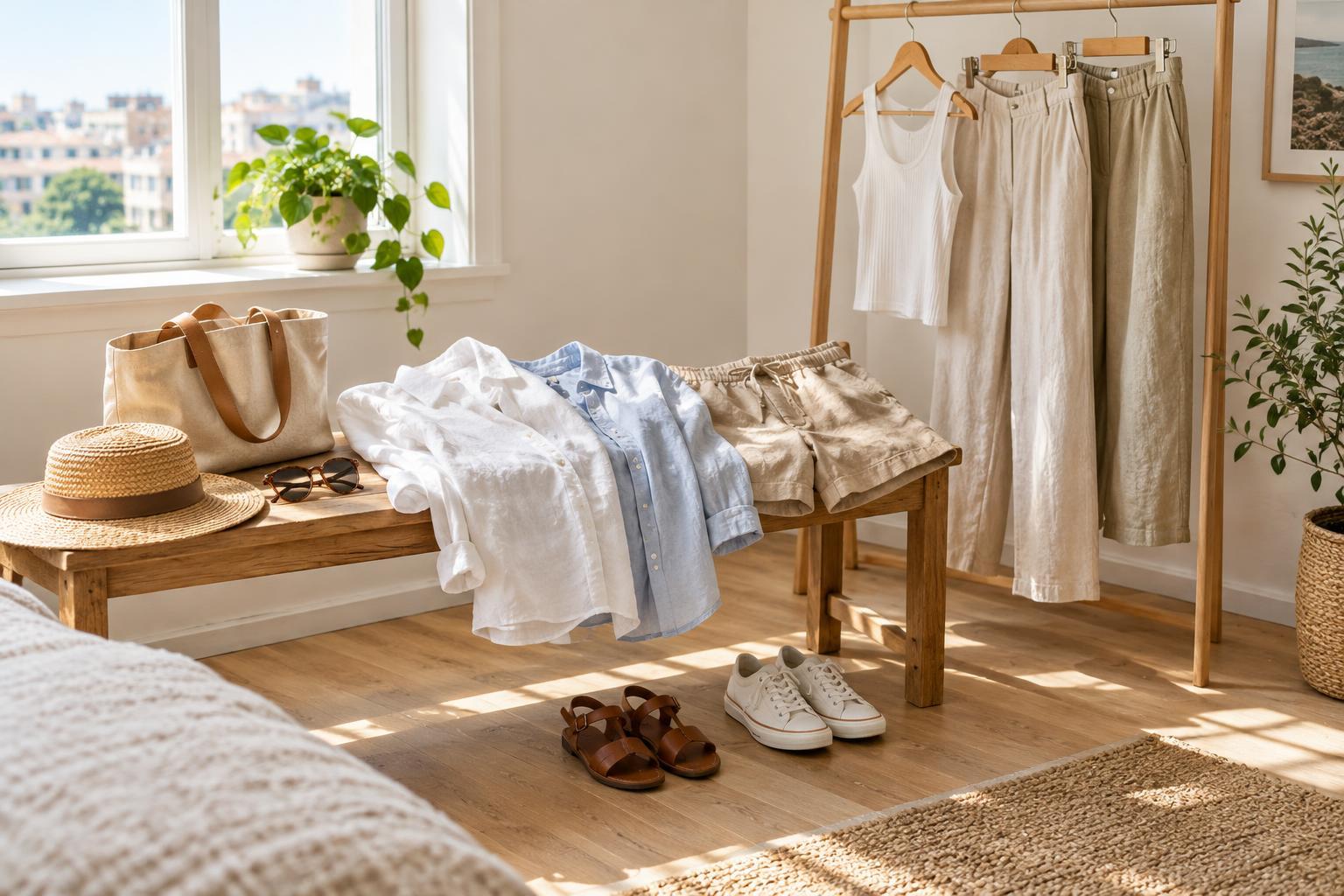
Begin with tops you can wear alone or under another layer. A comfortable T-shirt, a long-sleeve top, and a lightweight button-up cover different temperatures without demanding separate outfits. Cotton can feel soft and familiar; linen often feels airy but creases easily; a fine knit can add warmth without much bulk. Check how each fabric feels against your skin and whether it suits the amount of care you want to give it.
Choose layers that are easy to remove
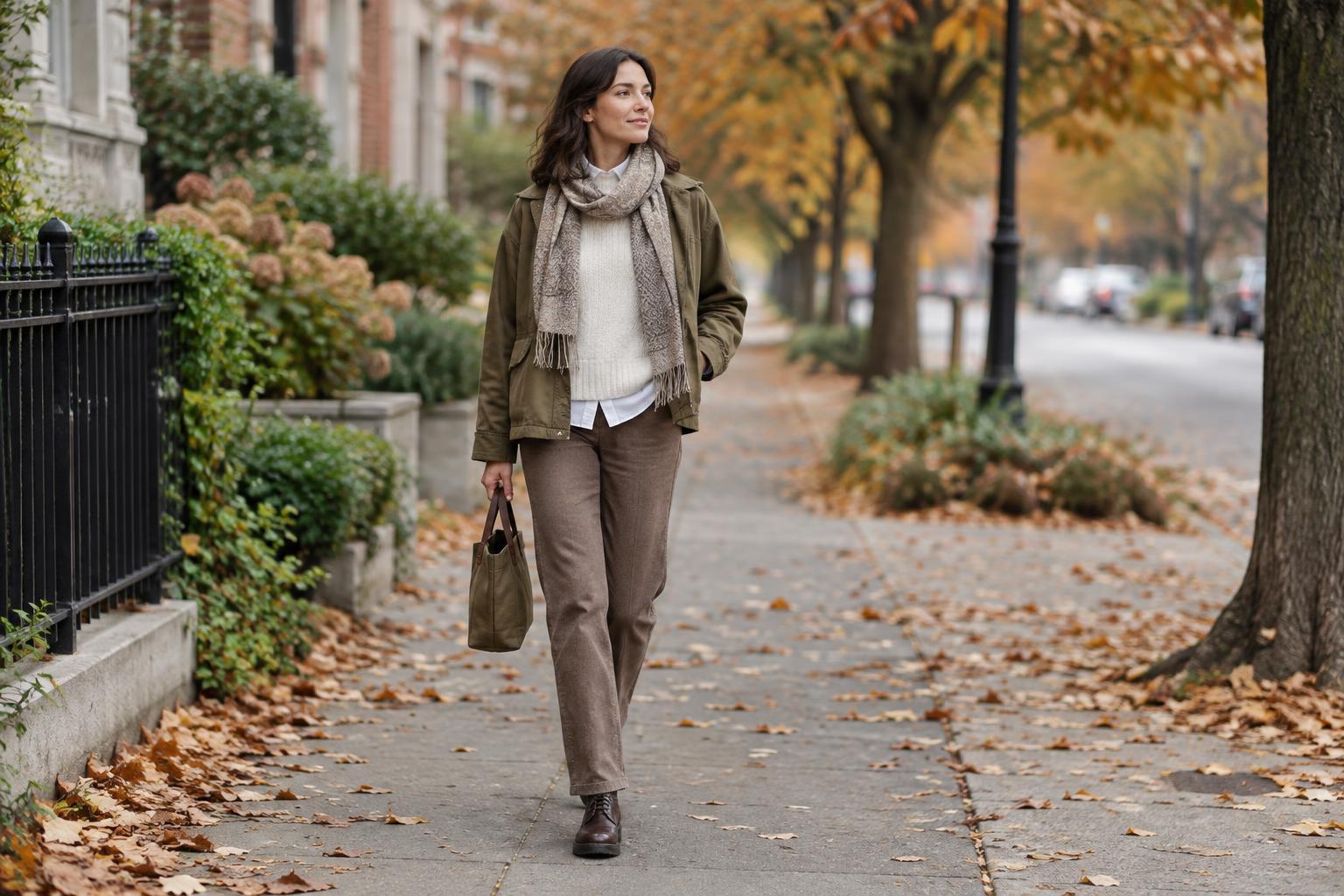
A cardigan, overshirt, or unstructured jacket makes a useful middle layer because you can take it off and carry it when the day warms up. Look for enough room to fit over your base tops without bunching at the shoulders. If you prefer a neater shape, pair a relaxed layer with straighter trousers; if you like an easy silhouette, wear it open over a fitted or tucked-in top.
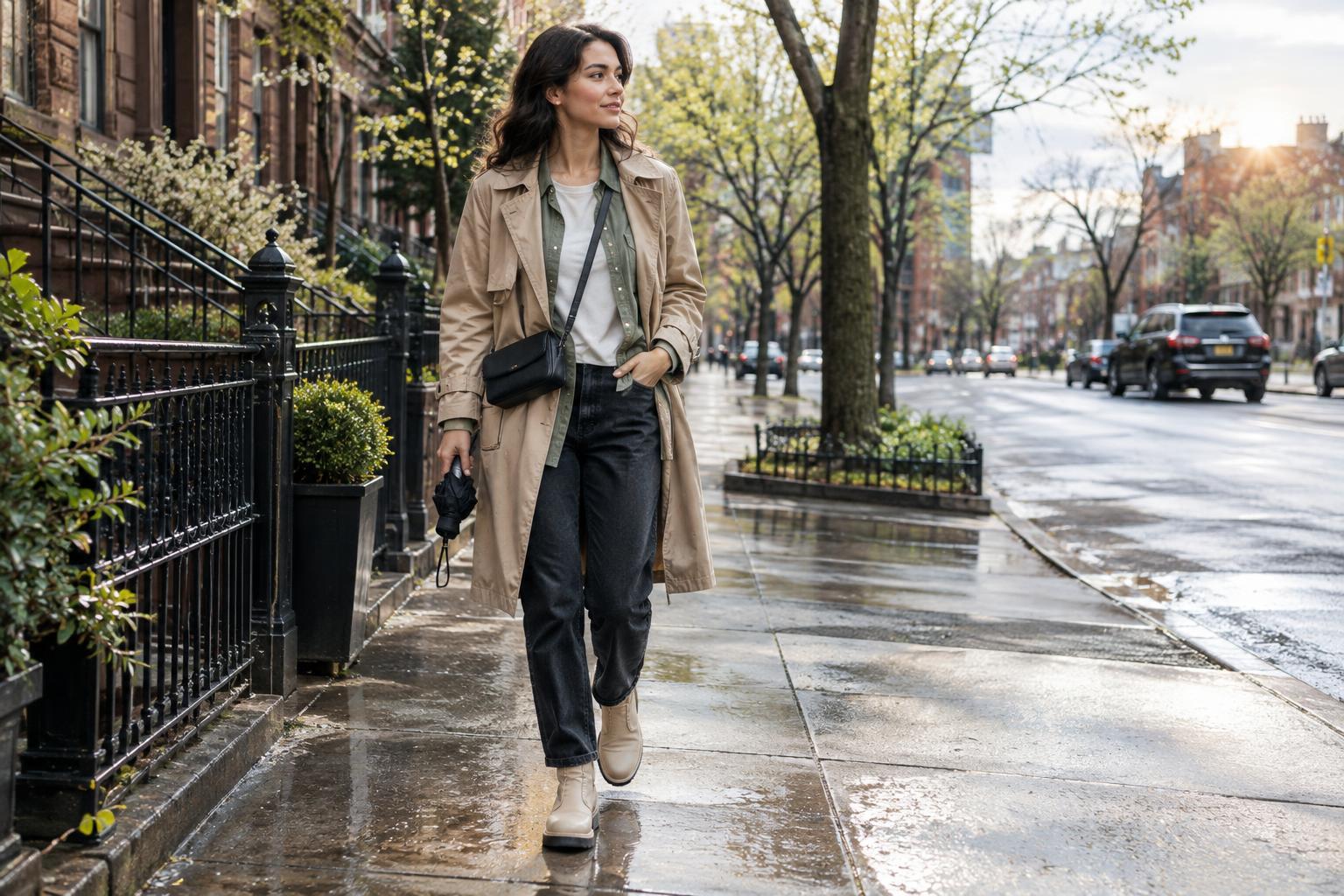
For an outer layer, consider a light jacket or coat that suits the conditions you meet most often. A tightly woven shell may help with wind and a brief shower, but not every spring jacket is waterproof. If rain is a regular concern, check the garment’s care label and weather-resistance details rather than relying on its appearance. A hood can be convenient when carrying an umbrella is impractical.
The goal is not to wear every layer at once. Think of each one as an option you can add or remove without making the rest of the outfit feel unfinished. A button-up worn over a T-shirt, for example, can act as a light jacket at midday and sit comfortably under a coat in the evening.
Pick bottoms and shoes for real conditions
Two or three dependable bottoms can anchor plenty of spring outfits. Straight-leg jeans, chinos, relaxed trousers, or a skirt you find comfortable with tights can all work; choose shapes that make it easy to sit, walk, and move through your usual day. Midweight fabrics often bridge the gap between winter-weight clothing and very light summer pieces. A darker or patterned bottom can also feel less fussy on damp days when splashes are possible.
Shoes deserve particular attention because a pleasant-looking day can still leave wet pavement. Clean sneakers, loafers, ankle boots, or other closed-toe shoes can be practical choices, depending on your routine. Check the sole for grip and leave enough room for the socks you actually wear. If you often walk in rain, keep one more water-resistant pair in rotation and allow damp shoes to dry fully before wearing them again.
Use accessories to adjust your comfort
Small accessories can make a basic outfit more adaptable. A light scarf offers extra coverage on a breezy commute and takes little space in a bag. Socks can add warmth when you switch to lighter trousers or shoes. Sunglasses and a compact umbrella may also earn their place if they match your daily travel needs. You do not need every accessory every day; keep the ones you reach for where you can find them on your way out.
Accessories are also an easy way to make practical layers feel personal. A colorful scarf can brighten neutral basics, while a belt, bag, or pair of earrings can bring a repeated color into an outfit. If your wardrobe has several patterns, try pairing one prominent print with quieter pieces. This keeps getting dressed simple without limiting your style.
Build a few repeatable outfits
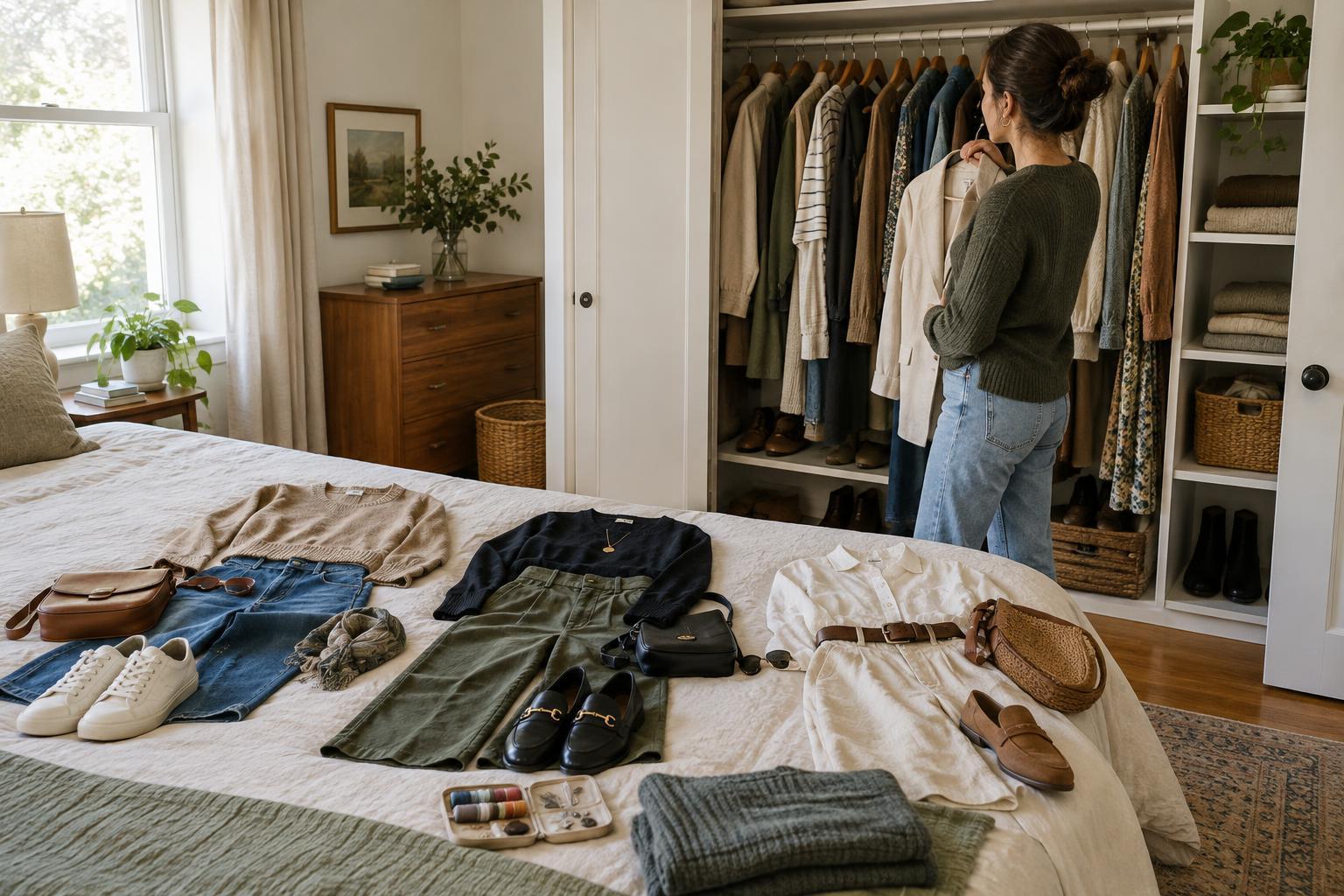
Before adding anything new, put together three outfits using what you own: one for a mild, dry day; one for a cooler day; and one for a day that might turn wet. For example, try a T-shirt, open button-up, straight trousers, and sneakers for the first. Add a fine knit and light jacket for the second. For the third, choose an outer layer and shoes suited to the rain you expect. If a piece works in several versions, it is likely to earn its space.
Notice what makes each outfit comfortable, not just how it looks in the mirror. Can you remove a layer and carry it easily? Does the hem stay clear of puddles? Will the shoes still feel good after your usual walk? These questions can guide future purchases and help you avoid buying a supposed essential that does not fit your life.
At the end of the day, air layers that are still clean, follow care labels for washing, and check shoes before putting them away. Simple upkeep helps your spring pieces stay ready for another changeable morning. A useful seasonal wardrobe is not a fixed checklist; it is a collection of clothes that lets you respond to the weather while still feeling like yourself.