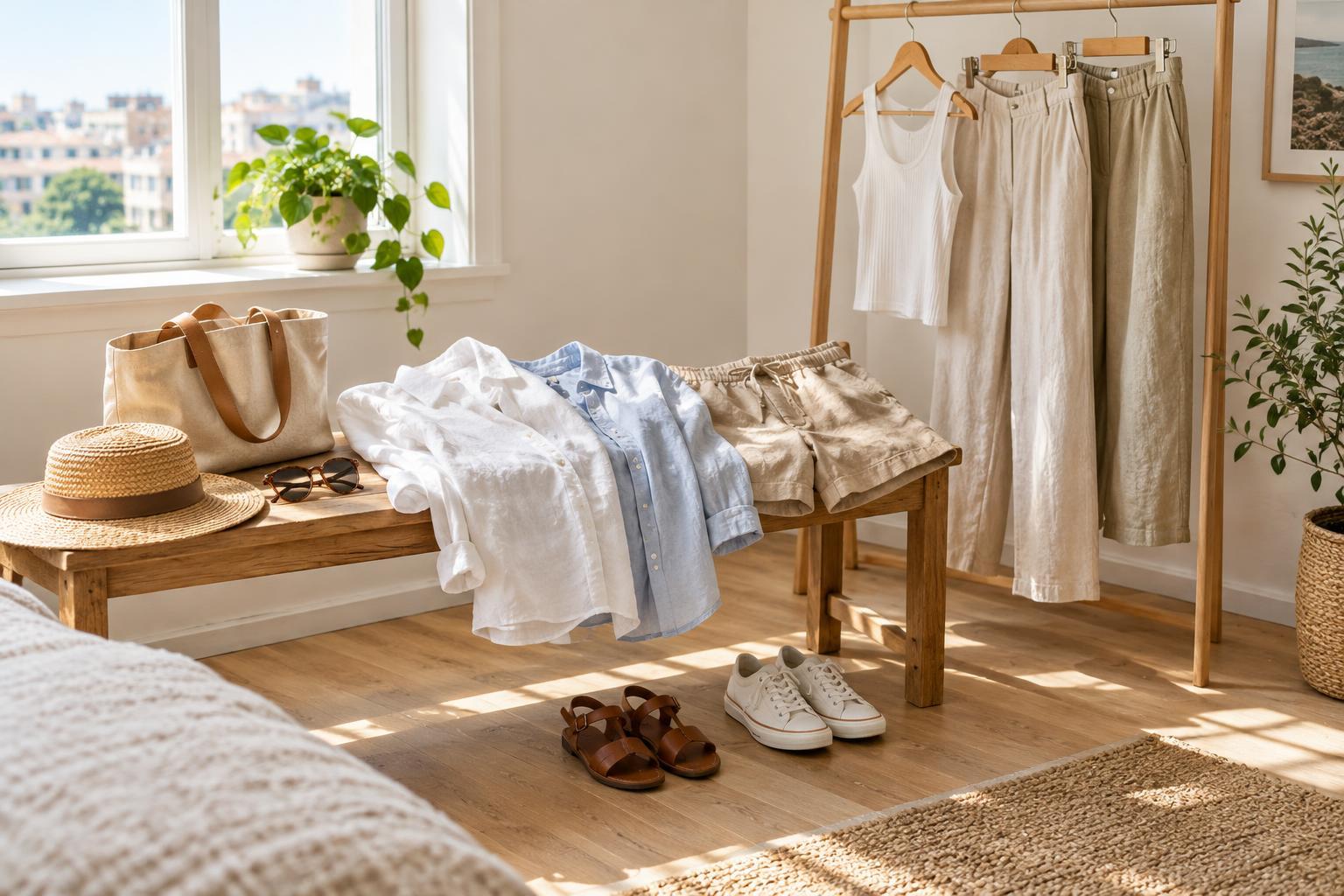
Start with the season you actually have
Before opening a shopping tab, think about what the coming season will ask of your clothes. Consider the weather where you live, the places you regularly go and any changes to your routine. A season of commuting, for example, may call for different shoes and layers than one spent mostly at home. Write down a few situations you need to dress for, such as ordinary weekdays, wet-weather errands and occasional evenings out.
Then define what is working in your current style. You might want more color, simpler outfits or clothes that feel comfortable through a long day. This is a useful filter, not a rule that every item must follow. Assessing your wardrobe against your real life helps you distinguish a practical need from an appealing piece that has no clear place in your routine.
Bring relevant pieces into view
Gather the clothing, shoes and accessories you might wear this season, including items stored away. You do not need to empty every drawer at once; working by category can make the task manageable. Put similar pieces together so you can see how many light jackets, long-sleeved tops or everyday shoes you already own. Check pockets and storage bags for accessories you may have forgotten.
As you handle each item, ask whether it fits comfortably now, suits at least one part of your routine and is in wearable condition. Set aside pieces that need washing, repair or alteration so they do not disappear back into the closet. If you are unsure about an item, try it on rather than deciding from the hanger. Keep a separate space for sentimental clothes or items you are not ready to evaluate; they need not complicate your everyday choices.
Make outfits, not just an inventory
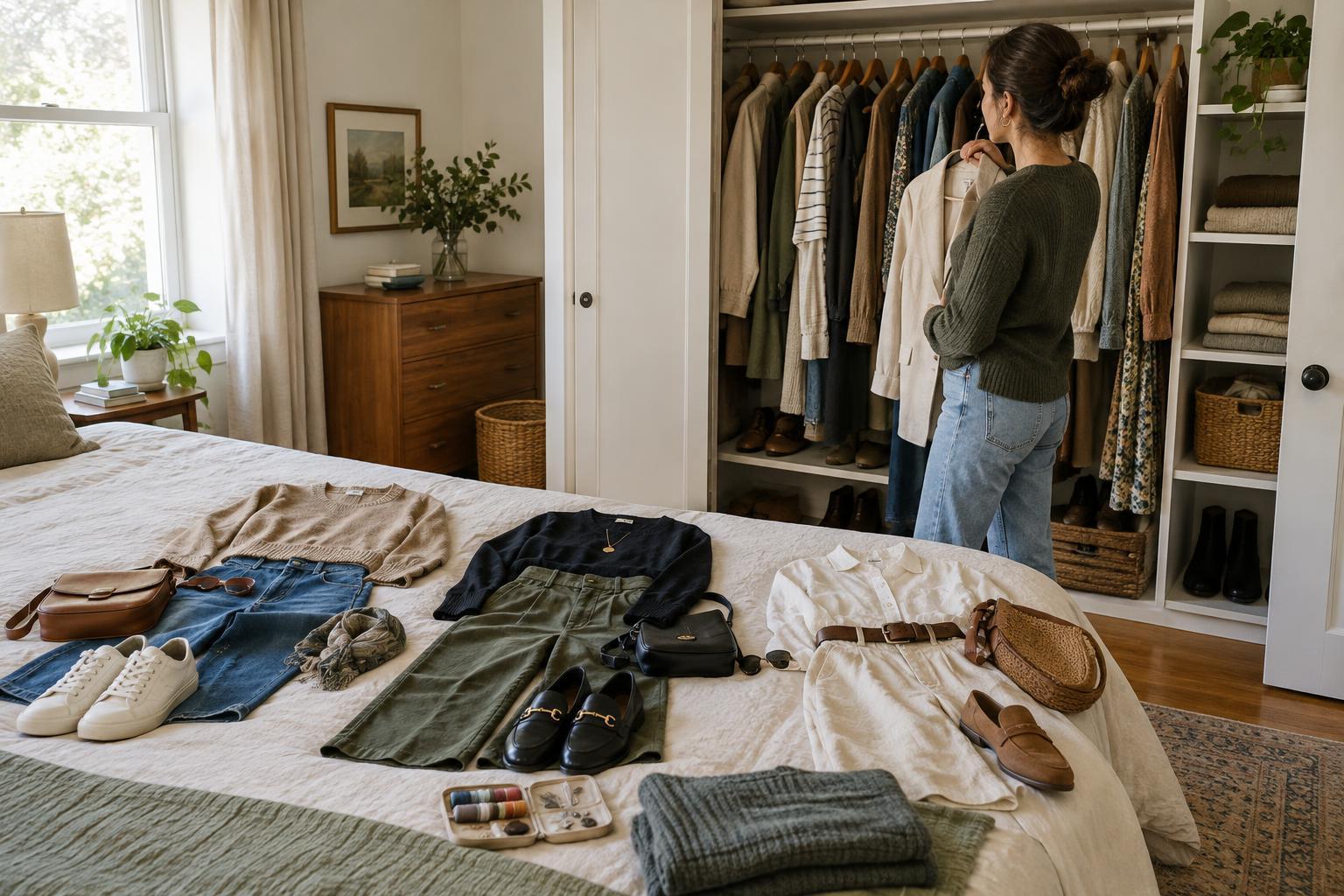
An item can look useful on its own but be difficult to wear with anything else you have. Choose a few bottoms or dresses you reach for often and build outfits around them. Add the shoes, outer layer and bag you would genuinely use. Try the combinations on if possible, paying attention to proportions, comfort and whether layers work together. A quick photo or written note can help you remember combinations that succeed.
Notice what interrupts an outfit. Perhaps you have enough tops but no comfortable layer that fits over them, or several pairs of trousers that only work with shoes you rarely wear. Accessories can solve some problems without a major purchase: a scarf may connect colors, while a different bag can change how dressed-up an outfit feels. The goal is not to create a perfect capsule wardrobe. It is to learn which pieces earn their space and which gaps affect how you get dressed.
Check condition and care before replacing anything
Some apparent wardrobe gaps are maintenance tasks. Clean shoes, remove pilling where the fabric allows, sew on a loose button or follow the care label to refresh a stored piece. Check garments in good light for stains, worn seams and damage that might make them uncomfortable or unreliable. If a repair is beyond what you want to do yourself, decide whether the item is worth taking to a repair service before budgeting for a replacement.
Consider care requirements when judging an item’s usefulness. A piece you love but rarely have time to wash or press may work best as an occasional option rather than a daily essential. Materials and construction also affect how you store clothes: give structured pieces room to keep their shape, and fold knits that may stretch on hangers. Looking after what you own can make your existing wardrobe feel more ready for the season.
Turn what you learned into a short shopping list
List only the gaps that showed up repeatedly while making outfits. Describe each one specifically: “a lightweight layer that works over my work tops” is more helpful than “new jacket.” Note the colors, fit, fabric feel and care needs that would make the purchase compatible with what you already own. Separate essentials from optional additions, and set a spending limit that feels comfortable for you.
Before buying, check whether you already own something that serves the same purpose, even if it looks different from the item you had in mind. When you do shop, picture at least a couple of outfits using the new piece and consider whether you would wear it often enough to justify its place. You can also wait until a genuine need becomes clear. A seasonal refresh is most useful when it makes your existing clothes easier to wear, not when it replaces them without a plan.