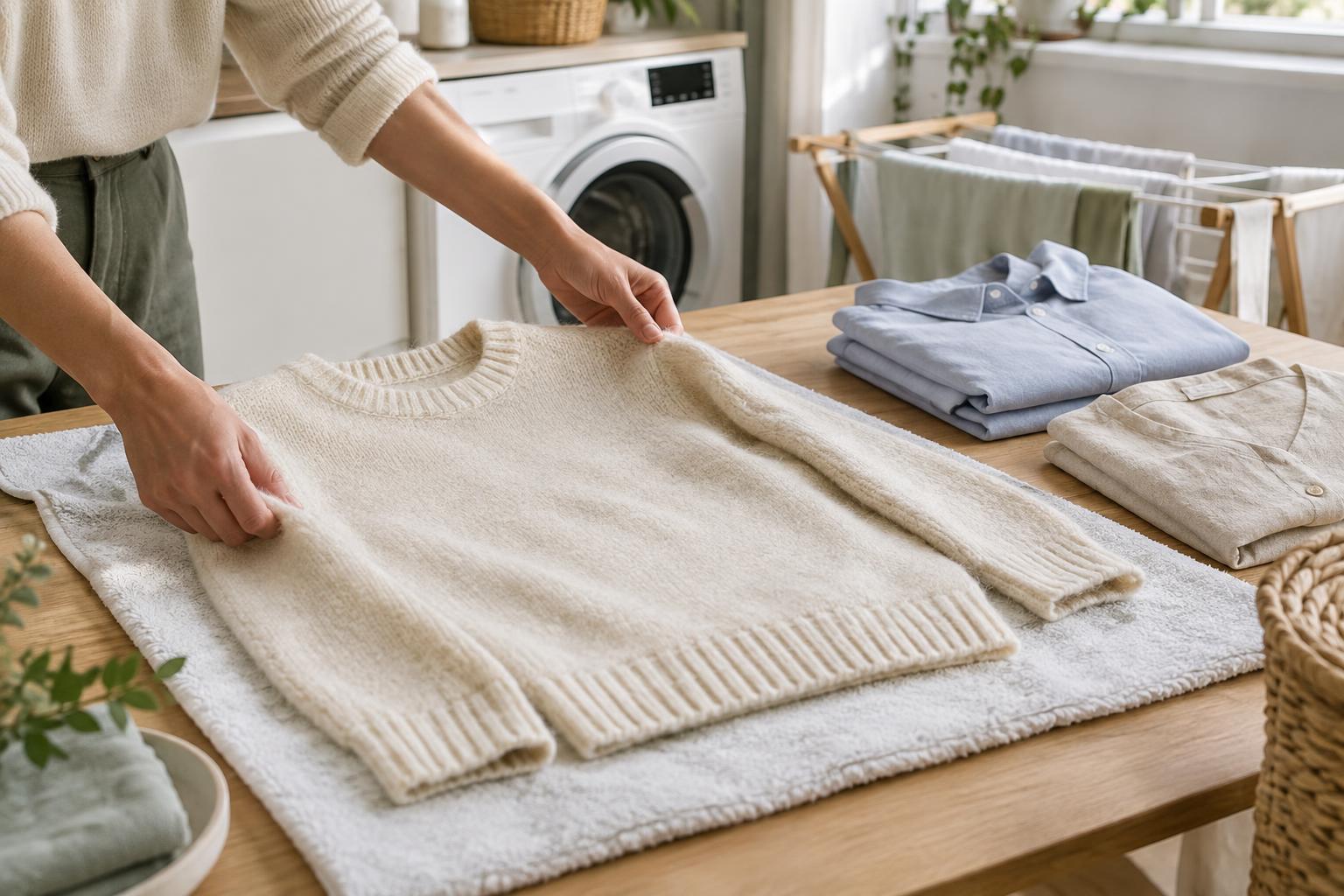
Start with the fabric, not the stain
Before reaching for a stain remover, check the garment’s care label. A sturdy cotton T-shirt can often tolerate more handling than silk, wool, leather or a garment marked dry clean only. If the item is delicate, structured or especially important to you, avoid experimenting with household products and consider a professional cleaner.
For washable clothes, act as soon as it is practical. Lift off any solids with a spoon or dull edge, then blot excess liquid with a clean cloth or paper towel. Work from the outside of the mark toward the center so it does not spread. Rubbing hard can push a stain deeper into fibers or leave a worn-looking patch.
Test any detergent or treatment on a hidden area first, particularly on dark, bright or patterned fabric. Put a clean cloth behind the stain when treating it so the residue has somewhere to go besides another layer of the garment. Use only one treatment at a time, rinse between products, and follow the product label.
Food stains: remove the excess, then rinse
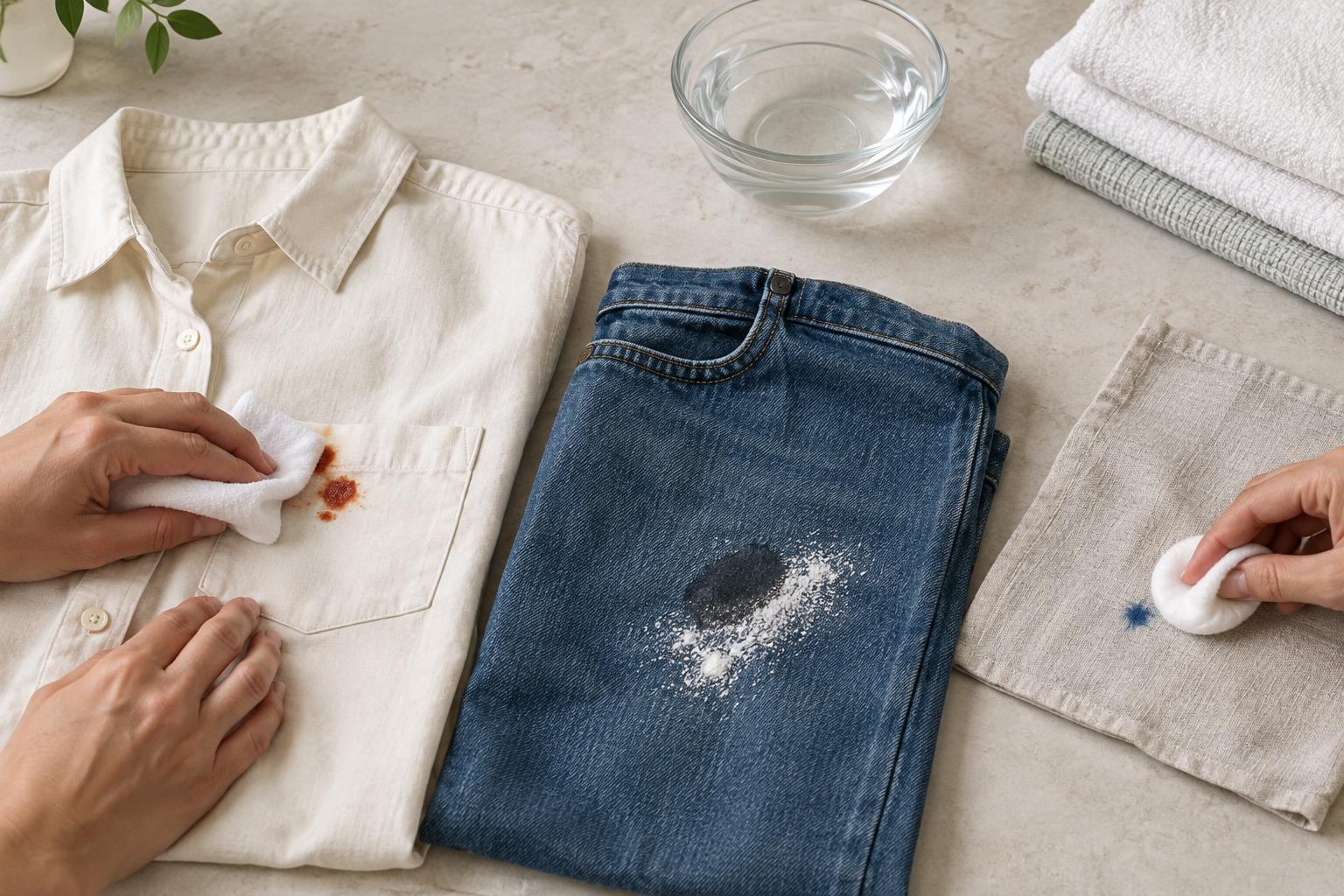
Food stains vary: a splash of sauce, a drop of coffee and a smear of chocolate do not contain the same ingredients. The useful first step is to remove as much as possible without grinding it in. For many fresh, washable food stains, rinse from the back of the fabric with cool running water. This helps push the spill out the way it entered rather than through more of the cloth.
Apply a small amount of liquid laundry detergent to the remaining mark and gently work it in with your fingers. Let it sit for the time recommended on the detergent label, then rinse or wash according to the garment’s instructions. For a dried stain, dampen it first and give the detergent time to loosen the residue; repeated gentle treatment is usually preferable to aggressive scrubbing.
If the food was greasy, treat the oily part as well. If it contained milk, egg or another protein-rich ingredient, begin with cool water rather than hot water, which can make some protein stains harder to remove. When you cannot identify the spill, a cautious cool-water rinse and a spot-tested detergent are sensible starting points.
Oil stains: draw out grease before the wash
Oil can leave a dark patch that looks better while wet but reappears after drying. First blot away any excess without spreading it. A little absorbent powder, such as cornstarch, can help pick up surface oil; leave it briefly, then brush it away gently. Keep powder away from areas where it may be difficult to remove, such as textured trims.
For a washable, colorfast fabric, apply a small amount of liquid laundry detergent directly to the mark. Gently press it into the fabric and allow it to sit according to the label before washing. A small amount of plain dish soap may help with some grease stains, but spot-test it first, use it sparingly and rinse it out before putting the garment in the machine. Too much can create excess suds.
Check the care label for the appropriate wash temperature. Warmer water may help loosen some oils, but it is not worth shrinking or fading a garment. If an oily shadow remains after washing, repeat the treatment before drying.
Ink stains: contain the mark and test carefully
Ink is less predictable than food or oil because pens use different formulas. Start by placing an absorbent cloth or paper towel beneath the stain. Blot a fresh mark gently; do not scrub or rinse it forcefully across the fabric. Change the cloth underneath as it picks up color.
On a washable item, you can spot-test rubbing alcohol in a hidden area to see whether it affects the dye or finish. If the fabric tolerates it, dab a small amount onto the ink with a clean cloth, working from the edges inward. Blot with a fresh section of cloth as ink transfers, and replace the backing beneath it. Stop if the garment’s color begins to lift or the stain spreads.
Rinse thoroughly, then apply liquid laundry detergent and wash as the care label permits. Alcohol is not suitable for every fabric or finish, and some inks will not respond to it. Keep it away from flames and use it in a ventilated space. For delicate fabrics or a large ink spill, professional cleaning may be the safer choice.
Inspect before you dry
After washing, inspect the stained area in good light while the garment is still damp. Machine-dryer heat can make a remaining mark more difficult to treat. If you can still see it, repeat an appropriate pre-treatment and wash again rather than drying the item. Air-drying also gives you a chance to assess a faint stain once the fabric is fully dry.
Keep the process gentle and realistic. Some stains, especially old ones or those on fragile fabrics, may not come out completely. A careful sequence—remove excess, choose a treatment suited to the stain, spot-test, wash and inspect—gives a favorite garment a better chance without sacrificing its color or texture.