Start with the care label, not the wrinkle
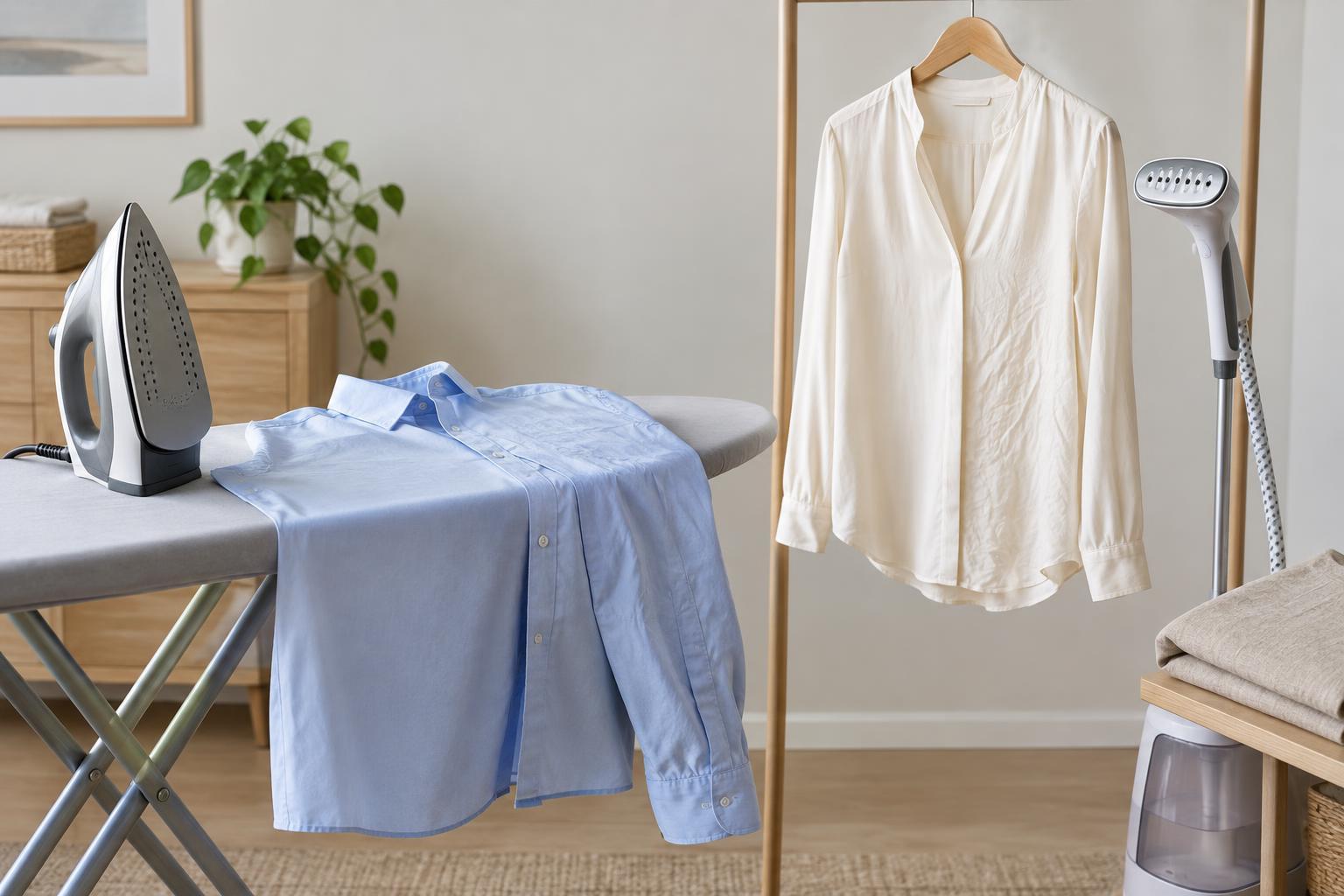
Ironing and steaming both relax wrinkles, but they do different jobs. An iron uses heat and pressure to flatten fabric and create a crisp finish. A steamer uses warm moisture to loosen creases while a garment hangs, usually leaving a softer finish. Neither method is right for every item: heat, moisture and pressure can each change the look of a fabric.
Before plugging anything in, read the garment’s care label. Check whether ironing is allowed, whether steam is restricted and whether a low temperature is required. If the label says not to iron, do not assume that steaming is safe; a fabric or its trims may also be sensitive to moisture and heat. When the label is missing or unclear, start with the least aggressive option and test an inconspicuous area. Let it dry and cool before judging the result.
Choose an iron for a crisp, controlled finish
An iron is useful for cotton shirts, linen trousers, washable table linens and other pieces that benefit from defined edges. It also gives you control over collars, cuffs, hems and pleats. Set the temperature for the most delicate material in the garment, including any lining or trim, and allow the iron to reach that setting before you begin. A clean soleplate and a stable ironing board help prevent marks and accidental folds.
Work on a small area at a time, keeping the fabric flat rather than stretching it. Press gently and lift the iron to reposition it when shaping a pleat; dragging can shift the fabric. Iron dark or shine-prone items inside out, or place a clean pressing cloth between the iron and the garment. Avoid pressing directly over prints, sequins, buttons or raised stitching. If you use the iron’s steam function, check the label first and test for water marks.
Choose a steamer for a softer finish and awkward shapes
Steaming can be convenient for a dress, blouse or jacket that is difficult to spread across a board. It is also handy when you want to release storage creases without making a sharp fold. Hang the item securely with room around it, and follow the steamer’s instructions for filling and heating. Pass the nozzle along the fabric without forcing it against the surface. Give the garment time to dry fully before wearing or putting it away.
Steam is hot enough to burn skin. Keep hands clear of the steam path, and use a tool or a hanger to steady fabric rather than gripping the area you are treating. Steam a hanging garment, never one you are wearing. Take particular care with linings, glued details, leather, suede, velvet and delicate decorations: moisture or heat may leave marks or alter their shape. If you are unsure how an item will react, check its care guidance instead of experimenting on a visible area.
Match the method to the fabric
Cotton and linen often respond well to ironing when a neat, tailored look is the goal; stubborn creases may be easier to tackle while the fabric is slightly damp, if its care label permits. Steam can soften wrinkles in these fabrics, but it may not produce the same crisp seams. For polyester and other synthetics, use the low heat recommended by the label. Too much heat can damage fibers or leave an unwanted sheen.
Wool often needs a light touch: steam may relax minor creases, while careful pressing with a cloth can help shape an edge when the label allows it. With silk, rayon and other fabrics that may show water spots or distort when damp, check instructions closely and test first. Blends need the same caution, because a garment’s least heat-tolerant component sets the practical limit. When a piece is expensive, structured or hard to replace, professional cleaning may be the safer choice.
Keep wrinkles from returning
The best technique will not last if a garment is folded or crowded before it cools and dries. After ironing, hang or lay the item flat until it reaches room temperature. After steaming, allow extra drying time, especially around seams and waistbands. Then use a hanger that supports the garment’s shape and leave enough space in the closet for fabric to hang freely.
For everyday maintenance, smooth clothes when taking them out of the wash, avoid overloading the dryer if you use one, and fold or hang items once they are dry. A slight wrinkle may be part of a fabric’s natural texture rather than a problem to erase. Choose the finish that suits the outfit, and use only as much heat, moisture and pressure as it needs.