Start by washing only when needed
Every wash exposes clothing to water, detergent and friction, so the simplest way to slow fading is to skip unnecessary loads. A dark sweater worn over a clean shirt may only need airing out before it goes back in the wardrobe. Jeans may also be wearable more than once if they are clean and free of odors. Items worn close to the skin, or clothes that are sweaty or visibly dirty, should be washed as needed.
Check the care label before anything goes into the machine. It may specify a water temperature, a gentle cycle or hand washing. Those directions matter especially for garments with delicate finishes, stretch fibers or decorative details. If a new dark item might release dye, wash it separately the first time or alongside similar dark colors rather than risking lighter pieces.
Sort by color, fabric and soil level
A dark load is safer than mixing black trousers with pale towels, but color is not the only thing to consider. Heavy denim, rough fabrics and garments with exposed zippers can rub against softer knits or smooth dark shirts. When practical, group clothes of similar weight and texture. Close zippers and fasten hooks so they are less likely to catch on other items.
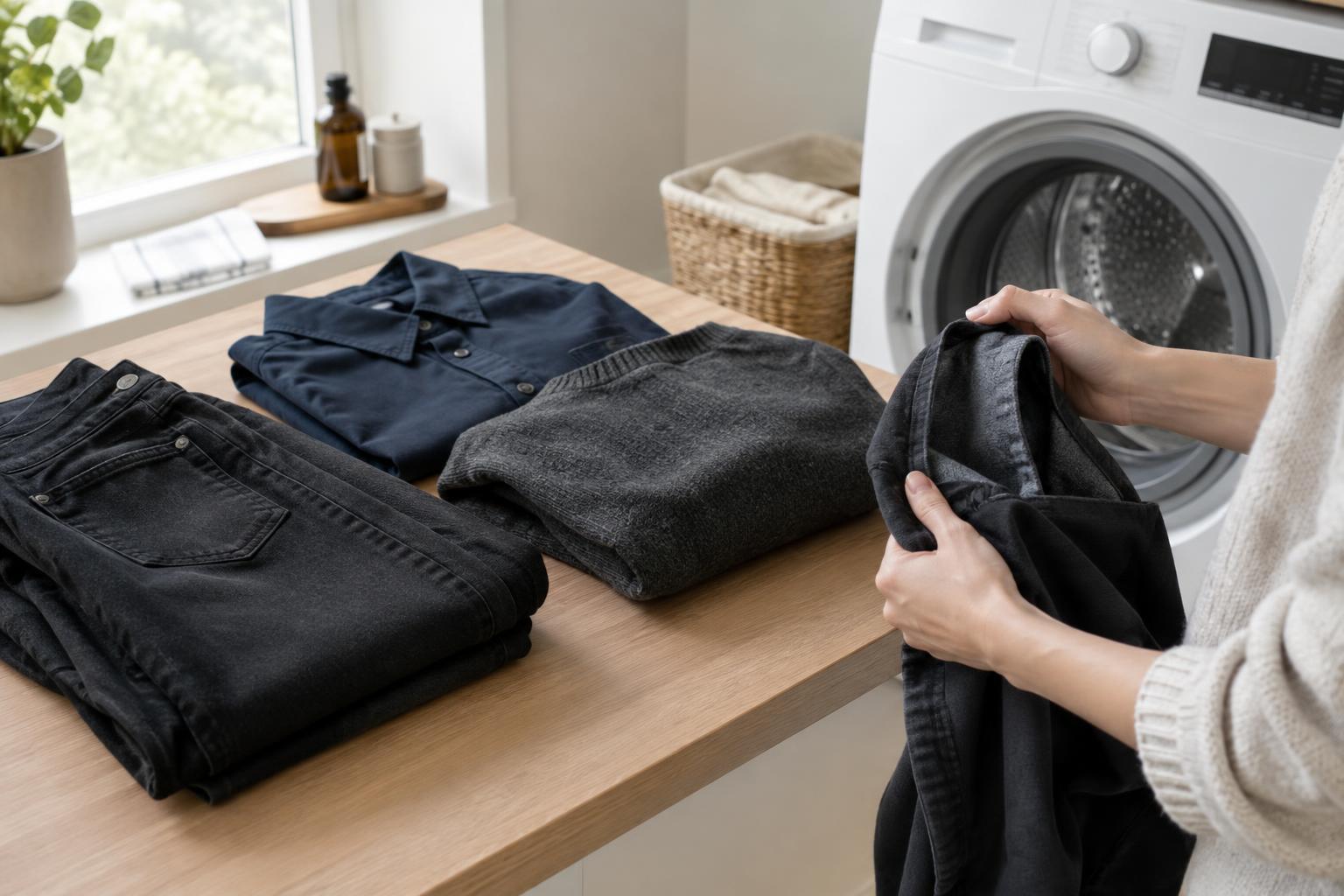
Keep heavily soiled clothes apart from pieces that need only a light wash. Dirtier items may need a longer cycle or more thorough cleaning, while lightly worn dark clothes benefit from gentler treatment. Before loading, turn garments inside out. This does not stop dye loss, but it puts more of the rubbing on the inner surface and can help protect the side you see when you wear them.
Choose a cool, gentle wash
For many everyday dark garments, cool water is a useful default: it can reduce stress on dyes and fabrics compared with a hotter wash. Use the temperature on the care label when it gives specific instructions, and choose a warmer setting when the garment’s cleaning needs require one. If you are unsure how a fabric will respond, a cautious setting and a small first load are sensible choices.
Select a gentle or shorter cycle when the clothes are only lightly soiled. Less tumbling usually means less friction, one cause of the worn, faded appearance dark fabrics can develop. Do not pack the drum tightly, though. Clothes need room to move and rinse; an overloaded machine can leave detergent behind and make a supposedly gentle wash less effective.
Use enough detergent, but not too much
Measure detergent according to the product directions, adjusting for load size and how dirty the clothes are. Adding extra does not necessarily make a load cleaner. Residue left on dark fabric can make it look dull or streaky, particularly on black cotton. If your machine has an extra-rinse option and clothes regularly come out with visible residue, try that setting or reduce the detergent in the next load.
A detergent intended for dark colors may be convenient, but you do not need a special product to build a good routine. Pay attention to the label of any laundry product you use, including stain removers. Test a new treatment on a hidden area if the garment is delicate or you are concerned about color change. Treat spots promptly and gently rather than scrubbing hard across the visible fabric.
Dry and store dark clothes with care
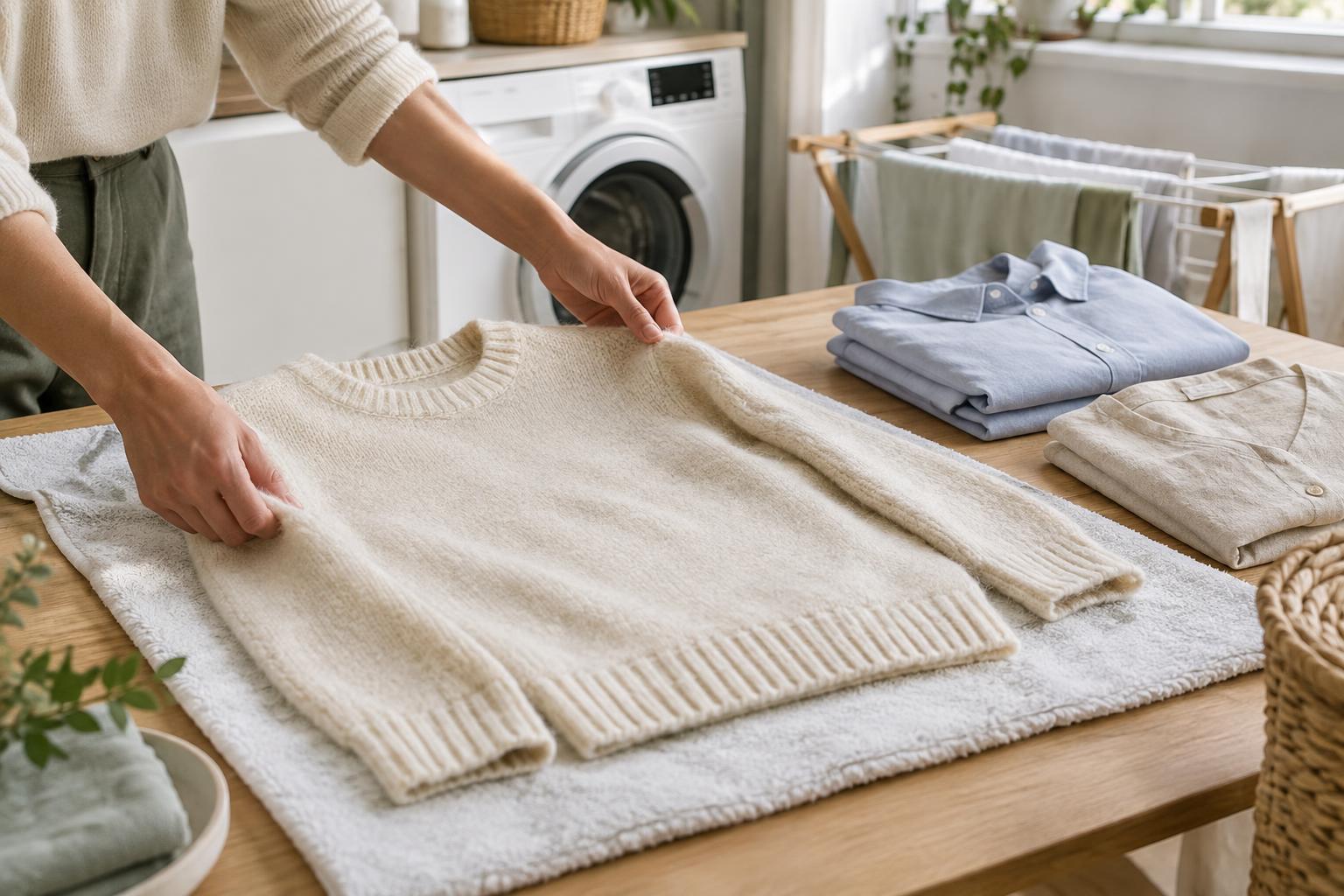
How you dry a garment can affect how it looks between washes. When the care label allows it, air-dry dark clothes away from direct sunlight, which can gradually lighten some dyes. Reshape knits and lay them flat if hanging would stretch them. For items going into a dryer, choose an appropriate lower-heat setting and remove them once dry rather than leaving them tumbling longer than necessary.
Store clean, fully dry clothes out of strong light. Folding heavy knits helps them keep their shape, while hanging shirts and trousers can prevent deep creases. Even with careful laundering, dark dye may soften over time, especially at areas that rub during wear. A routine of thoughtful washing and drying will not make color permanent, but it can help your favorite dark pieces look their best for longer.