Start with the garment, not the laundry pile
Air-drying and tumble-drying both have a place in a practical clothing-care routine. The best choice depends on more than the fiber named on the tag: weight, stretch, decoration and the fit you want to preserve all matter. Before sorting by drying method, read the care label. A crossed-out tumble-dry symbol means keep the item out of the dryer; a label allowing low heat gives you a useful limit, not a reason to choose high heat.
When a label is missing, take a cautious approach with clothes you would be disappointed to shrink, stretch or crease. A plain cotton T-shirt may be easy to replace; a fitted top with several fiber types or a structured jacket is harder to predict. If you are unsure, air-drying is usually the gentler first choice. It also gives you a chance to check the garment’s shape before it is fully dry.
When tumble-drying makes sense
The tumble dryer is useful for sturdy, machine-washable basics whose labels permit it. Towels, many cotton socks and some everyday T-shirts can often be tumble-dried, provided you follow their care instructions. Give items room to move rather than packing the drum tightly. If a load mixes thin shirts with heavy towels, the shirts may keep tumbling long after they are dry, so separating by weight can make drying easier to manage.
Heat and repeated tumbling can be hard on some clothes. A lower-heat setting is worth considering for permitted garments when you want to be gentler with color, elastic components or printed designs. Take clothes out promptly once dry to reduce set-in wrinkles, and avoid running an extra cycle just because one thick item is still damp. That item can finish drying separately.
Do not assume every item described as cotton belongs in the dryer. Denim, fitted cotton pieces and cotton-rich blends can change size or feel with heat, particularly if their labels call for air-drying. Likewise, clothes with embellishments, bonded details or delicate trims may need gentler handling than their main fabric suggests.
What to hang, and what to lay flat
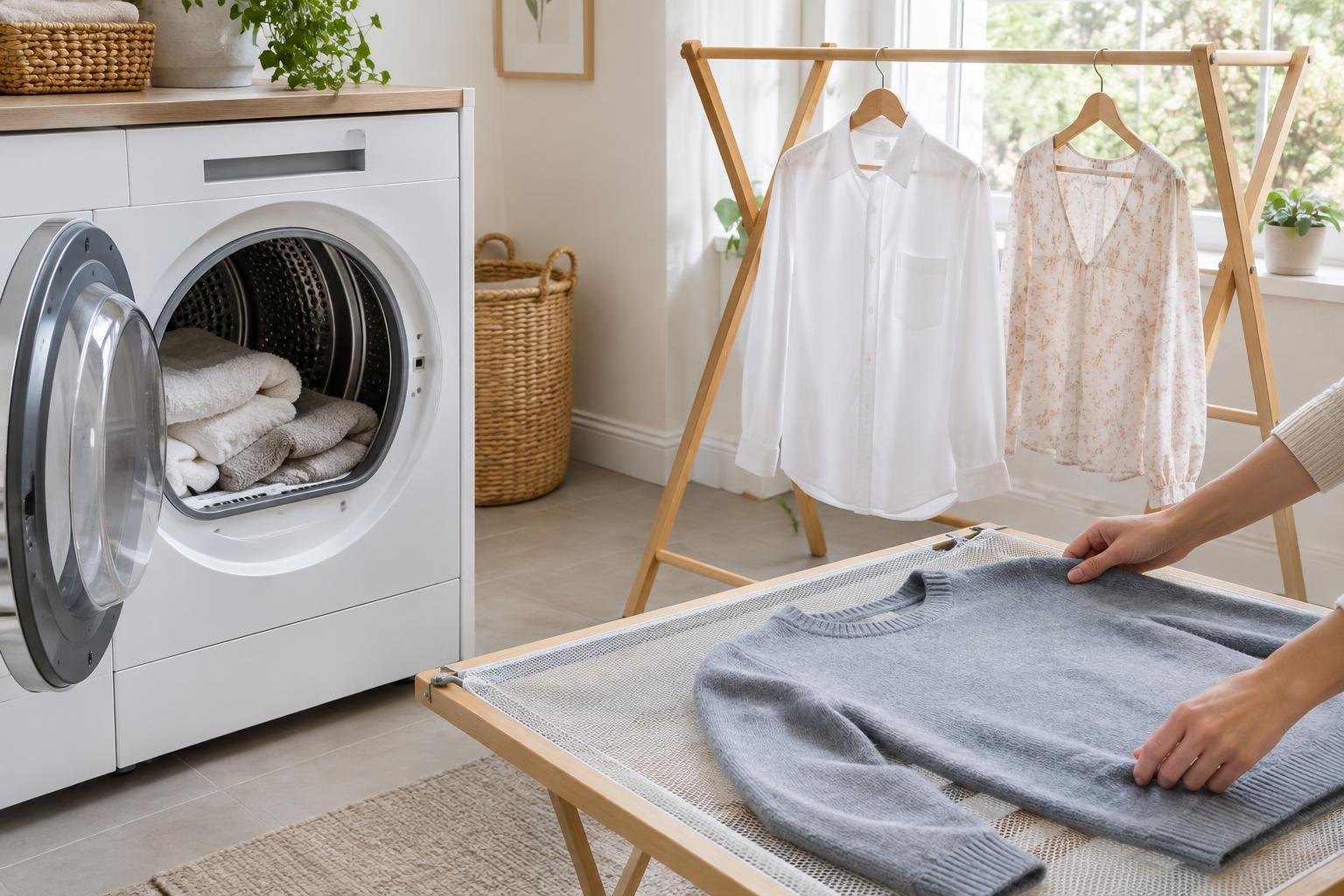
Air-drying is a strong choice for clothes that may be affected by heat or tumbling, including many activewear pieces, items with elastic, delicate fabrics and garments with decorative details. Smooth each piece after washing and reshape collars, cuffs and seams while it is damp. For woven shirts and lightweight tops, a suitable hanger or drying rack can help them dry with fewer creases. Check the label first, since some items should not hang while wet.
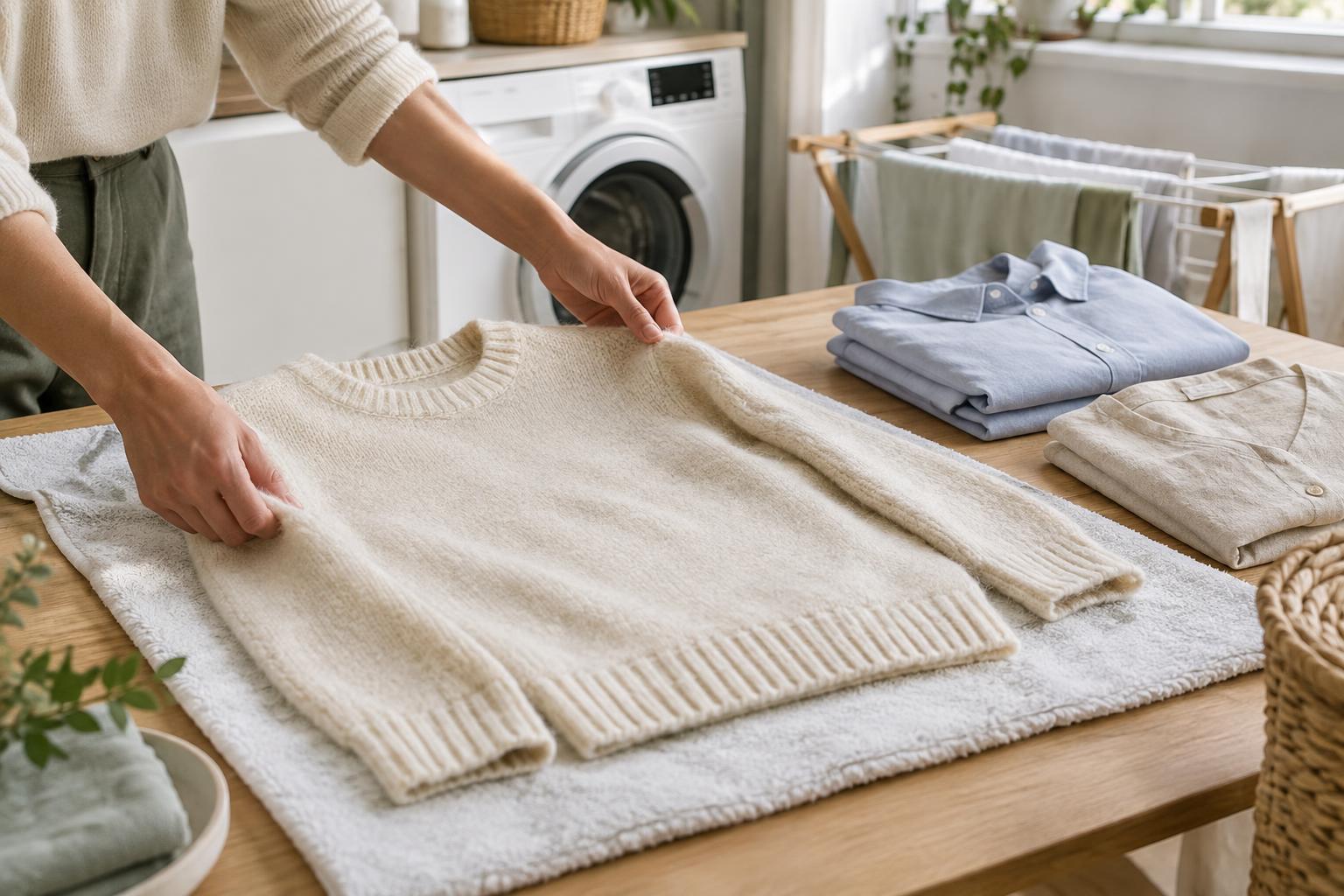
Heavy or stretchy garments often need a flat surface instead. Wet knitwear can pull downward on a hanger, leaving stretched shoulders or a longer hem. After washing a sweater according to its label, gently press out excess water without wringing it, then lay it on a clean towel or mesh drying rack. Arrange it close to its original dimensions and let it dry fully before putting it away. The same approach can help with other pieces that lose their shape under their own wet weight.
Give air-drying clothes space and airflow. Crowded items can stay damp longer, while direct sun may fade some colors over time. An indoor rack near ventilation or an outdoor line in suitable conditions can work well; choose the spot that lets clothes dry thoroughly without pressing against dirty or rough surfaces.
Treat mixed materials and special details with care
A garment’s construction can matter as much as its fabric. A dress might combine a sturdy outer layer with a delicate lining; trousers might have a waistband that reacts differently to heat than the legs. Printed graphics, pleats, padding and glued-on decorations can also complicate drying. Follow the most restrictive instruction on the label rather than deciding based on the largest section of fabric.
For unfamiliar pieces, start with the lowest-risk method the label allows. If you choose to tumble-dry a permitted item but worry about its fit, check it before the end of the cycle and let it finish on a rack if needed. Never put a garment away while it is still damp, even if its surface feels dry; thicker seams, pockets and waistbands may need more time.
Build a simple drying routine
After washing, sort into three groups: dryer-approved sturdy items, pieces that can hang, and pieces that should dry flat. Check pockets, fasten closures that could catch on other clothes, and straighten twisted garments before drying. This quick pause is easier than trying to rescue a misshapen sweater or a wrinkled shirt later.
You do not have to choose one method for your entire wardrobe. Tumble-dry a load of permitted basics when convenience matters, while reserving rack space for the clothes whose shape, finish or details need extra care. If an item repeatedly comes out smaller, rougher or more wrinkled than you like, adjust the method next time within its care-label guidance. The goal is a routine that suits your clothes and your space, not a single rule for every fabric.