Start with the role you want the print to play
Animal print is a family of patterns rather than a single look. Leopard spots, zebra stripes and snakeskin-inspired designs each create a different rhythm, and their colors can range from natural browns to unexpected brights. Before choosing a piece, decide whether you want the print to be a small accent or the first thing someone notices. That decision makes the rest of the outfit easier to put together.
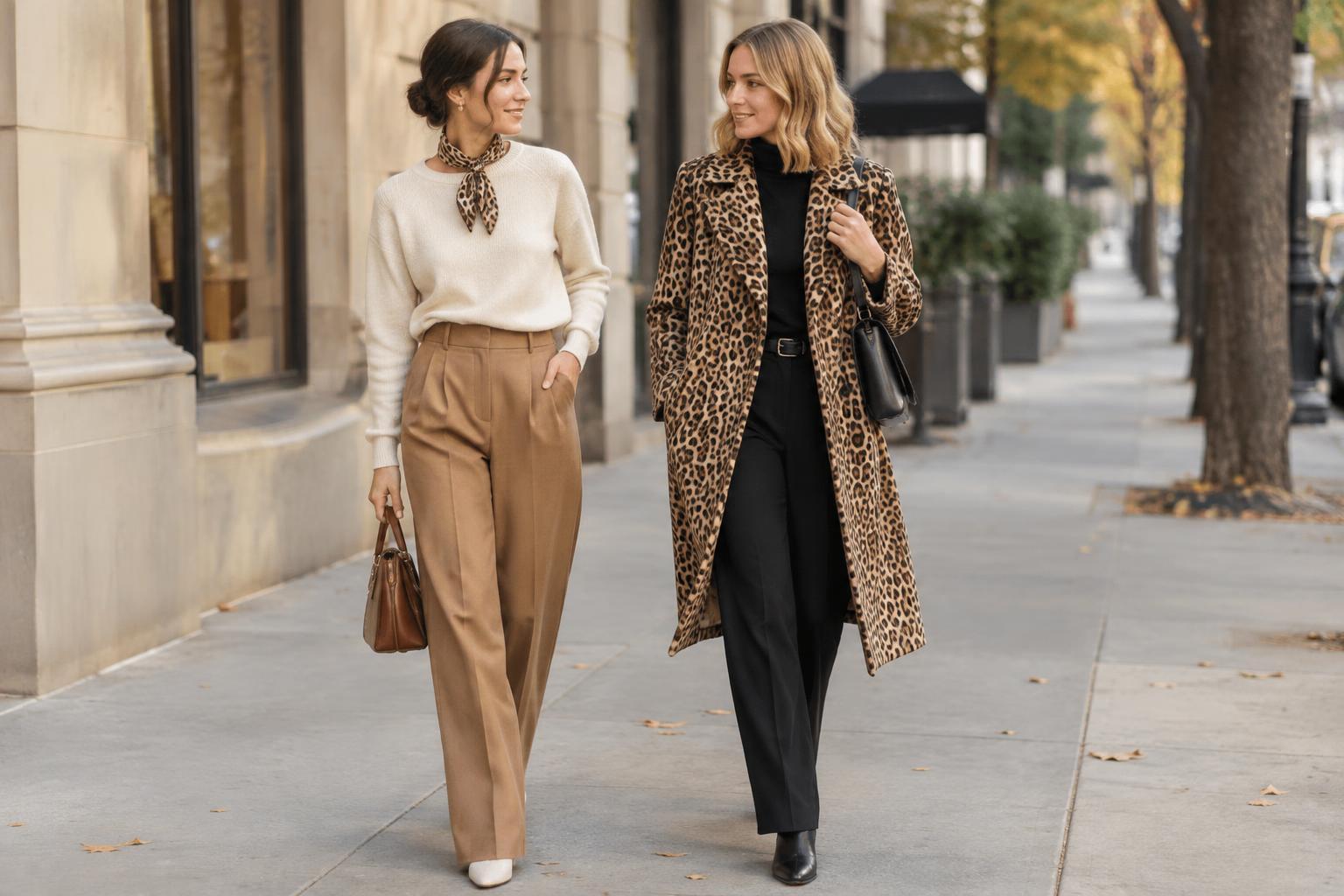
For an accent, try a belt, scarf, bag, shoes or a narrow layer that shows beneath a jacket. Keep the surrounding clothes relatively simple so the pattern has room to register. For a focal point, choose one prominent piece, such as a shirt, skirt, trousers or coat, then build the outfit around it. Neither approach has to be loud: the size of the pattern, its contrast and the cut of the garment all affect the result.
Choose colors that connect the outfit
One reliable way to style an animal print is to pick up a color already in it. A tan-and-black spotted scarf, for example, can tie together black trousers and a camel sweater. A monochrome zebra-patterned bag can sit comfortably beside white denim and a dark jacket. Repeating a color creates a connection without requiring every item to match exactly.
You can also use the print as the only break in a quiet palette. Navy, cream, olive, brown, gray and black offer useful starting points, depending on the colors in the pattern. If you prefer brighter combinations, choose one strong color and let the animal print act like a neutral beside it. Try the pieces together in daylight when possible: a print that looks subtle on its own may feel more prominent next to a saturated color.
Use scale and proportion to set the mood
Small, closely spaced markings often read as texture from a distance, while large, high-contrast shapes tend to draw the eye. This makes scale helpful when shopping or assembling an outfit. If you want an easy introduction, look for a lower-contrast print on a smaller item. If you want a bold focal point, a larger pattern on a cleanly shaped garment can make the choice look deliberate.
Consider where the printed piece sits in the outfit, too. A printed shoe grounds the look at the bottom, while a scarf brings attention toward the face. With a patterned coat or wide-leg trouser, simpler pieces nearby can keep the overall shape clear. These are options, not rules about which parts of the body deserve attention; the useful question is whether the finished outfit draws the eye where you want it to go.
Build outfits around one printed piece
For a small accent, start with clothes you already wear often: straight-leg jeans, a plain top and a cardigan or jacket. Add leopard-print flats or a patterned belt, then stop and assess the balance. If the accent feels disconnected, repeat one of its colors elsewhere, perhaps in the jacket or bag. A single accessory can change the character of familiar clothes without demanding a new wardrobe.
For a focal point, let the print do most of the visual work. Try a zebra-print shirt with dark trousers and simple shoes, or a spotted midi skirt with a solid knit and a jacket that echoes one color in the skirt. A patterned coat can go over an almost entirely solid outfit. Keeping the other pieces straightforward is a useful starting strategy, but you can add detail once you know what feels comfortable.
Mix patterns thoughtfully and wear them your way
Animal print can sit beside another pattern if there is a clear link between them. A fine stripe and a spotted accessory may work together when they share a color and have noticeably different scales. Give one pattern more visual space than the other, rather than asking both to compete equally. If the combination feels busy, remove one patterned item or put a solid layer between them.
Texture offers another way to add interest without adding a second print. Denim, smooth cotton, soft knitwear and leather-like finishes each change how a patterned piece feels. There is no need to commit to one permanent level of boldness: a scarf can be tied to a bag one day and worn prominently the next. Treat animal print as a flexible styling tool, adjusting its place in the outfit to match your mood.