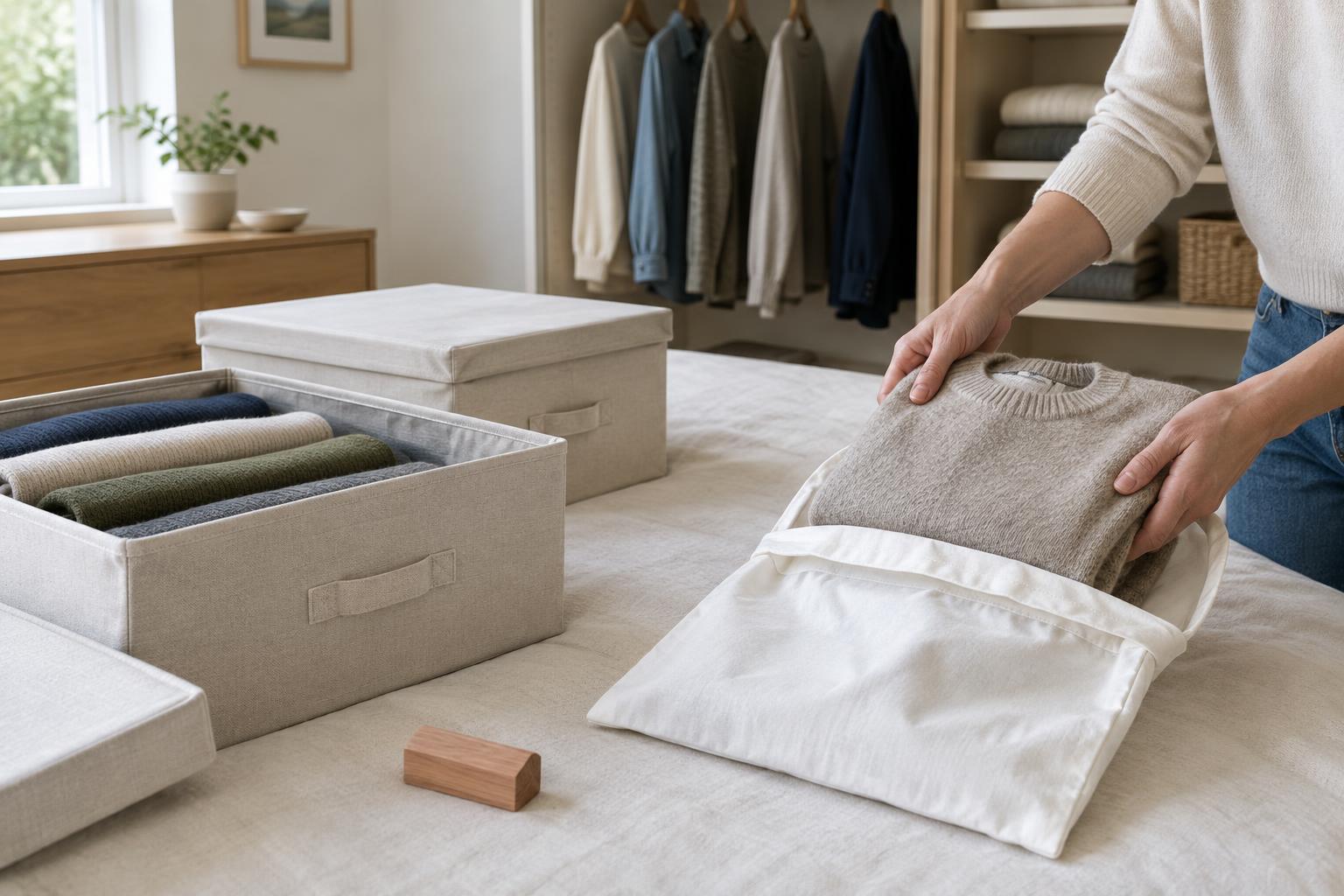
Start with a clean, completely dry wardrobe
Before packing anything away, sort clothes into three groups: store, keep accessible, and repair or donate. Check pockets, shake out scarves, and look closely at cuffs, collars, and underarms. Small spills and body oils may be hard to see now but can become more noticeable during storage. They can also make natural-fiber garments more attractive to fabric pests.
Launder or dry-clean items according to their care labels, then make sure they are fully dry before packing. Pay extra attention to thick waistbands, linings, and seams, which can hold dampness longer than the rest of a garment. If a coat or sweater still feels cool or clammy, give it more drying time. Putting away slightly damp clothes can encourage musty smells and mildew, even inside an otherwise tidy container.
Make simple repairs before storage if you can. Securing a loose button or mending a small hole is easier to remember now than when you need the garment next season. Let freshly cleaned pieces air out before closing them in a box, especially if they have been treated with a scented product.
Choose a dry space and the right container
The storage location matters as much as the box. An indoor closet or under-bed space with a fairly steady temperature is often a better choice than a damp basement, a hot attic, or a spot beside a leaking window. Check the area for condensation, water marks, and musty odors before moving clothes in. If the space has a known moisture problem, address that first rather than relying on packaging to protect the wardrobe.
Clean, sturdy containers help keep out dust and make clothes easier to organize. Lidded plastic bins can be useful in a dry space, but they can also trap moisture if their contents are not thoroughly dry. Fabric storage bags and boxes allow more airflow, though they offer less protection from spills. Whichever option you choose, avoid placing clothes directly against a cold exterior wall or on a floor where water might collect.
Fold knits, heavy sweaters, and stretchy garments rather than leaving them on hangers for months; their weight may pull them out of shape. Hang structured coats and jackets on supportive hangers if you have suitable closet space. Leave a little room around stored pieces instead of packing every bag or bin tightly. This reduces crushing and makes it easier to spot a problem during a check-in.
Make storage less inviting to moths
Clothes moths are most concerning for animal fibers such as wool, cashmere, and silk, as well as blends containing them. Their larvae, rather than the flying adults, damage fabric. Cleaning garments before storage and removing lint and hair from shelves and closet corners are sensible first steps. Vacuum the storage area, including along baseboards, then empty or clean the vacuum as appropriate.
Place vulnerable items in clean, well-closing storage bags or containers, and inspect them as you pack. Look for small holes, fine webbing, or shed material tucked into folds and seams. If you find signs of an infestation, separate the affected pieces and follow care-label guidance for cleaning or other treatment before returning them to storage. Treat nearby garments and the storage area as potentially affected rather than simply hiding the damaged item in a new box.
Cedar blocks and scented sachets may make storage smell pleasant, but they are not a substitute for cleaning, inspection, and a sound container. If you consider a moth-control product, read and follow its label carefully; some products require particular enclosed spaces and should not be used casually around people or pets.
Pack so clothes are easy to find and check
Group clothes by type or season and label the outside of each container. A short list such as “wool sweaters and scarves” is more useful than “winter things” when the weather changes. For delicate pieces, fold loosely and use clean, acid-free tissue between folds if you want to reduce sharp creases. Avoid wrapping garments in ordinary plastic dry-cleaning bags for long-term storage; they are intended for transport, not as a complete storage system.
Set a reminder to look through stored clothes occasionally. Check for dampness, odors, pest signs, or a container that no longer closes properly. If you notice a musty smell, take the garments out, identify and fix the source of moisture, and clean and dry the clothes according to their labels before storing them again. A brief check can save you from discovering a larger problem just when you want to wear a favorite piece.