Start with the clothes you actually wear
Before choosing a palette, look at the pieces you reach for most often. Set aside a few favorite tops, bottoms, layers and shoes, then notice which colors appear repeatedly. Also look at what stays unworn. A color may be beautiful on its own but hard to combine with the rest of your closet, or it may simply not feel like you. Your wardrobe can tell you more about your preferences than a color chart can.
Think about where you get dressed for most days. Someone who wears denim and casual shoes may want different foundations from someone who often wears tailored trousers. You do not need every item to match every other item. The aim is to create several easy combinations while leaving room for clothes that are playful, sentimental or deliberately unexpected.
Choose core neutrals that work together
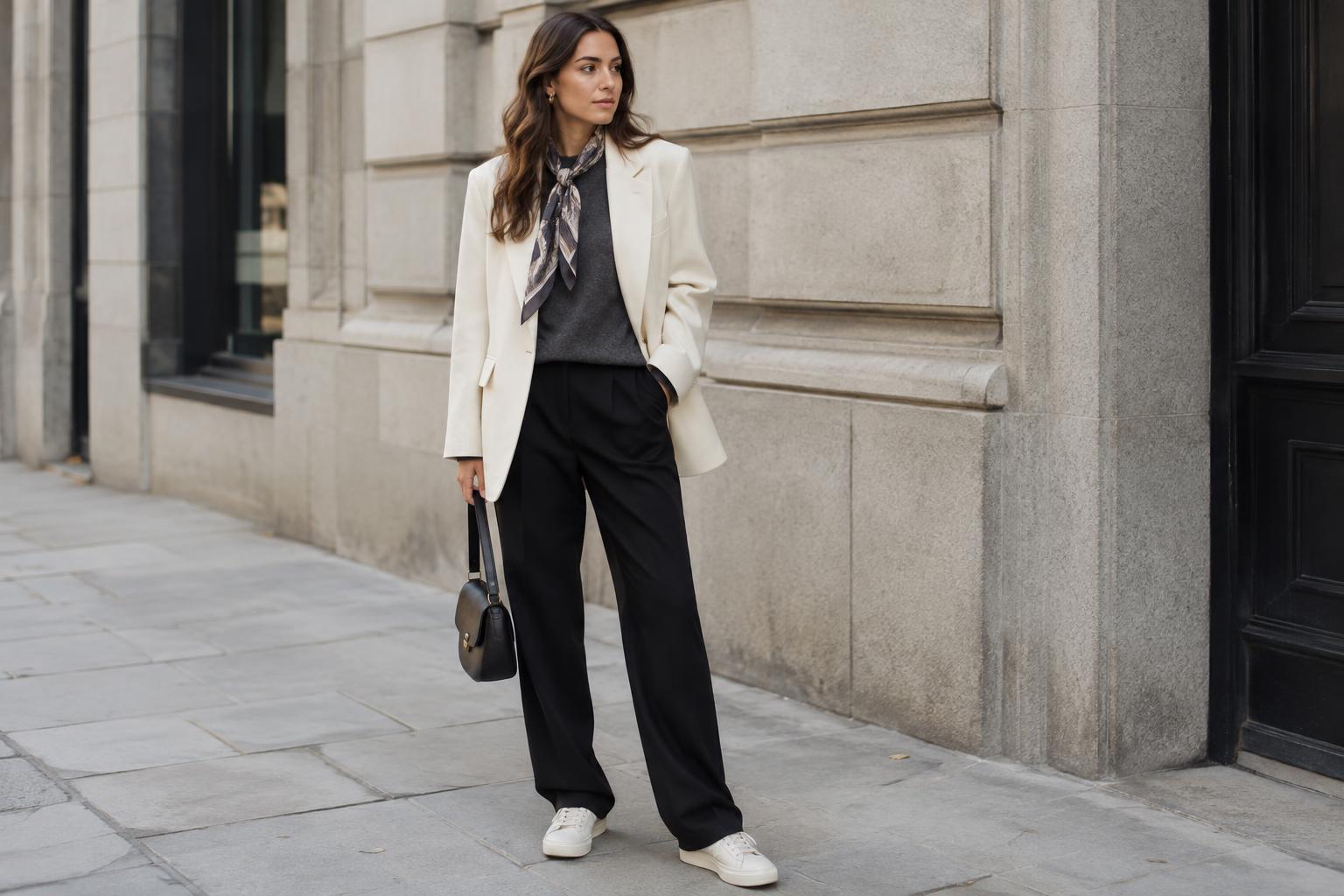
Core neutrals are the colors you rely on for larger or frequently worn pieces, such as trousers, coats, knitwear and everyday shoes. Black, navy, charcoal, gray, brown, camel, cream, white, olive and denim blue can all serve this role. Pick two or three that you like wearing together, rather than buying one of everything. For example, navy, cream and faded denim create a different mood from black, charcoal and white.
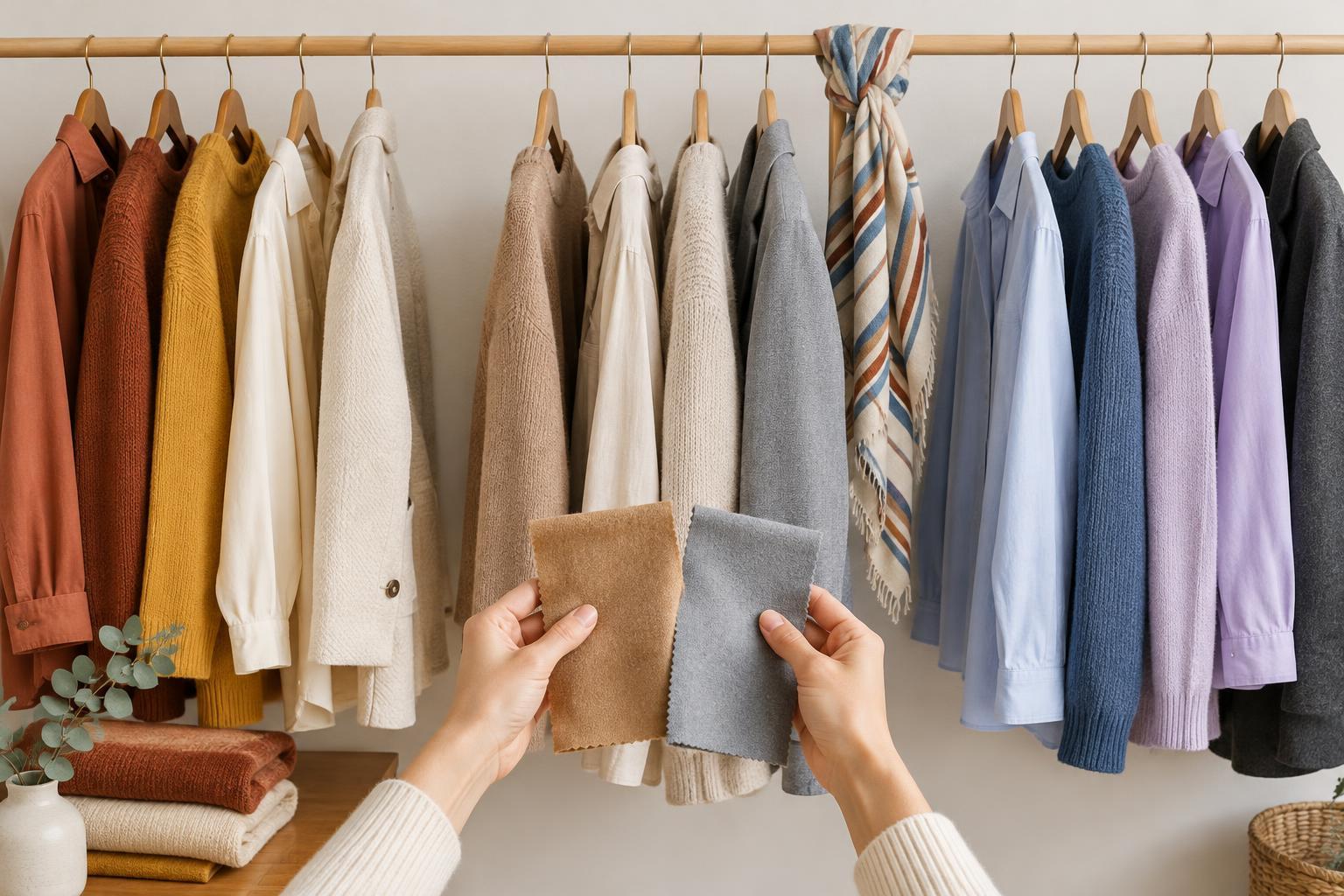
Consider contrast as well as color. A light neutral can make outfits feel more varied when most of your clothes are dark; a dark neutral can ground a wardrobe full of pale pieces. You can also mix warm and cool neutrals if you enjoy the result. Instead of following a rule about which shades you are supposed to wear, hold garments next to each other in natural light and see whether the combination appeals to you. Texture matters too: a matte cotton trouser and a soft knit can look distinct even when their colors are similar.
Give accent colors a clear job
Accent colors add character without requiring a complete wardrobe change. Start with one or two shades you are pleased to see in an outfit. They might be bold, such as cobalt or tomato red, or quiet, such as dusty rose or muted green. An accent does not have to be bright; it only needs to stand apart from your core neutrals.
Decide how much of each color you enjoy wearing. If you love a shade near your face, try it in a shirt, scarf or sweater. If you prefer it in smaller amounts, choose a bag, socks or another accessory. Repeating an accent in two different items can make outfits easier to put together, but those items do not need to be worn at the same time. A green shirt and a green bag, for instance, each offer a separate way to use the same palette.
Let patterns bridge the palette
Patterns can help connect colors that otherwise feel unrelated. A striped shirt containing cream and navy can sit comfortably with either neutral, while a printed scarf might bring a favorite accent into an outfit built from basics. When considering a patterned piece, identify its most visible colors rather than trying to match every tiny detail. If at least one of those colors already appears in your wardrobe, you may have several ways to wear it.
Scale makes a difference. A subtle check often reads almost like a solid from a distance, while a large floral or graphic print becomes a focal point. If you want an uncomplicated outfit, pair a noticeable pattern with plain pieces drawn from its colors. If you enjoy mixing patterns, look for a shared color and vary their scale. These are starting points, not restrictions: trying combinations on is the best way to decide whether they feel balanced to you.
Test the palette before you buy more
Build a few outfits using only what you own. Try each core neutral with your chosen accents, then check whether you have suitable shoes and layers for the combinations you like. Take note of specific gaps, such as a light top that would work under two jackets, instead of making a broad shopping list. This small test can prevent you from buying a color that looks promising in isolation but has no comfortable place in your routine.
A palette should be useful, not permanent. Seasonal fabrics, changing tastes and new favorite pieces can all shift the colors you wear. You might keep the same neutrals year-round and change accents, or use darker foundations in one part of the year and lighter ones in another. Leave space for exceptions. The strongest wardrobe palette is one that helps you get dressed with less effort while still looking and feeling like yourself.