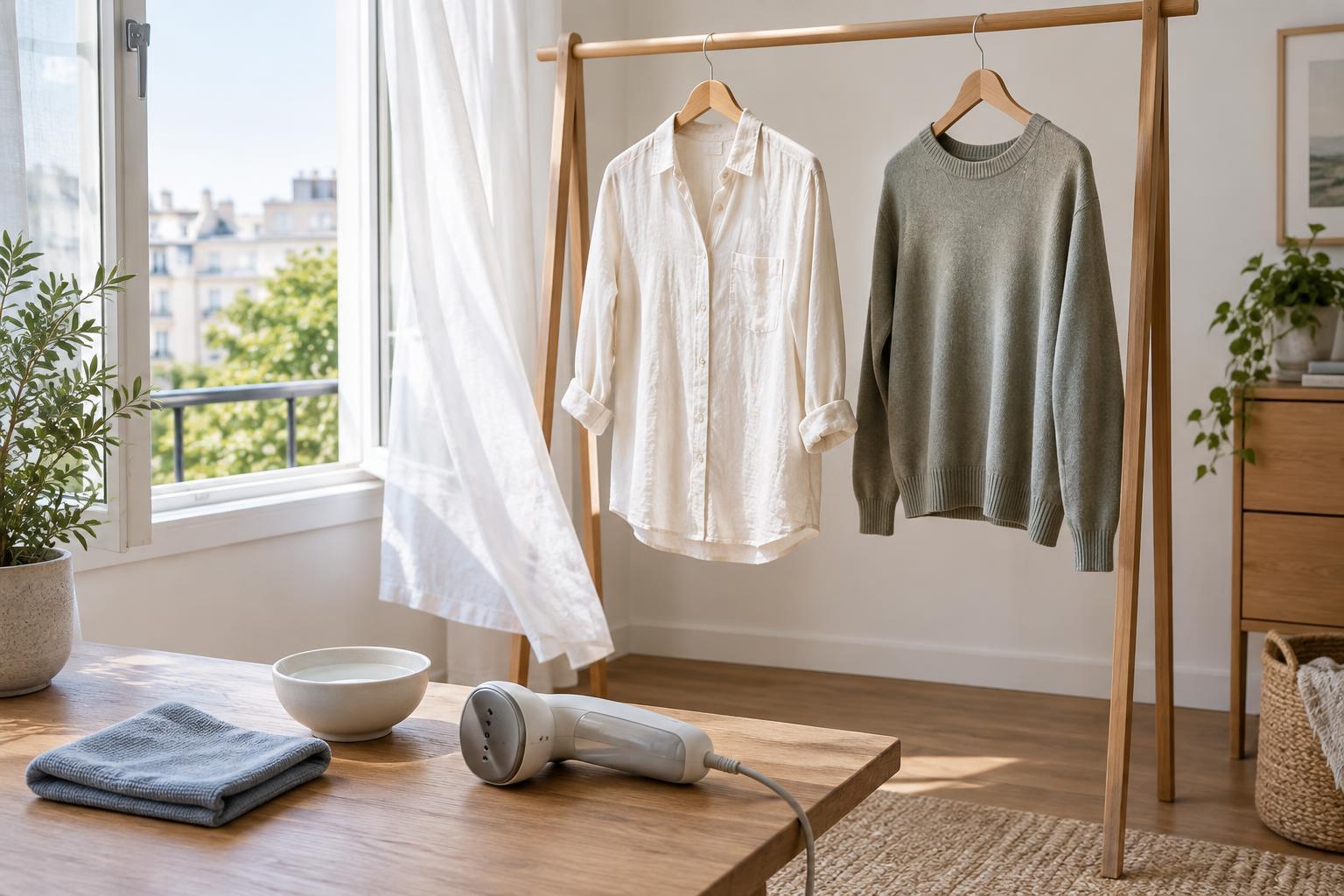
Decide whether a refresh is enough
Not every worn garment belongs in the laundry basket. A jacket worn over a clean shirt, for example, may only need time to air out. A top that is damp with sweat or has a persistent underarm odor needs washing. Freshening works best when a garment is otherwise clean and the issue is a faint, temporary smell or a small mark.
Check the areas that touch skin, such as collars, cuffs and underarms. If they feel oily, have visible residue or still smell after airing, do not try to disguise the problem with fragrance. Treat the affected area if the care label permits, or wash the item. Delicate and structured pieces may need the cleaning method specified on their labels.
Give clothes room and time to air out
Hang a recently worn item rather than folding it immediately into a drawer or piling it on a chair. Choose a place with airflow, and leave space around the garment so both sides can dry. Turn it inside out if the odor is concentrated where it touched your body. A hanger supports shirts and jackets, while a drying rack may be better for knits that could stretch.
Airflow matters more than adding a scent. An open window can help when conditions allow, but avoid leaving fabrics in harsh direct sunlight for long periods, since some colors may fade. If a garment is damp, let it dry completely before putting it away. Trapping moisture in a crowded closet can leave clothes smelling stale again.
Spot-clean the part that needs attention
A small splash or mark does not always call for washing the whole garment. First, read its care label and test any cleaning method on an inconspicuous area. For a washable fabric, gently blot a fresh mark with a clean, slightly damp cloth. If needed, use a small amount of mild detergent diluted in water, then blot away the residue with another damp cloth. Avoid soaking the fabric, which can spread a stain or leave a water ring.
For collars or cuffs with noticeable buildup, a careful spot clean can help between full washes, but it is not a substitute indefinitely. Let the treated area dry fully before judging the result or storing the item. If the mark remains, resist repeated scrubbing; friction can change a fabric’s texture or color. Launder the garment according to its label when a light treatment is not enough.
Use steam thoughtfully, not as a cover-up
Steam can relax wrinkles and make some garments feel more ready to wear, especially after they have been aired out. Follow the garment and steamer instructions, keep the steamer moving, and allow the fabric to dry before dressing or storage. Try a hidden area first if you are unsure how the material will respond.
Steam is not a dependable fix for a strong odor, a stain or an item that needs washing. It may also be unsuitable for materials or finishes that react poorly to heat and moisture, including some delicate fabrics and structured details. When in doubt, skip the steam and follow the care label.
Keep the next wear fresher
A simple wearing routine reduces the need for last-minute fixes. Let clothes dry after each wear, then return only clean, dry pieces to drawers or closets. Give frequently worn jackets and trousers a rest between wears when possible, and keep storage spaces from becoming so packed that air cannot circulate. An undershirt can put a washable layer between your skin and a harder-to-clean outer garment.
If an odor returns as soon as you put an item on, treat that as a sign to wash it rather than applying more scent. Perfumed sprays may change what you smell for a while, but they do not remove sweat or residue from the fibers. A good between-wash refresh is modest: air the garment, address a small problem area if appropriate, and know when it is time for proper cleaning.