Start with the garment, not a general rule
Silk is a fiber, not a single type of garment. A simple silk blouse, a structured jacket and a lined dress may all need different care. Before washing anything, read its care label and look at the whole construction: linings, pleats, embroidery and delicate trims can be less tolerant of water than the silk itself. If the label says dry clean only, or the piece is structured, valuable or difficult to replace, professional cleaning is the cautious choice.
Even a label that permits washing does not guarantee that every color will behave the same way. If the garment is new to you, test an inconspicuous area with a little cool water and a clean white cloth. Check for color transfer, a change in texture or a visible water mark after it dries. Do not proceed with a full wash if the test raises concerns. Keep care decisions conservative with printed silk and pieces that combine contrasting colors.
Wash gently when the label allows it
For washable silk, hand-washing offers control over the amount of movement the fabric receives. Fill a clean basin with cool water and add a small amount of detergent intended for delicates or silk. Avoid bleach and strong stain removers. Turn the garment inside out, submerge it, and move it through the water gently rather than scrubbing or twisting it. A short wash is usually preferable to a long soak, particularly if you are unsure how stable the dye is.
Drain the basin and rinse with cool water until the detergent is removed. Support the garment with both hands when lifting it: wet fabric can become heavy, and pulling on a sleeve or strap may distort it. Do not wring it out. If the care label permits machine washing, use a mesh bag, a delicate cycle and cool water, but remember that a machine still introduces more movement than hand-washing. Wash silk separately or with similarly delicate items so zippers and rough fabrics cannot catch it.
Dry without heat or stretching
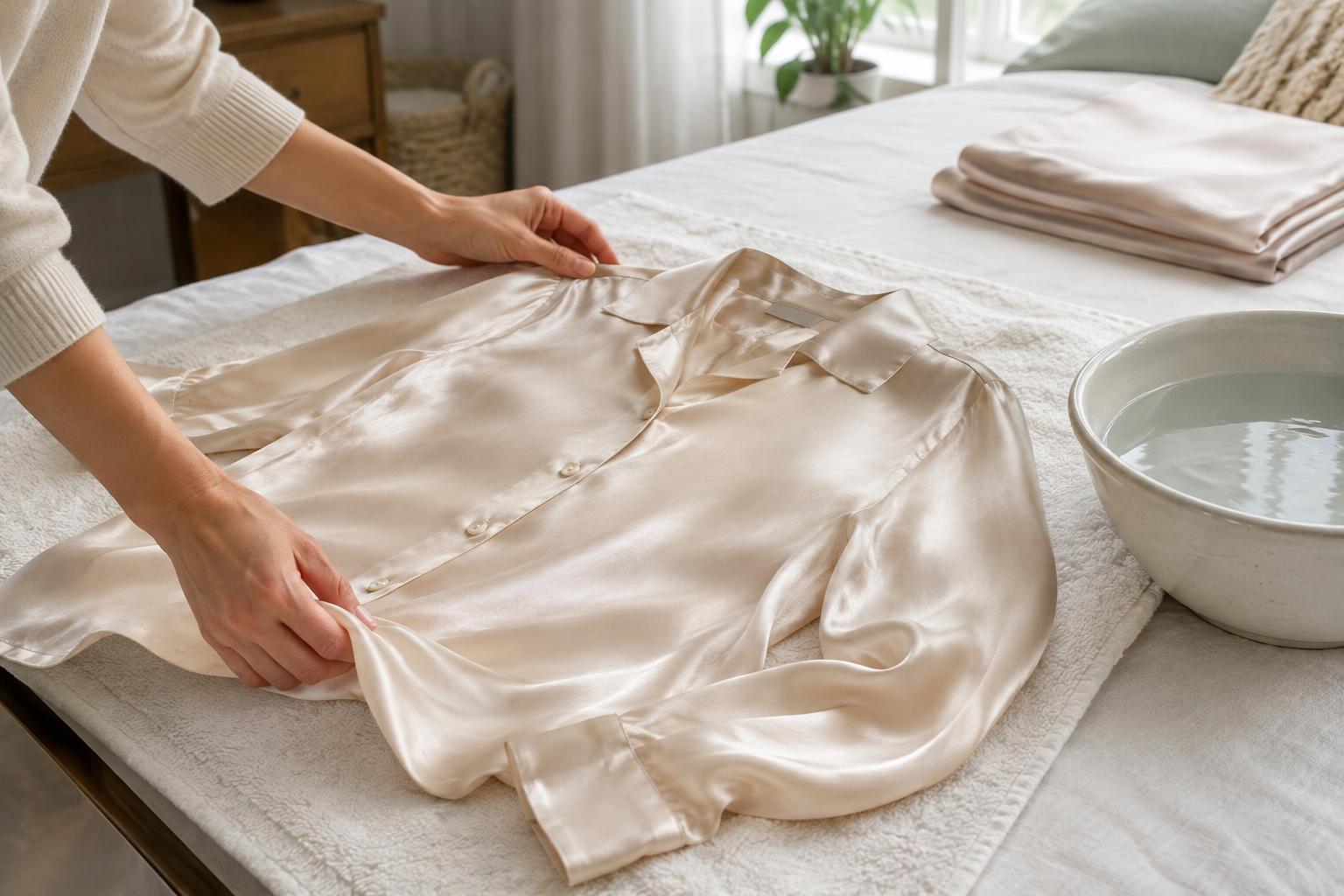
Lay the rinsed garment on a clean, dry towel, roll the towel loosely and press to absorb excess water. Unroll it promptly and reshape the garment. Many lightweight pieces can dry flat on another dry towel or a mesh rack. For a blouse that holds its shape well, a smooth, padded hanger may work, provided the fabric is not heavy enough when damp to stretch at the shoulders. Keep it away from radiators, tumble dryers and strong direct sunlight.
Give silk room to dry fully before putting it away. If a piece has a slippery surface, check it as it dries and smooth out any folds you would rather not press later. Avoid clipping wet silk with firm pegs, which can leave marks. The aim is to remove moisture while placing as little tension on the fabric as possible.
Handle wrinkles and stains with restraint
For wrinkles, check the label before using an iron or steamer. If ironing is allowed, turn the garment inside out and use a low setting suitable for silk, with a clean pressing cloth between the iron and the fabric. Test a hidden area first and avoid leaving the iron in one place. Follow the appliance instructions if steaming, and keep the steamer from spitting droplets onto the garment. Water can leave visible marks on some silk, so caution matters even when the heat seems gentle.
Treat a spill as soon as practical by blotting it with a clean cloth; rubbing may spread the stain or roughen the surface. Resist the urge to apply concentrated soap, bleach or a household stain-removal mixture to one spot. These can affect the dye or leave a ring. For oil, ink, persistent stains or an item with a dry-clean-only label, explain what happened to a professional cleaner rather than repeatedly treating the area at home.
Make care easier between wears
Silk does not need to be washed automatically after every brief wear. If a garment is clean, let it air in a shaded, well-ventilated place before returning it to the wardrobe. This gives moisture time to dissipate and can reduce unnecessary washing. Be mindful of perfume, deodorant and skincare products: let them dry before dressing when possible, and check high-contact areas such as collars and underarms before storing a piece.
Store silk clean and completely dry in a space where it will not be crushed. Fold heavier knits or garments that might stretch on a hanger; hang lighter woven pieces on smooth hangers with enough space around them. For longer storage, a breathable fabric bag can help protect a special piece from dust without pressing directly against it. A few gentle habits will do more for a silk garment than an elaborate routine: follow its label, minimize friction and heat, and address problems before they become harder to remove.