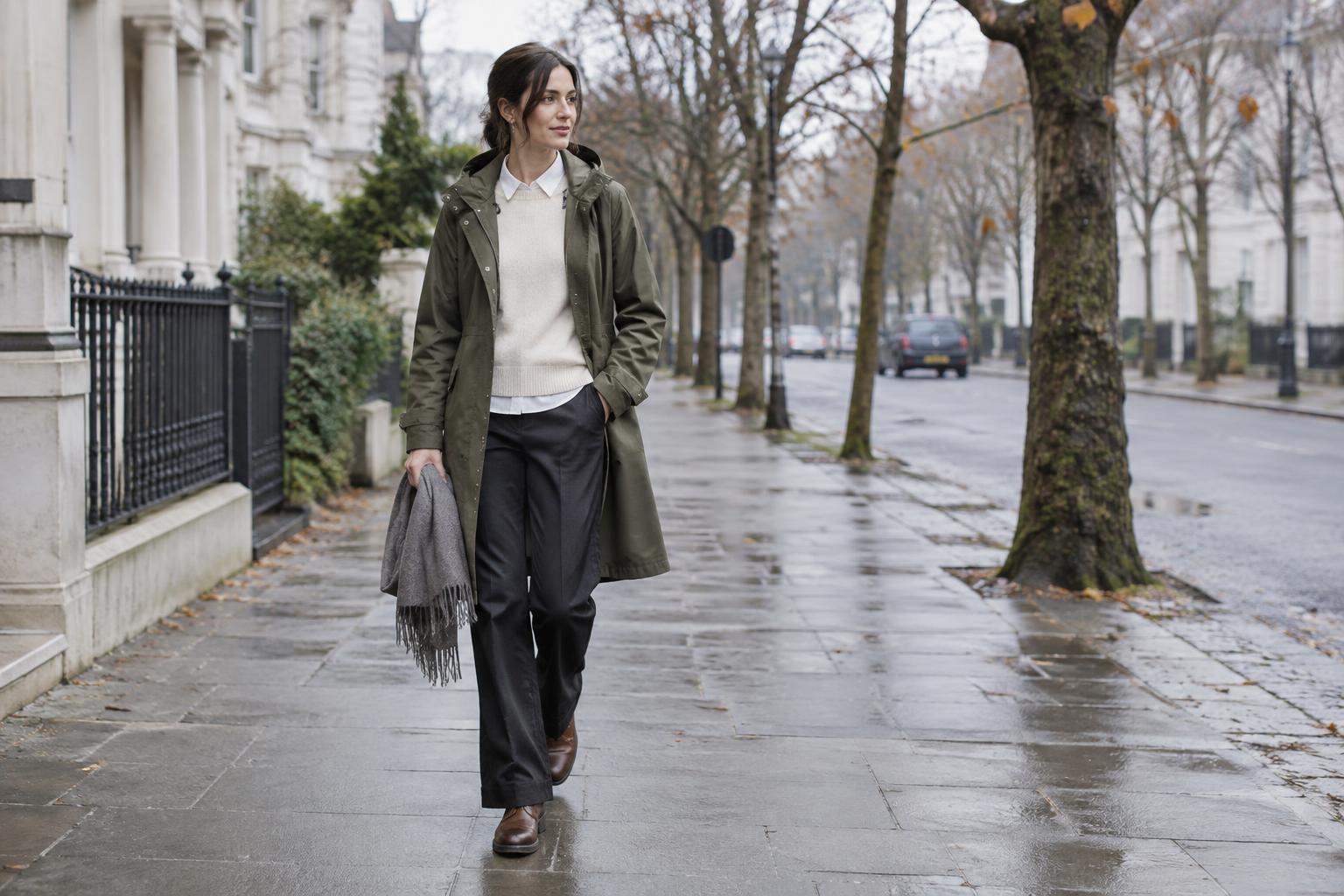
Start with how the outfit feels
In humid weather, sweat may take longer to dry, so clothes can feel damp or cling to your skin. The most useful wardrobe question is not simply “Is this lightweight?” but “Will I feel comfortable moving around in it?” A thin, close-fitting garment can feel less comfortable than a roomier piece in a slightly heavier fabric. Consider how an item feels when you sit, walk and lift your arms, not just how it looks on a hanger.
Choose pieces that leave some space between fabric and skin, especially around the underarms, waist and thighs. You do not need an entirely oversized outfit: a relaxed shirt with straight-leg trousers, or a fitted tank with an airy skirt, can provide both shape and ease. If chafing is an issue, smoother seams and a fit that stays in place may matter more than extra looseness.
Choose fabrics with their trade-offs in mind
Linen is a useful option for humid days because its open, airy feel works well in relaxed shirts, trousers and dresses. It wrinkles readily, which can be part of its casual look; linen blends may offer a neater appearance. Lightweight cotton can also feel pleasant against the skin, particularly in loose weaves, though it may stay damp once soaked with sweat. A crisp cotton poplin shirt and a heavy cotton jersey T-shirt can behave quite differently, so pay attention to the fabric rather than the fiber name alone.
Lyocell and some viscose fabrics have a soft drape that works well for wide-leg trousers or loose dresses. Check care labels and try the garment on if possible: a flowing fabric is not necessarily comfortable if it is sheer, clingy or difficult to wash. Lightweight performance fabrics can be handy for long walks or active days, especially when designed to dry quickly, but some feel less pleasant against bare skin. A blend you enjoy wearing is more useful than a supposedly ideal fabric you avoid.
Use fit, construction and color to your advantage
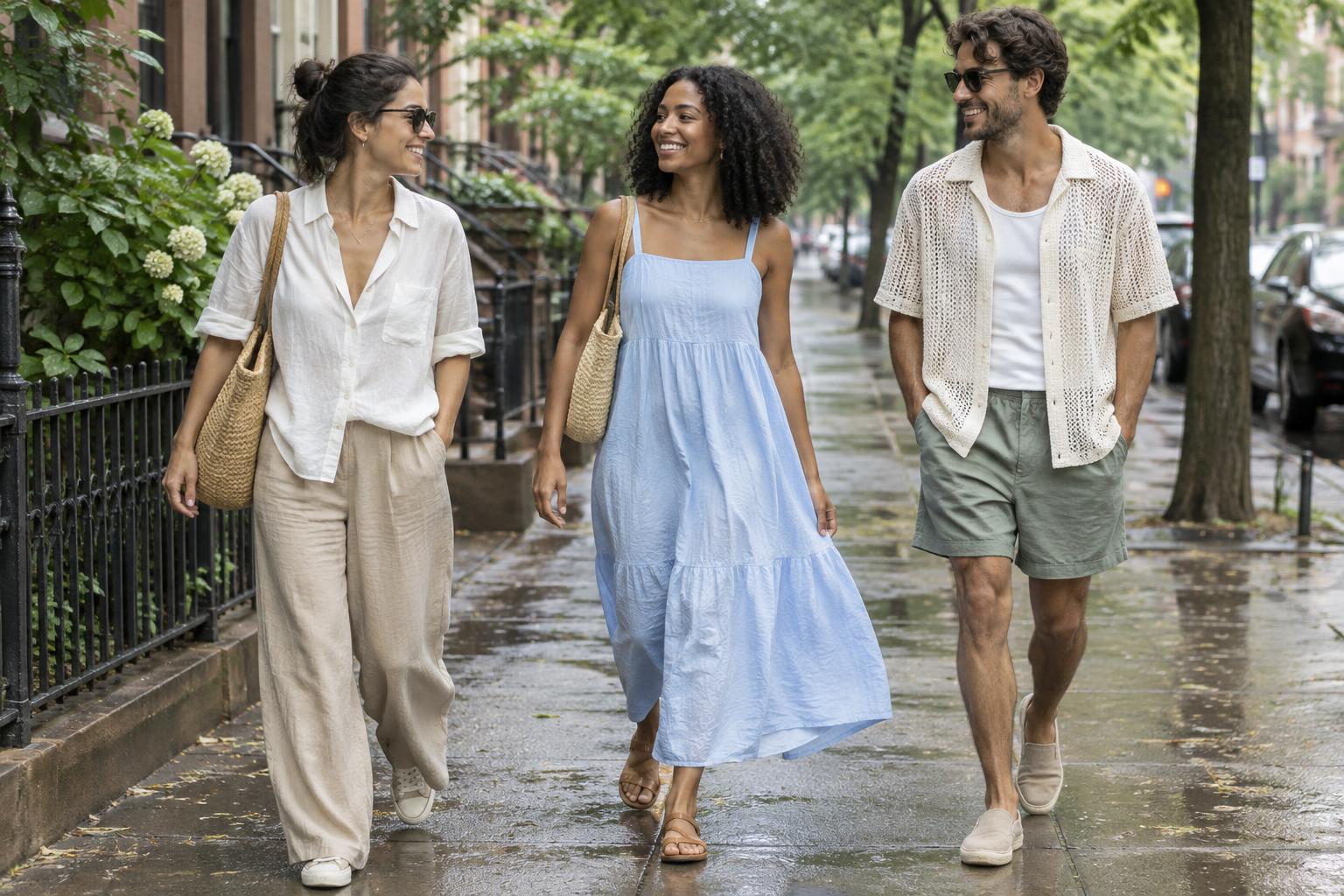
Look for shapes that allow air to circulate without getting in your way. Short sleeves with a little room, open necklines, swing dresses, relaxed shorts and straight or wide-leg trousers are easy starting points. An elastic waistband may feel easier than a rigid one when you will be seated for hours, provided it does not grip too tightly. For a polished outfit, choose one generously cut piece and keep the other more structured.
Small construction details can change how comfortable clothing feels. A lined garment may be less breezy than it appears, while a seam or thick waistband can rub when damp. Pockets, hems and straps are worth checking before a long day out. Dark colors can make visible damp patches less noticeable on some fabrics; prints and textured weaves may also help. Lighter colors can feel visually fresh, but the best choice is one you feel at ease wearing.
Build outfits for the day you actually have
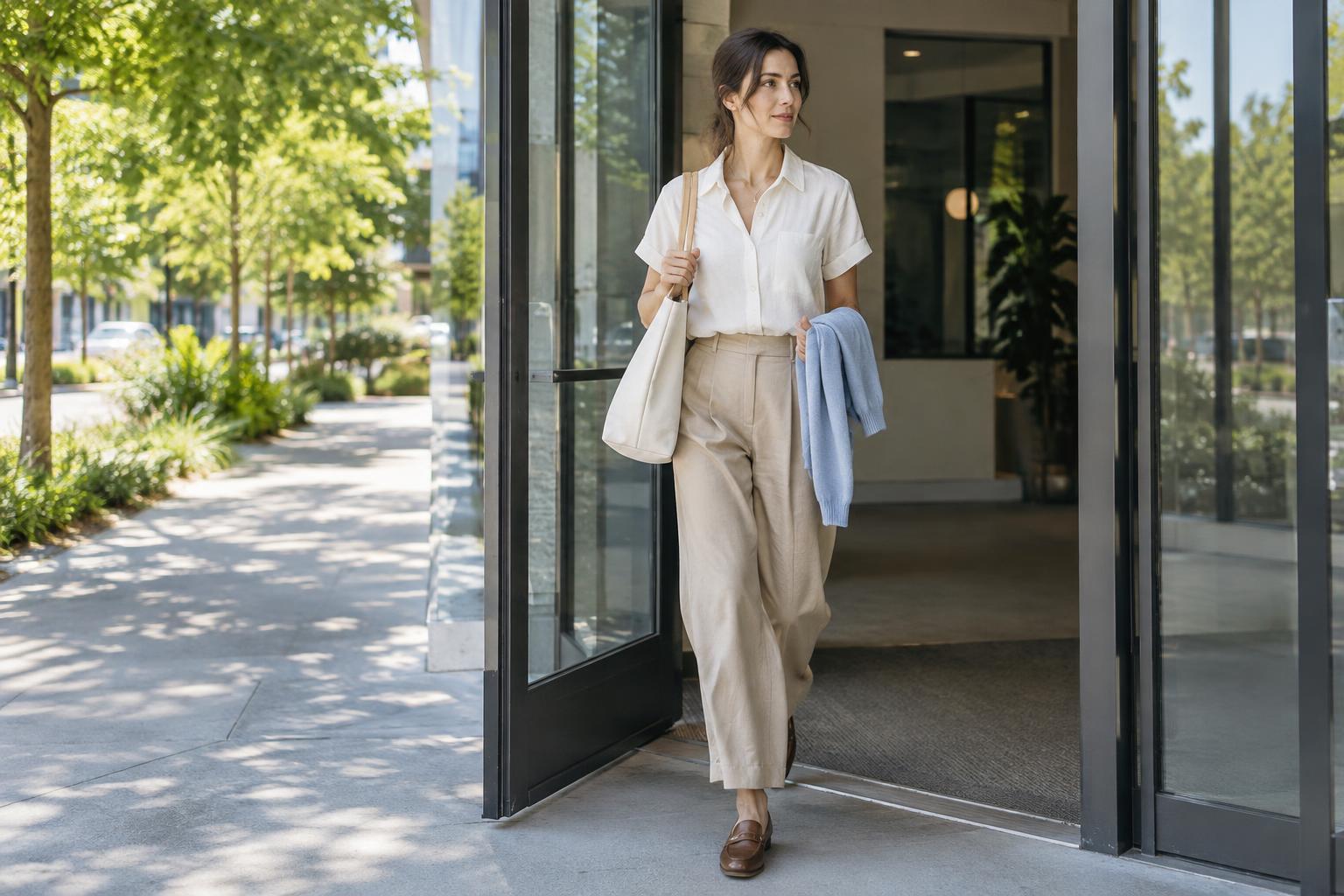
For a casual day, try a loose linen or cotton-blend shirt over a comfortable tank, with relaxed shorts or lightweight trousers. You can wear the shirt open for airflow and button it when you want more coverage. For a work setting, a short-sleeve woven shirt with straight-leg trousers makes a simple base; add a lightweight layer only if the indoor temperature calls for it. A breezy dress with comfortable underlayers is another easy option for commuting or errands.
Think about your route as well as your destination. An outdoor walk, a crowded commute and a cool indoor space may all happen in the same day. A thin overshirt or cardigan that fits in a bag gives you flexibility without committing to a heavy layer. Comfortable sandals or breathable shoes can help complete the outfit, but choose footwear that suits the walking and dress requirements ahead. If you can, carry a spare top for a long or especially active day.
Keep a small humid-weather wardrobe ready
You do not need a separate wardrobe for every change in temperature. Start with a few pieces you already reach for on sticky days, then notice what they have in common: perhaps a certain sleeve shape, fabric texture or waistband. Use that information when shopping or altering what you own. One dependable pair of trousers, two breathable tops and a light extra layer can make several outfits when their colors work together.
Care matters, too. Follow each garment’s label, wash sweaty pieces when needed and let them dry fully before storing them. Give items enough room on a drying rack so damp areas are not trapped in folds. If wrinkles bother you, hang pieces promptly after washing and consider fabrics that keep a look you like without much effort. The goal is not a perfect summer uniform; it is a set of clothes that feels manageable on humid days and still looks like you.