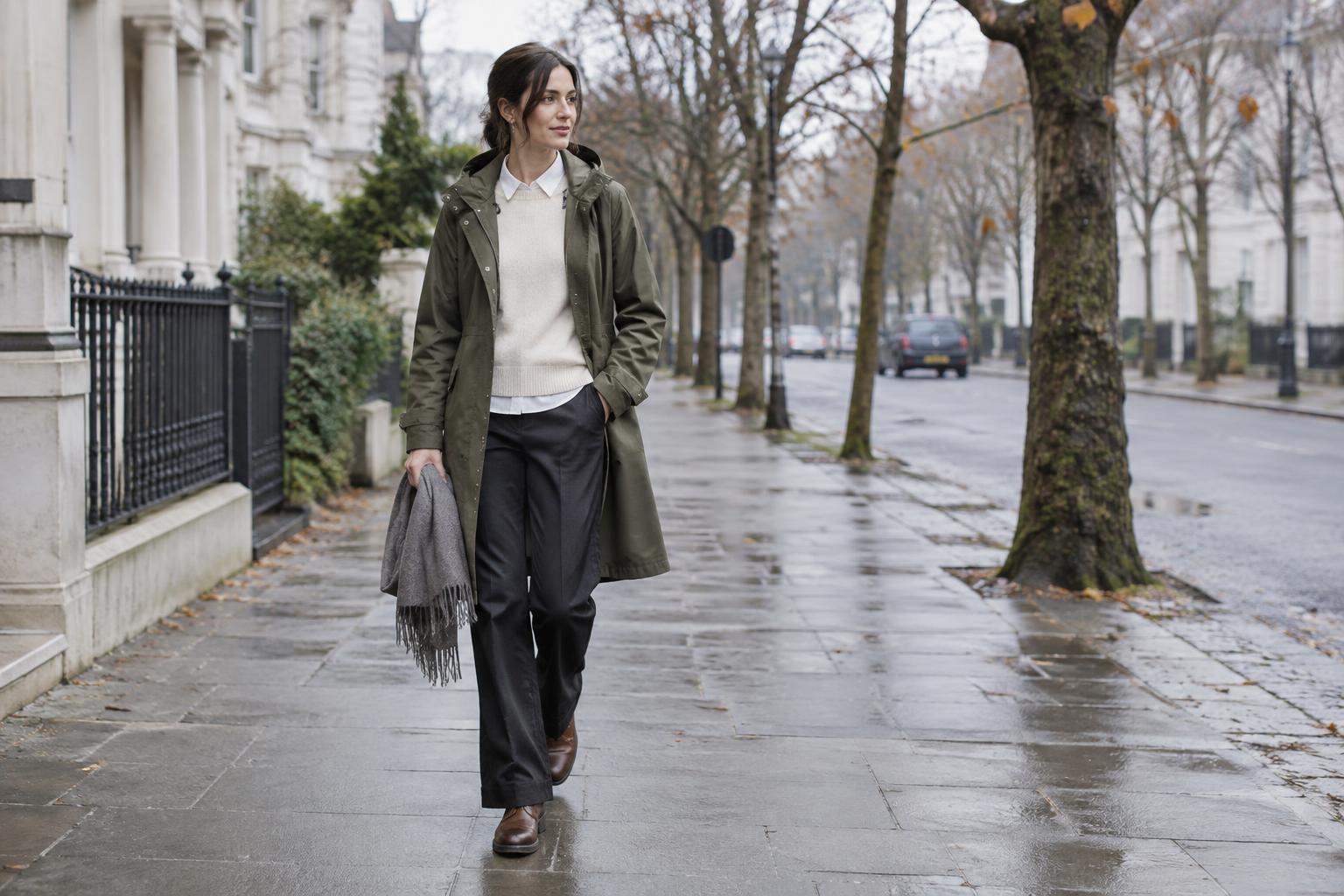
Start with the weather you actually experience
A winter wardrobe designed for snow and prolonged freezing temperatures can feel cumbersome in a place where days are cool, damp or changeable. Instead of starting with a list of traditional winter essentials, think about the conditions you encounter most often. Is the challenge a chilly morning followed by a warm afternoon? Wind on your walk to work? Rain that comes and goes? Your answers will help you decide which pieces deserve space in your wardrobe.
Take stock of what you already wear on cooler days. Set aside items that keep you comfortable and note why they work. A light jacket may be more useful than a heavy coat if you can wear it over several different tops. You do not have to discard warmer pieces that you still enjoy; simply reserve them for travel, unusually cold days or evenings spent outdoors. The goal is a smaller set of choices that fits your routine, not a wardrobe built around an idealized winter.
Build layers that are easy to remove
In a mild climate, adjustable layers often do more work than one very warm garment. Begin with a comfortable base, such as a cotton tee, long-sleeved top or lightweight knit. Add a removable middle layer: a cardigan, overshirt, fine-gauge sweater or casual blazer. Finish with outerwear suited to the day. This arrangement makes it easier to respond to changes between outdoor air, heated rooms and warmer afternoons.
Pay attention to fit as well as warmth. A middle layer should sit comfortably over your base without bunching, while your jacket should leave enough room for both. If you feel restricted, try a thinner sweater rather than sizing up every piece. Layers can also create variety: the same trousers and shirt may look relaxed with an open cardigan, sharper with a blazer or more casual with an overshirt. When shopping, consider whether a new layer works with several outfits you already own.
Choose fabrics and outerwear for your conditions
Fabric weight and construction can matter as much as a garment’s winter label. Lightweight wool or wool blends can offer warmth without the bulk of a chunky knit, while cotton shirts and breathable knits may be comfortable when temperatures fluctuate. Denim, corduroy and medium-weight trousers can provide a little more coverage than thin summer fabrics without requiring thermal underlayers. Comfort varies by person, so use how a fabric feels during your day as your guide.
For outerwear, consider wind and rain separately from cold. A light coat or lined jacket may be enough on dry days; a rain-resistant shell can be more useful when the forecast is wet. A shell worn over a sweater also gives you options that a single heavy coat cannot. Check a garment’s care label and intended use before relying on it in steady rain: water-resistant fabric and fully waterproof construction are not the same thing.
Make a few dependable outfit combinations
Simple outfit formulas reduce the temptation to dress for the coldest possible moment. For a casual day, try straight-leg jeans, a long-sleeved tee, an overshirt and comfortable closed-toe shoes. For work or a dinner out, pair medium-weight trousers with a fine knit and a light coat. On a damp day, swap the coat for a rain-ready layer and choose shoes you do not mind wearing on wet pavement. Each formula has a piece you can remove if the day warms up.
Accessories can provide warmth without committing you to a bulky outfit. A light scarf protects your neck when the wind picks up and fits easily in a bag later. Socks that feel comfortable in your chosen shoes may be more valuable than adding another sweater. If you enjoy color, use a scarf, bag or knit as an accent against versatile outerwear. This keeps a practical wardrobe from feeling repetitive while allowing you to dress according to your own taste.
Keep the wardrobe ready for changing days
A little care helps flexible pieces stay useful through the season. Let damp coats and shoes dry fully before putting them away, and follow care labels when cleaning knits or weather-resistant garments. If your winter is often rainy, keep an appropriate outer layer where you can reach it easily. Store seldom-used heavy coats elsewhere so they do not crowd the pieces you need every week.
Revisit your choices after a few weeks rather than replacing everything at once. If you repeatedly reach for the same cardigan, consider whether a similar layer would fill a genuine gap. If a coat stays unworn, ask whether it is too warm, too restrictive or simply hard to pair with your clothes. Adapting a winter wardrobe to a mild climate is an ongoing edit: keep what makes getting dressed easier, and let actual use guide what comes next.