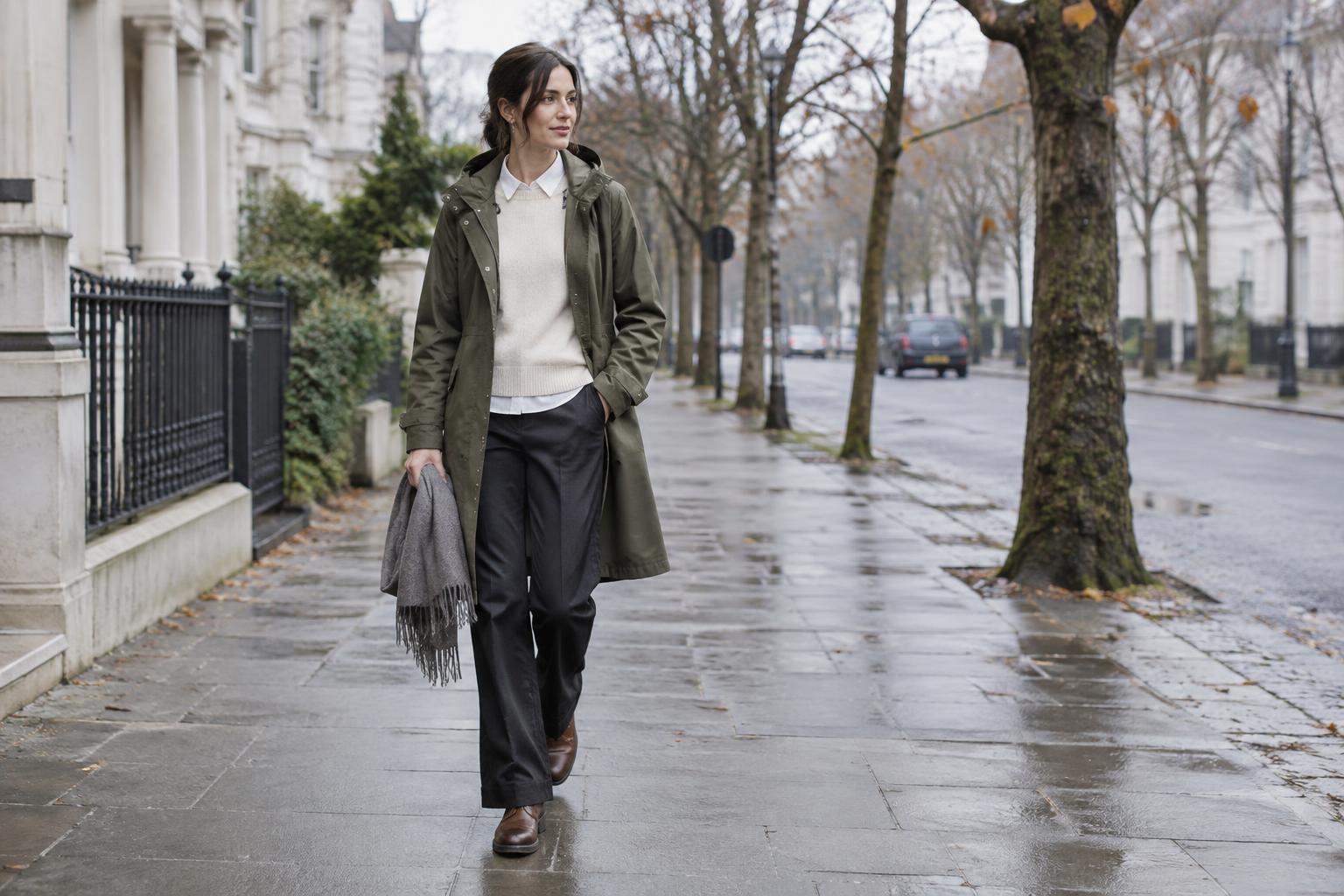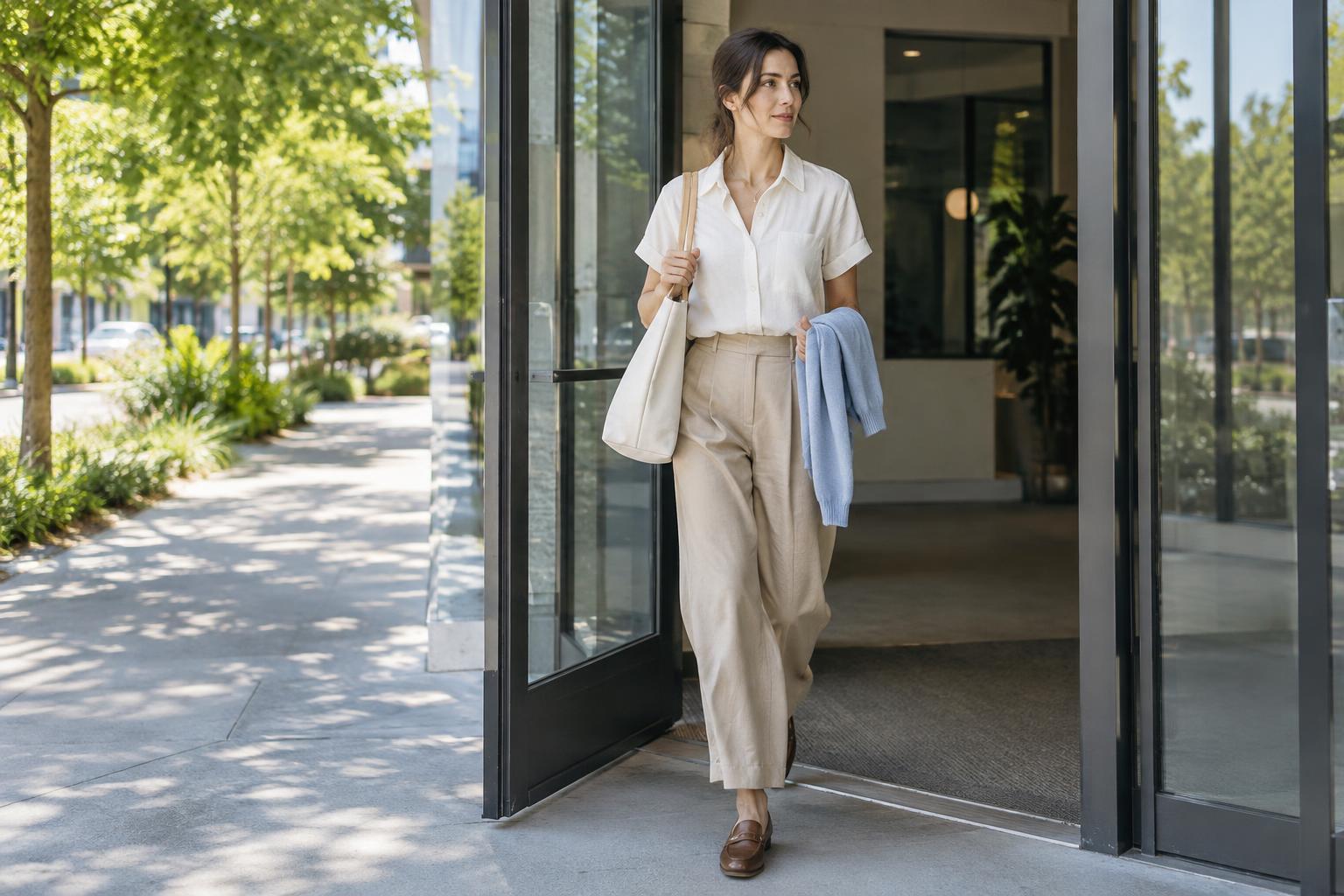
Build the outfit for the warmest part of your day
Start with what you will wear outside, especially if your commute involves walking or waiting for transport. A lightweight top with relaxed trousers, a skirt or an easy dress gives air room to move. The goal is not to wear as little as possible; it is to avoid a heavy outfit that becomes uncomfortable before you reach work.
Look for pieces that do not cling tightly at the underarms, waist or back. A short-sleeved shirt, loose blouse or simple knit top can work beneath a layer without feeling bulky. If your workplace has a dress code, use its requirements as your starting point, then choose the lightest comfortable version of the pieces it allows.
Choose fabric by feel and construction
Fiber labels are useful, but they do not tell the whole story. Cotton and linen are familiar summer options, while some lightweight lyocell or viscose garments feel fluid and cool against the skin. Weave, thickness, lining and fit also matter: a dense, lined garment may feel warmer than an unlined piece made from a similar fiber.
Hold a garment up to the light to get a sense of its weight, and check whether it is opaque enough for work. Notice how it feels after sitting down, too. Linen wrinkles readily, which may suit a relaxed workplace; a blended fabric may be easier to keep looking neat. If you are shopping on a budget, testing the movement and feel of pieces you already own is a useful first step.
Make the office layer easy to add and remove
Instead of dressing for the coldest meeting room all morning, carry one layer you can put on when you arrive. An unlined blazer adds structure, a fine cardigan feels softer, and a lightweight overshirt suits a more casual setting. Choose a layer that fits comfortably over your base top without pulling at the shoulders or sleeves.
Keep it near your desk or in your bag if the office temperature changes throughout the day. A neutral layer is versatile, but it does not have to be plain: a soft stripe, a muted color or an interesting texture can make repeated outfits feel intentional. If cold air tends to hit your shoulders or arms, prioritize coverage there rather than adding warmth everywhere.
Put together outfits that work on both sides of the door
For a more formal workplace, try wide-leg trousers with a light short-sleeved shirt and an unlined blazer. For a relaxed office, pair a loose midi skirt with a simple top and a cardigan. A shirt dress offers another straightforward base; add a layer indoors and remove it for the journey home. In each case, check that you can walk comfortably outside and sit comfortably at your desk.
Shoes deserve the same two-temperature thinking. Choose a pair suited to your commute and your workplace, with enough support and room to stay comfortable as you move. If your dress code permits sandals, consider whether they feel practical for your route; otherwise, lightweight loafers or other breathable closed shoes may be easier. A spare pair kept at work can help if your commute calls for different footwear.
Keep the routine simple through the season
A small rotation of base pieces and one or two reliable layers can do more than a closet full of outfits that only suit one temperature. Pick colors that work together so you can change a top without rethinking everything else. If carrying a bag, leave space for the layer you will take off later instead of having to hold it throughout the commute.
Summer clothes may need more frequent washing, so check care labels before buying and give worn pieces time to dry fully before storing them. Treat marks promptly according to the garment’s instructions, and let a blazer or overshirt air between wears when appropriate. The best setup is one you can repeat easily: a comfortable outdoor base, a dependable indoor layer and a few adjustments for the weather and your workplace.