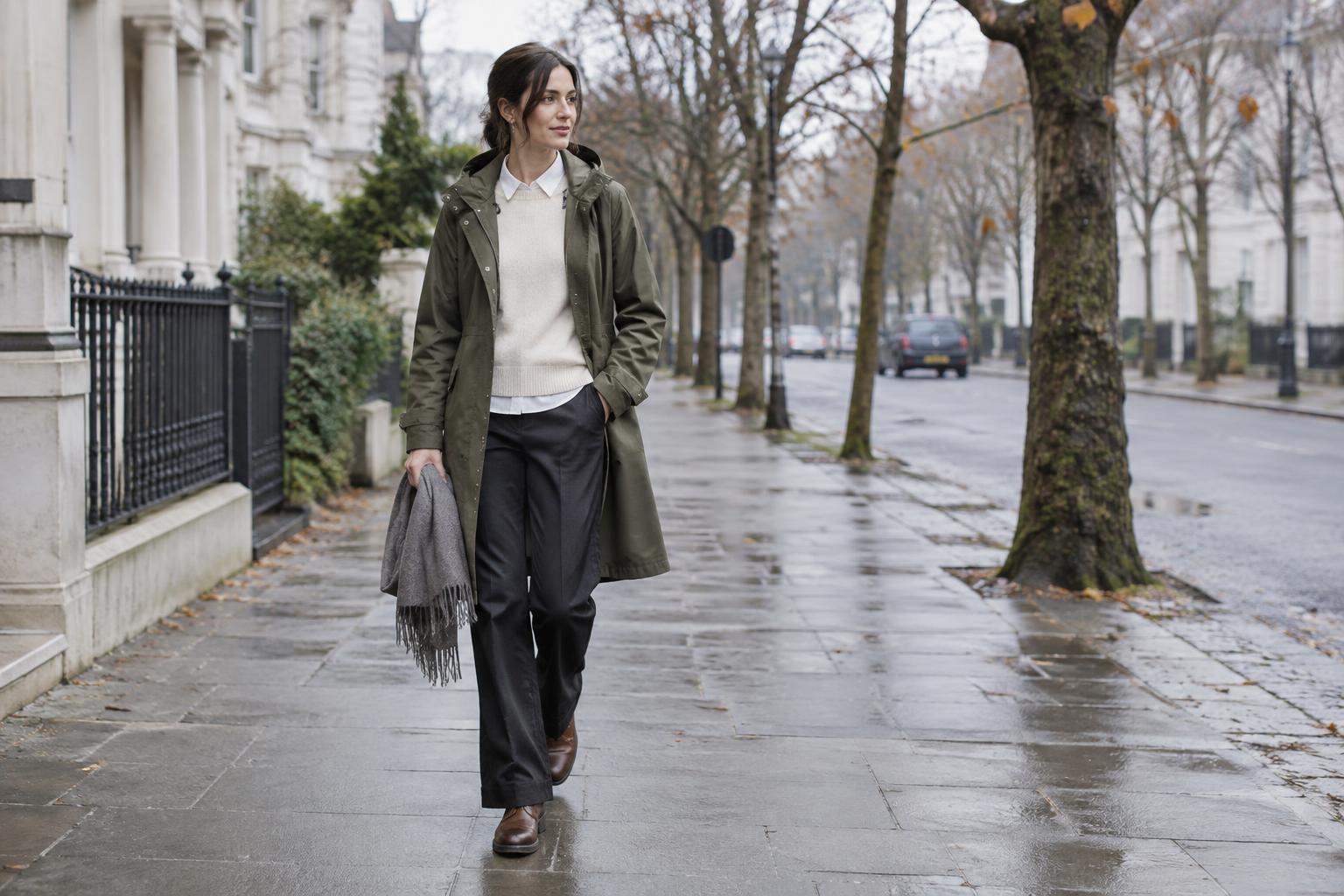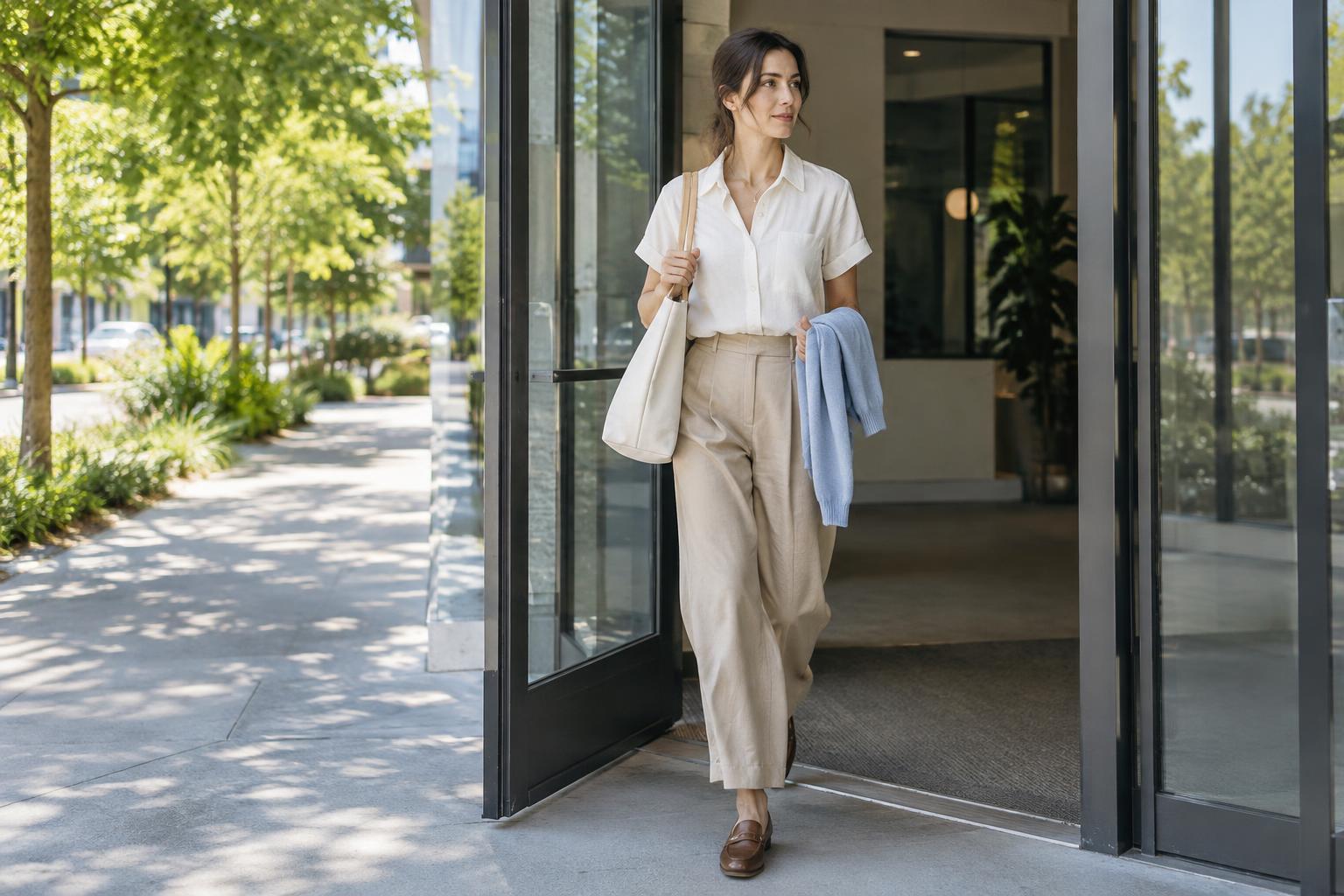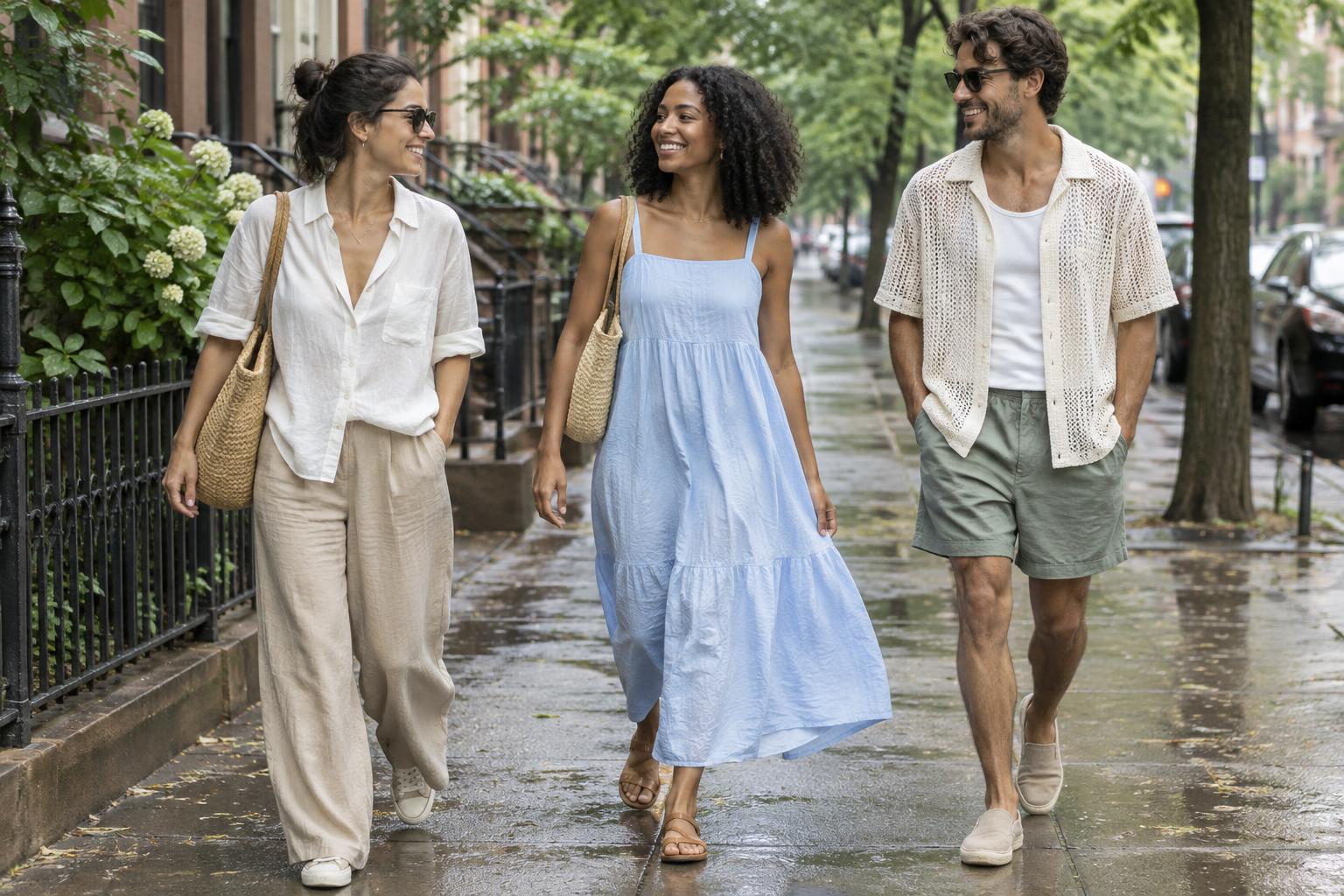
Start with the day you have planned
Dressing for summer sun is a balance between covering skin and letting heat escape. The most useful outfit depends on where you are going, how long you expect to be outside and whether you will be walking, sitting or moving between air-conditioned spaces. A loose long-sleeved shirt may feel comfortable on a breezy walk but less so in a crowded, still setting.
Before getting dressed, identify the areas you want to cover most: perhaps your shoulders, arms, chest or legs. Then choose one main piece that does that work rather than piling on several layers. A relaxed shirt over a tank, a long-sleeved dress or lightweight trousers with a simple top can each provide coverage while keeping the outfit easy to wear.
Choose fabric with airflow in mind
Fabric weight, weave and fit all affect comfort. Lightweight linen and cotton can be pleasant in warm weather, especially when the garment sits away from the body. Some lightweight technical fabrics are also designed to dry quickly, which may appeal if you commute, travel or expect to perspire. Feel the fabric before choosing it: a material described as “summer weight” can still feel clingy or dense when worn.
Coverage and sun protection are not identical. A very sheer shirt may cover your arms visually while allowing considerable light through. If sun protection is a priority, look for a garment with a stated UPF rating and follow its care instructions. Keep in mind that wet, stretched or worn fabric may perform differently from fabric in good condition.
Do not judge a garment by fiber alone. A close-fitting linen top can feel warmer than a roomy shirt made from another material. Look for space at the shoulders, underarms and waist, and check that you can move comfortably without the fabric pulling tight.
Build outfits around loose, useful shapes
A long-sleeved button-up is one of the most flexible summer pieces. Wear it on its own with relaxed shorts or wide-leg trousers, or leave it open over a light top when you want a layer you can remove indoors. Sleeves that can be rolled up give you another way to adjust the outfit as your surroundings change.
For fuller coverage, try a loose midi or maxi dress with sleeves, or pair an airy top with straight or wide-leg trousers. Length does not have to mean bulk: a garment with a comfortable waist and room around the legs may feel easier than a shorter piece that fits tightly. If you prefer skirts, a lightweight long skirt and a relaxed shirt create a similar effect.
Color is a personal choice, not a complete comfort strategy. Lighter shades may feel appealing in strong sunshine, while darker shades can be practical for visible marks or a preferred look. Cut and fabric matter just as much. Choose colors you will actually wear, then check whether the finished outfit feels comfortable outdoors.
Use accessories to cover gaps
A hat with a brim can shade areas an outfit leaves exposed, while sunglasses make bright conditions more comfortable for many people. Choose a hat that stays on comfortably and suits what you will be doing; a wide brim is less useful if you spend the day holding it in place. A lightweight scarf can add occasional coverage at the neck or shoulders, but it may feel too warm when wrapped tightly.
Footwear matters too. Breathable shoes that suit the amount of walking you plan to do can make a covered outfit feel less cumbersome. If you wear sandals, remember that the tops of your feet remain exposed. Clothing and accessories are only part of planning for time in the sun; they do not cover every exposed area.
Test the outfit, then make small adjustments
Try your outfit on before a long day out and move around in it. Reach forward, sit down and walk a short distance. Notice whether the shirt clings, the waistband presses or a layer traps warmth. Small changes often help more than replacing the whole outfit: swap a fitted top for a looser one, choose an unlined layer or carry a shirt instead of wearing it throughout the day.
A useful summer wardrobe does not need to be large. One comfortable long-sleeved shirt, one easy bottom and a hat can form the basis of several outfits when mixed with pieces you already own. Start with the combination that suits your plans, then adjust for the weather, your comfort and the amount of coverage you want.