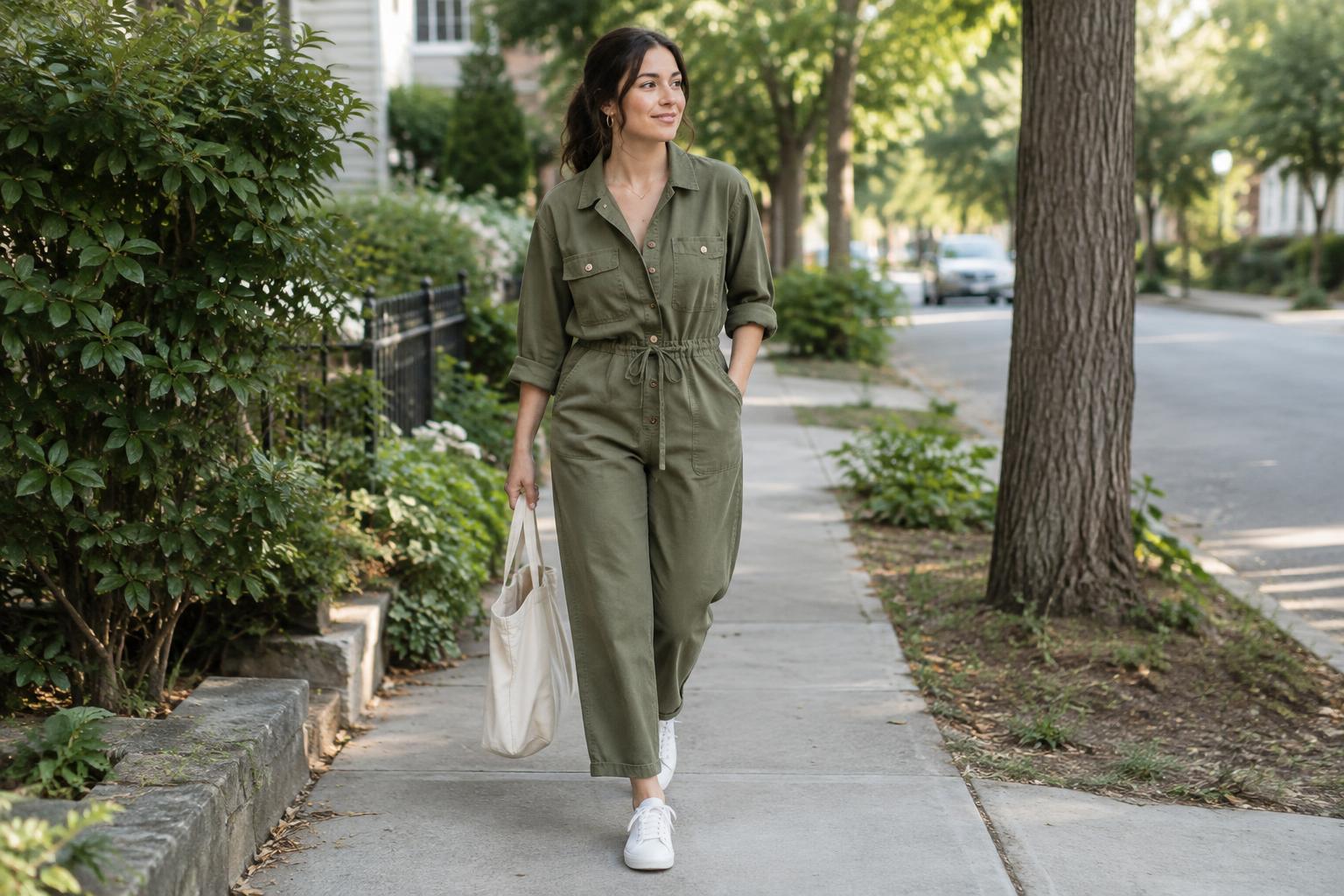
Start with movement, not just appearance
A comfortable jumpsuit should let you sit, bend and reach without pulling at the shoulders or riding up through the torso. When trying one on, move as you would during a normal day: sit in a chair, lift your arms and take a few long steps. If the fabric strains across your back or the waistband shifts uncomfortably, a different cut may serve you better than simply sizing up.
Torso length matters as much as waist and hip fit in a one-piece garment. An elastic waist, adjustable tie or slightly relaxed middle can give you more room to move. Check the rise and leg shape, too. Wide legs may feel airy but can catch underfoot if they are too long; tapered legs are often easier to manage on stairs or while cycling. Choose the silhouette that suits your activities rather than treating one shape as the right choice for everyone.
Pick fabric for the kind of day you have
For a day spent walking, working at a desk or running errands, look for fabric that feels pleasant against your skin and has enough give for repeated movement. Soft cotton blends, jersey and other flexible fabrics can feel less restrictive than a stiff, closely fitted weave. A crisp woven jumpsuit can work just as well if its cut leaves room at the shoulders, hips and knees.
Think about temperature and care before choosing a piece. Lightweight fabric may be comfortable indoors or in warm weather but leave you wanting a layer outside. Heavier fabric may offer more coverage while feeling warm during a busy afternoon. Notice whether the material wrinkles easily, needs careful washing or takes a long time to dry. The most useful everyday jumpsuit is one you will be happy to wear and look after regularly.
Make getting dressed and undressed easy
A jumpsuit’s opening can make a noticeable difference to everyday comfort. Front buttons or a front zip may be easier to manage on your own than a fastening high on the back. If you prefer a back zip, check that you can reach it without a struggle. Also consider whether a belt or complicated tie will need adjusting each time you use the bathroom.
Details that seem minor in a fitting room can become useful throughout the day. Pockets can keep small essentials close, while adjustable straps can help the top sit where you want it. If you plan to carry a bag, try it on with the jumpsuit: straps can shift a loose neckline or rub against a structured shoulder. A quick trial at home can reveal what needs adjusting before you head out.
Build a simple outfit around it
A jumpsuit already covers most of the outfit, so a few practical additions are often enough. Flat shoes, comfortable sandals or everyday trainers can support a day on your feet. Try your chosen shoes with the jumpsuit before leaving, particularly if the legs are long. The hems should clear the ground without requiring you to walk differently.
Layers make a jumpsuit more adaptable. A cardigan or open shirt is easy to remove as temperatures change; a cropped jacket can leave an elastic or tied waist visible without bunching fabric around the hips. For an understated look, repeat one colour in your shoes and bag. If you enjoy contrast, use a bright scarf, patterned layer or distinctive earrings. You do not need several accessories to make the outfit feel intentional.
Adjust the details to your routine
The best styling choice depends on what you actually do while wearing the jumpsuit. For commuting, secure footwear and a bag that stays on your shoulder may matter more than a statement belt. For a relaxed day at home, a loose fit and soft fabric might take priority. If your plans include both, start with the more demanding activity and add a layer or accessory you can change easily.
After wearing a jumpsuit for a full day, notice where you adjusted it most. Did you keep pulling the neckline into place, rolling up the cuffs or loosening the waist? Those observations can guide your next outfit: a different layer may solve a neckline issue, while persistent pulling may mean the cut is not right for you. Everyday comfort comes from a garment that works with your routine, not from making yourself accommodate it.