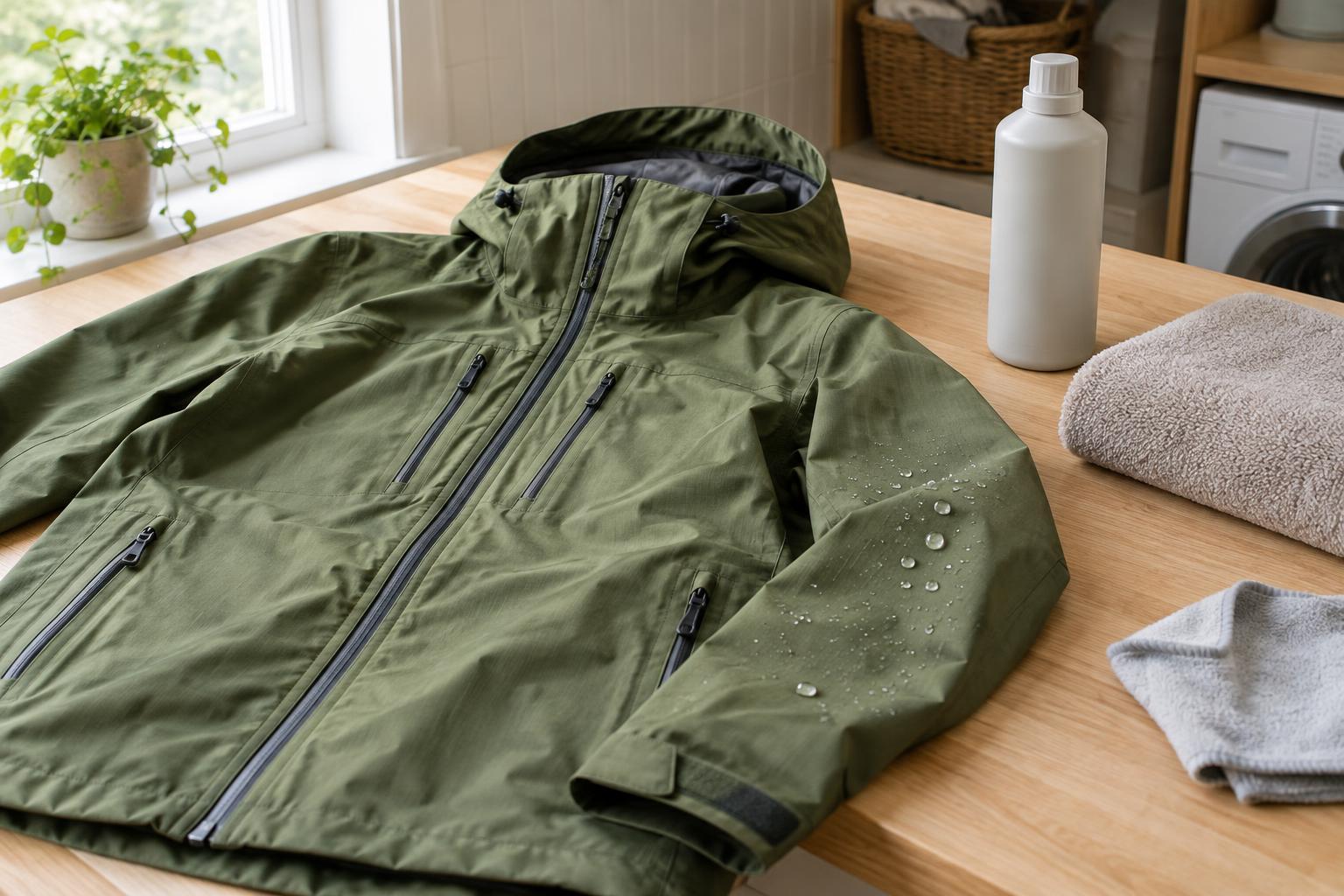
Know what the finish does
A waterproof jacket often has two parts doing different jobs. A membrane or coating forms the main barrier to rain, while a durable water-repellent finish, often called DWR, helps droplets bead up and roll off the outer fabric. When that finish wears down, the fabric may absorb water and feel heavy or clammy. This is known as wetting out. It does not necessarily mean rain has passed through the jacket, but it can make the jacket less comfortable to wear.
Dirt, body oils and leftover laundry products can interfere with the outer finish, so washing is part of maintenance rather than something to avoid. Start with the care label: its directions take priority over general advice, especially for jackets with unusual fabrics, insulation or trims.
Prepare the jacket for washing
Empty every pocket, then close the main zip, pocket zips and hook-and-loop fasteners. This helps prevent loose fasteners from catching on the fabric. Brush away dried mud and gently wipe heavily soiled areas with a damp cloth. If the label permits machine washing, check that the detergent drawer and drum are free of fabric softener residue; a rinse cycle before loading the jacket can help.
Use a cleaner recommended by the jacket maker or a product intended for waterproof outerwear. If the label allows ordinary liquid detergent, use only the recommended amount and rinse thoroughly. Avoid fabric softener, bleach and stain removers unless the jacket’s instructions explicitly allow them. These products may leave residues or damage components. Wash the jacket on the gentle cycle and at the temperature stated on its label, ideally without crowding the drum. An extra rinse can help remove cleaner left in the fabric.
Dry it without guessing about heat
After washing, follow the label’s drying instructions. If tumble drying is permitted, a low-heat setting may help reactivate an existing water-repellent finish. Do not assume heat is safe for every jacket: high temperatures can harm coatings, taped seams or other details. If tumble drying is not permitted, hang the jacket to dry in a well-ventilated space, away from direct heat. Make sure it is fully dry before storing it.
Once dry, sprinkle a little water on a clean area of the outer fabric. If droplets bead and roll away, the finish is still doing its job. If water spreads across the fabric and darkens it, the finish may need renewing. Test more than one area, since high-wear spots such as shoulders and cuffs can lose repellency before the rest of the jacket.
Reproof when cleaning is not enough
Reproofing adds a new water-repellent treatment to the outer fabric. Choose a product compatible with the jacket’s material and follow both the product directions and the garment label. Spray-on treatments let you focus on the exterior, particularly areas that wet out first. Wash-in treatments can be convenient, but check whether they are suitable for your jacket, especially if it has a lining or insulation you do not want to treat.
Apply treatment to a clean jacket; coating dirt or detergent residue is unlikely to give a good result. Use the amount directed on the product, paying attention to even coverage rather than saturating one area. Some treatments need heat to set, while others air-dry. Follow the specific instructions instead of adding heat by habit. Test the jacket again after it has dried or cured as directed. Reproofing is not needed after every wash: let the jacket’s performance guide you.
Spot problems a finish cannot fix
If water appears on the inside, check whether it could be condensation from exertion, moisture entering at an opening, or a problem with a seam or damaged fabric. A water-repellent treatment helps the outer fabric shed rain, but it will not repair a tear, a failing coating or loose seam tape. Inspect those areas before applying another layer of treatment; the jacket maker’s repair guidance is a useful next step.
Between washes, let the jacket dry after use, remove obvious dirt and store it clean and loose rather than damp and tightly packed. Wash it when it is dirty or no longer performing comfortably, then check how the outer fabric sheds water. That simple routine can help you avoid unnecessary treatments while keeping a useful jacket ready for the next rainy day.